
The Green Flame That Quietly Burns
Jealousy rarely enters a room loudly. It slips in like smoke under a locked door. One moment you are smiling at a friend’s success, scrolling through photos, or hearing praise about someone else. The next, something tightens inside your chest. Your thoughts grow hot and restless. Suddenly, comparison becomes impossible to ignore.
That feeling is jealousy — a deeply human emotion that has appeared in myths, novels, poetry, and everyday conversations for centuries. Writers often describe jealousy through metaphors because plain words can feel too small for such a tangled emotion. A metaphor turns jealousy into something readers can see, hear, and almost touch. It transforms emotion into image.
In literature, jealousy has been called a poison, a storm, a monster, and even a fire that feeds on itself. These comparisons help writers express the emotional weight of envy, insecurity, fear, and longing. They also help readers connect with experiences they may struggle to explain.
This article explores powerful metaphors for jealousy, their meanings, emotional layers, and creative uses. You will also find examples, storytelling ideas, writing prompts, and practical tips for using jealousy metaphors in daily writing, fiction, poetry, social media captions, and conversations. Whether you are a student, blogger, novelist, or curious reader, these vivid comparisons can help you express emotions with greater depth and beauty.
Why Metaphors for Jealousy Matter in Writing
Emotions Become Easier to Visualize
Jealousy is invisible. You cannot hold it in your hand or place it on a table. Metaphors make it visible by comparing it to something concrete.
Instead of saying:
“She felt jealous.”
You might say:
“Jealousy curled around her heart like a thorny vine.”
Now the reader can imagine the emotion physically wrapping itself around someone.
Metaphors Add Emotional Power
Strong metaphors create mood and atmosphere. They pull readers into the emotional experience instead of merely describing it.
A simple sentence tells.
A metaphor makes readers feel.
They Make Writing More Memorable
People remember vivid imagery. A metaphor stays in the mind longer than plain explanation. This is why famous literary works often use symbolic language to describe jealousy.
In Shakespeare’s Othello, jealousy is famously described as:
“The green-eyed monster.”
That phrase survived for centuries because it paints such a sharp emotional image.
Jealousy as a Green-Eyed Monster
Meaning of the Metaphor
The “green-eyed monster” is one of the most famous jealousy metaphors ever created. It suggests that jealousy behaves like a creature that grows stronger the more attention it receives.
The monster image also implies danger. Jealousy can distort thinking, damage trust, and ruin relationships when left unchecked.
Example Sentence
“The green-eyed monster whispered cruel ideas into his mind all night.”
Alternative Ways to Express It
Jealousy as a Beast
This version emphasizes wildness and loss of control.
Jealousy as a Predator
This focuses on how envy hunts confidence and peace.
Jealousy as a Shadow Creature
This creates a darker, quieter emotional tone.
Mini Storytelling Example
Imagine a young musician watching another performer receive applause. At first, he claps politely. But later, alone in his room, jealousy begins crawling through his thoughts like a creature scratching at the walls. Soon, admiration transforms into bitterness.
That is how the metaphor works — it turns emotion into movement and image.
Bonus Writing Tip
Use monster metaphors when writing dramatic fiction, emotional poetry, or intense relationship scenes.
Jealousy as a Fire
Why Fire Works So Well
Fire represents heat, destruction, energy, and lack of control. Jealousy often behaves the same way.
It starts small. It spreads quickly; consumes everything nearby.
Example Sentence
“Jealousy burned inside her like a wildfire racing through dry woods.”
Emotional Details
Fire metaphors often suggest:
- Anger
- Passion
- Obsession
- Emotional destruction
- Loss of calm thinking
Alternative Comparisons
A Smoldering Coal
This suggests hidden jealousy that quietly grows.
A Forest Fire
This represents explosive emotional damage.
Sparks in the Mind
This implies the early stages of envy.
Cultural Reference
Many ancient stories connect destructive emotions with flames. In mythology and literature, uncontrolled desire and envy often appear alongside images of burning cities, torches, or volcanic eruptions.
Practice Prompt
Write about a time someone tried to hide jealousy but failed. Describe the emotion using only fire imagery.
Social Media Caption Idea
“Jealousy is a fire that rarely burns only one person.”
Jealousy as Poison in the Heart
The Meaning Behind the Image
Poison metaphors focus on how jealousy slowly damages emotional health. Unlike fire, poison often works quietly and over time.
This metaphor is powerful because jealousy can quietly affect friendships, romance, confidence, and trust before anyone notices.
Example Sentence
“Envy dripped through his thoughts like poison spreading through water.”
Why It Feels So Real
Poison changes what it touches. Jealousy can do the same by twisting healthy admiration into resentment.
Alternative Expressions
Bitter Medicine
This suggests painful emotional lessons.
Venom in the Veins
This creates an intense emotional image.
Toxic Fog
This implies confusion and emotional heaviness.
Real-Life Scenario
A coworker constantly compares herself to another employee who receives praise. Over time, her jealousy changes how she speaks, thinks, and reacts. She becomes colder without fully realizing why.
That slow emotional transformation fits the poison metaphor perfectly.
Bonus Tip for Writers
Poison imagery works especially well in psychological fiction, emotional essays, and dark poetry.
Jealousy as a Storm
Emotional Chaos and Turbulence
Storm metaphors capture emotional unpredictability. Jealousy often arrives suddenly and shakes emotional stability.
Storms are loud, chaotic, and difficult to control — just like intense envy.
Example Sentence
“A storm of jealousy thundered across her thoughts.”
Layers of Meaning
Different storm images create different emotional tones.
Thunder
Represents explosive anger.
Lightning
Suggests sudden emotional realization.
Rain
Can symbolize sadness beneath jealousy.
Hurricanes
Represent overwhelming emotional destruction.
Literary Feel
Storm imagery often feels cinematic and emotional. It creates movement and tension in scenes.
Creative Exercise
Describe jealousy as weather. Is it a blizzard? A thunderstorm? Heavy fog? A tornado? Explain why.
Alternative Phrase
“Jealousy rolled in like dark clouds before the argument began.”
Jealousy as a Thorny Vine
A More Poetic Comparison
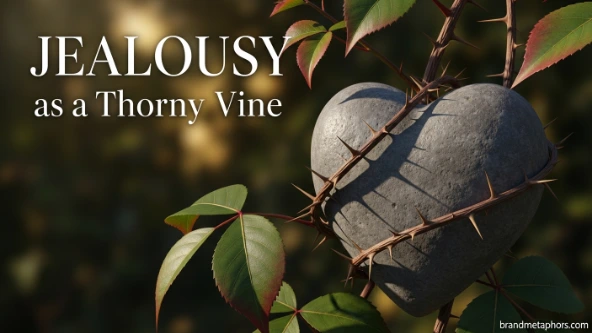
This metaphor feels softer yet painful. A vine grows slowly and quietly, wrapping itself around everything nearby.
Jealousy can behave in the same way.
Example Sentence
“Jealousy twisted around her thoughts like a thorn-covered vine.”
Why This Metaphor Is Effective
It combines beauty and pain.
Vines are natural and graceful. Thorns hurt.
That duality reflects jealousy perfectly because envy often grows from love, admiration, or desire.
Alternative Nature Metaphors
Weeds in a Garden
Represents emotional neglect.
Rotting Roots
Suggests hidden relationship problems.
Ivy on Stone Walls
Implies emotional attachment becoming unhealthy.
Mini Storytelling Example
Two childhood friends drift apart after one becomes successful. The other still loves her friend deeply, but jealousy slowly grows between them like vines cracking old bricks.
Bonus Tip
Nature metaphors work beautifully in poetry, romance writing, and reflective essays.
Jealousy as a Mirror
The Reflection Metaphor
Sometimes jealousy says more about personal insecurity than about other people. Mirror metaphors highlight self-reflection and comparison.
Example Sentence
“Jealousy held up a cruel mirror to all his insecurities.”
Emotional Meaning
This metaphor suggests:
- Self-doubt
- Comparison
- Fear of inadequacy
- Identity struggles
Alternative Comparisons
A Cracked Mirror
Distorted self-image.
A Funhouse Mirror
Exaggerated insecurity.
Fogged Glass
Unclear understanding of oneself.
Real-Life Connection
Social media often intensifies mirror-style jealousy. People compare their lives to carefully edited online images and begin feeling emotionally “less than.”
Writing Prompt
Write about someone staring into a mirror while struggling with jealousy. Describe both the physical reflection and emotional reflection.
Jealousy as Chains
Feeling Trapped by Emotion
Chain metaphors focus on emotional imprisonment. Jealousy can trap people inside obsessive thoughts and fears.
Example Sentence
“Jealousy chained his mind to endless comparison.”
Why This Image Works
Chains suggest:
- Restriction
- Lack of freedom
- Emotional weight
- Mental repetition
Alternative Versions
Emotional Handcuffs
Modern and direct.
Iron Shackles
Heavy and dramatic.
Invisible Ropes
Subtle emotional limitation.
Literary Reference
In many classic novels, characters trapped by jealousy become prisoners of suspicion. Their fear controls every decision they make.
Bonus Social Media Phrase
“Comparison builds chains no one else can see.”
Jealousy as a Hungry Animal
Endless Emotional Appetite
Some jealousy never feels satisfied. No amount of reassurance calms it completely.
That is why animal metaphors work so well.
Example Sentence
“Jealousy prowled through his mind like a starving wolf.”
Different Animal Meanings
Snake
Sneaky and dangerous jealousy.
Wolf
Aggressive emotional hunger.
Hyena
Cruel mockery and resentment.
Crow
Dark curiosity and obsession.
Emotional Impact
Animal metaphors make jealousy feel alive and instinctive. They emphasize primal emotion over rational thought.
Creative Exercise
Choose an animal that represents jealousy to you. Write five descriptive sentences explaining why.
Jealousy as Smoke
Quiet, Creeping, and Hard to Escape
Smoke metaphors suggest confusion and emotional suffocation.
Unlike fire, smoke spreads silently. It clouds vision and makes thinking difficult.
Example Sentence
“Jealousy filled the room like smoke nobody could clear away.”
Emotional Layers
Smoke can symbolize:
- Suspicion
- Confusion
- Emotional distance
- Unspoken tension
Alternative Versions
Fog of Envy
Gentler emotional confusion.
Ash in the Air
Aftermath of emotional damage.
Smoke in the Lungs
Deep emotional discomfort.
Storytelling Example
At a family dinner, nobody mentions the tension directly. Yet jealousy hangs in the air like smoke after a candle has been blown out.
Writing Tip
Smoke metaphors are excellent for subtle emotional scenes.
How to Create Your Own Metaphors for Jealousy
Start with Physical Sensations
Ask yourself:
What does jealousy feel like physically?
Maybe it feels hot, heavy, sharp, cold, or tight.
Turn that sensation into imagery.
Connect Emotion to Nature
Nature offers endless metaphor inspiration:
- Storms
- Fire
- Ice
- Rivers
- Shadows
- Thorns
Use Movement
Strong metaphors often move.
Instead of:
“Jealousy existed.”
Try:
“Jealousy crept under the door.”
Movement makes imagery feel alive.
Think About Color
Green is the classic jealousy color, but others can work too.
- Black for bitterness
- Red for rage
- Gray for emotional emptiness
Practice Exercise
Finish these metaphor starters:
- Jealousy was a…
- Envy crawled like…
- Her jealousy bloomed into…
- His envy tasted like…
Using Jealousy Metaphors in Daily Life and Creative Writing
In Fiction Writing
Metaphors deepen emotional scenes and help readers connect with characters.
Instead of directly explaining emotions, show them through imagery.
In Poetry
Poetry thrives on symbolic language. Jealousy metaphors add emotional texture and rhythm.
In Journaling
Metaphors can help people understand their own feelings more clearly.
Try writing:
“Today my jealousy felt like…”
You may discover emotional truths hidden beneath the surface.
In Social Media Captions
Short metaphorical lines are memorable and shareable.
Examples:
- “Jealousy grows fastest in silent comparison.”
- “Envy is smoke that blinds gratitude.”
- “The green flame burns brightest in insecurity.”
In Conversations
Metaphors can soften difficult emotional discussions.
Instead of accusing someone, you might say:
“I think comparison has been creeping into my thoughts lately.”
That sounds calmer and more reflective.
Conclusion
Jealousy is one of the most complex emotions humans experience. It can appear suddenly like lightning or grow slowly like vines across old walls. Because the feeling is so layered and difficult to explain, metaphors become powerful tools for expression.
Through images of monsters, fire, poison, storms, mirrors, smoke, chains, and hungry animals, writers can transform invisible emotion into something vivid and unforgettable. These metaphors help readers not only understand jealousy but feel its emotional texture.
Whether you are crafting poetry, writing fiction, posting online, or simply exploring your emotions, metaphorical language gives depth and beauty to your words. The next time jealousy appears in your life or writing, try describing it as something tangible. You may discover that imagery reveals truths ordinary language cannot fully hold.
FAQs
What is the most famous metaphor for jealousy?
The most famous metaphor is “the green-eyed monster,” originally used in Othello by William Shakespeare. It describes jealousy as a dangerous creature that consumes people emotionally.
Why are metaphors useful for describing jealousy?
Metaphors make abstract emotions easier to visualize and feel. They add emotional depth, creativity, and vivid imagery to writing.
What colors are commonly linked with jealousy?
Green is the classic color associated with jealousy, but writers also use red, black, and gray to symbolize anger, bitterness, or emotional emptiness.
Can jealousy metaphors improve creative writing?
Yes. Metaphors create stronger emotional scenes, richer descriptions, and more memorable storytelling in fiction, poetry, essays, and social media writing.
How can I create original metaphors for jealousy?
Focus on physical sensations, emotional experiences, nature imagery, movement, and symbolic objects. Compare jealousy to something readers can easily imagine or feel.