
A Candle in the Storm: Why Hope Matters
The rain hammered against the windows. The power was out. A child sat quietly beside a single candle, watching the tiny flame dance against the darkness. Outside, the storm roared. Inside, that small light felt stronger than fear itself.
That is what hope often feels like.
Hope is not always loud or dramatic. Sometimes it is soft. Sometimes it trembles. Yet it keeps glowing when everything else seems uncertain. Through history, poetry, music, and daily life, people have searched for metaphors for hope to describe this invisible force that keeps hearts moving forward.
Metaphors help us explain emotions that are hard to put into plain words. They turn feelings into pictures we can see and feel. Hope becomes a sunrise, a bridge, a seed, or a lighthouse. These images stay with us because they connect deeply with human experience.
In this article, you will explore powerful metaphors for hope, their meanings, emotional layers, and creative ways to use them in writing and daily life. You will also find examples, storytelling ideas, exercises, and practical tips to make your language more vivid and meaningful.
The Meaning of Hope in Everyday Life
Hope as an Emotional Compass
Hope is the quiet belief that tomorrow can improve. It guides people through heartbreak, failure, illness, and uncertainty. Without hope, even small tasks feel heavy. With hope, people find strength to continue.
Think about a student waiting for exam results or a farmer planting seeds before rain arrives. Both situations carry uncertainty. Yet hope pushes action forward.
Why Metaphors Make Hope Easier to Understand
Hope is abstract. You cannot hold it in your hand. Metaphors make it visible by comparing it to something familiar.
For example:
- Hope is a lighthouse.
- Hope is a seed.
- Hope is a sunrise.
Each image creates emotion instantly. Readers can picture light, growth, or a new beginning without long explanations.
Emotional Power of Hopeful Language
Hopeful metaphors create warmth and resilience. They are often used in:
- Poetry
- Motivational speeches
- Social media captions
- Therapy and journaling
- Inspirational stories
A strong metaphor can comfort someone during difficult times.
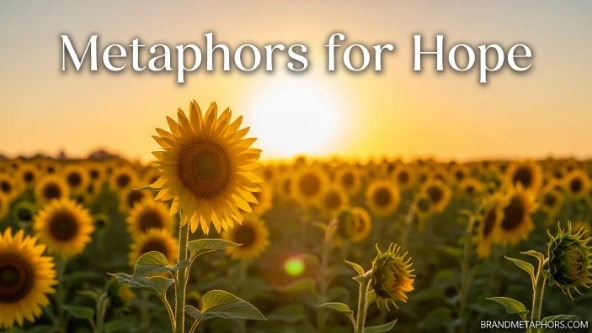
Hope as a Sunrise
Meaning of the Sunrise Metaphor
A sunrise represents fresh beginnings. No matter how dark the night becomes, morning eventually arrives. This makes the sunrise one of the most powerful metaphors for hope.
Example Sentences
- “After years of struggle, hope rose like the sun over her life.”
- “His smile felt like sunrise after endless rain.”
Alternative Ways to Express It
- Dawn breaking through darkness
- Morning light on the horizon
- The first golden rays of day
Sensory and Emotional Details
Imagine cold air slowly warming. Birds begin singing. Pale orange light stretches across the sky. These details create emotional comfort and renewal.
Mini Storytelling Example
During difficult times in history, many writers described hope as dawn after war or tragedy. Survivors often spoke about seeing the morning sun and feeling alive again.
Creative Writing Tip
Use sunrise metaphors when writing about recovery, healing, or second chances.
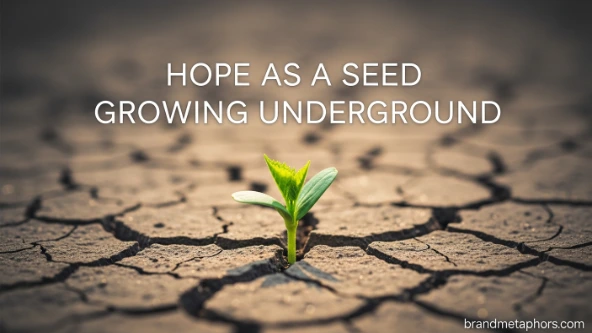
Hope as a Seed Growing Underground
Meaning of the Seed Metaphor
A seed spends time hidden beneath the soil before growth appears. Hope works the same way. Sometimes progress is invisible at first.
Example Sentences
- “Hope was a seed sleeping beneath winter soil.”
- “Tiny acts of kindness planted seeds of hope.”
Alternative Expressions
- Roots preparing to grow
- A hidden garden
- Silent growth beneath the earth
Emotional Imagery
Picture dark soil after rain. Beneath the ground, something quietly prepares to bloom. The image suggests patience and trust.
Real-Life Connection
People recovering from grief often feel stuck before healing begins. Growth happens slowly, just like a seed underground.
Bonus Writing Tip
Combine nature metaphors with emotional experiences to create poetic imagery.
Example: “Her hope unfolded like spring leaves after a harsh winter.”
Hope as a Lighthouse in the Storm
Why This Metaphor Feels Powerful
A lighthouse stands firm during dangerous weather. Ships look toward its light for direction and safety. Hope can guide people through emotional storms in the same way.
Example Sentences
- “Her words became a lighthouse during his darkest days.”
- “Hope flashed across the chaos like a distant beacon.”
Alternative Ways to Say It
- A guiding light
- A beacon in darkness
- A lamp beside rough waters
Sensory Details
Imagine crashing waves, cold wind, and heavy fog. Suddenly, a beam of light cuts through the darkness. The emotional impact feels immediate.
Literary and Cultural References
Lighthouses appear often in literature and films because they symbolize guidance, safety, and resilience.
Daily Life Application
Use this metaphor when encouraging someone facing stress or uncertainty.
Hope as a Bridge Across the River
Meaning Behind the Bridge Metaphor
A bridge connects two places. Hope connects present struggles with future possibilities.
Example Sentences
- “Hope built a bridge between fear and courage.”
- “She crossed the river of grief one hopeful step at a time.”
Alternative Expressions
- Pathway toward tomorrow
- Crossing into brighter days
- A road over troubled waters
Emotional Layer
Rivers often symbolize obstacles or emotional distance. A bridge suggests movement, connection, and progress.
Mini Storytelling Example
Imagine someone rebuilding life after losing a job. Hope becomes the bridge carrying them toward opportunity.
Writing Tip for Bloggers and Authors
Bridge metaphors work beautifully in self-help writing and inspirational storytelling.
Hope as a Tiny Flame
Why Fire Symbolizes Hope
Even the smallest flame can push back darkness. This metaphor reminds readers that hope does not need to be huge to matter.
Example Sentences
- “A tiny flame of hope still burned inside him.”
- “She protected her hope like a candle in the wind.”
Alternative Ways to Express It
- A spark in the dark
- An ember refusing to die
- A candle against the night
Emotional and Sensory Imagery
Think about warm candlelight flickering in a silent room. The image feels intimate and comforting.
Cultural Symbolism
Candles often represent remembrance, faith, and emotional strength across many cultures.
Social Media Caption Idea
“Even the smallest flame can survive the darkest night.”
Hope as a Bird Taking Flight
Meaning of This Hope Metaphor
Birds symbolize freedom, movement, and possibility. Hope lifts the spirit above fear and limitation.
Example Sentences
- “Hope spread its wings inside her heart.”
- “His dreams flew like hopeful birds into the sky.”
Alternative Expressions
- Wings of possibility
- Flight toward freedom
- A bird escaping the cage
Sensory Details
Picture open skies, moving clouds, and birds rising above the earth. The feeling is expansive and uplifting.
Literary Reference
Bird imagery appears in poetry worldwide because it connects naturally with freedom and aspiration.
Interactive Exercise
Write three sentences using birds as symbols of emotional growth or healing.
Example Prompt: “What kind of bird matches your current hopes?”
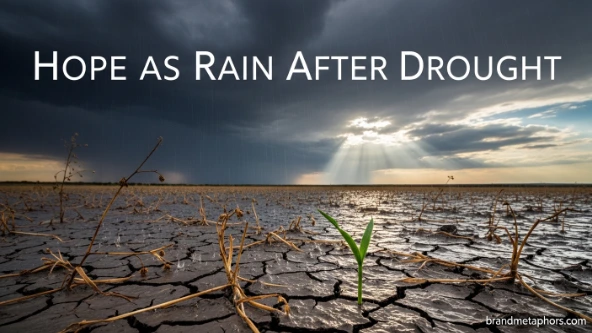
Hope as Rain After Drought
Understanding the Metaphor
After long dryness, rain brings life back to the land. Hope refreshes exhausted hearts the same way.
Example Sentences
- “Her laughter felt like rain after drought.”
- “Hope poured into the weary town.”
Alternative Expressions
- Water for dry ground
- Relief after endless heat
- Clouds finally breaking open
Emotional Imagery
Dry cracked earth suddenly touched by cool rain creates powerful emotional contrast.
Real-Life Example
Communities recovering from hardship often describe support and kindness as rain bringing life back again.
Creative Writing Tip
Use weather imagery to create emotional atmosphere in stories and poems.
Hope as a Star in the Night Sky
Why Stars Represent Hope
Travelers once used stars for navigation. In emotional terms, hope becomes something steady to follow even in darkness.
Example Sentences
- “Hope shimmered like a distant star.”
- “She kept her eyes fixed on that one bright star.”
Alternative Ways to Express It
- Guiding star
- Light among darkness
- Constellation of dreams
Sensory Details
Imagine standing beneath a silent night sky filled with stars. One bright point shines stronger than the rest.
Cultural and Literary Connections
Stars symbolize dreams and destiny in myths, songs, and stories across cultures.
Bonus Social Media Idea
“Be someone’s star during their darkest night.”
Creative Exercises for Using Metaphors for Hope
Exercise 1: Finish the Sentence
Complete these prompts:
- Hope is like __________.
- My future feels like __________.
- Courage grows like __________.
Try to avoid obvious answers. Surprise yourself.
Exercise 2: Nature Observation
Go outside and observe nature for five minutes. Find one object that could symbolize hope.
Examples:
- A growing leaf
- Flowing water
- A bird nest
Exercise 3: Rewrite a Simple Sentence
Original: “She felt hopeful.”
Improved: “Hope bloomed inside her like wildflowers after rain.”
Why These Exercises Help
Creative metaphor practice strengthens writing skills and emotional awareness at the same time.
Tips for Using Hope Metaphors in Writing and Daily Life
Keep Metaphors Simple and Clear
Strong metaphors do not need complicated language.
Good: “Hope is a candle.”
Too Complex: “Hope is an interdimensional illumination mechanism.”
Simple images connect faster with readers.
Match the Tone to the Situation
Gentle metaphors work well for emotional topics. Bright metaphors suit motivational writing.
Use Sensory Details
Add sight, sound, texture, or temperature.
Example: “Hope warmed her chest like sunlight on cold skin.”
Avoid Overloading Sentences
One strong metaphor is often enough. Too many comparisons can confuse readers.
Use Metaphors in Everyday Communication
Hopeful metaphors can improve:
- Journaling
- Speeches
- Instagram captions
- Poems
- Letters
- Motivational posts
Metaphors for Hope in Literature, Music, and Culture

Hope in Poetry
Poets often compare hope to birds, light, or flowers. These images feel universal and timeless.
Hope in Songs
Many songs use journeys, stars, or rising suns as symbols of hope. Music connects emotional imagery with rhythm and memory.
Hope in Films and Stories
Characters often survive difficult moments because they hold onto one small symbol of hope.
Examples include:
- A photograph
- A promise
- A light in the distance
Why Humans Return to These Symbols
People naturally search for visual ways to explain emotion. Hope metaphors make pain easier to carry and dreams easier to imagine.
Conclusion
Hope is more than a feeling. It is a force that quietly carries people through uncertainty, grief, and change. Metaphors for hope help transform invisible emotions into vivid images readers can see and feel.
A sunrise reminds us that darkness ends. A seed teaches patience. A lighthouse offers guidance. A flame proves even small strength matters.
These metaphors do more than decorate language. They help people connect emotionally, heal through storytelling, and express difficult feelings with beauty and clarity.
Whether you are writing poetry, crafting social media captions, journaling, or simply encouraging a friend, hopeful metaphors can add warmth and depth to your words.
The next time life feels uncertain, look around carefully. You may find hope hiding in ordinary things — a candle, a bird, a star, or the first light of morning.
FAQs About Metaphors for Hope
What are metaphors for hope?
Metaphors for hope are symbolic comparisons that describe hope through vivid imagery, such as light, seeds, bridges, or stars.
Why are hope metaphors important in writing?
They make emotional ideas easier to understand and create stronger connections with readers through imagery and feeling.
What is the most common metaphor for hope?
Light is one of the most common metaphors for hope because it naturally contrasts with darkness and fear.
How can I create my own metaphor for hope?
Observe emotions, nature, or daily life. Then compare hope to something meaningful, such as weather, growth, or movement.
Can metaphors for hope improve storytelling?
Yes. They add emotional depth, make scenes memorable, and help readers visualize feelings more clearly.