
Guilt has a way of arriving quietly. It slips into the room after a harsh word, a broken promise, or a missed opportunity. At first, it may seem small, like a pebble in a shoe. Yet with every step, it grows harder to ignore. Many people have experienced that lingering feeling that follows a mistake—the heavy sensation in the chest, the restless thoughts at night, and the desire to turn back time.
Because guilt is such a complex emotion, writers, poets, speakers, and everyday people often rely on metaphors to describe it. A metaphor transforms an abstract feeling into something we can see, touch, and understand. Instead of saying, “I feel guilty,” we might say, “A shadow followed me all day” or “A stone sat on my heart.” These images help communicate emotions more vividly and memorably.
In this article, we will explore some of the most powerful metaphors for guilt, understand their meanings, examine examples, and discover creative ways to use them in writing and daily communication. Whether you are a student, storyteller, blogger, poet, or simply curious about language, these metaphors can help you express remorse, regret, and self-reflection with greater depth and beauty.
What Are Metaphors for Guilt?
Understanding Emotional Metaphors
A metaphor compares one thing to another without using “like” or “as.” It helps readers feel an emotion rather than merely understand it.
Guilt is often invisible, but metaphors make it tangible. They turn feelings into objects, weather, creatures, weights, or shadows that readers can easily imagine.
For example:
- “Guilt was a chain around his ankle.”
- “Her guilt was a storm that never ended.”
These expressions create emotional pictures that stay with readers long after they finish reading.
Guilt as a Heavy Stone
The Weight of Regret
One of the most common metaphors for guilt is a heavy stone.
This metaphor suggests that guilt is a burden carried everywhere. The person feels weighed down by mistakes and finds it difficult to move forward.
Meaning:
Guilt creates emotional heaviness and makes life feel harder.
Example Sentence:
“The lie became a stone in his pocket, pulling him deeper into regret.”
Alternative Expressions:
- A boulder on the chest
- A sack of rocks on the shoulders
- An anchor tied to the heart
Sensory Detail:
Imagine carrying a cold, rough stone all day. Every movement requires more effort than before.
Mini Story:
A student cheats on an exam and earns a high grade. Instead of feeling proud, she spends weeks feeling uneasy. Every compliment from her teacher makes the stone feel heavier.
Guilt as a Shadow
The Feeling That Never Leaves
A shadow follows wherever light exists. This makes it a perfect metaphor for guilt.
Meaning:
Guilt remains present even when a person tries to ignore it.
Example Sentence:
“His guilt followed him like a shadow through every celebration.”
Alternative Expressions:
- A dark silhouette
- A silent companion
- A lingering darkness
Emotional Detail:
This metaphor often creates feelings of loneliness, fear, and constant awareness.
Literary Connection:
Many classic novels use shadows to symbolize hidden sins and unresolved regrets. The image instantly communicates emotional weight.
Guilt as a Chain
Bound by Past Mistakes
Chains symbolize restriction and imprisonment.
When guilt becomes a chain, it prevents personal growth and freedom.
Meaning:
A person feels trapped by previous actions.
Example Sentence:
“Every memory added another link to the chain of guilt.”
Alternative Expressions:
- Emotional handcuffs
- Iron restraints
- A locked cage
Real-Life Scenario:
Someone who hurt a friend years ago may continue replaying the event repeatedly, unable to forgive themselves.
Sensory Detail:
The cold clink of metal echoes every time the memory returns.
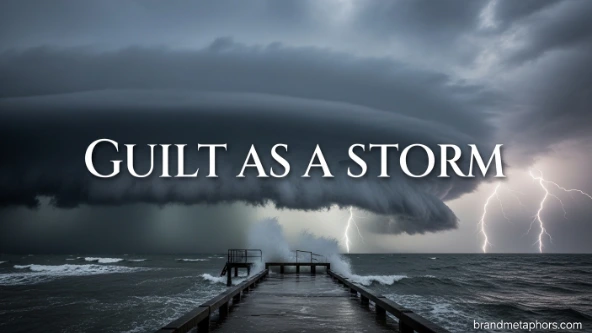
Guilt as a Storm
Emotional Turbulence Within
Storms represent chaos, unpredictability, and overwhelming emotions.
Meaning:
Guilt creates mental conflict and emotional unrest.
Example Sentence:
“A storm of guilt raged inside her after the argument.”
Alternative Expressions:
- A hurricane of regret
- Thunderclouds of remorse
- A sea of emotional turbulence
Mini Story:
After forgetting an important family event, a son spends days replaying the disappointment on his mother’s face. His thoughts crash together like thunder and lightning.
Sensory Detail:
Dark clouds gather overhead while strong winds scatter peace of mind.
Guilt as a Stain
The Mark That Remains
Stains are difficult to remove. Even after cleaning, traces may remain.
Meaning:
Guilt leaves lasting emotional marks.
Example Sentence:
“The betrayal left a stain on his conscience.”
Alternative Expressions:
- A blot on the soul
- A mark on the heart
- A permanent smudge
Cultural Reference:
Many cultures use images of cleanliness and impurity to discuss morality and wrongdoing.
Emotional Impact:
The metaphor emphasizes the desire for redemption and forgiveness.
Guilt as a Thorn
Constant Emotional Pain
A thorn may be small, but it causes persistent discomfort.
Meaning:
Guilt creates recurring emotional pain.
Example Sentence:
“The memory remained a thorn in her heart.”
Alternative Expressions:
- A splinter in the mind
- A needle of regret
- A sharp emotional prick
Sensory Detail:
The pain is not overwhelming, but it never completely disappears.
Real-Life Example:
A forgotten apology may continue to bother someone for years, surfacing unexpectedly during quiet moments.
Guilt as a Ghost
Haunted by the Past
Ghosts symbolize memories that refuse to disappear.
Meaning:
Past mistakes continue to influence the present.
Example Sentence:
“The ghost of guilt wandered through every corner of his thoughts.”
Alternative Expressions:
- A haunting memory
- A restless spirit
- A phantom of regret
Mini Story:
Years after a misunderstanding ended a friendship, an old photograph brings back feelings that seemed buried. The ghost returns once again.
Literary Use:
Ghost imagery frequently appears in stories about redemption, memory, and conscience.
Guilt as a Fire
The Burn of Conscience
Fire can warm, destroy, or purify.
Meaning:
Guilt burns within a person and demands attention.
Example Sentence:
“A fire of guilt consumed her peace.”
Alternative Expressions:
- Flames of remorse
- A burning conscience
- An inner blaze
Sensory Detail:
Heat spreads through the chest while thoughts race endlessly.
Interesting Perspective:
Unlike some metaphors, fire can also represent transformation. Guilt may inspire positive change and personal growth.
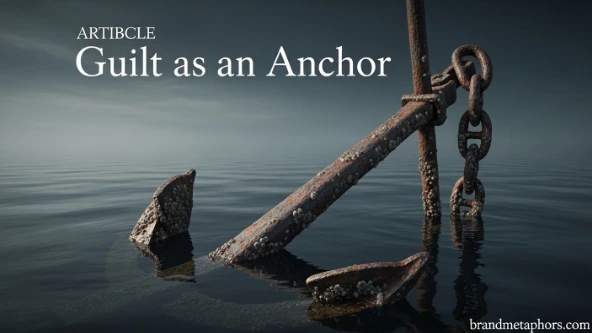
Guilt as an Anchor
Unable to Move Forward
Anchors keep ships from drifting away.
Meaning:
Guilt prevents emotional progress.
Example Sentence:
“His guilt was an anchor holding him in the harbor of the past.”
Alternative Expressions:
- A weight beneath the waves
- A chain beneath the sea
- A tether to yesterday
Mini Story:
A business owner makes a poor decision that harms employees. Even years later, he struggles to pursue new opportunities because guilt keeps pulling him backward.
Emotional Effect:
This metaphor highlights stagnation and self-imposed limitations.
Guilt as a Dark Cloud
Living Under Emotional Gray Skies
Clouds often symbolize sadness and worry.
Meaning:
Guilt affects mood and colors everyday experiences.
Example Sentence:
“A dark cloud of guilt hovered above her happiness.”
Alternative Expressions:
- A fog of remorse
- A gray emotional sky
- A blanket of regret
Sensory Detail:
Everything appears dimmer, quieter, and less joyful.
Writing Tip:
Weather metaphors are especially effective because readers can instantly visualize them.
How to Use Metaphors for Guilt in Creative Writing
Making Emotions Feel Real
Strong metaphors create memorable scenes and emotional depth.
Try these techniques:
- Match the metaphor to the character’s personality.
- Use sensory details.
- Avoid mixing too many metaphors at once.
- Connect the metaphor to the story setting.
- Show how the metaphor changes over time.
For example:
Instead of writing:
“She felt guilty.”
Write:
“A stone of guilt settled deeper into her chest each time she heard his name.”
The second version creates a stronger emotional experience.
Interactive Exercises to Practice Guilt Metaphors
Build Your Own Emotional Imagery
Practice helps writers develop creative expression.
Exercise 1: Complete the Sentence
Finish these prompts:
- My guilt was a __________.
- Regret followed me like a __________.
- The mistake became an __________ around my heart.
Exercise 2: Memory Reflection
Think about a time you felt guilty.
Ask yourself:
- What object resembles that feeling?
- What weather pattern matches it?
- What color would it be?
- What sound would it make?
Exercise 3: Character Challenge
Create a fictional character carrying guilt.
Describe the guilt using three different metaphors without directly naming the emotion.
Bonus Tips for Using Guilt Metaphors in Writing, Social Media, and Daily Life
Making Your Language More Memorable
Metaphors can improve communication everywhere.
Writers
- Use guilt metaphors to deepen character development.
- Combine emotional and sensory imagery.
- Let metaphors evolve as characters heal.
Bloggers
- Open articles with powerful emotional images.
- Use relatable metaphors that readers immediately understand.
Social Media
Examples:
- “Carrying yesterday’s mistakes like stones in my backpack.”
- “Some regrets cast long shadows.”
These phrases are short, visual, and shareable.
For Daily Conversations
Instead of saying, “I still feel bad,” you might say:
“It feels like a thorn I haven’t removed yet.”
The image communicates the feeling more effectively.
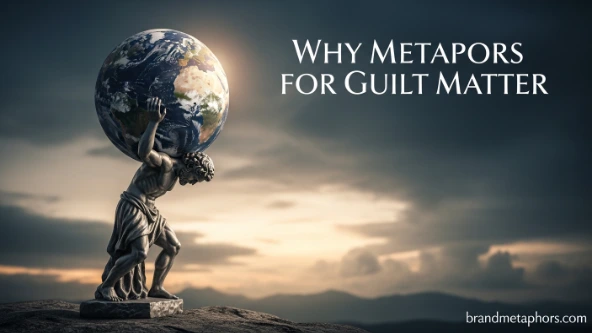
Why Metaphors for Guilt Matter
Turning Emotions into Understanding
Metaphors do more than decorate language. They help people understand emotions that are difficult to describe. Guilt can feel overwhelming because it lives inside the mind, but metaphors give it shape and form. A stone, a shadow, a chain, or a storm transforms an invisible feeling into something recognizable.
These comparisons also encourage empathy. When readers encounter vivid emotional imagery, they connect more deeply with characters, stories, and even real people. The right metaphor can express years of regret in a single sentence.
As a result, metaphors become bridges between personal experiences and shared understanding.
Frequently Asked Questions About Metaphors for Guilt
What is the best metaphor for guilt?
There is no single best metaphor. A heavy stone is popular because it clearly expresses emotional burden and regret.
Why do writers use metaphors for guilt?
Writers use metaphors to make emotions more vivid, relatable, and memorable. They help readers feel the emotion rather than simply read about it.
Can guilt be compared to weather?
Yes. Storms, clouds, fog, and rain are common guilt metaphors because they reflect emotional turbulence and sadness.
How can I create my own guilt metaphor?
Think about how guilt feels physically or emotionally. Then compare that feeling to an object, animal, place, or natural force with similar qualities.
Are guilt metaphors useful outside creative writing?
Absolutely. They can strengthen speeches, social media posts, personal reflections, journals, and everyday conversations.
Conclusion
Guilt is one of the most powerful human emotions, yet it can be difficult to describe directly. That is why metaphors are so valuable. They transform invisible feelings into stones, shadows, chains, storms, stains, thorns, ghosts, fires, anchors, and clouds. Each image captures a different aspect of remorse and regret, helping readers understand the emotional experience more deeply.
Whether you are crafting fiction, writing poetry, creating content, or simply exploring language, metaphors for guilt provide a rich vocabulary for expressing complex emotions. The next time you encounter a feeling that seems impossible to explain, imagine what shape it might take. Perhaps it is a shadow at your side, a storm on the horizon, or a stone in your pocket. Through metaphor, even the heaviest emotions can find a voice.