
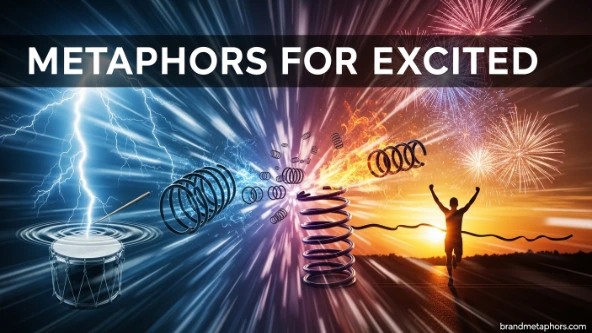
When Excitement Feels Like Fireworks in Your Chest
The moment before a long-awaited phone call. The seconds before stepping onto a stage. The instant you spot someone you love in a crowded room.
Excitement rarely arrives quietly. It races through the body like electricity, lights up the imagination, and transforms ordinary moments into unforgettable memories. Sometimes it feels like butterflies colliding in your stomach. Other times it roars like a rocket preparing for launch.
That is why metaphors for excited emotions matter so much. They help us describe feelings that are too powerful for plain language. Instead of simply saying “I’m excited,” we can say “My heart was a drumline before the concert,” or “Joy fizzed inside me like shaken soda.” Suddenly, the emotion becomes vivid, emotional, and alive.
Writers, students, speakers, and social media creators all benefit from colorful metaphors. They make stories memorable, conversations expressive, and emotions easier to connect with. In this article, you’ll explore imaginative metaphors for excitement, learn how to use them naturally, and discover creative exercises that help you bring emotional energy into your writing and daily life.
Why Metaphors for Excited Feelings Matter
Excitement is universal, yet deeply personal. Everyone experiences it differently. Some people feel it like warm sunlight spreading through the chest. Others feel it as nervous lightning crackling through their veins.
Metaphors help bridge that emotional gap. They translate invisible feelings into sensory images people instantly understand.
Consider these examples:
- “I was excited.”
- “I felt like a kid holding a golden ticket.”
The second sentence creates imagery, emotion, and curiosity. Readers can almost feel the anticipation.
Using metaphors for excited emotions can:
- Improve creative writing
- Make speeches more engaging
- Add emotion to storytelling
- Strengthen poetry and lyrics
- Enhance social media captions
- Make conversations more expressive
Excitement is energy. Metaphors give that energy shape.
Excitement as Fire: Burning Bright with Anticipation
One of the most common ways to describe excitement is through fire imagery. Fire symbolizes intensity, warmth, movement, and passion.
Example Metaphors
- My excitement was a wildfire spreading through my chest.
- Her joy flickered like candlelight in the dark.
- His anticipation burned hotter than summer pavement.
Meaning and Emotional Effect
Fire metaphors suggest emotions that are difficult to control. They imply urgency, passion, and emotional heat.
Example Scenario
Imagine a student waiting for college acceptance results:
“My thoughts sparked like dry wood near a flame. Every passing second fed the fire.”
The metaphor transforms anxiety and excitement into something physical and cinematic.
Alternative Ways to Express It
- A glowing ember of excitement
- A torch of anticipation
- Fireworks beneath the skin
- A heart blazing with joy
Sensory Details
Add smell, heat, or movement:
- Excitement crackled through the air like burning pine.
- Her laughter popped like sparks from a bonfire.
These details create immersive emotional writing.
Butterflies and Birds: Metaphors for Nervous Excitement
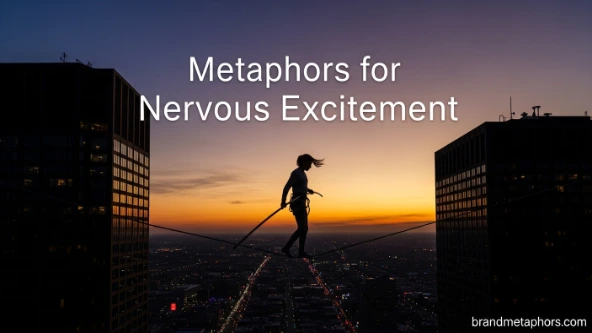
Some excitement feels light, fluttery, and uncontrollable. Bird and butterfly metaphors capture that beautifully.
Example Metaphors
- Butterflies tap-danced inside my stomach.
- My thoughts fluttered like trapped birds.
- Excitement lifted me like wings catching the wind.
Why This Works
Butterflies symbolize movement, delicacy, and nervous energy. They often describe moments before performances, dates, or big announcements.
Mini Storytelling Example
A young athlete waits behind the curtain before a championship speech:
“His stomach became an aviary of restless birds, wings beating against his ribs.”
The metaphor adds tension and emotional realism.
Alternative Expressions
- Floating on wings of excitement
- Hummingbird heartbeat
- A flock of joy taking flight
- Emotions soaring sky-high
Bonus Writing Tip
Combine bird imagery with weather imagery:
- My excitement soared like a kite in storm winds.
This layering creates richer emotional texture.
Metaphors for Excited Like Electricity and Storms
Excitement often feels sudden and powerful, which makes electricity a perfect metaphor source.
Example Metaphors
- Electricity danced through my veins.
- The room buzzed with excitement.
- Anticipation struck like lightning.
Meaning
These metaphors suggest speed, energy, and unstoppable movement.
Real-Life Example
Think about concert crowds moments before the lights dim:
“The audience vibrated like power lines before a storm.”
Everyone understands that charged atmosphere.
Alternative Ways to Say It
- Static in the air
- Thunder in the chest
- A lightning bolt of happiness
- Charged with excitement
Emotional Details
Electric metaphors work especially well for:
- Sports events
- Parties
- Performances
- Surprise announcements
- Romantic moments
They create momentum in writing.
Ocean and Wave Metaphors for Excited Emotions
Excitement can also arrive gradually, building like waves before crashing powerfully onto shore.
Example Metaphors
- Excitement washed over me like a tidal wave.
- Joy rolled through me like ocean surf.
- Anticipation rose like a rising tide.
Why Ocean Imagery Feels Powerful
Water represents emotional depth and movement. Unlike lightning, waves build slowly and emotionally.
Example Sentence
“The closer graduation came, the more excitement swelled inside her like a storm tide under a full moon.”
This feels emotional, poetic, and cinematic.
Alternative Expressions
- Waves of happiness
- Drowning in excitement
- Riding the tide of anticipation
- An ocean of joyful nerves
Cultural Reference
Ocean metaphors appear throughout literature because water mirrors human emotion so naturally. Ancient poetry often used tides and storms to symbolize emotional intensity.
Rocket and Speed Metaphors for High Energy Excitement
Sometimes excitement feels explosive and unstoppable. That is where speed and rocket imagery become effective.
Example Metaphors
- My excitement shot through the roof.
- Her happiness blasted off like a rocket.
- Anticipation revved inside me like a race car engine.
Meaning
These metaphors emphasize acceleration and momentum.
Mini Storytelling Example
A child on Christmas Eve:
“His excitement bounced around the room like a pinball machine with no off switch.”
That image instantly feels energetic and playful.
Alternative Ways to Express It
- Zooming with excitement
- Fueled like a rocket
- Racing heartbeat
- Speeding toward joy
Sensory Additions
Use sound and movement:
- My thoughts roared like engines at a racetrack.
- Excitement rattled inside me like a train gathering speed.
This creates vivid pacing in your writing.
Light and Sparkle Metaphors for Happy Excitement
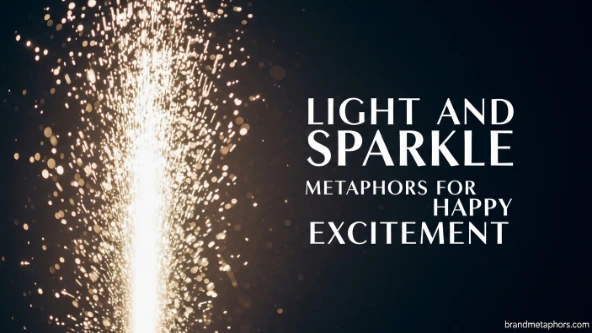
Light metaphors create warmth and positivity. They work beautifully in uplifting emotional scenes.
Example Metaphors
- Her eyes sparkled like fireworks.
- Joy lit me up from the inside.
- Excitement glowed brighter than city lights.
Emotional Meaning
Light symbolizes hope, possibility, and celebration.
Example Scenario
Picture someone opening an acceptance letter:
“The news burst through her like sunrise after a long winter.”
This feels emotional without becoming overly dramatic.
Alternative Expressions
- Shining with excitement
- Glittering with anticipation
- A glowing heart
- Fireworks of joy
Bonus Tip for Social Media
Light metaphors work wonderfully in captions:
- “Still glowing from today’s news.”
- “Sparkling with excitement for what’s next.”
They sound emotional yet elegant.
Animal Metaphors for Excited Energy
Animals provide playful and memorable ways to describe excitement.
Example Metaphors
- I was a puppy chasing its tail.
- She bounced like a rabbit on sugar.
- He paced like a tiger before the hunt.
Why Animal Metaphors Work
Animals naturally express emotion physically. These metaphors create movement and personality.
Example Sentence
“Before the interview, she buzzed around the house like a hummingbird fueled by caffeine.”
That image feels humorous and relatable.
Alternative Expressions
- A kid in a candy store
- A racehorse at the gate
- A puppy with a new toy
- A bird ready to burst from its cage
Literary Connection
Writers often use animal imagery because humans instinctively recognize emotional behavior in animals.
Creative Ways to Use Metaphors for Excited in Writing
Knowing metaphors is useful. Using them effectively is even more important.
1. Match the Emotion to the Situation
A romantic scene may need soft metaphors:
- Her excitement glowed like candlelight.
A sports scene may need stronger imagery:
- The stadium thundered with electric anticipation.
2. Avoid Overused Phrases
Instead of:
- “I was over the moon.”
Try:
- “My joy floated like lanterns into the night sky.”
Fresh imagery feels more memorable.
3. Mix Sensory Details
Add sound, touch, or color:
- Excitement fizzed like soda on my tongue.
- Anticipation hummed beneath my skin.
This makes metaphors immersive.
Example Writing Exercise
Take this sentence:
“I was excited for vacation.”
Rewrite it three ways:
- Fire metaphor
- Ocean metaphor
- Animal metaphor
You’ll instantly notice how tone changes.
Interactive Exercises to Practice Excitement Metaphors
Creativity improves with practice. These exercises help develop emotional writing skills.
Exercise 1: Finish the Metaphor
Complete these lines:
- My excitement raced like…
- Joy exploded inside me like…
- Anticipation fluttered through me like…
Write three different endings for each.
Exercise 2: Memory Mining
Think about the most exciting moment of your life.
Ask yourself:
- What sounds surrounded you?
- What did your body feel like?
- Did the emotion move slowly or suddenly?
- What natural image matches that feeling?
Then create a metaphor from those sensations.
Exercise 3: Social Media Creativity Challenge
Write an Instagram caption about excitement without using the word “excited.”
Example:
“Currently glowing brighter than neon signs in the rain.”
This improves expressive language quickly.
Bonus Tips for Using Excited Metaphors in Daily Life
Metaphors are not just for poets and novelists. They can improve communication everywhere.
In Conversations
Instead of saying:
- “I’m nervous and excited.”
Try:
- “My stomach feels like a carnival ride.”
People remember vivid language.
In Creative Writing
Use metaphors to reveal personality.
A scientist may describe excitement differently than a musician or athlete.
In Speeches
Metaphors help audiences emotionally connect with ideas.
Example:
“Our team entered this project like explorers stepping into unknown waters.”
In Marketing and Social Media
Emotion drives engagement. Metaphorical captions feel human and memorable.
Examples:
- “Buzzing brighter than city lights tonight.”
- “Running on pure fireworks and caffeine.”
In Journaling
Metaphors help process emotions creatively.
Instead of writing:
- “Today was exciting.”
Write:
- “Today felt like standing at the edge of a roller coaster before the drop.”
That captures emotional truth more deeply.
Famous Literary and Cultural Examples of Excitement Imagery
Writers and filmmakers constantly use metaphors for excited emotions.
In Literature
Classic novels often compare anticipation to storms, flames, or racing horses.
Charles Dickens frequently described emotional energy through chaotic weather and crowded city imagery. Meanwhile, romantic poets used light and nature to symbolize emotional intensity.
In Movies
Excitement is often visualized through:
- Fireworks
- Fast-moving cameras
- Bright lights
- Racing music
- Explosive colors
Even without dialogue, viewers feel emotional momentum.
In Music
Songs frequently compare excitement to:
- Flying
- Burning
- Dancing
- Lightning
- Stars exploding
Metaphors make emotions universal across cultures.
Common Mistakes When Using Metaphors for Excited
Even beautiful metaphors can become confusing if overused.
1. Mixing Too Many Images
Avoid:
“My excitement burned like lightning on ocean wings.”
Too many metaphors clash together.
2. Using Clichés Excessively
Phrases like:
- Over the moon
- On cloud nine
are familiar but less original.
Try adding a personal twist.
3. Ignoring Tone
A dramatic metaphor may not fit a casual moment.
For example:
“Her excitement erupted like a volcano”
might feel too intense for receiving free coffee.
Choose imagery that matches the emotional scale.
4. Overwriting
Sometimes simple metaphors work best.
Instead of a paragraph of imagery, one sharp metaphor can create stronger impact.
FAQs About Metaphors for Excited
1. What is a metaphor for being excited?
A metaphor for excitement compares excitement to another vivid experience, such as fire, electricity, waves, or flying birds. Example: “Excitement crackled through me like lightning.”
2. Why are metaphors useful in writing emotions?
Metaphors help readers visualize and emotionally feel experiences. They make writing more engaging, memorable, and expressive.
3. What are some simple metaphors for excited feelings?
Simple examples include:
- Butterflies in my stomach
- Fireworks in my chest
- Buzzing like electricity
- Floating on air
4. How can students improve at writing metaphors?
Students can practice by observing emotions carefully and comparing them to sounds, objects, weather, animals, or movement. Reading poetry and descriptive fiction also helps.
5. Can metaphors be used in everyday conversations?
Absolutely. Metaphors make conversations more colorful and relatable. Saying “I’m bouncing off the walls” feels more expressive than simply saying “I’m excited.”
Conclusion
Excitement is one of the most alive emotions humans experience. It dances through conversations, stories, celebrations, dreams, and memories. Yet ordinary language often struggles to capture its intensity. That is where metaphors become magical.
A single image can transform a sentence from flat to unforgettable. Fire can symbolize passion. Waves can reveal emotional buildup. Lightning can express sudden energy. Butterflies can capture nervous anticipation.
The beauty of metaphors for excited emotions lies in their flexibility. They can be poetic, playful, cinematic, dramatic, or deeply personal. Whether you are writing fiction, creating social media captions, journaling, speaking publicly, or simply describing your day, vivid metaphors help your emotions resonate with others.
So the next time excitement rushes through you, pause for a moment and ask yourself:
What does this feeling resemble?
A storm? A rocket? A wildfire? A sky full of fireworks?
The answer might become your most powerful line yet.