
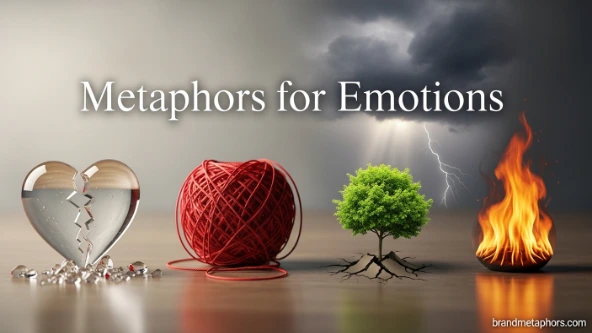
Emotions are invisible, yet they shape every moment of our lives. We cannot hold happiness in our hands or see sadness floating through the air. Still, we know exactly how they feel. A racing heartbeat before a big speech. The warm glow of a compliment. The heavy ache after a loss.
Imagine standing on a beach as dark clouds gather overhead. The wind rises, waves crash, and the sky turns gray. That storm might describe anger, fear, or grief more clearly than a dictionary definition ever could. This is the power of metaphors.
Metaphors for emotions help us transform abstract feelings into vivid images. They allow writers, speakers, and everyday people to communicate experiences that are often difficult to explain. Whether you are crafting poetry, writing stories, creating social media posts, or simply understanding your own feelings, emotional metaphors can make your words richer and more meaningful.
In this guide, you’ll discover powerful metaphors for emotions, practical examples, creative exercises, and tips for using them effectively in daily communication and writing.
Why Metaphors for Emotions Matter
Understanding Emotional Language
Human emotions are complex. A metaphor bridges the gap between feeling and expression.
Instead of saying:
“I felt angry.”
You might say:
“A volcano erupted inside me.”
The second sentence paints a vivid picture and creates an emotional connection.
Metaphors help readers and listeners:
- Visualize feelings
- Connect emotionally
- Remember ideas more easily
- Express difficult experiences
- Enhance storytelling
From ancient myths to modern novels, emotional metaphors have always been part of powerful communication.
Happiness as Sunshine
Meaning and Symbolism
One of the most common metaphors for happiness is sunshine. Sunshine represents warmth, energy, hope, and positivity.
When someone feels happy, they often seem to brighten a room just like sunlight brightens a landscape.
Example Sentence
“Her laughter was sunshine pouring through the windows of a gloomy day.”
Alternative Expressions
- A field of blooming flowers
- A golden morning
- A glowing lantern
- A sky full of stars
Mini Story
After months of job searching, Sarah finally received an offer. As she read the email, it felt as if sunshine flooded every corner of her heart. The worries that had lingered for weeks melted away.
Sensory Details
Think of warm skin, bright colors, and gentle breezes. These sensations naturally connect with joy.
Sadness as Rain
Meaning and Symbolism
Rain often symbolizes sorrow, disappointment, and grief. Like tears, rain falls quietly and can linger for hours or days.
This metaphor appears across literature, films, and songs.
Example Sentence
“A steady rain of sadness fell over him after hearing the news.”
Alternative Expressions
- A gray fog
- A fading sunset
- A wilted flower
- A silent winter
Literary Reference
Many classic novels use weather to reflect emotional states. Storms and rain often accompany moments of heartbreak and loss.
Real-Life Example
When people experience grief, they sometimes describe feeling as though a cloud follows them everywhere.
Sensory Details
Picture cool air, dark skies, and raindrops tapping softly against a window.
Anger as Fire
Meaning and Symbolism
Fire is one of the strongest metaphors for anger. It can start small and grow rapidly if left unchecked.
Just as flames spread, anger can consume thoughts and actions.
Example Sentence
“His anger blazed like a wildfire across dry grass.”
Alternative Expressions
- A volcano erupting
- Molten lava
- Burning coals
- A lightning strike
Mini Story
During the heated debate, Michael felt sparks of irritation turn into roaring flames. Every word seemed to add fuel to the fire.
Writing Tip
Fire metaphors work especially well when showing escalating emotions.
Fear as a Shadow

Meaning and Symbolism
Fear often feels like something following us. Shadows perfectly capture this sensation.
They remain nearby, sometimes growing larger than reality.
Example Sentence
“Fear followed her like a shadow through the empty streets.”
Alternative Expressions
- A dark cloud
- A lurking monster
- A cold wind
- A locked door
Cultural Reference
Many folktales portray fear as a shadowy figure hiding just beyond sight.
Sensory Details
Cold skin, quick breathing, and quiet footsteps strengthen this metaphor.
Love as a Garden
Meaning and Symbolism
Love requires care, attention, and patience. Like a garden, it grows when nurtured.
Neglect can cause it to wither.
Example Sentence
“Their relationship was a garden blooming with trust and kindness.”
Alternative Expressions
- A growing tree
- A flowing river
- A guiding star
- A warm hearth
Mini Story
For years, Emma and David supported one another through challenges. Their love grew steadily, much like flowers blooming season after season.
Writing Tip
Garden metaphors are excellent for describing long-term relationships.
Anxiety as a Storm
Meaning and Symbolism
Anxiety often feels overwhelming and unpredictable. Storm imagery captures both experiences perfectly.
Example Sentence
“A storm of worries thundered through her mind.”
Alternative Expressions
- Churning waves
- Turbulent winds
- A spinning tornado
- Crashing thunder
Real-Life Example
Many people describe anxious thoughts as waves that keep returning no matter how hard they try to stop them.
Sensory Details
Strong winds, dark clouds, and loud thunder create emotional intensity.
Hope as a Lighthouse
Meaning and Symbolism
Hope guides us during difficult times. A lighthouse shining through darkness symbolizes direction and reassurance.
Example Sentence
“Hope stood like a lighthouse in the middle of his troubles.”
Alternative Expressions
- A candle in darkness
- A rising dawn
- A distant star
- A glowing path
Mini Story
After months of recovery, every small improvement became a lighthouse guiding Maria toward better days.
Writing Tip
Use lighthouse metaphors when characters face uncertainty.
Jealousy as Poison
Meaning and Symbolism
Jealousy can slowly damage relationships and personal peace. Poison illustrates its harmful effects.
Example Sentence
“Jealousy dripped through his thoughts like poison.”
Alternative Expressions
- A creeping vine
- A spreading stain
- A hidden snake
- Bitter smoke
Literary Reference
Many tragedies throughout history portray jealousy as a destructive force that corrupts judgment.
Sensory Details
Bitterness, darkness, and discomfort strengthen this image.
Confidence as a Mountain
Meaning and Symbolism
Confidence creates stability and strength. Mountains symbolize resilience and unwavering presence.
Example Sentence
“She stood like a mountain before the crowd.”
Alternative Expressions
- A sturdy oak tree
- A fortress
- A soaring eagle
- A solid bridge
Mini Story
Despite criticism, the entrepreneur remained as steady as a mountain, trusting her vision.
Writing Tip
Mountain metaphors work well for leadership and personal growth themes.
Emotional Metaphors in Everyday Writing
Making Conversations More Memorable
You do not need to be a poet to use metaphors.
Instead of saying:
“I’m nervous.”
Try:
“Butterflies are dancing in my stomach.”
Instead of:
“I’m excited.”
Try:
“My heart is a rocket ready for launch.”
These expressions make communication more engaging.
Social Media Applications
Metaphors perform well because they create imagery.
Examples:
- “Today felt like sunshine after a long winter.”
- “My motivation is a train finally leaving the station.”
- “Hope is my compass this week.”
Such posts feel personal and memorable.
Creative Exercises for Practicing Metaphors for Emotions
Exercise 1: Emotion Mapping
Choose an emotion.
Ask yourself:
- What color is it?
- What weather resembles it?
- What animal represents it?
- What landscape reflects it?
Write answers and combine them into a metaphor.
Example:
“Anxiety is a restless wolf pacing through a snowy forest.”
Exercise 2: Sensory Challenge
Pick an emotion and describe:
- What it sounds like
- What it smells like
- What it tastes like
- What it feels like
Then create a metaphor.
Exercise 3: Memory Connection
Think of a strong emotional memory.
What object best represents that feeling?
Turn the object into a metaphor.
Example:
“My childhood happiness was a kite dancing freely in the wind.”
Bonus Tips for Using Emotional Metaphors Effectively
Keep Metaphors Relatable
Readers connect more easily with familiar images such as weather, nature, and everyday objects.
Avoid Mixed Metaphors
Do not combine unrelated images.
Confusing:
“Her happiness was a river climbing a mountain.”
Clear:
“Her happiness flowed like a river.”
Match the Tone
Dark metaphors fit serious moments.
Bright metaphors suit joyful scenes.
Use Specific Details
Instead of:
“Anger was fire.”
Try:
“Anger crackled like dry branches in a forest blaze.”
Read Great Literature
Books, poems, and speeches are excellent sources of inspiration for emotional imagery.
Building Your Own Metaphors for Emotions

A Simple Formula
Emotion + Object + Shared Quality
Example:
Emotion: Hope
Object: Candle
Shared Quality: Provides light in darkness
Metaphor:
“Hope was a candle flickering through the night.”
Practice Prompt
Complete these sentences:
- Joy is a __________.
- Fear is a __________.
- Love is a __________.
- Anger is a __________.
- Confidence is a __________.
The more you practice, the more natural metaphor creation becomes.
Conclusion
Metaphors for emotions transform invisible feelings into vivid experiences. They help us communicate happiness, sadness, anger, fear, love, hope, and countless other emotions with greater clarity and beauty. Whether happiness becomes sunshine, fear becomes a shadow, or hope becomes a lighthouse, these images make language memorable and meaningful.
The next time you experience a strong emotion, pause and ask yourself: What does this feeling look like? What object, place, or force of nature resembles it? The answer may lead to your most powerful metaphor yet.
By using emotional metaphors in writing, conversations, social media, and personal reflection, you can turn ordinary words into unforgettable imagery that resonates deeply with others.
FAQs
What are metaphors for emotions?
Metaphors for emotions are figurative comparisons that describe feelings using images, objects, or experiences. They help make abstract emotions easier to understand and visualize.
Why are emotional metaphors important in writing?
They create stronger imagery, improve reader engagement, and help communicate complex feelings more effectively than literal descriptions.
What is an example of a metaphor for happiness?
A common example is: “Happiness is sunshine filling the room.” This compares joy to warmth and brightness.
How can I create my own emotion metaphors?
Identify the emotion, find something that shares similar qualities, and connect them creatively. For example, hope can be compared to a lighthouse because both provide guidance.
Can emotional metaphors be used in everyday conversations?
Yes. Emotional metaphors make communication more vivid and memorable. They are commonly used in conversations, storytelling, social media posts, speeches, and creative writing.