
Children fill the world with wonder. They ask questions that adults never think to ask. They imagine castles in clouds, dragons in shadows, and adventures around every corner. Because childhood is so colorful and full of life, ordinary descriptions often feel too small. That is where metaphors become powerful.
A metaphor helps us compare one thing to another without using the words “like” or “as.” It paints a picture in the reader’s mind. Instead of saying a child is energetic, we might say, “The child is a whirlwind.” Instantly, we see movement, excitement, and unstoppable energy.
Metaphors for children are useful in writing, storytelling, teaching, speeches, and everyday conversations. They help express emotions, personality traits, dreams, and growth in ways that are memorable and meaningful. Whether you are a parent, teacher, student, or writer, learning these creative comparisons can bring your language to life.
In this guide, you will discover vivid examples, practical tips, creative exercises, and inspiring ideas that will help you use metaphors effectively when describing children.
Why Metaphors for Children Matter
Bringing Childhood to Life
Children are complex and unique. Simple descriptions may not fully capture their personalities. Metaphors create deeper meaning and stronger emotional connections.
For example:
- “The child is a ray of sunshine.”
- “The child is a spark of curiosity.”
These descriptions instantly create vivid mental images.
Making Writing More Memorable
Stories become more engaging when readers can picture characters clearly. Metaphors help readers feel emotions rather than simply read about them.
Encouraging Creativity
Children themselves often understand and enjoy imaginative language. Metaphors inspire creativity in both writers and young readers.
Children as Rays of Sunshine
Meaning and Explanation
A ray of sunshine symbolizes warmth, happiness, hope, and positivity. This metaphor is often used for children who brighten the lives of others.
Example Sentence
“Emma is a ray of sunshine who brightens every room she enters.”
Alternative Expressions
- A beam of light
- A golden morning
- A bright dawn
- A warm glow
Sensory and Emotional Details
Imagine sunlight streaming through a window after a storm. That comforting feeling mirrors the joy some children bring to families and friends.
Mini Story
After moving to a new school, Jake felt nervous and alone. Then he met Mia, whose cheerful smile welcomed everyone. Soon the classroom felt warmer and friendlier. Mia truly became a ray of sunshine for her classmates.
Children as Growing Trees
Meaning and Explanation
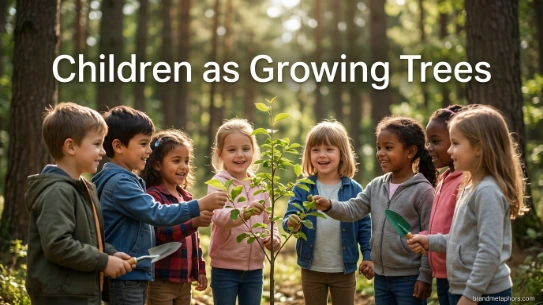
A growing tree represents development, strength, and potential. Children constantly learn and evolve, just as trees grow from tiny seeds into towering giants.
Example Sentence
“Every child is a growing tree reaching toward the sky.”
Alternative Expressions
- A young sapling
- A blooming garden
- A rising oak
- A flourishing branch
Sensory and Emotional Details
Think of roots stretching deep into the soil while branches reach upward. Children develop strong foundations while exploring new possibilities.
Cultural Connection
Many cultures use trees as symbols of wisdom, family, and growth. This makes the metaphor especially meaningful across different traditions.
Writing Tip
Use this metaphor when discussing education, personal growth, or future potential.
Children as Sparks of Curiosity
Meaning and Explanation
A spark represents the beginning of something exciting. Curious children often ignite discovery, creativity, and learning.
Example Sentence
“The little boy was a spark of curiosity, asking questions about everything.”
Alternative Expressions
- A flame of wonder
- A glowing ember
- A flicker of discovery
- A shining spark
Real-Life Scenario
A child notices an ant carrying food and asks where it is going. One question leads to another, eventually opening a fascinating conversation about nature.
Emotional Impact
This metaphor highlights the excitement and energy of learning.
Children as Butterflies in Flight
Meaning and Explanation
Butterflies symbolize transformation, beauty, and freedom. Children grow and change rapidly, making this metaphor particularly fitting.
Example Sentence
“The children fluttered across the playground, colorful butterflies in flight.”
Alternative Expressions
- Dancing wings
- Floating petals
- Gentle breezes
- Flying dreams
Sensory Details
Picture bright colors moving through a sunny garden. The image captures the playful spirit of childhood.
Storytelling Example
A shy child joins a school play. By the final performance, confidence has blossomed. The transformation resembles a butterfly emerging from its cocoon.
Children as Little Stars
Meaning and Explanation
Stars symbolize brilliance, hope, and uniqueness. Every child possesses special talents and qualities.
Example Sentence
“Each student in the classroom was a little star waiting to shine.”
Alternative Expressions
- Tiny galaxies
- Shining lights
- Guiding stars
- Bright constellations
Emotional Connection
Stars remind us that even small lights can illuminate darkness. Children often inspire hope and optimism.
Bonus Writing Tip
This metaphor works well in graduation speeches, school essays, and inspirational stories.
Children as Whirlwinds of Energy
Meaning and Explanation
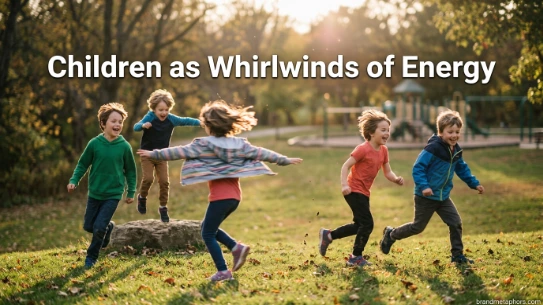
A whirlwind represents movement, excitement, and boundless energy. Many children seem constantly in motion.
Example Sentence
“The twins were whirlwinds of energy from sunrise to sunset.”
Alternative Expressions
- Racing rivers
- Rolling thunder
- Spinning tops
- Dancing storms
Sensory Details
Imagine feet running across grass, laughter echoing through the air, and endless activity throughout the day.
Everyday Example
A birthday party full of active children often feels like a whirlwind sweeping through the room.
Children as Precious Gems
Meaning and Explanation
Gems symbolize rarity, value, and beauty. Every child is unique and deserving of care.
Example Sentence
“Each child is a precious gem with unique talents and gifts.”
Alternative Expressions
- Hidden treasures
- Rare diamonds
- Shining jewels
- Golden treasures
Emotional Details
Just as gems are polished over time, children develop their abilities through guidance and experience.
Practical Use
This metaphor is especially effective in educational and motivational writing.
Children as Open Books
Meaning and Explanation
An open book represents honesty, transparency, and endless stories waiting to unfold.
Example Sentence
“The young child was an open book whose emotions were easy to read.”
Alternative Expressions
- Unwritten stories
- Fresh pages
- New chapters
- Blank canvases
Storytelling Element
Every day of childhood adds a new page filled with experiences, lessons, and memories.
Writing Advice
Use this metaphor when describing emotional openness or future possibilities.
Children as Seeds of Tomorrow
Meaning and Explanation
Seeds represent potential and future growth. Children carry the hopes and dreams of future generations.
Example Sentence
“Children are the seeds of tomorrow, planted with care and possibility.”
Alternative Expressions
- Future gardens
- Promises of spring
- New beginnings
- Tomorrow’s blossoms
Cultural Reference
Many educational philosophies compare young minds to seeds that flourish with proper nurturing.
Emotional Impact
This metaphor emphasizes responsibility, hope, and investment in the future.
Children as Songs of Joy
Meaning and Explanation
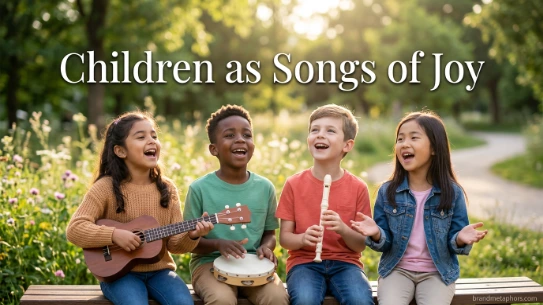
Songs symbolize happiness, harmony, and emotional expression. Children’s laughter often resembles music.
Example Sentence
“Their laughter was a song of joy floating through the neighborhood.”
Alternative Expressions
- Melodies of happiness
- Symphonies of laughter
- Harmonies of hope
- Rhythms of delight
Sensory Details
Imagine cheerful voices filling the air during a summer afternoon. The sound creates a feeling of warmth and connection.
Real-Life Example
Family gatherings often become more lively when children add their playful energy and laughter.
How to Create Your Own Metaphors for Children
Step 1: Identify a Quality
Ask yourself what characteristic you want to describe.
Examples:
- Kindness
- Curiosity
- Courage
- Energy
- Creativity
Step 2: Find a Symbol
Think of an object, element, or image that represents that quality.
Examples:
- Sun = warmth
- Tree = growth
- River = movement
- Star = brilliance
Step 3: Connect the Two
Combine the child and symbol into a meaningful comparison.
Example:
“The child was a river of imagination flowing endlessly through every conversation.”
Practice Prompt
Describe a child using:
- An animal
- A weather element
- A natural object
- A musical instrument
Try creating at least one metaphor for each category.
Interactive Exercises for Practicing Metaphors
Exercise 1: Finish the Sentence
Complete these metaphor starters:
- The child was a __________.
- Her imagination was a __________.
- His laughter was a __________.
- Their friendship was a __________.
Exercise 2: Create a Character
Invent a fictional child and describe them using three original metaphors.
Questions to consider:
- What are their strengths?
- What makes them unique?
- How do they interact with others?
Exercise 3: Nature Inspiration
Look outside and choose something from nature.
Examples:
- Cloud
- River
- Flower
- Mountain
Turn it into a metaphor describing a child.
Exercise 4: Memory Writing
Think about your childhood.
Write five metaphors that capture your experiences, dreams, or personality during those years.
Bonus Tips for Using Metaphors in Writing and Daily Life
Keep Images Clear
Choose comparisons readers can easily visualize.
Match the Emotion
Happy moments need positive imagery, while serious moments may need deeper symbolism.
Avoid Overloading
One strong metaphor often works better than several weak ones.
Use Sensory Language
Include sights, sounds, textures, and emotions to strengthen imagery.
Enhance Social Media Posts
Creative metaphors make captions more memorable.
Example:
“Our little star continues to shine brighter every day.”
Improve Storytelling
Characters become more vivid when metaphorical descriptions reveal personality and emotion.
Conclusion
Metaphors for children bring language alive. They transform simple descriptions into memorable images filled with emotion, meaning, and imagination. Whether a child is a ray of sunshine, a growing tree, a spark of curiosity, or a precious gem, these comparisons help us celebrate the beauty and uniqueness of childhood.
By using metaphors thoughtfully, writers can create stronger stories, teachers can inspire students, and parents can express their love in creative ways. The best metaphors do more than describe children—they honor their wonder, potential, and ability to make the world brighter.
Keep practicing, observing, and imagining. Every child has a story worth telling, and sometimes the perfect metaphor is the key to bringing that story to life.
FAQs
What is a metaphor for children?
A metaphor for children is a creative comparison that describes a child by saying they are something else, such as a star, tree, or ray of sunshine, to highlight specific qualities.
Why are metaphors useful when describing children?
Metaphors create vivid images, make writing more engaging, and help readers understand emotions, personality traits, and experiences more deeply.
What is a positive metaphor for a child?
A positive metaphor could be “a ray of sunshine,” “a precious gem,” “a little star,” or “a blooming flower.”
Can children create their own metaphors?
Yes. Creating metaphors encourages creativity, critical thinking, and imaginative expression, making it a valuable learning activity.
How can I improve my metaphor-writing skills?
Read widely, observe the world carefully, practice connecting qualities with symbols, and experiment with different comparisons in everyday writing.