
Chaos arrives without warning. One moment, life feels organized and predictable. The next, papers scatter across a desk, schedules collapse, emotions collide, and everything seems to spin in different directions. It can feel like standing in the middle of a storm while trying to hold onto a single umbrella. We have all experienced moments when order slips away and confusion takes over.
Because chaos is such a powerful human experience, writers, speakers, and storytellers often use metaphors to describe it. A metaphor transforms an abstract feeling into a vivid image that readers can see, hear, and feel. Instead of simply saying something is confusing, a metaphor paints a picture that captures the intensity of the moment.
Understanding these comparisons can improve writing, strengthen communication, and help express complex emotions more clearly. Whether you are crafting a novel, writing social media content, creating poetry, or simply looking for better ways to describe a hectic day, these metaphorical images can bring your words to life.
In this guide, we will explore powerful symbolic comparisons for disorder and confusion, their meanings, practical uses, creative exercises, and ways to make your descriptions more memorable.
Why Metaphors Help Describe Chaos
Turning Confusion into Imagery
Chaos is often difficult to explain directly. People know what it feels like, but describing it can be challenging. Metaphors solve this problem by connecting confusion to familiar images.
For example, saying “the office was chaos” provides information. Saying “the office was a tornado trapped indoors” creates a vivid picture.
Making Writing More Emotional
Strong imagery allows readers to experience the feeling rather than merely understand it.
Readers can imagine:
- Flying debris
- Loud noise
- Unpredictable movement
- A loss of control
These sensory details create stronger emotional connections.
Enhancing Creativity
Metaphorical language encourages imagination and helps writers avoid repetitive descriptions.
The Tornado of Disorder
Meaning and Symbolism
One of the most common comparisons for chaos is a tornado.
A tornado moves quickly, changes direction suddenly, and leaves destruction behind. It represents situations that spiral beyond control.
Example Sentence
“The meeting became a tornado of arguments and interruptions.”
Alternative Expressions
- Whirlwind of confusion
- Cyclone of problems
- Twister of emotions
Sensory Details
Imagine papers flying through the air, voices overlapping, and everyone struggling to stay grounded.
Mini Story
A teacher leaves a classroom for five minutes. Upon returning, she finds overturned chairs, scattered books, and students shouting. The room resembles a tornado’s path.
The Stormy Sea Metaphor
Meaning and Symbolism
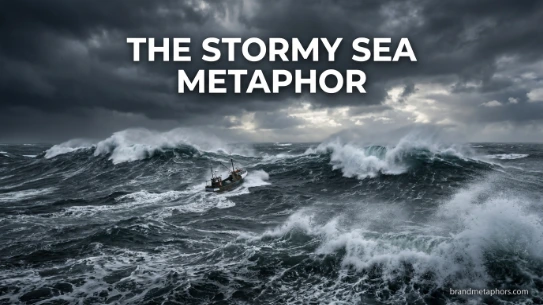
A stormy sea represents uncertainty and instability.
Just as sailors struggle against giant waves, people often battle unpredictable circumstances.
Example Sentence
“After the company merger, employees navigated a stormy sea of changes.”
Alternative Expressions
- Ocean of turmoil
- Waves of confusion
- Sea of uncertainty
Emotional Impact
This image creates feelings of vulnerability and struggle.
Cultural Connection
Throughout history, sailors have viewed storms as symbols of danger and unpredictability. Literature often uses rough seas to represent life’s challenges.
The Broken Orchestra Comparison
Meaning and Symbolism
An orchestra is designed to produce harmony. When every musician plays a different tune, disorder emerges.
This metaphor highlights situations where people fail to coordinate.
Example Sentence
“The project felt like a broken orchestra, with everyone following different instructions.”
Alternative Expressions
- Symphony gone wrong
- Band without a conductor
- Musical confusion
Real-Life Example
Imagine ten coworkers trying to solve one problem while communicating poorly. Their efforts create noise instead of progress.
Sensory Details
Picture clashing sounds, conflicting rhythms, and mounting frustration.
The Wildfire of Confusion
Meaning and Symbolism
Wildfires spread rapidly and unpredictably. Likewise, chaos often grows faster than expected.
Example Sentence
“Rumors spread through the office like a wildfire.”
Alternative Expressions
- Blaze of disorder
- Firestorm of panic
- Inferno of confusion
Emotional Power
Wildfires suggest urgency and danger. They remind readers how quickly situations can escalate.
Storytelling Example
A single misunderstanding starts in a group chat. Within hours, everyone believes a completely different version of the story.
The Maze Without an Exit
Meaning and Symbolism
A maze symbolizes confusion and uncertainty.
People become trapped, unable to find a clear path forward.
Example Sentence
“The new regulations created a maze without an exit.”
Alternative Expressions
- Labyrinth of problems
- Puzzle with missing pieces
- Endless corridors of confusion
Literary Connection
Ancient myths often used labyrinths as symbols of challenges and uncertainty.
Sensory Details
Imagine twisting corridors, dead ends, and growing frustration with every turn.
The Jigsaw Puzzle Thrown into the Wind
Meaning and Symbolism
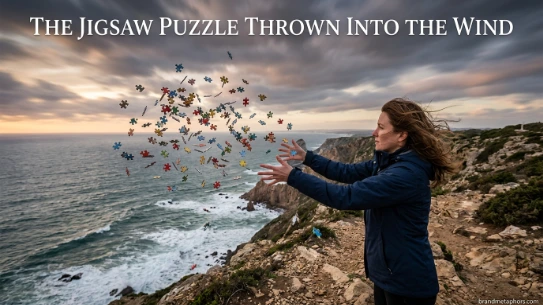
A completed puzzle represents order. Pieces scattered by the wind represent chaos.
Example Sentence
“After the sudden leadership change, the organization became a jigsaw puzzle thrown into the wind.”
Alternative Expressions
- Pieces scattered everywhere
- Puzzle broken apart
- Picture shattered into fragments
Emotional Meaning
This comparison captures both confusion and the desire to restore order.
Real-Life Scenario
A carefully planned event suddenly loses key staff members. Every plan must be rebuilt from scratch.
The Jungle of Disorder
Meaning and Symbolism
Dense jungles can be overwhelming and difficult to navigate.
This metaphor emphasizes complexity and unpredictability.
Example Sentence
“The legal process became a jungle of paperwork and regulations.”
Alternative Expressions
- Forest of confusion
- Tangled wilderness
- Overgrown path
Sensory Details
Imagine thick vines, hidden obstacles, and uncertain directions.
Why It Works
People instinctively associate untamed wilderness with uncertainty and challenge.
The Volcano Ready to Erupt
Meaning and Symbolism
Some forms of chaos build quietly before exploding.
A volcano symbolizes tension waiting to be released.
Example Sentence
“The workplace had become a volcano ready to erupt.”
Alternative Expressions
- Pressure cooker
- Ticking time bomb
- Mountain of tension
Emotional Impact
This image creates suspense and anticipation.
Mini Story
For weeks, coworkers avoid discussing a major issue. Eventually, a small disagreement triggers a massive conflict.
The Circus Without a Ringmaster
Meaning and Symbolism
A circus requires coordination and leadership. Without guidance, performances become disorderly.
Example Sentence
“The committee meeting was a circus without a ringmaster.”
Alternative Expressions
- Show without direction
- Performance gone wrong
- Stage of confusion
Humorous Effect
This metaphor often adds humor while still highlighting disorder.
Sensory Details
Picture performers running in different directions, loud noises, and complete unpredictability.
The Avalanche of Problems
Meaning and Symbolism
An avalanche starts with a small movement and quickly becomes overwhelming.
This comparison works well when challenges accumulate rapidly.
Example Sentence
“Missed deadlines triggered an avalanche of problems.”
Alternative Expressions
- Snowball effect
- Mountain of troubles
- Cascade of complications
Real-Life Example
One delayed task affects another, then another, until the entire project falls behind schedule.
Emotional Resonance
Avalanches emphasize the feeling of being overwhelmed by forces larger than oneself.
Using Chaos Metaphors in Everyday Writing
Social Media Posts
Creative imagery can make posts more engaging.
Examples:
- “My inbox is a tornado today.”
- “This week has been a stormy sea.”
- “My schedule is a circus without a ringmaster.”
Fiction Writing
Use sensory details to strengthen scenes.
Instead of:
“The city was chaotic.”
Try:
“The city roared like a wildfire racing through dry grass.”
Professional Communication
Moderate metaphors can make presentations more memorable.
Example:
“Without clear leadership, the project risks becoming a maze without an exit.”
Poetry and Creative Work
Poetry thrives on vivid comparisons. Chaos metaphors create powerful emotional landscapes.
Creative Exercises to Practice Chaos Metaphors
Exercise 1: Finish the Comparison
Complete these sentences:
- My desk looked like __________.
- The party became __________.
- The conversation felt like __________.
Exercise 2: Create a New Metaphor
Think of something unpredictable.
Examples:
- Fireworks
- Thunderstorms
- Roller coasters
Now connect it to confusion or disorder.
Exercise 3: Sensory Expansion
Choose one metaphor and describe:
- What can be seen?
- What can be heard?
- What can be felt?
- What emotions arise?
Exercise 4: Story Challenge
Write a short paragraph describing a chaotic event without using the word “chaos.”
Use only imagery and metaphorical language.
Exercise 5: Daily Observation
Notice one confusing situation today and describe it using a creative comparison.
Bonus Tips for Making Chaos Metaphors More Powerful
Be Specific
Specific images create stronger reactions.
Instead of:
“A storm.”
Try:
“A hurricane tearing through fragile plans.”
Use Multiple Senses
Include:
- Sound
- Sight
- Touch
- Emotion
Match the Tone
Humorous situations may suit a circus metaphor.
Serious situations may work better with avalanches or wildfires.
Avoid Overuse
One strong metaphor often works better than several weak ones.
Make It Personal
Create original comparisons based on your experiences.
Readers remember unique imagery.
Conclusion
Chaos is a universal part of life. It appears in busy workplaces, unexpected life changes, emotional struggles, and everyday misunderstandings. While disorder can be difficult to describe directly, metaphors transform confusion into vivid experiences that readers can immediately understand.
Whether chaos becomes a tornado, a stormy sea, a wildfire, a maze, or an avalanche, these comparisons help capture the feeling of uncertainty and intensity. They make writing more memorable, conversations more expressive, and storytelling more immersive.
The next time life feels overwhelming, challenge yourself to describe it creatively. You may discover that the perfect image is waiting just beneath the surface of your imagination. Through metaphor, even the most confusing moments can become powerful stories worth telling.
FAQs
What is a metaphor for chaos?
A metaphor for chaos is a figurative comparison that describes disorder using vivid imagery, such as a tornado, wildfire, stormy sea, or circus without a ringmaster.
Why are metaphors useful when describing confusion?
Metaphors make abstract ideas easier to understand by connecting them to familiar images that readers can visualize and feel emotionally.
What is the most common metaphor for chaos?
The tornado is one of the most common examples because it represents unpredictability, speed, destruction, and loss of control.
Can chaos metaphors improve creative writing?
Yes. They add emotion, imagery, and depth, making stories, poems, and articles more engaging and memorable.
How can I create my own metaphor for chaos?
Think about something unpredictable or difficult to control, then compare it to a confusing situation. Focus on sensory details and emotions to make the comparison vivid and original.