
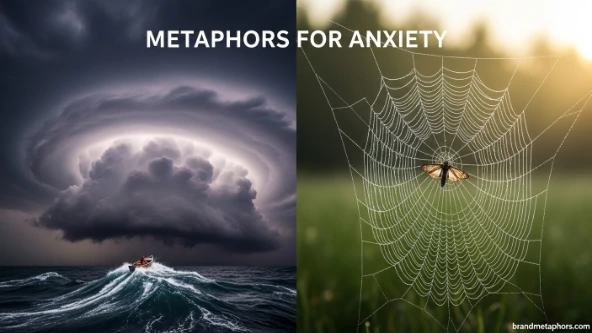
Anxiety often arrives without warning. One moment, life feels calm and ordinary. The next, your heart races like distant thunder rolling across a dark sky. Your thoughts swirl. Your chest tightens. The world feels louder, faster, and harder to navigate.
Many people struggle to describe what anxiety feels like. It can be invisible to others yet overwhelming to the person experiencing it. That is why metaphors are so powerful. They transform abstract emotions into vivid images that people can understand, relate to, and remember.
Writers, poets, therapists, teachers, and everyday people use metaphors to express feelings that seem impossible to put into words. A well-chosen comparison can capture the weight of worry, the speed of racing thoughts, or the exhaustion of constant fear.
In this article, you will discover meaningful and creative metaphors that describe anxiety from different angles. You will also learn how to use them in writing, conversation, storytelling, social media posts, and personal reflection. Along the way, you will find examples, exercises, and practical tips that help bring emotional experiences to life.
Why Metaphors Help Explain Anxiety
Turning Invisible Feelings into Visible Images
Anxiety is difficult to see. Unlike a broken arm or a visible wound, it exists beneath the surface.
Metaphors give shape to those hidden experiences. They allow people to paint emotional pictures that others can understand.
For example:
“My anxiety is a storm cloud that follows me everywhere.”
This image instantly communicates heaviness, uncertainty, and emotional pressure.
Metaphors create connection. They help people feel seen and understood.
Anxiety as a Storm at Sea
A Powerful Image of Emotional Turbulence
One of the most common metaphors compares anxiety to a stormy ocean.
Meaning:
Just as waves crash unpredictably against a ship, anxious thoughts can hit without warning.
Example sentence:
“My anxiety turned the calm sea of my mind into a raging storm.”
Alternative expressions:
- A hurricane of worry
- A tidal wave of fear
- Rough emotional waters
- Choppy mental seas
Sensory details:
Imagine salty wind stinging your face while enormous waves rise around you. The uncertainty mirrors how anxiety often feels.
Mini story:
A student sits quietly before an exam. To everyone else, the classroom appears calm. Inside, however, giant waves crash against the walls of their mind.
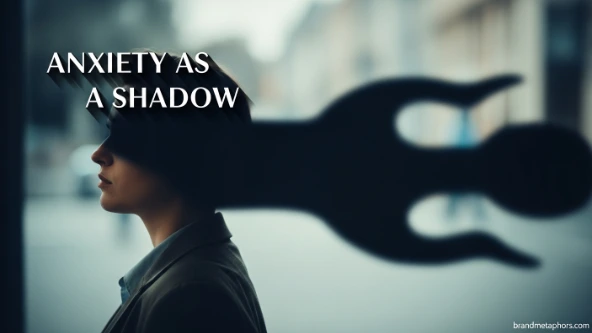
Anxiety as a Shadow
The Feeling of Constant Presence
Shadows follow us wherever light exists. This makes them a fitting symbol for persistent anxiety.
Meaning:
Anxiety can feel like something that never completely leaves.
Example sentence:
“Anxiety followed me like a shadow through every stage of life.”
Alternative expressions:
- A dark companion
- A silent follower
- A lingering silhouette
- A shape in the corner
Emotional details:
Shadows are not always threatening. Sometimes they simply exist. This reflects how anxiety may remain present even during good moments.
Literary connection:
Many classic novels use shadows to symbolize fear, uncertainty, or inner struggles.
Anxiety as a Fire Alarm
When the Warning System Never Stops
Imagine a fire alarm ringing constantly despite no fire being present.
Meaning:
Anxiety often triggers the body’s danger response even when no immediate threat exists.
Example sentence:
“My anxiety is a fire alarm that sounds at every little spark.”
Alternative expressions:
- An overactive warning system
- A faulty detector
- A siren in the mind
- An endless emergency signal
Real-life example:
Someone receives a simple email from their boss. Instead of seeing it as routine, anxiety interprets it as a major threat.
The alarm rings loudly despite there being no actual fire.
Anxiety as a Cage
Feeling Trapped by Fear
Many people describe anxiety as a cage that limits movement and freedom.
Meaning:
Fear creates barriers that prevent people from acting naturally.
Example sentence:
“Anxiety built a cage around opportunities I wanted to explore.”
Alternative expressions:
- Mental prison
- Invisible walls
- Locked room
- Fear-filled enclosure
Sensory details:
Cold metal bars. Limited space. Restricted movement. These images capture the confinement anxiety can create.
Storytelling example:
A talented musician dreams of performing on stage. Anxiety becomes the cage that keeps the door locked.
Anxiety as a Swarm of Bees
The Buzz of Endless Thoughts
Racing thoughts often resemble a swarm of bees.
Meaning:
Anxiety creates constant mental noise that is difficult to quiet.
Example sentence:
“My thoughts buzzed like angry bees trapped inside a jar.”
Alternative expressions:
- A hive of worry
- Buzzing fears
- Mental insects
- Swarming concerns
Sensory details:
The nonstop humming creates tension and distraction, much like anxious thinking.
Cultural note:
Throughout history, bees have symbolized both productivity and chaos, making them a rich metaphorical image.
Anxiety as a Heavy Backpack
Carrying Emotional Weight
This metaphor highlights the exhausting nature of anxiety.
Meaning:
Anxiety adds emotional weight to everyday activities.
Example sentence:
“Every task felt harder because anxiety sat on my shoulders like a heavy backpack.”
Alternative expressions:
- Emotional baggage
- A sack of stones
- A weighted burden
- A load too large to carry
Real-life scenario:
Two people walk the same path. One travels freely. The other carries a backpack full of bricks. Anxiety often feels like those hidden bricks.
Anxiety as a Maze
Searching for an Exit
A maze perfectly illustrates confusion and uncertainty.
Meaning:
Anxiety can make simple decisions feel complicated.
Example sentence:
“My mind became a maze where every turn led to another worry.”
Alternative expressions:
- A labyrinth of fear
- Endless corridors
- Twisting pathways
- Mental dead ends
Mini storytelling:
A person lies awake at night. Every solution creates another question. Every answer leads to another concern.
The maze keeps growing.
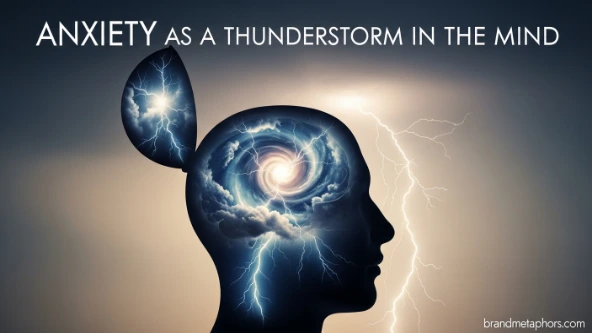
Anxiety as a Thunderstorm in the Mind
Sudden Emotional Weather
Weather metaphors are especially effective because emotions often change rapidly.
Meaning:
Anxiety can appear suddenly and intensely.
Example sentence:
“A thunderstorm erupted inside my mind before the meeting even began.”
Alternative expressions:
- Mental lightning
- Emotional rain clouds
- Internal turbulence
- Psychological thunder
Sensory details:
Dark clouds gather. Thunder rumbles. Lightning flashes unexpectedly.
These images mirror escalating worry.
Anxiety as a Fast-Spinning Wheel
The Cycle of Overthinking
Many people feel trapped in repetitive thoughts.
Meaning:
Anxiety keeps the mind moving without reaching a destination.
Example sentence:
“My thoughts spun like a wheel that could never stop turning.”
Alternative expressions:
- A hamster wheel
- Endless spinning
- Circular thinking
- Mental rotation
Real-life example:
Someone replays a conversation dozens of times, analyzing every word.
The wheel continues turning long after the event has ended.
Anxiety as an Uninvited Guest
A Visitor Who Stays Too Long
This metaphor helps people separate themselves from anxiety.
Meaning:
Anxiety is something experienced, not something a person is.
Example sentence:
“Anxiety arrived like an uninvited guest and refused to leave.”
Alternative expressions:
- An unwanted visitor
- A surprise intruder
- An unwelcome roommate
- A persistent guest
Emotional detail:
Guests eventually leave. This reminder can offer hope during difficult moments.
Creative Exercises for Using Anxiety Metaphors
Exercise 1: Finish the Sentence
Complete these prompts:
- Anxiety is a _________.
- Anxiety sounds like _________.
- Anxiety feels like _________.
- Anxiety moves like _________.
Write several answers and compare them.
Exercise 2: Create a Personal Symbol
Choose an object that represents your anxiety.
Examples:
- A ticking clock
- A tangled rope
- A locked door
- A broken compass
Describe why you chose it.
Exercise 3: Write a Short Scene
Create a paragraph where anxiety appears as a character.
Questions to consider:
- What does it look like?
- How does it speak?
- What emotions does it bring?
This exercise strengthens both emotional awareness and creative writing skills.
Bonus Tips for Using Anxiety Metaphors in Writing and Daily Life
Making Comparisons More Powerful
Follow these strategies:
- Use sensory language.
- Focus on specific images.
- Avoid overused comparisons.
- Match the metaphor to the situation.
- Combine emotion with action.
For social media:
Instead of saying:
“I’m anxious.”
Try:
“Today my mind feels like a room full of buzzing bees.”
For journaling:
Write one new metaphor each day to describe your emotions.
For storytelling:
Allow the metaphor to evolve throughout the narrative as the character grows.
Frequently Asked Questions
What is a metaphor for anxiety?
A metaphor for anxiety is a comparison that describes anxious feelings through imagery, symbols, or objects. Examples include storms, shadows, cages, and fire alarms.
Why are metaphors useful for describing anxiety?
Metaphors make invisible emotions easier to understand. They help people communicate complex feelings clearly and vividly.
What is the most common anxiety metaphor?
The storm metaphor is one of the most common because it captures unpredictability, intensity, and emotional turbulence.
Can metaphors help with emotional expression?
Yes. Many people find that metaphors help them explain emotions, journal effectively, and communicate experiences to others.
How can writers use anxiety metaphors effectively?
Writers should choose specific, sensory-rich images that match the emotional tone of their stories, poems, or personal reflections.
Conclusion
Anxiety can be difficult to explain, but metaphors offer a bridge between emotion and understanding. Whether it feels like a stormy sea, a swarm of bees, a heavy backpack, or an uninvited guest, each comparison provides a unique window into the experience of worry and fear.
These vivid images do more than decorate language. They help people express themselves, connect with others, and explore emotions with greater clarity. Writers can use them to create powerful scenes. Speakers can use them to communicate difficult feelings. Individuals can use them to better understand their own inner experiences.
The next time anxiety appears, try asking yourself a simple question: If this feeling were an object, place, weather pattern, or creature, what would it be? The answer may reveal a metaphor that speaks more clearly than ordinary words ever could.