
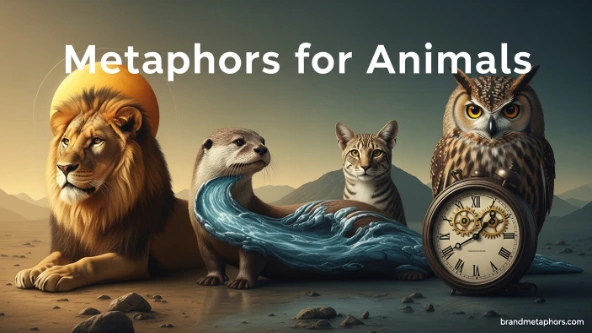
Animals have always inspired human imagination. From the silent owl watching the night to the lion roaring across the savanna, creatures of every shape and size have become symbols of emotions, personalities, and life experiences. Imagine standing in a forest at dawn. The air smells fresh. Birds sing from hidden branches. A fox slips quietly through the shadows while a deer pauses in a patch of golden sunlight. Each animal seems to tell a story without speaking a single word.
This storytelling power is exactly why metaphors involving animals remain so popular. They help writers paint vivid pictures, express complex feelings, and create memorable images. Instead of saying someone is brave, you can call them a lion. Rather than describing a person as clever, you might compare them to a fox. Such figurative language adds color and depth to communication.
Whether you are a student, writer, teacher, content creator, or simply someone who loves language, understanding animal-based metaphors can enrich your vocabulary and strengthen your storytelling. This guide explores their meanings, uses, examples, and creative applications while offering practical exercises and inspiration along the way.
Why Animal Metaphors Matter
Bringing Language to Life
Animal metaphors transform ordinary descriptions into vivid images. Readers instantly connect with familiar characteristics associated with different creatures.
For example:
- “She was brave” sounds simple.
- “She was a lion facing every challenge” creates a stronger picture.
The second sentence sparks imagination and emotion.
Connecting Through Shared Symbols
Across cultures, animals often symbolize universal traits.
Examples include:
- Lions represent courage.
- Owls symbolize wisdom.
- Foxes suggest intelligence.
- Wolves represent loyalty or independence.
Because these associations are widely understood, they help readers connect quickly with a message.
Enhancing Creativity
Writers use animal imagery to make stories more memorable. These comparisons can reveal personality, mood, conflict, and growth in a powerful way.
The Lion: A Metaphor for Courage
Meaning and Symbolism
The lion is perhaps the most famous animal metaphor. Known as the king of beasts, it symbolizes bravery, leadership, confidence, and strength.
Example Sentence
“He stood before the crowd like a lion defending his pride.”
This comparison emphasizes fearless determination.
Alternative Expressions
You can also say:
- Brave as a lion
- Heart of a lion
- Lion-hearted warrior
- Roaring with confidence
Mini Story
A young athlete felt nervous before a championship match. As he stepped onto the field, he imagined himself as a lion crossing the grasslands. That image transformed fear into courage and helped him perform at his best.
Emotional Details
The lion metaphor often evokes:
- Power
- Pride
- Fearlessness
- Determination
The Fox: A Metaphor for Intelligence

Meaning and Symbolism
Foxes are often associated with cleverness, strategy, and quick thinking. They appear in folklore around the world as smart problem-solvers.
Example Sentence
“The negotiator was a fox, finding opportunities where others saw obstacles.”
Alternative Expressions
Consider these variations:
- Sharp as a fox
- Crafty fox
- Strategic thinker
- Master of clever moves
Literary Reference
Many traditional tales feature foxes outsmarting larger animals. These stories reinforce the fox as a symbol of intelligence and resourcefulness.
Sensory Detail
Picture a fox moving silently through moonlit grass, carefully choosing each step. This image perfectly captures thoughtful planning.
The Owl: A Metaphor for Wisdom
Meaning and Symbolism
Owls have long symbolized knowledge and wisdom. Their calm nature and observant eyes make them ideal metaphors for thoughtful individuals.
Example Sentence
“The professor was an owl, quietly gathering knowledge before sharing insights.”
Alternative Expressions
Other options include:
- Wise owl
- Keeper of knowledge
- Silent observer
- Guardian of wisdom
Real-Life Application
Teachers, mentors, and advisors are often compared to owls because they guide others through experience and understanding.
Emotional Impact
The owl metaphor creates feelings of:
- Trust
- Intelligence
- Reflection
- Patience
The Wolf: A Metaphor for Loyalty and Independence
Meaning and Symbolism
Wolves represent both teamwork and personal strength. They thrive within packs but can also symbolize resilience and independence.
Example Sentence
“He was a wolf, loyal to his friends yet strong enough to walk alone.”
Alternative Expressions
You might use:
- Lone wolf
- Pack leader
- Fierce protector
- Wild spirit
Cultural Influence
Throughout history, wolves have appeared in myths, legends, and stories. Some cultures view them as protectors, while others admire their endurance.
Storytelling Element
A traveler crossing snowy mountains depended on inner strength. Like a lone wolf navigating harsh terrain, he pushed forward despite uncertainty.
The Butterfly: A Metaphor for Transformation
Meaning and Symbolism
Butterflies symbolize change, growth, beauty, and renewal. Their journey from caterpillar to winged creature makes them powerful symbols of personal development.
Example Sentence
“After years of struggle, she emerged as a butterfly.”
Alternative Expressions
Try these alternatives:
- Spreading new wings
- Emerging from a cocoon
- Transformation journey
- Symbol of renewal
Emotional Details
The butterfly evokes:
- Hope
- Freedom
- Growth
- New beginnings
Real-Life Example
People often use butterfly metaphors when describing major life changes such as graduation, recovery, or career success.
The Eagle: A Metaphor for Vision
Meaning and Symbolism
Eagles represent perspective, ambition, and foresight. Their ability to soar high above the landscape makes them symbols of vision and leadership.
Example Sentence
“She viewed the project like an eagle, seeing possibilities others missed.”
Alternative Expressions
Examples include:
- Eagle-eyed observer
- High-flying visionary
- Seeing the bigger picture
- Soaring above challenges
Sensory Image
Imagine an eagle gliding above mountains, scanning valleys far below. This image reflects clarity and long-term thinking.
Practical Use
Business leaders and innovators are frequently described using eagle metaphors.
The Deer: A Metaphor for Grace
Meaning and Symbolism
Deer often symbolize gentleness, elegance, and sensitivity. Their quiet movements inspire comparisons related to beauty and calmness.
Example Sentence
“She moved through the room like a deer in a peaceful meadow.”
Alternative Expressions
You can say:
- Graceful deer
- Gentle spirit
- Quiet beauty
- Soft-footed traveler
Storytelling Connection
In many stories, deer symbolize innocence and harmony with nature.
Emotional Impact
The deer metaphor suggests:
- Peacefulness
- Kindness
- Elegance
- Calm strength
The Shark: A Metaphor for Determination
Meaning and Symbolism
Sharks symbolize focus, persistence, and competitiveness. They are often used to describe people who relentlessly pursue goals.
Example Sentence
“He approached every opportunity like a shark searching for its next target.”
Alternative Expressions
Try:
- Relentless competitor
- Driven hunter
- Goal-focused achiever
- Tireless pursuer
Real-Life Scenario
Entrepreneurs are often compared to sharks because they continuously seek growth and opportunities.
Emotional Tone
This metaphor creates feelings of:
- Energy
- Ambition
- Focus
- Persistence
Creative Ways to Use Animal Metaphors
In Fiction Writing
Animal metaphors can reveal character traits quickly.
Examples:
- A lion-hearted hero
- A fox-like detective
- An owl-like mentor
In Poetry
Poets often use animal imagery to create emotional depth.
Example:
“Her thoughts fluttered like butterflies across a summer field.”
In Social Media
Short metaphors can make captions more memorable.
Examples:
- “Chasing dreams like an eagle.”
- “Quiet as an owl, strong as a wolf.”
- “Growing wings every day.”
In Everyday Conversations
Animal metaphors make ordinary speech more engaging and expressive.
Three Powerful Tips for Creating Original Animal Metaphors
Tip 1: Match Traits Carefully
Choose animals whose characteristics fit the message.
Example:
- Lion = bravery
- Turtle = patience
- Rabbit = speed
Poor matches can confuse readers.
Tip 2: Use Sensory Details
Add sights, sounds, or movement.
Example:
“She darted through the crowd like a hummingbird among flowers.”
This creates stronger imagery.
Tip 3: Avoid Overused Comparisons
Instead of common metaphors, explore unique options.
Example:
Rather than “busy as a bee,” try:
“He moved through tasks like an octopus juggling a dozen currents.”
This feels fresh and memorable.
Interactive Exercises for Practicing Animal Metaphors
Exercise 1: Match the Animal
Choose an animal for each trait:
- Wisdom
- Courage
- Patience
- Creativity
- Determination
Write a sentence using each metaphor.
Exercise 2: Describe Yourself
Complete this sentence:
“I am a ______ because ______.”
Example:
“I am a wolf because I value loyalty and independence.”
Exercise 3: Transform Simple Sentences
Change plain descriptions into metaphors.
Original:
“The student was very focused.”
Metaphor:
“The student was a hawk watching every detail.”
Exercise 4: Create a Character
Invent a character based on an animal.
Questions:
- What animal inspires them?
- What personality traits do they have?
- What challenges do they face?
Exercise 5: Daily Observation
Watch animals in videos, parks, or nature documentaries. Write down behaviors that could inspire future metaphors.
Bonus Tips for Writers, Bloggers, and Content Creators

Use Animal Metaphors in Headlines
Examples:
- Unleash Your Inner Lion
- Think Like an Eagle
- Move Through Change Like a Butterfly
These headlines attract attention and spark curiosity.
Strengthen Storytelling
Introduce metaphors early and revisit them later for consistency.
Example:
A shy character begins as a mouse and gradually becomes a lion by the story’s end.
Create Emotional Connections
Animal imagery helps readers feel emotions rather than simply read about them.
Enhance Social Media Posts
Short animal metaphors make captions shareable and memorable.
Build Personal Branding
Professionals often use animal symbols to communicate values:
- Lion for leadership
- Eagle for vision
- Owl for expertise
- Wolf for loyalty
Frequently Asked Questions
What are animal metaphors?
Animal metaphors are figurative comparisons that describe people, emotions, situations, or ideas using characteristics associated with animals.
Why are animal metaphors so popular?
They create vivid mental images, communicate ideas quickly, and connect with universal cultural symbols.
Which animal metaphor represents intelligence?
The fox is commonly used as a metaphor for intelligence, cleverness, and strategic thinking.
How can writers create original animal metaphors?
Observe real animal behavior, focus on specific traits, and combine sensory details with creative language.
Are animal metaphors useful outside literature?
Yes. They are widely used in business, education, marketing, public speaking, social media, and everyday communication.
Conclusion
Animal metaphors bring language alive. They transform simple descriptions into memorable images filled with emotion, movement, and meaning. Whether you draw courage from the lion, wisdom from the owl, vision from the eagle, or transformation from the butterfly, these symbolic creatures offer endless inspiration for writers and speakers alike.
The next time you describe a person, challenge, dream, or achievement, look to the animal kingdom. Hidden among forests, oceans, mountains, and skies are countless symbols waiting to enrich your words. By understanding and using these powerful comparisons, you can create writing that feels more vivid, expressive, and unforgettable—language that doesn’t merely tell a story but truly roars, soars, prowls, and flies.