
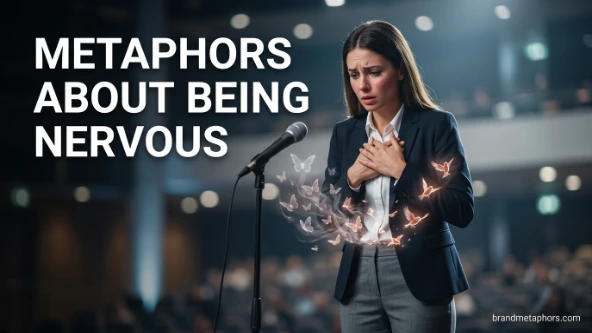
Have you ever stood in front of a crowd with your heart pounding like a drum? Maybe you waited for an important phone call, sat outside an interview room, or prepared to share a secret. In moments like these, nervousness can feel larger than life. It isn’t just an emotion—it becomes a physical experience. Your hands may tremble, your stomach may twist, and your thoughts may race in circles.
That is where metaphors become powerful. They help us describe feelings that are difficult to explain. Instead of saying, “I was nervous,” we can paint a picture that allows readers and listeners to feel the emotion. A metaphor transforms an ordinary sentence into something memorable and vivid.
Writers, speakers, students, and storytellers often use metaphors to communicate anxiety, anticipation, and uncertainty. These creative comparisons add color to language and help others connect with our experiences.
In this guide, you’ll discover powerful metaphors for nervousness, learn how to use them effectively, explore examples and exercises, and gain practical tips for creative writing, social media, and everyday conversations.
Why Metaphors About Being Nervous Matter
Understanding Emotional Language
Emotions are often invisible. Metaphors turn them into images people can see and feel.
Instead of saying:
“I was nervous before the speech.”
You might say:
“My stomach was a washing machine on spin cycle.”
The second sentence instantly creates a stronger emotional connection.
Creating Stronger Writing
Whether you’re writing fiction, poetry, essays, or social media posts, metaphors make your content more engaging and memorable.
Helping Readers Relate
People may not share the same experiences, but they understand vivid images. A good metaphor bridges that gap.
The Butterfly Garden: A Classic Metaphor for Nervousness
Meaning and Explanation
The phrase “butterflies in my stomach” is one of the most famous metaphors for nervousness. It compares anxious feelings to butterflies fluttering inside the body.
The sensation often feels light, restless, and uncontrollable.
Example Scenario
A student waits backstage before a school play.
“As the curtain rose, a thousand butterflies danced inside her stomach.”
Alternative Expressions
- A flock of butterflies
- Wings fluttering inside
- A garden of restless butterflies
Sensory Details
Imagine soft wings brushing against your ribs and creating tiny bursts of movement.
Mini Story
Before his wedding speech, James felt butterflies swirling in his stomach. Yet once he started talking, those butterflies seemed to fly away one by one.
A Drumline in the Chest
Meaning and Explanation
This metaphor compares a racing heartbeat to drums beating loudly and rapidly.
It highlights physical symptoms of nervousness.
Example Sentence
“My heart became a drumline marching through my chest before the interview.”
Alternative Ways to Express It
- A pounding drum
- A thunderous beat
- A marching band in the chest
Cultural Reference
Drums often symbolize urgency and excitement in music and storytelling. Their rhythm mirrors the quickening pulse of anxiety.
Emotional Impact
Readers can almost hear the heartbeat, making the feeling more vivid.
Walking on a Tightrope

Meaning and Explanation
A nervous person often feels as though one mistake could lead to disaster. The tightrope metaphor captures this pressure perfectly.
Example Scenario
“Giving that presentation felt like walking on a tightrope above a canyon.”
Alternative Expressions
- Balancing on a thin wire
- Crossing a fragile bridge
- Standing on the edge
Real-Life Application
Athletes, performers, and public speakers often describe high-pressure moments this way.
Storytelling Angle
Imagine every word as a careful step while an audience watches below.
A Storm Brewing Inside
Meaning and Explanation
Nervousness often grows quietly before becoming overwhelming. This metaphor compares anxiety to gathering storm clouds.
Example Sentence
“A storm brewed inside me as I waited for the test results.”
Alternative Expressions
- Gathering thunder
- Dark clouds within
- Emotional lightning
Sensory Details
Picture gray skies, distant thunder, and rising winds.
Literary Connection
Storm imagery has long been used in literature to symbolize inner conflict and emotional tension.
A Rabbit Trapped in a Cage
Meaning and Explanation
This metaphor highlights restlessness and the urge to escape.
A nervous person may feel trapped by circumstances.
Example Scenario
“I felt like a rabbit trapped in a cage before speaking to the crowd.”
Alternative Ways to Say It
- A cornered animal
- A bird trapped indoors
- A deer in headlights
Emotional Details
The metaphor suggests vulnerability, fear, and uncertainty.
Mini Story
During her first job interview, Maria felt like a rabbit searching desperately for an open door.
A Volcano Ready to Erupt
Meaning and Explanation
Some nervousness builds beneath the surface until it becomes impossible to ignore.
The volcano metaphor captures mounting pressure.
Example Sentence
“I was a volcano waiting to erupt before the championship game.”
Alternative Expressions
- Pressure building underground
- Lava beneath the surface
- A mountain of tension
Sensory Imagery
Imagine heat, rumbling earth, and rising pressure.
Why It Works
It emphasizes how hidden anxiety can become overwhelming if ignored.
Leaves Shaking in the Wind
Meaning and Explanation
This metaphor focuses on visible trembling caused by nervousness.
Example Sentence
“My hands were leaves shaking in the wind.”
Alternative Expressions
- Trembling branches
- Fluttering leaves
- A swaying tree
Sensory Experience
Readers can picture delicate leaves moving uncontrollably during a breeze.
Writing Tip
This metaphor works especially well in poetry and descriptive fiction.
A Mouse in a Room Full of Cats
Meaning and Explanation
This metaphor conveys intimidation and vulnerability.
Example Scenario
“As the youngest employee in the meeting, I felt like a mouse in a room full of cats.”
Alternative Expressions
- A fish among sharks
- A lamb among wolves
- A sparrow among eagles
Emotional Details
The image creates a sense of imbalance and fear.
Real-Life Example
Many people feel this way during their first day at work or school.
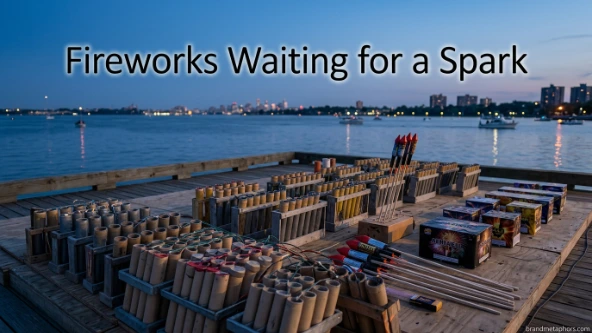
Fireworks Waiting for a Spark
Meaning and Explanation
This metaphor combines nervousness and anticipation.
The emotion feels ready to explode at any moment.
Example Sentence
“My nerves were fireworks waiting for a spark.”
Alternative Ways to Express It
- A fuse burning slowly
- Sparks beneath the surface
- Energy waiting to burst
Sensory Imagery
Bright flashes, crackling sounds, and explosive energy make this metaphor memorable.
Storytelling Example
An athlete waiting for the starting gun may feel exactly this way.
A Boat Tossed by Waves
Meaning and Explanation
Nervousness often creates uncertainty and lack of control.
This metaphor compares emotions to a boat struggling against rough water.
Example Sentence
“My thoughts were a boat tossed by waves before the exam.”
Alternative Expressions
- Lost at sea
- Sailing through a storm
- Drifting in rough waters
Emotional Effect
The image conveys instability and confusion.
Literary Use
Many classic writers use ocean imagery to symbolize emotional struggles.
How to Create Your Own Nervousness Metaphors
Focus on Physical Feelings
Ask yourself:
- Is my heart racing?
- Are my hands shaking?
- Does my stomach feel strange?
Turn those sensations into images.
Connect to Nature
Nature offers endless inspiration.
Examples:
- Nervous as a trembling leaf
- Anxious as gathering thunder
- Restless as a trapped bird
Think About Movement
Nervousness often involves motion.
Examples:
- Spinning wheels
- Racing horses
- Fluttering wings
Practice Exercise
Complete these sentences:
- My nervousness was like __________.
- Before speaking, I felt like __________.
- My heartbeat sounded like __________.
Tips for Using Metaphors About Being Nervous
Keep Them Relatable
Choose images your audience can easily imagine.
Match the Situation
A job interview may need a different metaphor than a first date.
Avoid Overuse
One strong metaphor is often better than many weak ones.
Use Sensory Details
Include sights, sounds, smells, textures, and emotions.
Social Media Bonus Tip
Try captions like:
“My heart was a drumline before today’s presentation.”
or
“Walking into Monday like a boat tossed by waves.”
These create stronger engagement than simple statements.
Creative Writing Challenge
Write a paragraph about a nervous character without ever using the words:
- nervous
- anxious
- worried
Use only metaphors and imagery.
Interactive Exercises to Practice Nervousness Metaphors
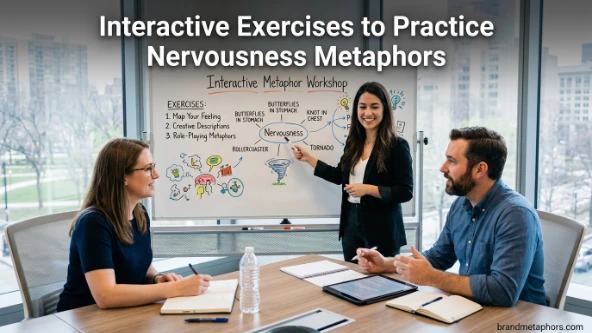
Exercise 1: Finish the Comparison
Complete these:
- My thoughts were like ______.
- My heartbeat became ______.
- Waiting felt like ______.
Exercise 2: Story Prompt
Write 100 words about someone waiting for important news.
Use at least three metaphors.
Exercise 3: Observation Challenge
Recall a recent nervous moment.
Answer:
- What did your body feel like?
- What natural image matches that feeling?
- What sound represents it?
Exercise 4: Social Media Practice
Turn this sentence into a metaphor:
“I was nervous before the interview.”
Example:
“I was a boat rocking in stormy waters before the interview.”
Exercise 5: Literary Inspiration
Read a favorite novel and identify metaphors used to describe emotions.
Notice how writers create emotional depth through imagery.
Frequently Asked Questions
What is a metaphor for being nervous?
A metaphor for being nervous is a creative comparison that describes anxiety or tension without using the words “nervous” or “anxious.” Examples include butterflies in the stomach, a storm brewing inside, or a drumline in the chest.
Why are metaphors useful for describing nervousness?
Metaphors make emotions more vivid and relatable. They help readers visualize and feel what a person is experiencing.
What is the most common metaphor for nervousness?
The most common metaphor is “butterflies in my stomach.” It represents the fluttering sensation many people experience when anxious or excited.
Can metaphors improve creative writing?
Yes. Metaphors add depth, imagery, and emotional impact, making stories, poems, and essays more engaging.
How can I create my own metaphor for nervousness?
Start by identifying physical sensations or emotions. Then compare them to something familiar, such as weather, animals, movement, or natural events.
Conclusion
Nervousness is a universal experience, but it doesn’t have to be described in ordinary ways. Metaphors allow us to transform racing hearts, trembling hands, and restless thoughts into vivid images that readers can instantly understand. Whether you compare anxiety to butterflies fluttering in a garden, a storm gathering on the horizon, or a boat struggling through rough seas, these comparisons bring emotional experiences to life.
The best metaphors do more than describe feelings—they invite others to experience them. By practicing the examples, exercises, and techniques in this guide, you can create memorable descriptions that enrich your writing, strengthen your storytelling, and make everyday communication more expressive. The next time nerves arrive, don’t just say you’re anxious. Paint a picture, tell a story, and let your metaphor speak for you.