
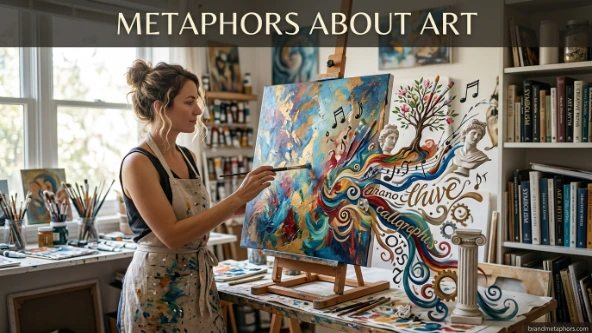
Introduction: When Colors Begin to Speak
Imagine standing in front of a painting. The room is quiet. The brushstrokes seem frozen in time, yet something inside them moves. A splash of blue feels like a memory. A streak of gold feels like hope. Suddenly, the artwork becomes more than paint on a canvas. It becomes a story, a feeling, and a conversation without words.
This is the magic of art. It communicates what language sometimes cannot. Artists have always searched for creative ways to describe this magic, and one of the most powerful tools they use is metaphor. A metaphor compares one thing to another without using “like” or “as.” It helps us see familiar things in new ways.
When we use metaphors about art, we give creativity a richer meaning. We transform paintings into windows, sculptures into frozen music, and sketches into maps of imagination. These comparisons help writers, students, artists, and everyday readers understand the deeper purpose of creative expression.
In this article, you will discover inspiring metaphors about art, learn how to use them effectively, explore cultural and literary examples, and practice creating your own imaginative comparisons. Whether you are writing a story, posting on social media, teaching a class, or simply appreciating creativity, these ideas can add color and depth to your words.
Why Metaphors Matter in Art
Understanding the Power of Creative Comparisons
Art often deals with emotions, dreams, and ideas that are difficult to explain directly. Metaphors bridge that gap.
Instead of saying art is important, we can say:
“Art is a bridge between the heart and the world.”
This simple comparison creates a stronger image and emotional connection.
Benefits of using metaphors about art include:
- Making descriptions vivid
- Helping readers visualize ideas
- Creating emotional impact
- Encouraging deeper thinking
- Making writing more memorable
Great artists and writers often rely on metaphors because they allow audiences to experience ideas rather than merely understand them.
Art as a Window to the Soul
Meaning and Symbolism
One of the most common metaphors describes art as a window to the soul.
Just as a window lets us look inside a room, artwork allows us to look inside a person’s emotions, thoughts, and experiences.
Example Sentence
“The painting was a window to the artist’s soul, revealing hidden joys and sorrows.”
Alternative Expressions
- Art is a mirror of emotions.
- Art reveals the heart’s landscape.
- Creativity uncovers inner worlds.
Mini Story
Consider the self-portraits of artists throughout history. Many viewers feel they are not simply looking at a face. They are looking into a lifetime of feelings, struggles, and dreams.
Sensory Detail
Imagine soft light pouring through a window and illuminating forgotten memories. That is how meaningful artwork often feels.
Art as a Universal Language
Meaning and Symbolism
Languages differ across nations, but creativity speaks everywhere.
This metaphor suggests that art communicates ideas beyond words and cultural boundaries.
Example Sentence
“Art is a universal language understood by hearts around the globe.”
Alternative Expressions
- Creativity is humanity’s shared voice.
- Art speaks across borders.
- Paintings whisper in every language.
Real-Life Example
A child in one country can appreciate a painting made by an artist thousands of miles away. No translation is required. The emotions travel naturally.
Emotional Detail
This metaphor creates feelings of unity, connection, and shared human experience.
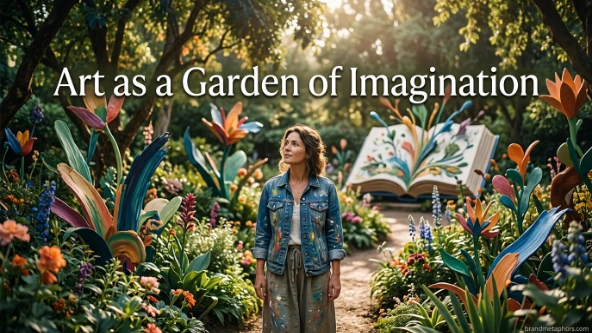
Art as a Garden of Imagination
Meaning and Symbolism
A garden grows from seeds, care, and patience. Art develops the same way.
Ideas begin as tiny seeds. Over time, they bloom into paintings, poems, music, and sculptures.
Example Sentence
“Her sketchbook was a garden of imagination filled with blooming ideas.”
Alternative Expressions
- Creativity is a forest of possibilities.
- Art is fertile soil for dreams.
- Ideas blossom through expression.
Mini Story
Many famous works began as rough sketches. Like flowers emerging from soil, masterpieces often start as small concepts.
Sensory Detail
Picture bright petals opening beneath warm sunlight. That growth mirrors the artistic process.
Art as a Bridge Between Worlds
Meaning and Symbolism
Art often connects reality with imagination.
It helps people travel between what exists and what could exist.
Example Sentence
“The mural became a bridge between history and modern life.”
Alternative Expressions
- Creativity connects past and future.
- Art joins dreams with reality.
- Expression links people and ideas.
Cultural Reference
Ancient cave paintings connected early human experiences with future generations. Thousands of years later, those messages still reach us.
Emotional Detail
This metaphor creates feelings of connection, curiosity, and discovery.
Art as Frozen Music
Meaning and Symbolism
This famous comparison suggests visual art captures rhythm, harmony, and movement in a still form.
Example Sentence
“The sculpture stood like frozen music carved from stone.”
Alternative Expressions
- Paintings dance in silence.
- Sculptures sing without sound.
- Creativity creates visible rhythm.
Literary Reference
Many architects and artists have described beautiful buildings as music turned into stone because both rely on balance and harmony.
Sensory Detail
Imagine hearing a melody and seeing it transformed into shape and color.
Art as a Lighthouse
Meaning and Symbolism
A lighthouse guides ships through darkness. Art often guides people through confusion, pain, and uncertainty.
Example Sentence
“During difficult times, art became a lighthouse showing her a path forward.”
Alternative Expressions
- Creativity is a guiding star.
- Art shines through darkness.
- Expression lights the way.
Real-Life Example
Many people turn to music, painting, or writing during challenging periods because creative expression offers comfort and direction.
Emotional Detail
This metaphor evokes hope, safety, and resilience.
Art as a Time Machine
Meaning and Symbolism
Artwork preserves moments and allows future generations to experience them.
Example Sentence
“The portrait acted as a time machine carrying viewers into another century.”
Alternative Expressions
- Art preserves moments forever.
- Creativity captures history.
- Paintings travel through time.
Historical Example
Ancient murals, sculptures, and manuscripts allow modern audiences to glimpse forgotten civilizations.
Sensory Detail
Imagine stepping through a doorway into another era. Great art creates that feeling.
Art as a Fire of Inspiration
Meaning and Symbolism
Fire provides warmth, light, and energy. Art often sparks creativity and motivation.
Example Sentence
“The exhibition ignited a fire of inspiration within young artists.”
Alternative Expressions
- Creativity sparks new ideas.
- Art fuels innovation.
- Expression lights creative flames.
Mini Story
A single photograph has inspired countless careers in photography, proving how one creative spark can change a life.
Emotional Detail
This metaphor suggests excitement, passion, and transformation.
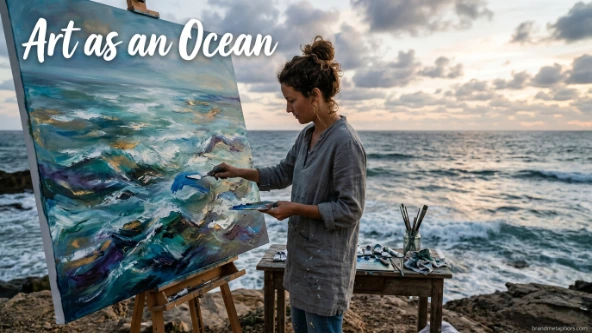
Art as an Ocean
Meaning and Symbolism
The ocean is vast, mysterious, and endlessly deep. Art possesses similar qualities.
Example Sentence
“Her creative mind was an ocean filled with hidden treasures.”
Alternative Expressions
- Creativity is an endless sea.
- Art contains infinite depths.
- Imagination has no shore.
Cultural Reference
Throughout literature, oceans symbolize mystery and exploration. Art often serves the same purpose.
Sensory Detail
Picture waves carrying secrets beneath their surface. Every masterpiece contains layers waiting to be discovered.
Art as a Mirror of Society
Meaning and Symbolism
Art reflects cultural values, challenges, dreams, and concerns.
Example Sentence
“The mural served as a mirror of society, reflecting both beauty and struggle.”
Alternative Expressions
- Creativity reflects the times.
- Art reveals social truths.
- Paintings capture collective experiences.
Real-Life Example
Many movements in history have been documented through artistic expression, allowing future generations to understand social change.
Emotional Detail
This metaphor highlights awareness, reflection, and understanding.
Three Practical Tips for Using Metaphors About Art
Tip 1: Connect Emotion First
Choose comparisons that match the feeling you want to express.
Example:
- Joy = art as sunlight
- Hope = art as a lighthouse
- Wonder = art as an ocean
Tip 2: Use Sensory Details
Add color, sound, texture, or movement.
Instead of:
“Art is inspiring.”
Try:
“Art is a sunrise spilling gold across the imagination.”
Tip 3: Keep Metaphors Consistent
Avoid mixing unrelated images.
Strong:
“Art is a garden where ideas bloom.”
Weak:
“Art is a garden that drives like a race car.”
Consistency improves clarity and impact.
Interactive Exercises for Practicing Art Metaphors
Exercise 1: Finish the Sentence
Complete these statements:
- Art is a __________.
- Creativity is a __________.
- A painting is a __________.
- An artist is a __________.
Exercise 2: Create Three Emotional Metaphors
Write metaphors describing:
- Happiness
- Curiosity
- Inspiration
Example:
“Inspiration is a spark hidden inside a storm cloud.”
Exercise 3: Describe Your Favorite Artwork
Choose a favorite piece and describe it using three metaphors.
Questions to consider:
- What emotion does it create?
- What journey does it suggest?
- What natural object resembles it?
Bonus Tips for Writers, Students, and Social Media Creators
Writing Tips
- Use metaphors to strengthen introductions.
- Add comparisons to character descriptions.
- Create memorable conclusions.
Social Media Tips
Creative captions attract attention.
Examples:
- “Creativity is a river that never stops flowing.”
- “Every brushstroke is a step toward a dream.”
Daily Life Tips
Use artistic metaphors in conversations, presentations, and journaling to make ideas more engaging and memorable.
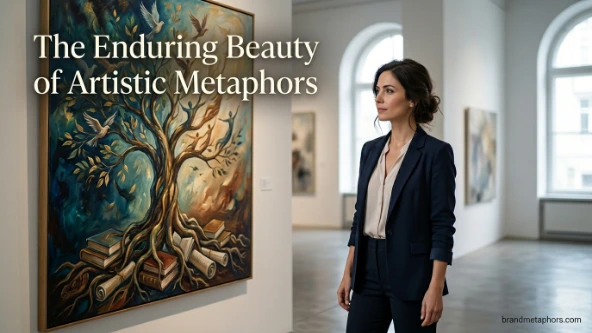
The Enduring Beauty of Artistic Metaphors
Why These Comparisons Continue to Inspire
From ancient storytellers to modern creators, people have used metaphors to explain beauty, creativity, and imagination.
These comparisons help us understand not only art but also ourselves.
When we describe creativity as a garden, a lighthouse, or an ocean, we reveal something deeper about how we experience the world. Metaphors transform ordinary language into vivid imagery and invite readers to see familiar ideas through fresh eyes.
Conclusion
Art is far more than paint, clay, ink, or stone. It is a language of emotion, memory, imagination, and human connection. Through powerful metaphors, we can better understand its role in our lives and communicate its beauty with greater depth.
Whether art becomes a window to the soul, a bridge between worlds, a fire of inspiration, or an ocean of possibility, each metaphor offers a new perspective. These creative comparisons enrich writing, strengthen storytelling, and deepen appreciation for artistic expression.
The next time you encounter a painting, sculpture, poem, or song, ask yourself: What metaphor best describes this experience? The answer may reveal an entirely new way of seeing the world.
FAQs
What are metaphors about art?
Metaphors about art are creative comparisons that describe artistic expression through vivid imagery, such as calling art a window to the soul or a bridge between worlds.
Why are metaphors useful when discussing art?
They help readers understand emotions, ideas, and creative processes more vividly while making descriptions memorable and engaging.
Can students use art metaphors in essays?
Yes. Metaphors can improve essays by adding creativity, clarity, and emotional impact when used appropriately.
What is a simple metaphor for art?
A simple metaphor is: “Art is a universal language.” It suggests creativity communicates beyond words and cultures.
How can I create my own metaphor about art?
Think about the feeling or purpose of the artwork and compare it to something familiar, such as a garden, lighthouse, ocean, fire, or window.