
Introduction
Words are powerful, but the way we use them makes our writing even stronger. Figurative language, descriptive language, similes, metaphors, and creative expressions help readers imagine ideas more clearly. They make stories exciting, essays more interesting, and everyday conversations more colorful. Whether you are writing a school assignment, a poem, a blog, or a social media post, choosing the right words improves your communication.
One spelling question that often confuses English learners is jewelry or jewellery. Both spellings refer to beautiful decorative items such as rings, necklaces, bracelets, earrings, and watches. However, the preferred spelling depends on the type of English you use.
This guide explains the difference between these two spellings, shows when each one should be used, provides examples, compares American and British English, explores figurative language, highlights common mistakes, and offers practical exercises. By the end, you will confidently know which spelling fits your audience and how to use the word correctly in speaking and writing.
What Do These Words Mean?
Both spellings have exactly the same meaning.
They refer to decorative items that people wear for beauty, fashion, tradition, or cultural importance.
Examples include:
- Rings
- Necklaces
- Bracelets
- Earrings
- Brooches
- Pendants
- Anklets
- Lockets
There is no difference in pronunciation or meaning.
The only difference is the spelling.
Jewelry vs Jewellery: The Main Difference
FeatureJewelryJewelleryMeaningDecorative ornamentsDecorative ornamentsEnglish TypeAmerican EnglishBritish EnglishPronunciationSameSameCorrect?YesYesUsed in USAYesRareUsed in UKRareYesUsed in CanadaUsually JewelleryCommonUsed in AustraliaRareStandard
The spelling changes because American English often removes extra letters that British English keeps.
Examples:
- Color → Colour
- Favorite → Favourite
- Honor → Honour
- Neighbor → Neighbour
- Jewelry → Jewellery
Why Do the Spellings Differ?
American English and British English developed slightly different spelling rules over time.
During the 1800s, American dictionary writer Noah Webster encouraged simpler spellings.
Because of this, many words became shorter in American English.
British English kept many traditional spellings.
That is why both spellings remain correct today.
When Should You Use Each Spelling?
Choose the spelling based on your audience.
Use “Jewelry” When Writing for:
- United States
- American schools
- American companies
- American websites
- US magazines
Examples:
- She designs handmade jewelry.
- The jewelry store opens at nine.
- I bought silver jewelry online.
Use “Jewellery” When Writing for:
- United Kingdom
- Australia
- New Zealand
- Ireland
- Many Canadian publications
- International organizations using British English
Examples:
- She designs handmade jewellery.
- The jewellery shop sells diamonds.
- Antique jewellery can be very valuable.
Comparison Examples
These sentences have the same meaning.
American EnglishBritish EnglishI love gold jewelry.I love gold jewellery.She bought beautiful jewelry.She bought beautiful jewellery.The jewelry store is nearby.The jewellery shop is nearby.Jewelry can be expensive.Jewellery can be expensive.Handmade jewelry sells well online.Handmade jewellery sells well online.
Sentence Examples in Different Situations
Everyday Conversation
American:
- My grandmother gave me beautiful jewelry.
British:
- My grandmother gave me beautiful jewellery.
School Writing
- Ancient Egyptians wore decorative jewelry.
- Roman jewellery often showed wealth.
Business Writing
- Our jewelry collection launches next month.
- Our jewellery collection includes handmade necklaces.
Social Media
- Loving my new pearl jewelry.
- Vintage jewellery never goes out of style.
Story Writing
The old wooden box contained sparkling jewelry that had belonged to the queen.
The little girl carefully polished her grandmother’s antique jewellery before the ceremony.
Figurative Language Using Jewelry
Figurative language makes writing more expressive.
Metaphor Examples
- Her smile was priceless jewelry.
- Kindness is the finest jewelry anyone can wear.
- Hope is the jewelry of the heart.
- Wisdom is more valuable than jewelry.
These comparisons do not mean actual ornaments.
They compare beauty, value, or importance.
Simile Examples
- Her necklace sparkled like the morning sun.
- The diamonds shone like tiny stars.
- His watch glittered like ice.
- The bracelet was as bright as silver lightning.
Personification Examples
- The necklace danced in the sunlight.
- The diamond smiled under the bright lights.
- The bracelet hugged her wrist.
- The earrings whispered elegance.
Hyperbole Examples
- Her ring was brighter than a thousand stars.
- The crown carried enough jewels to light the whole city.
- The necklace weighed a ton.
Symbolism
Jewelry often symbolizes:
- Love
- Wealth
- Success
- Marriage
- Family
- Friendship
- Faith
- Celebration
- Tradition
- Achievement
Jewelry in Creative Writing
Writers often use ornaments to describe emotions, personalities, or important moments.
Example:
“The necklace rested quietly against her heart, reminding her of promises made long ago.”
Another example:
“The old ring carried generations of family memories.”
Jewelry can symbolize:
- Family history
- Hope
- Loyalty
- Memories
- Power
- Courage
These descriptions make stories richer and more emotional.
Idioms and Expressions Related to Jewelry
English contains many expressions connected to gems and precious objects.
A Diamond in the Rough
Meaning:
Someone with great potential who needs improvement.
Example:
The young athlete is a diamond in the rough.
Worth Its Weight in Gold
Meaning:
Extremely valuable.
Example:
Good teachers are worth their weight in gold.
Pearl of Wisdom
Meaning:
A wise statement.
Example:
Grandfather shared another pearl of wisdom.
Crown Jewel
Meaning:
The best or most valuable part.
Example:
The library is the crown jewel of the university.
Gem of a Person
Meaning:
Someone kind and wonderful.
Example:
Our neighbor is a real gem.
Tone and Style in Writing
Choosing the correct spelling also helps maintain consistency.
Formal Writing
Use one spelling throughout the document.
Do not switch between the two.
Informal Writing
Either spelling is acceptable if it matches your audience.
Academic Writing
Follow the style guide required by your school or publisher.
Examples:
- APA often follows American English.
- Many UK universities prefer British English.
Creative Writing
Either spelling works.
Consistency is the most important rule.
Common Mistakes
Mixing Spellings
Incorrect:
The jewelry shop sells beautiful jewellery.
Better:
Use only one spelling throughout.
Assuming One Is Wrong
Many learners think only one spelling is correct.
Actually, both are correct.
Using the Wrong Style
If writing for an American audience, use American spelling.
If writing for British readers, use British spelling.
Misspelling the Word
Common incorrect spellings include:
- Jewlery
- Jewellry
- Jewellery
- Jewelery
Always check carefully.
Vocabulary Related to Jewelry
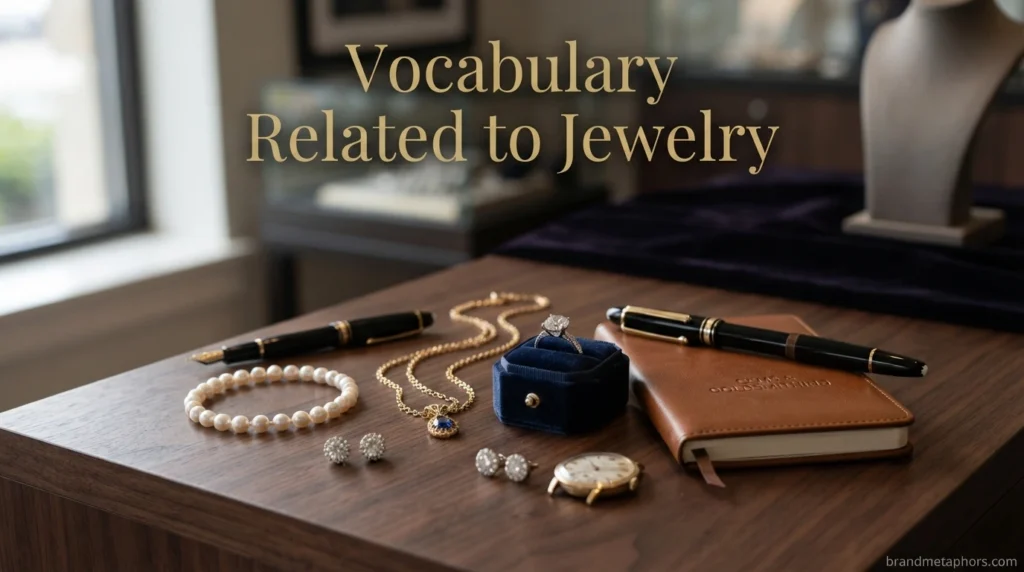
Learning related words improves writing.
WordMeaningOrnamentDecorative objectNecklaceWorn around the neckBraceletWorn around the wristPendantHanging ornamentGemstonePrecious stoneDiamondValuable gemstoneSapphireBlue gemstoneEmeraldGreen gemstoneRubyRed gemstonePearlSmooth natural gemGoldPrecious metalSilverWhite precious metalPlatinumStrong precious metalRingCircular finger ornamentBroochDecorative pin
Writing Tips for Students
Good writers use descriptive language naturally.
Instead of saying:
She wore jewelry.
Write:
She wore a sparkling silver necklace decorated with tiny blue sapphires.
Instead of saying:
The ring was nice.
Write:
The antique ring glittered softly under the warm evening light.
These details help readers imagine the scene.
Practice Exercises
Exercise 1
Choose the correct spelling for American English.
- Handmade ______ is popular online.
Answer:
Jewelry
Exercise 2
Choose the correct spelling for British English.
The antique ______ belonged to the queen.
Answer:
Jewellery
Exercise 3
Find the metaphor.
A.
The necklace sparkled brightly.
B.
Her kindness was priceless jewelry.
Answer:
B
Exercise 4
Find the simile.
A.
The diamond smiled.
B.
The diamond shone like a star.
Answer:
B
Exercise 5
Correct the sentence.
The jewelry store sells beautiful jewellery.
Possible answers:
The jewelry store sells beautiful jewelry.
OR
The jewellery shop sells beautiful jewellery.
Quick Comparison Summary
QuestionAnswerSame meaning?YesSame pronunciation?YesAmerican spelling?JewelryBritish spelling?JewelleryDifference in meaning?NoneCan they be mixed?NoWhich is better?Depends on your audience
Frequently Asked Questions
1. Is jewelry or jewellery more correct?
Both are correct. The correct choice depends on whether you are using American English or British English.
2. Which spelling should students learn?
Learn both spellings so you can recognize them, but use the one required by your teacher, school, or audience.
3. Do they have different meanings?
No. Both words refer to decorative ornaments worn on the body.
4. Why does American English use a shorter spelling?
American English simplified the spelling of many words while British English kept more traditional forms.
5. Can I switch between both spellings in one article?
No. Choose one spelling and use it consistently throughout your writing.
Conclusion
Understanding the difference between jewelry and jewellery is easier than many learners expect. The two words have the same pronunciation and exactly the same meaning. The only difference is regional spelling. American English prefers jewelry, while British English uses jewellery.
Knowing this distinction helps you write professionally, avoid spelling mistakes, and communicate clearly with different audiences. Whether you are writing an essay, a story, a business document, or a social media post, consistency is the key. Combine correct spelling with descriptive language, figurative expressions, similes, metaphors, and rich vocabulary to make your writing more engaging and memorable.
As your English skills grow, paying attention to small spelling differences like these will make your writing more polished, confident, and effective.