
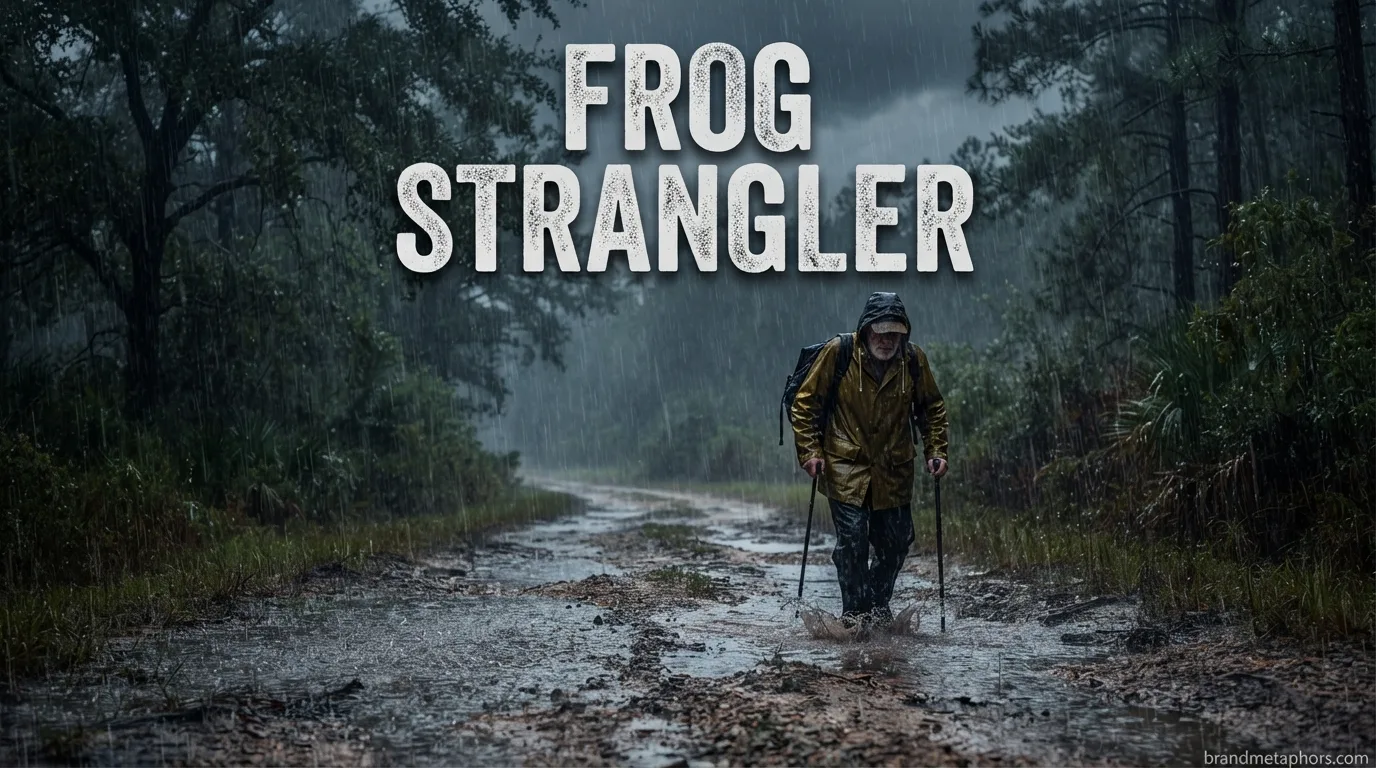
Have you ever heard someone say, “It’s coming down like a frog strangler”? If you’re unfamiliar with the phrase, it might sound strange or even a little funny. Yet this colorful expression has been part of everyday speech in many English-speaking regions for generations.
People often use vivid sayings to describe weather, especially when ordinary words like heavy rain don’t seem dramatic enough. This particular expression paints a memorable picture of an extremely intense downpour. It isn’t meant to be taken literally—it simply adds humor and exaggeration to conversations.
Whether you’re an English learner, a writer looking for expressive language, or someone curious about unusual idioms, understanding this phrase can improve your vocabulary and make your writing more engaging. In this guide, you’ll learn its meaning, history, usage, examples, similar expressions, common mistakes, and much more.
What Does This Expression Mean?
The phrase describes an extremely heavy rainfall.
When someone uses it, they mean that rain is falling so hard that visibility becomes poor, roads may flood, and going outside is difficult.
It is an example of figurative language, not a literal statement. No frogs are actually involved.
Simple definition
A humorous idiom used to describe a very heavy rainstorm.
Example
- “We planned a picnic, but it turned into a massive downpour.”
- “Driving was difficult because the rain was pouring so heavily.”
In everyday conversation, it simply means raining very hard.
Where Did This Saying Come From?
Like many traditional weather expressions, its exact origin is unknown.
Most language experts believe it developed in the Southern United States, especially in rural farming communities where colorful speech was common.
Before weather apps and radar forecasts existed, people relied on descriptive language to explain changing weather. Creative expressions made conversations entertaining and memorable.
Farmers, hunters, and outdoor workers often created humorous sayings to describe severe storms.
Although nobody knows exactly who first said it, the expression became popular because listeners immediately understood that the speaker meant an incredibly powerful rainstorm.
Why Do People Use Colorful Weather Idioms?
English has many imaginative expressions because they make conversations more interesting.
Instead of saying:
- It is raining hard.
Someone might say:
- It’s pouring.
- It’s raining buckets.
- It’s coming down in sheets.
These expressions create vivid mental images.
Benefits include:
- Makes conversations lively
- Adds humor
- Makes writing memorable
- Creates stronger descriptions
- Helps readers imagine the scene
Writers often prefer figurative expressions because they keep readers engaged.
Common Situations Where People Use It
The phrase fits casual conversations rather than formal writing.
People often say it when discussing:
- Summer thunderstorms
- Tropical storms
- Heavy monsoon rains
- Flash floods
- Unexpected downpours
- Camping trips
- Fishing trips
- Road travel during storms
Conversation example
Person A: Should we go hiking?
Person B: Not today. It’s absolutely pouring outside.
Another example
“We waited under the gas station roof until the storm slowed down.”
Different Ways to Describe Heavy Rain
English has dozens of colorful expressions that mean nearly the same thing.
ExpressionMeaningFormal or InformalRaining cats and dogsVery heavy rainInformalPouringHeavy rainfallNeutralBucketing downRain falling hardInformalComing down in sheetsThick heavy rainNeutralTorrential rainExtremely intense rainfallFormalDownpourHeavy rainstormFormalDelugeMassive rainfallFormalCloudburstSudden heavy rainFormal
Each expression works slightly differently depending on the audience.
Examples in Everyday Sentences
Seeing examples makes learning easier.
Casual speech
- We canceled the barbecue because the rain became incredibly heavy.
- You won’t need a small umbrella today.
- The roads disappeared under the water after the storm.
- We stayed inside until the clouds passed.
Story writing
“The sky darkened within minutes. Soon, rain pounded the roof with unbelievable force, making it impossible to hear normal conversation.”
Travel
“Our vacation beach day ended when the weather suddenly turned into a powerful storm.”
Sports
“The football game stopped because rain flooded the field.”
These examples show how the phrase fits naturally into informal conversations.
Similar Idioms Around the World
Many languages have unique ways to describe heavy rain.
English speakers commonly say:
- It’s pouring.
- It’s raining cats and dogs.
- It’s bucketing down.
- It’s coming down in sheets.
- It’s raining buckets.
- It’s a real deluge.
Other cultures have equally creative expressions involving animals, objects, or dramatic natural events.
This shows that people everywhere enjoy using imaginative language to describe extreme weather.
Why Writers Love Using Expressions Like This
Creative writing becomes stronger when it includes vivid descriptions.
Compare these two sentences.
Plain
“It rained heavily.”
Better
“The rain hammered the roof, flooded the streets, and turned sidewalks into shallow rivers.”
The second version helps readers imagine the scene.
Good writers often combine:
- Strong verbs
- Sensory details
- Figurative language
- Weather imagery
- Descriptive vocabulary
These techniques make stories feel alive.
Common Mistakes to Avoid
Although the expression is fun, there are times when it should not be used.
Using it in formal reports
Avoid writing:
“The city experienced a frog strangler yesterday.”
Instead write:
“The city experienced torrential rainfall.”
Taking it literally
Remember:
It is only an idiom.
No actual frogs are involved.
Overusing colorful language
If every sentence contains dramatic expressions, writing becomes distracting.
Use descriptive phrases naturally.
Related Vocabulary You Should Know
Learning similar words improves both speaking and writing.
Rain words
- Downpour
- Storm
- Shower
- Cloudburst
- Thunderstorm
- Drizzle
- Monsoon
- Rainfall
- Deluge
- Torrential rain
Weather adjectives
- Wet
- Stormy
- Windy
- Cloudy
- Humid
- Rainy
- Flooded
- Damp
- Severe
- Intense
Descriptive verbs
- Pour
- Splash
- Soak
- Flood
- Hammer
- Drench
- Rush
- Overflow
- Stream
- Cascade
Using these words together creates richer descriptions.
Why Learning Idioms Improves English

Idioms are everywhere in books, movies, TV shows, podcasts, and conversations.
Learning them helps you:
- Understand native speakers
- Improve listening skills
- Write naturally
- Sound more fluent
- Build vocabulary
- Enjoy literature
- Understand humor
- Recognize figurative language
Instead of memorizing isolated words, learning expressions teaches how English is actually spoken.
Practice by reading stories, watching English videos, and noticing how native speakers describe weather and everyday events.
Frequently Asked Questions
1. Is this phrase a real English idiom?
Yes. It is a genuine informal expression used mainly in parts of the United States to describe extremely heavy rain.
2. Does it mean frogs are actually harmed?
No. It is completely figurative and should never be interpreted literally.
3. Is it appropriate for formal writing?
Generally, no. Formal reports should use terms like torrential rainfall, heavy precipitation, or intense rain.
4. Where is it most commonly used?
It is most often heard in the Southern United States and some rural communities, though many English speakers recognize it.
5. Is it the same as “raining cats and dogs”?
Yes. Both expressions describe very heavy rain, though they use different imagery.
6. Can English learners use this expression?
Yes, but it is best used in informal conversations, storytelling, or creative writing rather than academic or business documents.
7. Why are weather idioms so common?
Weather affects everyone’s daily life, making it a natural topic for colorful expressions that are easy to remember.
8. What are some better alternatives in formal English?
You can say:
- Heavy rainfall
- Torrential rain
- Intense precipitation
- Severe rainstorm
- Powerful downpour
These options are more suitable for professional and academic contexts.
Conclusion
This colorful expression is one of the many imaginative idioms that make English enjoyable to learn. Rather than simply saying that it is raining hard, it paints a vivid picture of an incredibly intense storm through humorous exaggeration. Although it is most common in informal speech and storytelling, understanding its meaning helps English learners recognize regional language, improve vocabulary, and appreciate figurative expressions.
Whether you’re reading novels, listening to native speakers, or writing creative stories, knowing expressive weather idioms adds personality and depth to your language. Remember to use them in casual settings, choose more formal alternatives when needed, and continue exploring similar expressions to make your English sound more natural and engaging.