
Introduction: Why Language Precision and Figurative Expression Matter in Writing
Strong writing is not only about grammar rules—it is also about clarity, expression, and the ability to shape ideas in ways that readers can easily understand. Whether you are writing essays, stories, or professional content, tools like figurative language, creative writing techniques, and descriptive language help make communication more vivid and engaging.
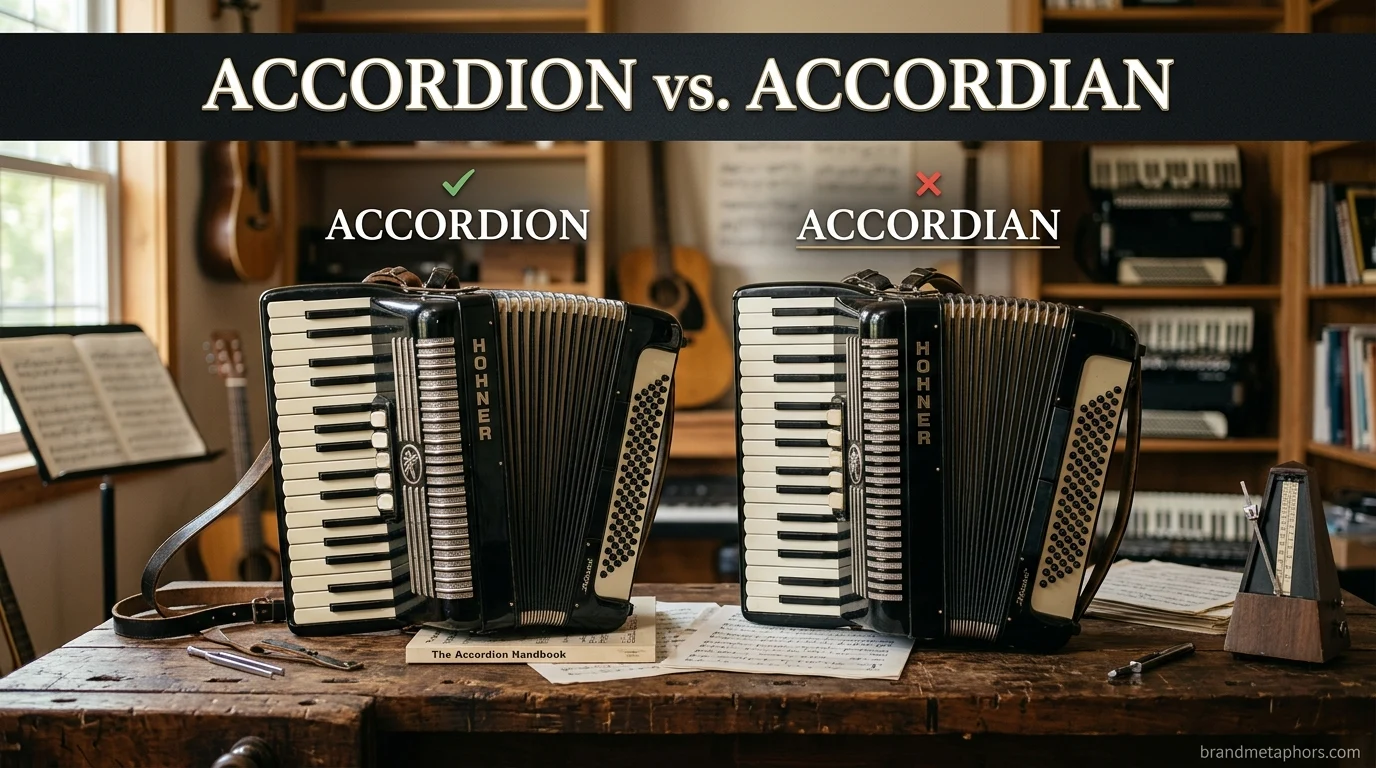
At the same time, accurate spelling is the foundation of credibility. Even a small spelling mistake can change how a reader perceives your writing. One such commonly confused word pair is accordion vs accordian. This confusion may look minor, but it reflects broader issues in English learning such as pronunciation-based spelling errors, memory gaps, and lack of exposure to correct vocabulary forms.
In this article, we will explore the correct spelling, meaning, usage, examples, and learning techniques related to this commonly misspelled word. We will also connect it with writing skills, vocabulary enhancement, and creative expression so learners can improve both accuracy and style.
Understanding the Correct Spelling: Accordion vs Accordian
The correct spelling is accordion.
The incorrect version “accordian” is a common misspelling caused by pronunciation confusion and visual memory errors.
Why “accordion” is correct:
- It comes from the German word Akkordeon
- It refers to a musical instrument with expanding bellows
- The double “c” and double “o” structure is standard in English spelling
Why “accordian” is incorrect:
- It incorrectly replaces “-ion” with “-ian”
- It is influenced by words like “guardian,” “librarian,” or “politician”
- It sounds similar when spoken quickly, leading to spelling confusion
This type of error is common in English learners who rely more on sound than spelling structure.
Meaning of Accordion in Simple Terms
An accordion is a musical instrument that produces sound by squeezing and expanding a bellows while pressing keys or buttons.
Key features:
- Handheld instrument
- Bellows in the center
- Keyboard or buttons on both sides
- Used in folk, classical, and modern music
Simple definition:
An accordion is a musical instrument that makes sound when air flows through reeds as the instrument is expanded and compressed.
Why Spelling Confusion Happens in English Learning
Spelling mistakes like accordion vs accordian happen due to several linguistic and cognitive reasons.
1. Phonetic Misinterpretation
English words are not always spelled the way they sound. Learners often write what they hear.
2. Influence of Similar Word Patterns
Words ending in “-ian” (guardian, musician) mislead learners into thinking “accordian” is correct.
3. Memory Interference (NLP Perspective)
In cognitive linguistics, the brain stores patterns. Similar-sounding words interfere with recall accuracy.
4. Lack of Visual Exposure
If learners rarely see the correct spelling, they rely on guessing.
5. Overgeneralization
Students apply one spelling rule to all words, which leads to errors.
Quick Comparison Table: Accordion vs Accordian
FeatureAccordion (Correct)Accordian (Incorrect)SpellingA-C-C-O-R-D-I-O-NA-C-C-O-R-D-I-A-NUsageStandard EnglishSpelling mistakeDictionary StatusValid wordNot recognizedOriginGerman “Akkordeon”Incorrect formationMeaningMusical instrumentNo meaningExampleShe plays the accordion❌ Incorrect form
Sentence Examples Using “Accordion”
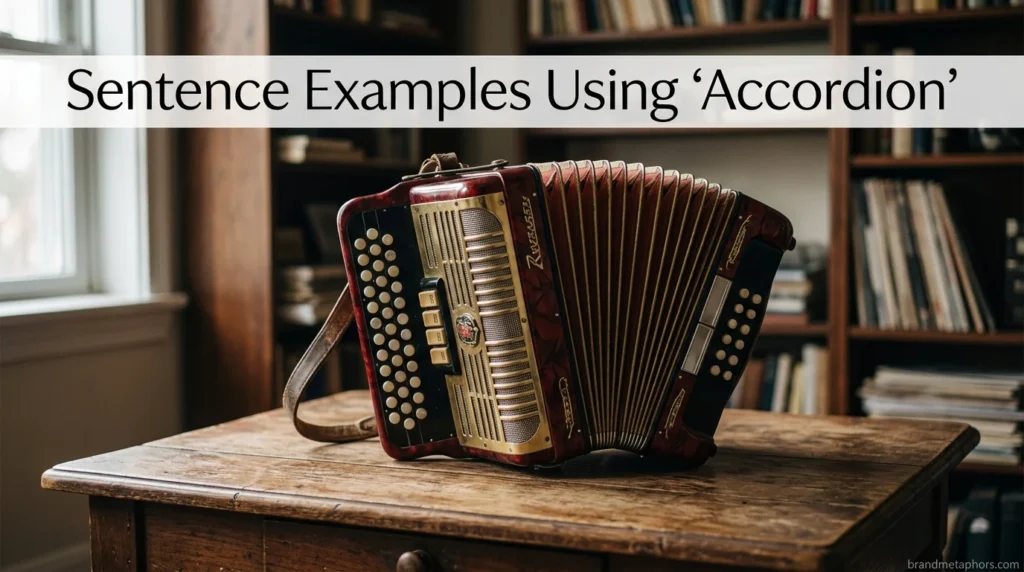
To master vocabulary enhancement, it is important to see how the word is used in real sentences.
Basic examples:
- She played a beautiful tune on the accordion.
- The musician carried his accordion everywhere.
- I learned how to play the accordion at school.
Descriptive language examples:
- The accordion breathed like a living creature, expanding and collapsing with each note.
- Its sound filled the room like waves of emotion rising and falling.
Creative writing examples:
- The street performer’s accordion echoed through the narrow alley like a voice from another world.
- Music flowed from the accordion as if memories were unfolding in the air.
These examples also show how figurative language enhances writing depth.
Connection Between Spelling and Figurative Language
Although spelling and figurative language seem unrelated, both are essential parts of effective communication.
How they connect:
- Spelling ensures clarity
- Figurative language adds creativity
- Together, they improve writing quality
For example:
- Literal: He plays the accordion.
- Figurative: His accordion speaks the language of forgotten dreams.
Here, metaphor and personification turn a simple sentence into expressive writing.
Creative Writing and Descriptive Language Use
In creative writing, words like “accordion” can be used beyond their literal meaning.
Symbolic use:
- Expansion and contraction → life changes, emotions, breathing rhythm
- Sound → nostalgia, culture, tradition
Simile example:
- The music rose like a folding and unfolding accordion of emotions.
Metaphor example:
- Life is an accordion, expanding with joy and contracting with sorrow.
Such usage improves storytelling, emotional tone, and reader engagement.
Common Mistakes Learners Make
Understanding mistakes helps improve accuracy and writing skills.
1. Writing “accordian” instead of “accordion”
Most common spelling error.
2. Overreliance on pronunciation
Writing based on sound rather than structure.
3. Mixing similar suffixes
Confusing “-ion” with “-ian.”
4. Ignoring word origin
Not recognizing borrowed words from other languages.
5. Poor proofreading habits
Failing to check spelling before submission.
When to Use and When to Avoid “Accordian”
As to use “accordion”:
- Music-related writing
- Educational content
- Descriptive essays
- Creative storytelling
- Instrument identification
When NOT to use “accordian”:
- Academic writing
- Exams
- Professional communication
- SEO content
- Formal documents
👉 Simply put, “accordian” should never be used in correct English writing.
Memory Tricks to Remember the Correct Spelling
Here are easy techniques for vocabulary retention:
1. Break it down:
AC-COR-DI-ON
2. Link with sound:
Think of “accordion = correct + ion sound instrument”
3. Visual memory trick:
Imagine the instrument expanding like two “O” shapes opening.
4. Repetition method:
Write the word 5–10 times correctly in sentences.
5. Association method:
Connect “accordion” with “concert” or “music class.”
Practice Exercises for Learners
Exercise 1: Choose the correct spelling
- accordion / accordian
- accordian / accordion
- accordion / accordian
Exercise 2: Fill in the blanks
- He plays the ______ beautifully at concerts.
- The street artist carried his ______ everywhere.
- I want to learn the ______ this year.
Drill 3: Correct the sentence
- She learned to play the accordian.
- The accordian music was loud and emotional.
- He bought a new accordian from the market.
Exercise 4: Creative writing task
Write 3 sentences using the word accordion in a poetic or descriptive way.
FAQs: Accordion vs Accordian
1. What is the correct spelling: accordion or accordian?
The correct spelling is accordion.
2. Why do people write “accordian”?
Because they confuse pronunciation and common word endings like “-ian.”
3. Is “accordian” accepted in English?
No, it is considered incorrect in standard English.
4. What is an accordion used for?
It is a musical instrument used in folk, classical, and modern music.
5. How can I remember the correct spelling?
Break it into syllables (ac-cor-di-on) and practice writing it repeatedly.
Conclusion
Mastering English is not only about learning vocabulary but also about understanding correct spelling patterns, pronunciation challenges, and expressive writing techniques. The confusion between accordion vs accordian is a small but important example of how learners can improve attention to detail.
At the same time, combining spelling accuracy with figurative language, creative writing, and descriptive expression helps transform basic sentences into powerful communication tools. Whether you are a student, writer, or English learner, focusing on both correctness and creativity will significantly enhance your writing skills, vocabulary depth, and confidence.
In the end, precision builds trust, and expression builds impact—and strong writers always master both.