
Introduction
Good writing is more than using correct grammar. It is also about choosing the right words and expressions to share your ideas clearly. Figurative language, idioms, descriptive language, metaphors, similes, and other literary devices make writing more interesting and memorable. They help readers picture ideas, understand emotions, and enjoy reading. Whether you are writing a school essay, a story, a blog post, or simply talking with friends, knowing common English expressions can improve your communication skills.
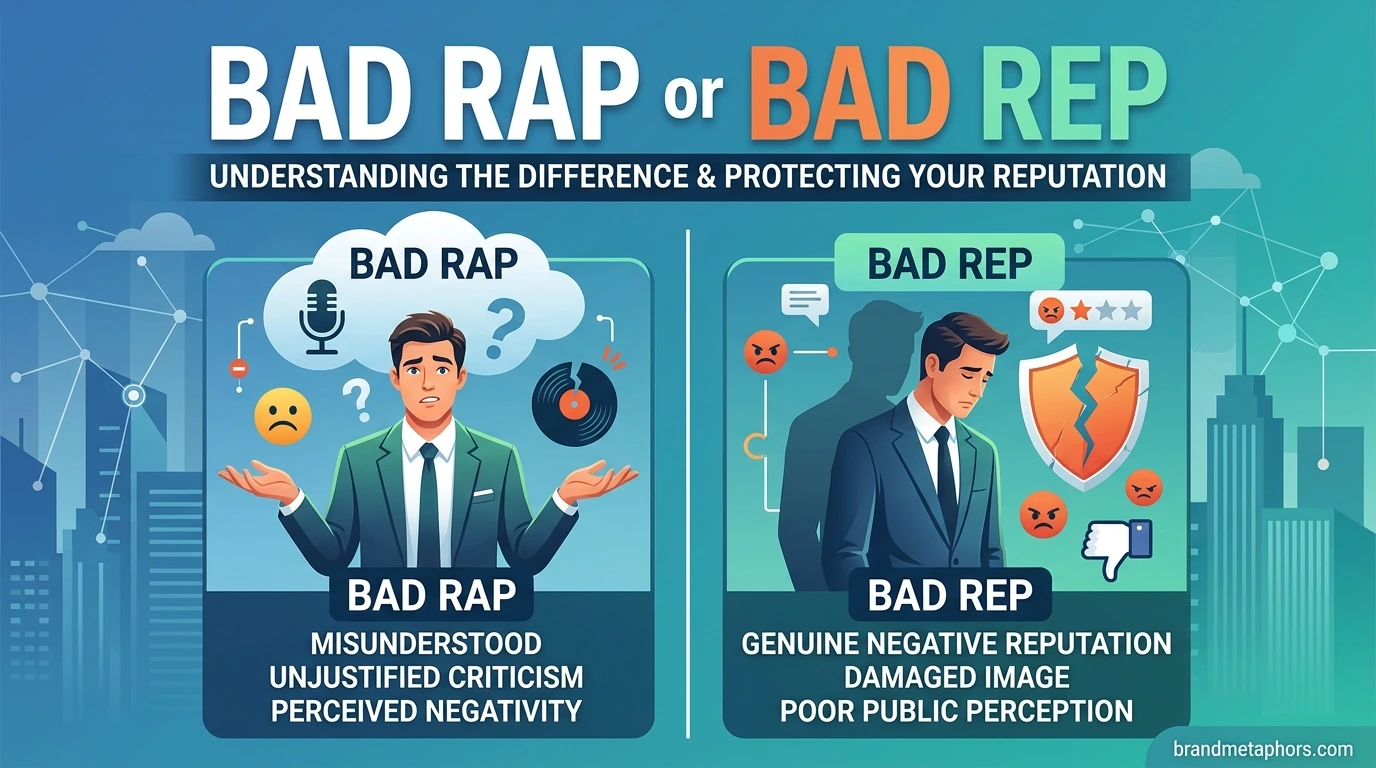
One expression that often confuses English learners is bad rap or bad rep. Many people hear the phrase in conversations but are unsure which version is correct. Since both words sound similar, they are often mixed up in writing. Understanding the difference helps you avoid mistakes and build stronger vocabulary.
This guide explains the correct phrase, its meaning, history, examples, common errors, writing tips, comparison tables, exercises, and frequently asked questions. By the end, you will know exactly when and how to use this expression with confidence.
What Does This Expression Mean?
The correct phrase means that someone or something has an unfairly negative reputation or is blamed unfairly.
In simple words:
- People think badly about someone.
- The bad opinion may not be true.
- The person or thing deserves better treatment.
Simple definition
Meaning: An unfair negative opinion or reputation.
Everyday examples
- The restaurant gets an unfair reputation because of one bad review.
- Cats sometimes receive unfair criticism because of old myths.
- Online learning often gets blamed even though it helps many students.
The expression is commonly used when someone wants to defend a person, place, idea, or object.
Which Version Is Correct?
Many people wonder whether to write bad rap or bad rep.
Here is the answer.
PhraseCorrect?MeaningBad rap✅ YesUnfair reputation or criticismBad repInformal variationShort for “bad reputation” but not the traditional idiom
Although many people say “bad rep” in everyday speech, dictionaries recognize bad rap as the original English idiom.
Why people confuse them
The words rap and rep sound similar when spoken quickly.
People naturally connect “rep” with the word “reputation,” which makes it seem logical.
However, the traditional expression uses rap, not rep.
Where Did the Phrase Come From?
Many people believe the word rap here means blame or accusation.
Years ago, rap could refer to:
- a criminal charge
- blame
- punishment
- criticism
Over time, people began saying someone “got a bad rap” when they were blamed unfairly.
Eventually, the phrase became an everyday idiom describing unfair criticism or an undeserved poor reputation.
Today it is common in:
- newspapers
- books
- television
- business writing
- conversations
- classrooms
Why This Idiom Matters in Everyday English

Idioms make English sound natural.
Learning them helps you:
- understand movies
- enjoy books
- improve speaking
- write naturally
- communicate confidently
Instead of saying:
“The company has an unfair reputation.”
You can say:
“The company gets a bad rap.”
It sounds smoother and more like native English.
Benefits for students
- Better vocabulary
- Stronger essays
- Higher reading skills
- Better speaking confidence
Benefits for writers
- More engaging dialogue
- Natural storytelling
- Realistic conversations
- Richer descriptive language
Comparison Table: Correct vs Incorrect Usage
SituationBetter ChoiceExplanationFormal writingBad rapTraditional idiomAcademic essaysBad rapPreferred by style guidesCasual conversationBad rapMost common expressionInformal speechBad repSometimes heard but less preferredEnglish examsBad rapCorrect answer
Remember
Think of it this way:
Rap = Idiom
Rep = Reputation
The idiom uses rap.
Sentence Examples for Different Situations
Learning through examples makes idioms easier to remember.
School
The new student got a bad rap before anyone met him.
The teacher said the subject gets a bad rap because students think it is too difficult.
Family
My little brother gets a bad rap for every missing cookie.
Dogs of that breed often get a bad rap even though most are friendly.
Work
The company received a bad rap after one mistake.
The manager believes the team gets a bad rap despite working hard.
Travel
The town gets a bad rap because of outdated stories.
The hotel received a bad rap from one unhappy visitor.
Food
Spinach gets a bad rap from children.
Healthy meals often get a bad rap for being boring.
Figurative Language and Related Literary Devices
Although this expression is an idiom, understanding similar literary devices improves writing.
Idiom
An idiom has a meaning different from the individual words.
Example:
“He got a bad rap.”
It does not mean someone was hit.
It means someone received unfair criticism.
Metaphor
A metaphor compares two things without using “like” or “as.”
Example:
Her mind is a library.
Simile
A simile compares using “like” or “as.”
Example:
He is as brave as a lion.
Personification
Giving human qualities to objects.
Example:
The wind whispered.
Hyperbole
An exaggeration.
Example:
I waited forever.
Learning these literary devices improves creative writing and reading skills.
Tone, Style, and When to Use This Expression
Different situations require different language.
Casual conversations
Perfect choice.
Example:
“My hometown gets a bad rap.”
Friendly writing
Works naturally.
Example:
“This movie gets a bad rap.”
News articles
Often used.
Example:
“The neighborhood has long received a bad rap.”
Opinion writing
Useful.
Example:
“Social media gets a bad rap, but it has many benefits.”
Academic writing
Acceptable if the tone is not too formal.
In very formal papers, you may instead write:
- unfair reputation
- undeserved criticism
- negative public opinion
When You Should Avoid Using It

Although useful, this idiom does not fit every situation.
Avoid it when:
Writing legal documents
Use direct language.
Scientific reports
Choose precise vocabulary.
Formal research papers
Replace it with:
- unfair reputation
- negative perception
- undeserved criticism
International audiences
Some readers may not know English idioms.
Simple language may communicate more clearly.
Common Mistakes Students Make
Many English learners make similar errors.
Mistake 1
❌ Bad rep is always correct.
✅ The traditional idiom is bad rap.
Mistake 2
Thinking it means someone talks badly.
Actually, it refers to receiving unfair blame.
Mistake 3
Using it literally.
The phrase is figurative.
Mistake 4
Using it in extremely formal writing.
Better choices include:
- unfair reputation
- undeserved criticism
Mistake 5
Misspelling the phrase.
Double-check spelling before submitting school assignments.
Vocabulary Enhancement and Similar Expressions
Learning related expressions expands your vocabulary.
Similar phrases
- unfair reputation
- undeserved criticism
- negative image
- poor public opinion
- false impression
- blamed unfairly
- misunderstood
- wrongly judged
- unfair label
- undeserved blame
Opposite expressions
- good reputation
- respected
- admired
- highly regarded
- trusted
- well respected
- positive image
Using a variety of expressions makes your writing richer and more interesting.
Practice Exercises
Try these activities to test your understanding.
Exercise 1
Choose the correct sentence.
A. The library gets a bad rep.
B. The library gets a bad rap.
Answer: B
Exercise 2
Fill in the blank.
Many snakes receive unfair criticism. They often get a ________.
Answer: bad rap
Exercise 3
Rewrite using simple words.
“The museum gets a bad rap.”
Possible answer:
“The museum has an unfair reputation.”
Exercise 4
Write your own sentence about:
- a sport
- a book
- a city
- a school subject
- an animal
Try using the idiom correctly.
Exercise 5
Circle the figurative language.
“The old house gets a bad rap because people think it is haunted.”
Answer:
The idiom is the figurative expression.
Quick Comparison Tables
Meaning Comparison
ExpressionMeaningBad rapUnfair criticismBad reputationPoor reputationFalse accusationWrong blameNegative imagePoor public opinion
Formality Comparison
SituationRecommended ChoiceSchool essayBad rap or unfair reputationBusiness emailUnfair reputationStory writingBad rapSpeechBad rapResearch paperNegative reputation
Related Literary Devices
DeviceExampleIdiomGot a bad rapSimileQuiet as a mouseMetaphorTime is moneyPersonificationThe stars dancedHyperboleI have told you a million times
Frequently Asked Questions
1. Which phrase is correct?
The traditional and dictionary-approved idiom is bad rap.
2. Is bad rep wrong?
It is commonly heard in conversation because people connect it with “reputation,” but it is generally considered a variation rather than the original idiom.
3. What does the phrase mean?
It means someone or something receives unfair criticism or has an undeserved negative reputation.
4. Can I use it in school writing?
Yes. It works well in most school assignments unless your teacher requests very formal language.
5. How can I remember the correct version?
Remember this simple tip:
Rap = the idiom
Rep = reputation
The idiom uses rap.
Conclusion
Learning English idioms helps you become a stronger reader, writer, and speaker. This common expression is a great example of how spoken English can sometimes confuse learners because words sound alike. While many people casually say “bad rep,” the traditional and widely accepted idiom is bad rap, meaning someone or something has received unfair criticism or an undeserved negative reputation.
Understanding the history, meaning, sentence examples, comparison tables, tone, and common mistakes allows you to use this expression naturally and confidently. Along with learning idioms, practicing metaphors, similes, descriptive language, and other literary devices will improve your creative writing, vocabulary, and communication skills.
Keep reading, writing, and practicing new expressions every day. Small improvements in vocabulary lead to stronger essays, clearer conversations, and greater confidence in English.