
Introduction
Good writing is more than using correct grammar. It is also about choosing the right words. A single spelling mistake can completely change the meaning of a sentence. Learning the difference between similar-looking words helps students, writers, and English learners communicate more clearly.
Figurative language also plays an important role in improving communication. Metaphors, similes, idioms, descriptive language, and other literary devices make writing more interesting and memorable. Whether you are writing a school essay, a poem, a story, or a professional email, a rich vocabulary helps you express ideas with confidence.
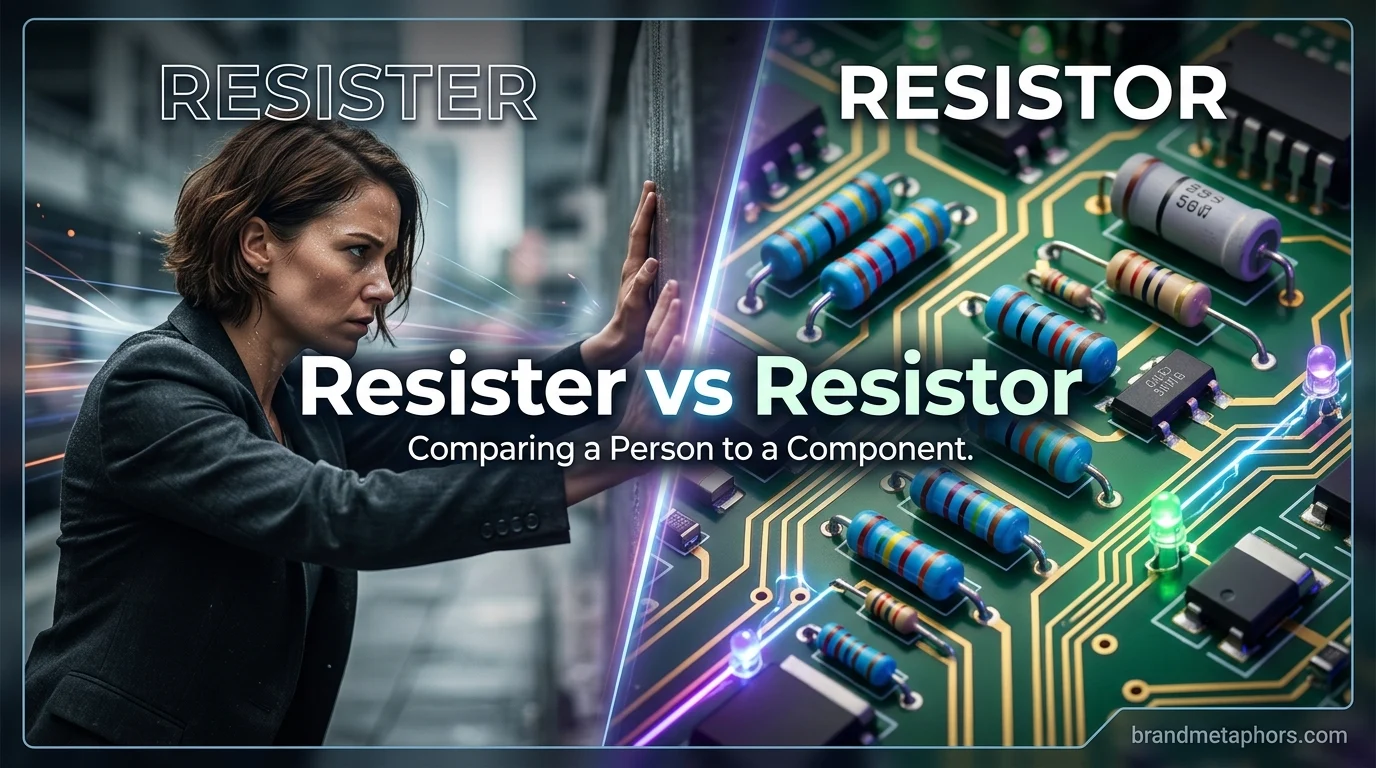
Some words confuse people because they look almost the same. One common example is resister and resistor. Although they differ by only one letter, they have completely different meanings. One refers to a person who resists something, while the other is an electronic component used in electrical circuits.
This guide explains both words in simple language. You will learn their meanings, pronunciation, uses, examples, common mistakes, comparison tables, writing tips, and practice exercises. By the end, you will know exactly which word to use in every situation.
What Do These Two Words Mean?
Although they look similar, these words belong to different fields.
WordPart of SpeechMeaningUsed InResisterNounA person who opposes or refuses somethingPeople, society, historyResistorNounAn electronic component that limits electric currentElectronics, engineering
The easiest way to remember them is this:
- Resister = Person
- Resistor = Electronic device
The difference is small in spelling but huge in meaning.
What Is a Resister?
A resister is a person who refuses to obey, accept, or support something.
A resister may oppose:
- Unfair rules
- Bad habits
- Pressure from others
- Violence
- Corruption
- Temptation
- Oppression
The word comes from the verb resist, meaning “to fight against or refuse.”
Examples
- She became a brave resister during difficult times.
- The young resister stood up for justice.
- Every resister believed freedom was worth fighting for.
- He was known as a peaceful resister.
- The community honored every resister who protected human rights.
In all these examples, the word describes a person.
What Is a Resistor?
A resistor is a small electronic component used in electrical circuits.
Its main job is to control or reduce the flow of electricity.
Without resistors:
- Circuits could overheat.
- Components could burn out.
- Electrical devices might stop working.
Resistors are found in:
- Computers
- Mobile phones
- Televisions
- Radios
- LED lights
- Cars
- Home appliances
Examples
- The technician replaced the damaged resistor.
- Every circuit contains at least one resistor.
- The resistor protects the LED from too much current.
- Engineers selected a higher-value resistor.
- The broken resistor caused the circuit to fail.
Notice that every example relates to electronics.
Quick Comparison Table
FeatureResisterResistorRefers toA personAn electronic componentFieldLanguage, history, societyElectronicsComes fromResistResistLiving or non-livingLiving personNon-living objectUsed in writingYesUsually technical writingUsed in engineeringNoYes
How to Remember the Difference Easily

Many learners confuse these words because they sound almost alike.
Here are simple memory tricks.
Trick 1: Think of the Ending
ResistER
The ending -er often refers to a person.
Examples:
- Teacher
- Writer
- Painter
- Runner
- Farmer
A resister is also a person.
Trick 2: Think of Technology
ResistOR
Many electronic parts end with -or.
Examples include technical terms used in science and engineering.
So remember:
Resistor belongs in electronics.
Trick 3: Ask Yourself a Question
Ask:
“Am I talking about a person?”
If yes, choose resister.
Ask:
“Am I talking about an electrical circuit?”
If yes, choose resistor.
Sentence Examples in Different Situations
Using “Resister”
- The brave resister never gave up.
- Every resister wanted peace.
- She became a respected resister.
- A young resister inspired the whole town.
- The resister refused to follow unfair laws.
- He remained a calm resister despite pressure.
- The history book described each resister.
- Every resister believed change was possible.
Using “Resistor”
- The resistor reduced the electrical current.
- We soldered a new resistor onto the board.
- The resistor protected the circuit.
- Every electronics student studies how a resistor works.
- The resistor became too hot.
- Replace the damaged resistor immediately.
- A resistor is measured in ohms.
- The resistor prevented the LED from burning out.
When to Use Each Word
Use “Resister” When Talking About
- History
- Social movements
- Human rights
- Personal courage
- Standing against injustice
- Refusing bad influences
- Moral choices
Example:
A peaceful resister inspired many people.
Use “Resistor” When Talking About
- Electricity
- Engineering
- Electronic circuits
- Science
- Robotics
- Technology
- Electrical repair
Example:
The resistor controls the flow of electricity.
Common Mistakes Students Make
Mistake 1
❌ The engineer replaced the resister.
✅ The engineer replaced the resistor.
Mistake 2
❌ Every resistor fought against injustice.
✅ Every resister fought against injustice.
Mistake 3
Confusing spelling because the words sound similar.
Always remember:
Person = resister
Electronic component = resistor
Mistake 4
Using the wrong word in school assignments.
Science class:
Use resistor.
History class:
Use resister.
Comparison Examples
These pairs make the difference very clear.
Example 1
❌ The resistor joined the protest.
✅ The resister joined the protest.
Example 2
❌ The electrician installed a new resister.
✅ The electrician installed a new resistor.
Example 3
❌ Every resistor believed in freedom.
✅ Every resister believed in freedom.
Example 4
❌ The circuit needed another resister.
✅ The circuit needed another resistor.
Figurative Language and Creative Writing
Although these words have literal meanings, one of them can also inspire creative writing.
Metaphor Examples
- She was a resistor, slowing the rush of anger before it spread.
- His patience became a resistor against fear.
- Hope acted like a resistor that controlled panic.
These metaphors compare emotional control to electrical resistance.
Simile Examples
- She stood like a fearless resister.
- His calm mind was like a resistor protecting the heart.
- The team acted like resisters against injustice.
Descriptive Language
Creative descriptions include:
- fearless defender
- courageous opponent
- determined protester
- protective barrier
- calming influence
- quiet strength
Poetic Expression
Poets often describe people resisting fear, darkness, or injustice.
Example:
“She stood against the storm, A quiet resister, Unmoved by the strongest winds.”
Idiom Meaning
Although neither word is an idiom, they work well beside common idioms.
Examples:
- Stand your ground.
- Hold your ground.
- Fight the good fight.
- Stay strong.
- Keep your head up.
These expressions describe determination similar to the actions of a resister.
Vocabulary Enhancement
Learning similar words improves writing skills.
Related Words for Resister
- protester
- defender
- activist
- reformer
- dissenter
- opponent
- challenger
- freedom fighter
- campaigner
Related Words for Resistor
- electronic component
- circuit element
- electrical device
- conductor partner
- electrical part
Knowing related vocabulary makes your writing richer and more accurate.
Writing Tips for Students
Choosing the right word improves your writing.
In Essays
Use precise vocabulary.
Example:
The young resister inspired many citizens.
In Science Reports
Use technical language.
Example:
The resistor limits current in the circuit.
In Stories
Describe characters clearly.
Example:
The brave resister refused to surrender.
In Creative Writing
Use metaphors carefully.
Example:
Her kindness became a resistor against hatred.
When to Avoid Each Word
Avoid resister when discussing electronics.
Incorrect:
The resister protected the computer.
Correct:
The resistor protected the computer.
Avoid resistor when discussing people.
Incorrect:
The resistor spoke against injustice.
Correct:
The resister spoke against injustice.
Always choose the word that matches the topic.
Practice Exercises
Exercise 1
Choose the correct word.
- The ______ repaired the circuit.
Answer: resistor
- The brave ______ refused to surrender.
Answer: resister
- Every LED needs a ______.
Reply: resistor
- The peaceful ______ inspired many people.
Answer: resister
- The broken ______ stopped the circuit.
Answer: resistor
Exercise 2
Correct the mistake.
- The resister controls electric current.
Correct:
The resistor controls electric current.
- The resistor joined the protest.
Correct:
The resister joined the protest.
- Every resistor fought for justice.
Correct:
Every resister fought for justice.
- Replace the damaged resister.
Correct:
Replace the damaged resistor.
Exercise 3
Write Your Own Sentences
Create:
- Two sentences using resister
- Two sentences using resistor
- One metaphor using resistor
- One simile using resister
This exercise strengthens vocabulary and writing skills.
Frequently Asked Questions
1. Are these words interchangeable?
No. They have completely different meanings.
2. Which word refers to electronics?
Resistor is the correct word for electronic circuits.
3. Which word describes a person?
Resister refers to a person who opposes or refuses something.
4. Which spelling mistake is more common?
Many learners accidentally replace one word with the other because they sound similar.
5. How can I remember the difference?
Think:
- Person = resister
- Circuit = resistor
That simple rule works almost every time.
Conclusion
Words that look alike often create confusion, but understanding their meanings makes writing clearer and more accurate. A resister is a person who stands against something, such as injustice, pressure, or unfair treatment. A resistor, on the other hand, is an electronic component that controls the flow of electricity in a circuit.
Learning the difference is useful for school assignments, creative writing, science classes, and everyday communication. It also strengthens vocabulary, improves grammar, and helps you avoid common spelling mistakes. As you continue building your language skills, pay close attention to context. Asking whether you are talking about a person or an electronic device will quickly lead you to the correct choice.
Finally, keep practicing with sentence writing, comparison exercises, metaphors, similes, and descriptive language. The more you read and write, the easier it becomes to recognize similar-looking words and use them with confidence.