

Introduction
English is full of colorful expressions that make conversations more interesting. Some phrases paint a clear picture even though they do not mean exactly what the words say. One popular example is stick a fork in it.
You may hear someone say this after a sports game, during a business meeting, or while talking about a TV show. At first, the phrase sounds like it has something to do with food. However, its real meaning is very different.
This guide explains everything you need to know about this common idiom. You’ll learn its meaning, origin, uses, examples, similar expressions, common mistakes, and practical tips for using it correctly. Whether you are an English learner, student, writer, or language lover, this guide will help you understand and use this expression with confidence.
What Does This Idiom Mean?
The expression means that something is completely finished, beyond repair, or has no chance of recovering.
People use it when they believe a person, project, business, team, or situation has reached its end.
Simple definition
The situation is over, and nothing can change the result.
It often suggests that trying to continue would be pointless.
Easy examples
- Our old washing machine finally stopped working. It’s done.
- The company lost its biggest customers. It may never recover.
- After five turnovers, the football game was over.
- The battery won’t charge anymore.
In every example, the speaker believes the outcome cannot be changed.
Where Did This Expression Come From?
The phrase comes from cooking.
When people cook foods like potatoes, cakes, or meat, they often test whether the food is ready by pushing a fork into it.
If the fork slides in easily, the food is cooked.
Over time, English speakers began using this cooking idea as a metaphor. Instead of talking about food, they started using it for situations that were completely finished.
Today, the idiom is common in:
- Daily conversations
- Sports commentary
- Business discussions
- News articles
- Social media
- Movies and television
The expression has become a natural part of informal English.
When Should You Use This Expression?
This idiom fits many everyday situations.
1. Sports
Fans often use it when one team clearly cannot come back.
Example:
The score is 42–7 with two minutes left. The game is over.
2. Business
Companies sometimes fail after years of financial problems.
Example:
After losing another major contract, the business may not survive.
3. Technology
Old devices eventually stop working.
Example:
My laptop won’t turn on anymore.
4. Personal Goals
Sometimes people give up on a project after repeated failures.
Example:
We’ve tried fixing the old website five times.
5. Entertainment
People may describe a television series that has lost its audience.
Example:
After the poor final season, many fans felt the show was finished.
Different Ways the Idiom Is Used
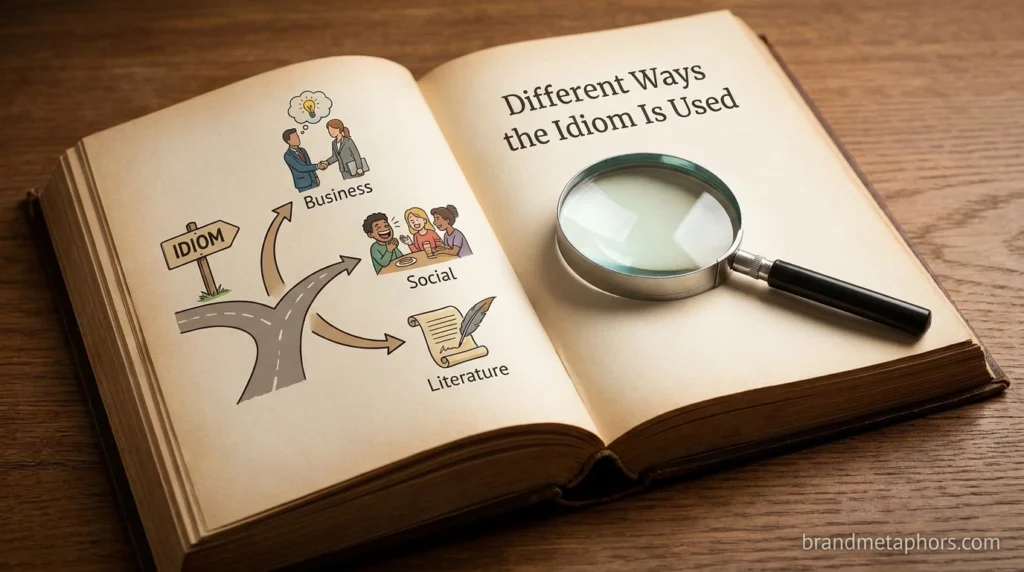
Although the basic meaning stays the same, the phrase appears in different situations.
SituationMeaningExampleSportsNo chance of winningThe match is over.BusinessCompany is failingSales dropped too far.TechnologyDevice cannot be fixedThe phone finally died.RelationshipsConnection has endedThey decided to move on.PoliticsCampaign cannot recoverThe election hopes disappeared.EntertainmentPopularity is goneThe series lost its audience.
Example Sentences
Here are examples you can use in daily English.
Everyday Life
- My bicycle broke again. It’s finished.
- The flowers didn’t survive the heat.
- That old sofa has completely worn out.
School
- I forgot to study and failed every test.
- The science project was ruined after the computer crashed.
Work
- Our printer has stopped working forever.
- The project missed every deadline.
Sports
- The home team is losing by thirty points.
- Their championship hopes disappeared after today’s loss.
Fun Examples
- The pizza disappeared in five minutes.
- My phone battery lasts only ten minutes now.
Why People Like Using This Idiom
Native speakers enjoy idioms because they make language more colorful.
This expression is popular because it is:
- Easy to remember
- Visual and descriptive
- Funny in many situations
- Short and direct
- Useful in everyday speech
Instead of saying,
“This situation cannot recover.”
people often prefer a more vivid expression.
It sounds natural in casual conversations.
Similar Expressions
English has many idioms with nearly the same meaning.
Call it a day
Meaning: Stop working because the task is finished.
Example:
We’ve worked long enough.
Game over
Meaning: The situation has ended.
Example:
They lost every chance to win.
Dead in the water
Meaning: Unable to continue.
Example:
Without funding, the project cannot move forward.
Done for
Meaning: Certain to fail.
Example:
The old car won’t survive another winter.
The end of the road
Meaning: The final stage.
Example:
Their journey has reached its conclusion.
Common Mistakes to Avoid
Many English learners misunderstand this idiom.
Mistake 1: Using it literally
Incorrect thinking:
Someone is putting a fork into an object.
Correct meaning:
It is a figurative expression.
Mistake 2: Using it too early
Do not use it when there is still a realistic chance of success.
Incorrect:
The team is losing by one point in the first quarter.
Correct:
Use it only when recovery seems impossible.
Mistake 3: Using it in formal writing
This phrase is informal.
Avoid it in:
- Academic papers
- Legal documents
- Scientific reports
- Official government writing
Instead, use words like:
- Completed
- Finished
- Irrecoverable
- No longer viable
Why Learning Idioms Improves Your English
Understanding idioms helps you:
- Speak more naturally
- Understand movies
- Enjoy books
- Follow podcasts
- Improve listening skills
- Increase vocabulary
- Write more creatively
- Sound more fluent
Idioms also help readers understand emotion and tone.
For writers, they add descriptive language without making sentences long or boring.
Tips for Remembering the Meaning

Learning idioms becomes easier with simple memory tricks.
Picture the Scene
Imagine checking a baked potato with a fork.
If the fork slides in easily, the food is ready.
Now imagine applying that idea to life.
The job is finished.
The game is over.
The project cannot continue.
Practice Daily
Create your own sentences.
Examples:
- My old backpack finally broke.
- The movie series ended badly.
- The broken chair cannot be repaired.
Writing your own examples helps the phrase become natural.
Listen for It
Watch:
- Sports broadcasts
- Sitcoms
- YouTube videos
- Podcasts
- American TV shows
Native speakers often use this idiom during discussions about competition and failure.
Real-Life Situations
Here are realistic examples.
Business
A restaurant loses customers for two years and closes.
Employees say the business was already finished months earlier.
Sports
A basketball team trails by forty points with one minute remaining.
Commentators know the outcome is decided.
Technology
An eight-year-old computer refuses to start.
The repair shop says replacing it will cost more than buying a new one.
School
A student misses every assignment and cannot pass the course.
Teachers know recovery is almost impossible.
Home
After many repairs, the washing machine finally stops forever.
Buying a replacement becomes the best choice.
When You Should Avoid Using It
Although useful, the idiom does not fit every conversation.
Avoid using it when:
- Speaking very formally
- Giving official presentations
- Writing research papers
- Talking about sensitive personal issues where it may sound harsh
- Encouraging someone who still has a real chance to succeed
Choose your words carefully depending on the audience.
Frequently Asked Questions
1. What does this idiom mean?
It means something is completely finished or beyond recovery.
2. Is it formal or informal?
It is mainly informal and best for conversations and casual writing.
3. Can I use it at work?
Yes, in casual workplace conversations. Avoid it in formal reports.
4. Does it always refer to failure?
No. Sometimes it simply means something has reached its natural end.
5. Is it common in American English?
Yes. It is very common in American English and widely understood elsewhere.
6. Can I use it in creative writing?
Yes. It adds vivid, conversational language to stories and dialogue.
7. Is it suitable for students?
Yes. English learners often study it because it appears in movies, books, and conversations.
8. What expressions have similar meanings?
Common alternatives include:
- Game over
- Done for
- Dead in the water
- Call it a day
- The end of the road
Conclusion
This popular English idiom is an easy way to describe situations that have reached their final stage. Although it began as a cooking reference, it now appears in conversations about sports, business, technology, relationships, and everyday life.
Learning expressions like this expands your vocabulary, improves your listening skills, and makes your speech sound more natural. Remember that it works best in informal settings and should be used only when something is truly finished or beyond recovery.
The more idioms you learn and practice, the more confident and fluent your English will become. Try using this expression in your own conversations, writing, and storytelling to make your language more engaging and expressive.