

Language becomes more powerful when we understand the expressions people use in daily life. Some phrases are short, but they carry a strong message. One such expression is for all the marbles. You may hear it in sports, movies, classrooms, workplaces, or casual conversations. It sounds playful, but its meaning is serious. It points to a moment when everything is at stake.
This article explains the phrase in clear and easy words. You will learn what it means, where it came from, how it is used, why it matters, and how to use it correctly in speaking and writing. If you are a student, writer, English learner, or content creator, this guide will help you understand the idiom with confidence.
What Does “For All the Marbles” Mean?
This expression means for everything that matters in a contest, decision, or important moment. It describes a situation where the final result will decide the winner, the success, or the full outcome.
In simple words, it means:
- the final and most important round
- the moment when everything is at stake
- a high-pressure situation with a big reward or loss
- the deciding event that settles it all
Simple definition
If someone says, “This game is for all the marbles,” they mean:
- the winner of this game gets everything
- the result of this game matters most
- this is the final deciding moment
Easy example
- After winning three rounds each, the last round was for all the marbles.
Here, the last round decides the whole competition.
The Core Idea Behind the Idiom
At its heart, this phrase is about high stakes. It is not really about marbles as toys. Instead, it uses marbles as a symbol for everything valuable in the game.
The expression often appears when:
- there is a final match or deciding test
- both sides have reached the last stage
- one action will decide success or failure
- emotions, pressure, and importance are high
The feeling behind the phrase
When people use this idiom, they usually want to show:
- excitement
- tension
- seriousness
- competition
- importance
That is why the phrase works so well in sports, debates, business decisions, and even family board games.
Origin of the Expression
The exact history is not always explained in one fixed story, but the phrase is widely linked to the old game of marbles. In that game, children sometimes played for keeps or competed to win each other’s marbles. Marbles were the “prize” or the “stakes” of the game.
So if one final turn would decide who got all the marbles, that moment truly was for all the marbles.
Why marbles?
In the past, marbles were:
- collected and valued by children
- used in games with winners and losers
- treated like small treasures
- something you could win or lose
Over time, the phrase moved beyond the game itself and became a figurative expression in English.
Figurative meaning developed
The literal idea was:
- “Whoever wins this turn gets all the marbles.”
The figurative meaning became:
- “This is the final moment that decides everything.”
This is how many idioms grow. A simple real-life activity turns into a powerful expression used in many situations.
Literal Meaning vs Figurative Meaning
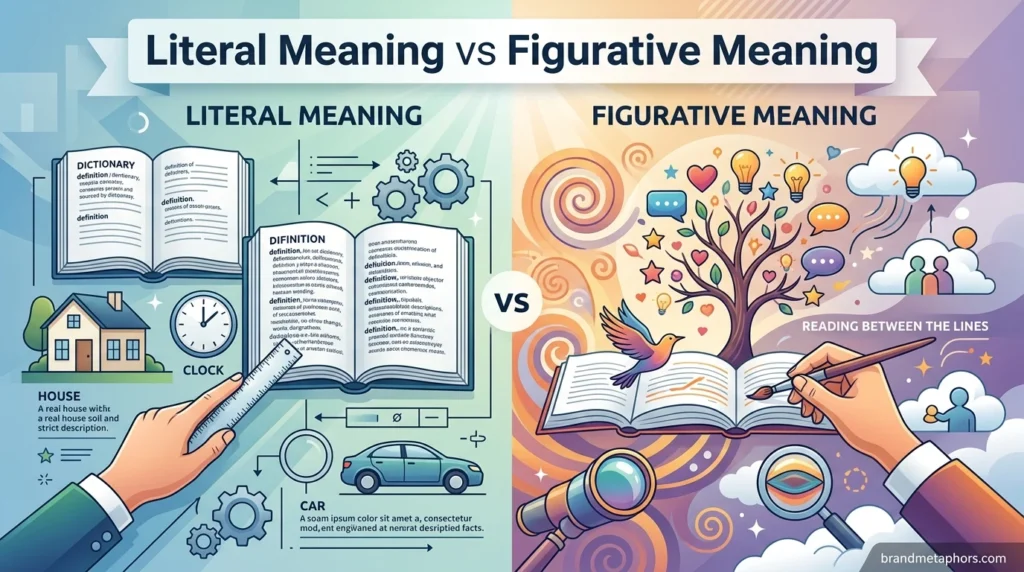
Understanding the difference between literal and figurative meaning helps English learners use idioms correctly.
TypeMeaningExampleLiteralReal marbles in a marble game“The kids played for all the marbles in the jar.”FigurativeA final or decisive moment where everything is at stake“The championship match was for all the marbles.”
Why this matters
If you take the phrase literally in every case, you may misunderstand the speaker. Most of the time, people are not talking about toy marbles. They are talking about:
- a final exam
- a sports final
- a business deal
- a contest
- a life-changing decision
So the phrase belongs to figurative language, which is common in English speaking and writing.
When People Use This Expression
This idiom is used in situations where the result really matters. It often appears in informal speech, journalism, sports commentary, and storytelling.
Common situations
1. Sports and competitions
- “Tonight’s match is for all the marbles.”
- “The last penalty kick was for everything.”
2. Exams and academics
- “The final presentation is for all the marbles because it counts for 40% of the grade.”
3. Business and career
- “This pitch meeting is for all the marbles. If they approve it, the company lands the contract.”
4. Elections and debates
- “The final debate felt like it was for all the marbles.”
5. Games and reality shows
- “The final challenge was for all the marbles.”
6. Personal life decisions
- “His interview at the dream company felt like it was for all the marbles.”
Tone of the phrase
The phrase can sound:
- dramatic
- playful
- competitive
- motivating
- emotional
That makes it useful in both casual and expressive writing.
Examples in Real-Life Contexts
The best way to learn an idiom is to see it in action. Below are real-life style examples in different settings.
sports
- After a tied series, Game 7 was for all the marbles.
- The final over in the cricket match was for everything.
- The coach told the team, “This is the moment we trained for. It’s for all the marbles.”
school
- She had done well all semester, but the final exam was for all the marbles.
- The scholarship interview felt like the deciding moment.
- Their science fair presentation was the last step, and it was for all the marbles.
business
- The investors liked the early ideas, but the final pitch was for all the marbles.
- Months of planning led to one meeting that would decide the future of the project.
- The company’s biggest client renewal felt like a make-or-break moment.
everyday life
- The final round of the family quiz night was for all the marbles.
- His driving test felt like everything depended on it.
- The last interview round was for all the marbles because it would decide the job offer.
entertainment
- The final episode challenge was for all the marbles.
- The singer saved her best performance for the round that decided the winner.
These examples show that the phrase works whenever there is a decisive turning point.
Similar Phrases and Related Expressions

English has many expressions that carry a similar idea. Learning them can improve vocabulary and help you vary your writing.
Similar idioms and phrases
1. Winner takes all
This means the winner gets everything.
- Example: “In this final round, it’s winner takes all.”
2. The whole ball game
This means the entire matter or main result.
- Example: “That final vote changed the whole ball game.”
3. Everything on the line
This means a lot is at risk.
- Example: “She went into the interview with everything on the line.”
4. Make-or-break moment
This describes a point that can lead to success or failure.
- Example: “The product launch is a make-or-break moment for the brand.”
5. High-stakes situation
A more formal phrase for a very important and risky situation.
- Example: “The trial became a high-stakes legal battle.”
Quick comparison table
ExpressionMeaningToneFor all the marblesFinal deciding moment where everything is at stakeInformal, vividWinner takes allThe winner gets everythingCompetitiveEverything on the lineA lot is at riskSeriousMake-or-break momentA critical point that decides success or failureCommon, strongHigh-stakesInvolving serious risk or importanceMore formal
Using related expressions helps with:
- vocabulary growth
- stronger writing
- better understanding of idioms
- more natural English conversation
How to Use It Correctly in Sentences
Many learners understand an idiom but feel unsure about how to place it in a sentence. The good news is that this expression is easy to use once you know the pattern.
Common sentence patterns
1: [Event] + was/is + for all the marbles
- The final match was for all the marbles.
- Tomorrow’s interview is for all the marbles.
2: [Action/round/game] + became + for all the marbles
- The final set became for all the marbles after both players tied.
3: Use it after context
- We had each won one round, so the last challenge was for all the marbles.
More sentence examples
- The final presentation is for all the marbles, so prepare well.
- We lost the first game, won the second, and now the third is for everything.
- The election runoff feels like it is for all the marbles.
- One final decision will settle the case once and for all.
Writing tip
This idiom works best in:
- blog posts
- speeches
- storytelling
- sports writing
- conversation
- opinion pieces
It may sound too informal in very strict academic or legal writing, unless you are using it for style or quotation.
Common Mistakes to Avoid
Idioms can be tricky when translated word by word. Here are some common mistakes and how to avoid them.
1. Taking it literally in the wrong context
If someone says, “The final interview is for all the marbles,” they do not mean real marbles are involved.
2. Using it in a low-stakes situation
The phrase works best when the situation is important. It sounds odd if nothing serious depends on the result.
Weak example:
- “Choosing between two pens was for all the marbles.”
This only works if you are joking.
3. Using it too often
Idioms are powerful because they stand out. If you use them in every paragraph, they lose effect.
4. Confusing it with money only
The phrase does not only mean money. It can also refer to:
- success
- reputation
- a title
- a scholarship
- a trophy
- a major opportunity
5. Using it in the wrong tone
In formal reports, you may prefer phrases like:
- decisive moment
- final determining stage
- high-stakes phase
- critical turning point
Why Idioms Like This Matter in English Learning
Learning idioms is not just about memorizing funny phrases. It helps you understand how native speakers think, speak, and write.
Benefits of learning idioms
1. Better listening skills
Movies, interviews, podcasts, and sports commentary often use figurative language. Idioms help you catch the real meaning.
2. Stronger speaking confidence
When you know expressions like this, your English sounds more natural and expressive.
3. Better reading comprehension
News articles, novels, and blogs use idioms to add energy and emotion.
4. More engaging writing
Writers use idioms to make content lively, relatable, and memorable.
5. Cultural understanding
Idioms often reflect history, play, work, and habits from everyday life.
Example of richer writing
Compare these two sentences:
- The final round was important.
- The final round was for all the marbles.
The second sentence feels more vivid. It creates tension and emotion.
The Role of This Idiom in Writing and Storytelling
Writers often look for phrases that make a scene feel alive. This expression does exactly that. It tells the reader that the next moment matters deeply.
Why writers use it
It helps create:
- suspense
- drama
- emotional intensity
- a sense of competition
- a clear turning point
In creative writing
Imagine a story about a young athlete, a spelling bee, or a courtroom trial. Instead of saying “the final round was important,” a writer may say:
- This was for all the marbles.
That one line adds energy and rhythm.
In persuasive writing
The phrase can also strengthen opinion writing or speeches.
Example:
- The next vote is for all the marbles because it will shape the future of the policy.
In sports commentary
Commentators love short dramatic phrases. This one fits perfectly because it quickly tells the audience:
- this is the big moment
- everything depends on what happens next
Real-Life Lessons Hidden Inside the Expression

Idioms often reflect more than language. They also reflect life. This phrase reminds us of how people feel in moments of pressure, challenge, and competition.
Life lessons connected to the phrase
1. Big moments require preparation
When something important is at stake, preparation matters.
2. Pressure is part of growth
Many important opportunities feel stressful because they matter.
3. Final moments often reveal character
How people act under pressure shows discipline, courage, and focus.
4. Not every moment is equal
Some situations truly carry more weight than others.
5. Calm thinking matters in decisive moments
When everything feels important, clear thinking becomes even more valuable.
Everyday situations where this idea appears
- job interviews
- final exams
- championship matches
- visa interviews
- important family decisions
- business pitches
- public speaking contests
This is why the idiom stays popular. It connects language with real human experience.
Best Alternatives for Formal and Informal Use
Sometimes you may want a phrase with the same meaning but a different style. Here are good alternatives based on tone.
Informal alternatives
Use these in conversation, blog writing, and casual content:
- winner takes all
- the big moment
- the final showdown
- everything rides on this
- the deciding round
Neutral alternatives
Use these in general writing:
- the decisive stage
- the final turning point
- the determining moment
- the crucial round
Formal alternatives
Use these in essays, reports, or professional communication:
- a high-stakes decision point
- a critical phase
- the conclusive stage
- the final determining factor
Example swaps
Instead of:
- The interview is for all the marbles.
You could say:
- The interview is the decisive stage of the hiring process.
- Everything depends on the final interview.
- This is a make-or-break moment.
Practice Sentences for Students and English Learners
If you want to remember an idiom, use it in your own examples. Below are practice sentences that show different situations.
Fill-in style examples
Try reading these aloud:
- We both scored the same marks, so the final quiz was __________.
- The team had worked all season, and the last match was __________.
- She passed every step, but the final interview felt like __________.
- The final round of the debate competition was __________.
- The company had one chance to impress the client, so the meeting was __________.
Model answers
- for all the marbles
- for all the marbles
- it was for all the marbles
- for all the marbles
- for all the marbles
Create your own examples
Write one sentence for each topic:
- sports
- school
- job interview
- business
- family game night
This is one of the fastest ways to remember figurative expressions.
Frequently Asked Questions
1) What does “for all the marbles” mean in simple words?
It means the final moment that decides everything. It is used when the result is very important and everything is at stake.
2) Is this phrase literal or figurative?
It is usually figurative. Most of the time, it does not refer to real marbles. It refers to a deciding event, game, or moment.
3) Where did this idiom come from?
It is commonly linked to the old game of marbles, where players could compete to win marbles. Over time, it came to mean a final contest for everything.
4) Can I use this phrase in academic writing?
You can, but it is more common in informal or semi-formal writing. In formal essays, phrases like decisive moment or high-stakes stage may be more suitable.
5) Is it only used for sports?
No. It can be used for many situations, such as:
- exams
- business deals
- interviews
- elections
- contests
- final decisions
6) What is a synonym for this expression?
Some close alternatives are:
- winner takes all
- everything on the line
- make-or-break moment
- decisive moment
- high-stakes showdown
7) Can this idiom be used in conversation?
Yes. It is very natural in conversation, especially when talking about competition, pressure, or important final results.
8) How can I remember this idiom easily?
Think of a final game where the winner gets every marble. That image makes the meaning easier to remember: one final moment decides everything.
Conclusion
The expression for all the marbles is a vivid English idiom that describes a final, decisive moment where everything is at stake. It comes from the image of a marble game in which the winner takes the full prize, but today it is used far beyond children’s games. People use it in sports, exams, business, interviews, contests, and life decisions whenever one final step will determine the outcome.
Learning this phrase helps you do more than expand vocabulary. It helps you understand figurative language, improve your writing, follow real conversation, and express high-pressure situations in a more natural way. The key idea is simple: when something is “for all the marbles,” it is the moment that matters most.
If you remember just one thing, remember this: the phrase points to a make-or-break situation, a final showdown, and a result that decides it all. Once you understand that, you can recognize it easily, use it correctly, and add more power to your English.
If you want, I can also turn this into a fully optimized WordPress post format with: