
Have you ever walked past an abandoned building with cracked walls, broken windows, and peeling paint? At first glance, it might seem unpleasant. Yet if you pause for a moment, you may notice a strange beauty hidden beneath the decay. The vines climbing the walls, the stories buried in the bricks, and the history trapped in every corner reveal something deeper than appearance.
The idea of “ugly” has fascinated writers, artists, and storytellers for centuries. What one person finds unattractive, another may see as unique, interesting, or even beautiful. Because physical descriptions can sometimes feel harsh or repetitive, metaphors provide a creative way to express ugliness with imagery, emotion, and depth.
Metaphors for ugly help writers paint vivid pictures. They transform a simple description into something memorable. Whether you’re writing fiction, poetry, social media captions, essays, or everyday observations, these figurative expressions can make your language more powerful.
In this guide, we’ll explore creative ways to describe unattractiveness through metaphor, understand their meanings, and learn how to use them effectively in writing and conversation.
Understanding Metaphors for Ugly
What Is a Metaphor?
A metaphor compares one thing to another without using words such as “like” or “as.” Instead of saying something resembles something else, it directly becomes that thing.
For example:
- “His smile was sunshine.”
- “Her thoughts were a storm.”
When describing ugliness, metaphors replace direct criticism with vivid imagery.
Examples:
- “The house was a scar on the landscape.”
- “His attitude was a swamp of bitterness.”
These comparisons create stronger emotional and visual effects.
Why Writers Use Metaphors for Unattractiveness
Metaphors:
- Add creativity to descriptions.
- Create memorable images.
- Convey emotions more effectively.
- Help readers visualize scenes.
- Add depth to storytelling.
A simple statement may be forgotten. A vivid metaphor often stays with readers for years.
The Power of Visual Imagery in Describing Ugliness
Creating Pictures with Words
Strong metaphors help readers see what you see.
Instead of saying:
“The building was ugly.”
You could write:
“The building was a rotten tooth in the city’s smile.”
Immediately, readers picture something damaged, unpleasant, and out of place.
Emotional Impact
Visual metaphors do more than describe appearances. They also communicate feelings.
A writer may use ugliness to suggest:
- Neglect
- Sadness
- Fear
- Decay
- Corruption
- Isolation
This emotional layer makes descriptions richer and more meaningful.
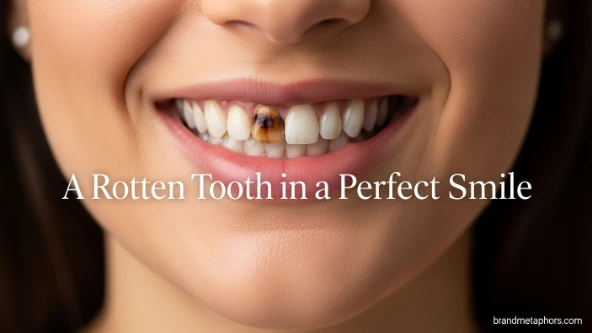
Example 1: A Rotten Tooth in a Perfect Smile
Meaning and Explanation
One of the most popular metaphors for ugliness is comparing something unattractive to a rotten tooth.
A healthy smile appears beautiful and balanced. A rotten tooth stands out as damaged and unpleasant.
The metaphor suggests:
- Imperfection
- Decay
- Contrast
- Visual disruption
Example Sentence
“The abandoned warehouse was a rotten tooth in the neighborhood’s bright smile.”
Alternative Expressions
You might also say:
- A crack in the mirror
- A stain on silk
- A blemish on beauty
Sensory and Emotional Details
Imagine the discomfort of seeing a dark, damaged tooth among healthy ones. The image creates immediate unease.
Mini Story
A traveler arrives in a charming village filled with colorful homes and blooming gardens. At the center stands a crumbling factory with shattered windows. It feels like a rotten tooth interrupting an otherwise beautiful smile.
Example 2: A Storm Cloud on a Sunny Day
Meaning and Explanation
This metaphor describes something that disrupts beauty or happiness.
A sunny day represents positivity and attractiveness. A storm cloud introduces darkness and tension.
Example Sentence
“His cruel expression was a storm cloud on an otherwise cheerful face.”
Alternative Expressions
Consider:
- A shadow over the garden
- A dark wave on calm water
- A thunderclap in silence
Emotional Details
Readers often associate storms with anxiety, fear, and discomfort.
Literary Connection
Many novels use storms as symbols of inner darkness. The metaphor works because readers instinctively understand the emotional contrast.
Example 3: A Scar Across a Painting
Meaning and Explanation
A scar on a painting suggests damage to something that should be beautiful.
The metaphor implies:
- Imperfection
- Distortion
- Visible damage
- Lasting impact
Example Sentence
“The graffiti-covered wall was a scar across the historic square.”
Alternative Expressions
Try:
- A tear in a masterpiece
- A crack through crystal
- A wound on the canvas
Real-Life Example
Imagine a beautiful mural admired by thousands. If someone damages it, the mark becomes impossible to ignore. The image creates a powerful metaphor for ugliness.
Nature-Based Metaphors for Ugly
Using Natural Imagery
Nature offers countless metaphors for describing unattractiveness.
Examples include:
- A dying tree
- A muddy swamp
- A withered flower
- A polluted river
These images evoke decay and neglect.
Why They Work
People naturally connect with nature. As a result, these metaphors feel vivid and relatable.
Examples:
- “The abandoned garden was a withered flower.”
- “His bitterness was a stagnant pond.”
Nature-based metaphors often carry emotional meaning beyond physical appearance.
Animal Metaphors and Symbolic Comparisons
Animal Imagery in Language
Animals have long been used symbolically in literature.
Certain creatures represent beauty, while others symbolize unpleasant qualities.
Examples:
- Vulture
- Rat
- Hyena
- Toad
Example Uses
“The old factory crouched like a giant toad beside the river.”
“His greed was a vulture circling opportunity.”
Cultural References
Many folk tales and myths use animals to represent character traits. These symbolic associations make animal metaphors powerful storytelling tools.
Caution
Avoid using animal metaphors to insult real people unfairly. They work best when describing fictional characters, settings, or behaviors.
Architectural Metaphors for Ugliness
Buildings as Symbols
Architecture provides excellent metaphor material.
Examples include:
- Crumbling walls
- Broken windows
- Collapsing bridges
- Rusted gates
Example Sentences
“Her confidence had become a house with broken windows.”
“The neglected park was a crumbling monument to forgotten dreams.”
Why These Metaphors Work
Buildings symbolize stability and beauty. When damaged, they represent decline and imperfection.
Storytelling Tip
Architectural metaphors can reveal emotional states without directly naming them.
Using Metaphors for Ugly Characters
Beyond Physical Appearance
The best writers often describe character flaws rather than looks.
Examples:
- “His soul was a polluted river.”
- “Her jealousy was a creeping mold.”
- “His lies were cracks spreading through stone.”
Building Complex Characters
These metaphors focus on personality and behavior.
Readers generally connect more strongly with moral or emotional ugliness than physical ugliness.
Literary Example
Many classic villains are remembered not because they look ugly but because their actions are.
Their inner flaws become the true source of unattractiveness.
Creative Writing Exercises and Practice Prompts
Exercise 1: Transform Simple Descriptions
Turn these basic sentences into metaphors:
- The house was ugly.
- The street looked neglected.
- His attitude was unpleasant.
Possible answers:
- The house was a rotten tooth.
- The street was a forgotten scar.
- His attitude was a swamp of bitterness.
Exercise 2: Nature Challenge
Choose one natural object:
- Tree
- River
- Mountain
- Flower
Use it to create a metaphor describing imperfection or decay.
Exercise 3: Story Starter
Write a paragraph beginning with:
“The old building stood at the edge of town, a…”
Complete the metaphor and continue the story.
Exercise 4: Photo Inspiration
Look at an old photograph and create three metaphors based on what you observe.
Exercise 5: Daily Observation
Find something worn, damaged, or unusual in your environment and describe it using metaphorical language.
Bonus Tips for Writers, Bloggers, and Social Media Creators
Keep Metaphors Original
Avoid overused descriptions whenever possible.
Instead of:
- Ugly as sin
Try:
- A rusted anchor dragging through beauty
Match the Tone
Choose metaphors that fit your audience.
poetry:
- More emotional imagery
blogs:
- Simpler comparisons
fiction:
- Character-specific metaphors
Use Sensory Details
Add:
- Sounds
- Textures
- Smells
- Colors
Example:
“The alley was a bruise on the city, dark, damp, and aching.”
Don’t Overuse Metaphors
Too many metaphors can overwhelm readers.
Use them strategically for maximum effect.
Social Media Application
Creative metaphors can increase engagement.
Example caption:
“Some places aren’t abandoned; they’re unfinished stories wearing cracked walls.”
This type of imagery encourages readers to pause and reflect.
Common Mistakes When Using Metaphors for Ugly
Being Needlessly Cruel
Metaphors should enhance writing, not encourage harmful insults.
Focus on creativity rather than personal attacks.
Mixing Metaphors
Avoid combining unrelated images.
Poor example:
“His face was a swamp sailing through a thunderstorm.”
The imagery becomes confusing.
Choosing Weak Comparisons
A metaphor should create a clear mental image.
Strong:
- “A scar across the landscape.”
Weak:
- “A thing that looked somewhat unpleasant.”
Ignoring Context
A metaphor must fit the setting, character, and tone.
Historical fiction and modern social media posts may require different styles.
Forgetting Emotional Meaning
The strongest metaphors communicate both appearance and feeling.
Readers remember emotions more than descriptions.
Frequently Asked Questions
What is a metaphor for ugly?
A metaphor for ugly is a figurative comparison that describes unattractiveness through imagery, such as “a rotten tooth,” “a scar on the landscape,” or “a storm cloud on a sunny day.”
Why are metaphors better than direct descriptions?
Metaphors create vivid mental images and emotional connections, making writing more memorable and engaging.
Can metaphors for ugly describe personality?
Yes. Many writers use metaphors to describe negative traits, emotions, or behaviors rather than physical appearance.
Are metaphors for ugly appropriate in creative writing?
Absolutely. They add depth, atmosphere, and originality to stories, poems, and essays when used thoughtfully.
How can I create my own metaphor?
Choose a quality you want to describe, find an object that shares that quality, and compare them directly. Focus on strong visual or emotional connections.
Conclusion
Metaphors for ugly offer far more than simple descriptions. They transform ordinary language into vivid imagery that readers can see, feel, and remember. Whether you compare something to a rotten tooth, a scar across a painting, a storm cloud, or a withered flower, the goal is not merely to criticize but to create meaning through imagination.
Great metaphors reveal hidden layers of emotion, history, and perspective. They help writers move beyond surface-level observations and craft descriptions that linger in the mind. By practicing creative comparisons, exploring nature, architecture, and symbolism, and paying attention to the emotions behind your words, you can develop powerful figurative language that enriches every piece of writing.
The next time you encounter something imperfect, look closer. You may discover not just ugliness, but a story waiting to be told through metaphor.