

1. When Life Feels Frozen: Understanding the Experience of Being Stuck
A Moment That Refuses to Move Forward
There are days when everything feels paused, as if the world has quietly pressed a hidden “freeze” button. You sit with your thoughts, staring at the same screen, the same wall, the same unfinished task—and yet nothing moves. Time does not stop, but it begins to feel heavier, like it is dragging its feet through thick mud. You want to act, but your mind feels tangled in invisible thread.
Most people experience this in different forms: creative blocks, emotional stagnation, career confusion, or even a vague sense of “I don’t know what I’m doing with my life.” Being stuck is not always dramatic. Sometimes it is quiet, subtle, and deeply personal.
This is where metaphors become powerful. They help us name the invisible. When we say “I’m stuck,” our brain understands it—but when we say “I feel like I’m trapped in quicksand,” suddenly the emotion has shape, texture, and direction. Metaphors turn confusion into something we can observe, understand, and eventually move through.
This article explores powerful metaphors for being stuck, not just as poetic expressions, but as tools for clarity, reflection, and even healing.
2. The Psychology of Feeling Stuck: Why the Mind Creates Stillness
When Thought Becomes a Loop Instead of a Path
Being stuck is often not physical—it is mental repetition. The mind replays the same thoughts like a broken record. You think, analyze, overthink, and return to the same point.
Psychologically, this happens when:
- Fear of failure blocks decision-making
- Overwhelm creates mental shutdown
- Perfectionism delays action
- Uncertainty feels safer than risk
Why Metaphors Help
Metaphors allow emotional distance. Instead of saying “I am failing,” you might say “I am walking through fog.” That fog does not judge you—it simply exists. This shift reduces emotional pressure and opens space for insight.
Simple Reflection Prompt
Ask yourself: “What does my stuckness feel like in physical space?” Is it heavy? Tight? Foggy? Locked? Your answer becomes the doorway to understanding.
3. Metaphor of Quicksand: The More You Struggle, the Deeper You Sink
Meaning of the Quicksand Image
Being stuck in quicksand represents situations where the harder you try to escape using force, the deeper you feel trapped. It reflects anxiety cycles, panic reactions, and overthinking loops.
Real-Life Scenario
Imagine someone trying to fix their career by constantly switching jobs out of fear. Each jump feels urgent, but nothing stabilizes. Like quicksand, frantic movement does not solve the root problem.
Alternative Expressions
- “I feel like I’m sinking into my own decisions.”
- “The more I rush, the more lost I become.”
- “I am trapped in emotional quicksand.”
Mini Story
A student preparing for exams keeps revising every topic endlessly, afraid to miss something. Instead of feeling ready, they feel overwhelmed. The more they study without structure, the more confused they become—like struggling in soft ground that refuses to hold them.
Sensory Detail
Imagine the ground softening beneath your feet, your breath quickening, your arms flailing—but nothing solid to push against.
Exercise
Write one situation where you feel stuck. Now describe it as quicksand. Ask:
- What actions are “struggling movements”?
- What would “staying still” look like here?
4. Metaphor of a Traffic Jam: Life That Won’t Move Forward
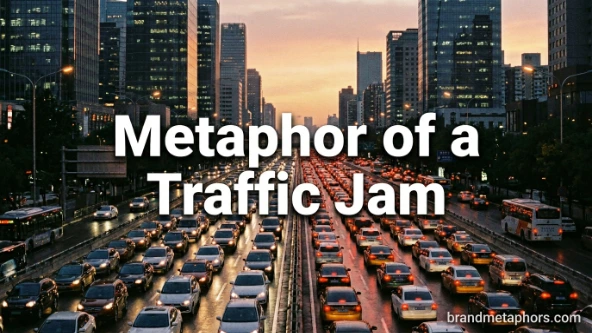
Meaning of the Traffic Jam Image
A traffic jam symbolizes external delays and blocked progress. Unlike quicksand, the problem is not internal panic but external congestion—too many forces, not enough space.
Real-Life Scenario
You may feel ready to move forward in your career, but opportunities, timing, or resources are not aligning. You are not failing—you are simply waiting in line.
Alternative Expressions
- “My progress is stuck in a bottleneck.”
- “Everything feels backed up.”
- “I am waiting for movement that isn’t coming yet.”
Mini Story with Cultural Reference
Think of rush hour in a busy city. Cars stretch endlessly under the sun. Everyone is honking, but no one is moving. Like scenes from crowded metropolitan roads often shown in films, life feels collective yet motionless.
Sensory Detail
The heat rising from asphalt, engines idling, impatience building in silence.
Exercise
Draw your current goals as cars in traffic.
- Which ones are stuck?
- Which lane might open first?
- What is causing the blockage?
5. Metaphor of a Locked Door: Opportunity Without Access
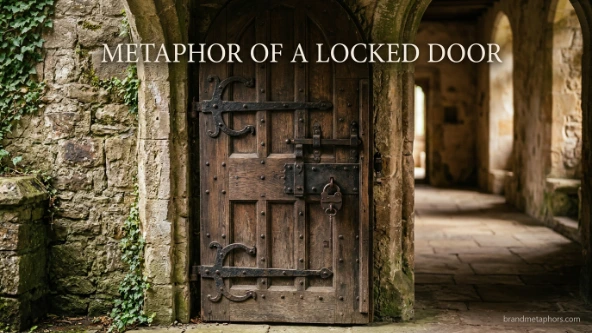
Meaning of the Locked Door Image
A locked door represents blocked access. You can see where you want to go, but you do not yet have the key.
Real-Life Scenario
Someone wanting to start a business but lacking funding or skills may feel this metaphor deeply. The opportunity is visible—but unreachable.
Alternative Expressions
- “I can see the path, but I can’t enter it.”
- “The door is right there, but it won’t open.”
- “I am waiting for the key.”
Mini Story
A young writer sits in front of a blank manuscript idea. The story feels real in their mind, but words do not come. The door to creativity is visible—but locked by doubt.
Sensory Detail
The cold metal of the handle, the echo of footsteps behind a closed entrance, the silence of waiting.
Exercise
Write your “locked doors.” Then answer:
- What might the key look like (skill, courage, support)?
- Who might already have a copy of it?
6. Emotional Layers of Being Stuck: Fog, Glue, and Invisible Weight
The Fog of Uncertainty
Fog represents confusion where direction exists but visibility does not. You move, but slowly and uncertainly.
The Glue of Habit
Glue represents routines and patterns that hold you in place. Even when you want change, comfort keeps you stuck.
The Weight of Invisible Pressure
Sometimes nothing is physically blocking you, but expectations feel like weight on your shoulders.
Exercise
Match your feeling:
- Fog = confusion
- Glue = habit
- Weight = pressure
Which one fits your current state?
7. Mini Story: The Artist in the Empty Room
A Narrative of Creative Stuckness
A painter once sat in a white room with endless supplies but no inspiration. Every canvas felt like judgment. Days passed. The brushes remained untouched.
One day, instead of forcing art, the painter simply observed the emptiness. The silence became part of the process. Slowly, shapes returned—not as pressure, but as possibility.
Lesson
Being stuck is not always absence of movement. Sometimes it is preparation.
8. Interactive Exercises to Break Mental Stuckness
Exercise 1: The Map of Blockage
Draw your situation like a map. Mark where you are stuck.
Exercise 2: The Metaphor Switch
Rewrite your problem using three metaphors:
- Quicksand
- Traffic jam
- Locked door
Exercise 3: The One Small Movement Rule
Ask: “What is the smallest possible action I can take today?”
Bonus Tip
Even writing one sentence is movement.
9. Using Metaphors for Writing, Social Media, and Communication
Why Metaphors Increase Engagement
Metaphors make emotions relatable. Readers connect faster because they “see” the feeling.
Writing Tips
- Use simple, sensory comparisons
- Avoid overcomplication
- Keep metaphors consistent
Social Media Use
Instead of saying: “I feel stuck today,” try:
- “My thoughts are in traffic again.”
- “I am waiting at a door that hasn’t opened yet.”
Bonus Idea
Metaphors can turn personal struggle into storytelling content that others relate to deeply.
10. Moving Forward: From Stuckness to Gentle Motion

Redefining Progress
Progress is not always speed. Sometimes it is awareness.
Key Insight
Being stuck is often a signal, not a sentence.
Final Reflection Exercise
Ask:
- What is this stuckness teaching me?
- What would “slight movement” look like?
Even small clarity is movement.
FAQs
What does it mean to feel stuck in life?
It means experiencing mental, emotional, or situational blockage where progress feels delayed or unclear.
Why do metaphors help when feeling stuck?
They make abstract emotions easier to understand and process by turning feelings into images.
Can being stuck be positive?
Yes, it can indicate rest, reflection, or preparation before change.
How do I stop feeling stuck quickly?
Start with small actions, reduce pressure, and focus on one simple step instead of the whole problem.
What is the best metaphor for overthinking?
Quicksand or looping fog are commonly used because they represent repetitive mental cycles.
Conclusion
Being stuck is not a failure—it is a phase where movement becomes internal before it becomes visible again. Metaphors like quicksand, traffic jams, and locked doors do more than describe emotion; they help transform it. They give shape to confusion and light to stillness.
When you can name your stuckness, you begin to understand it. And when you understand it, even slightly, you are no longer fully stuck—you are already shifting.