
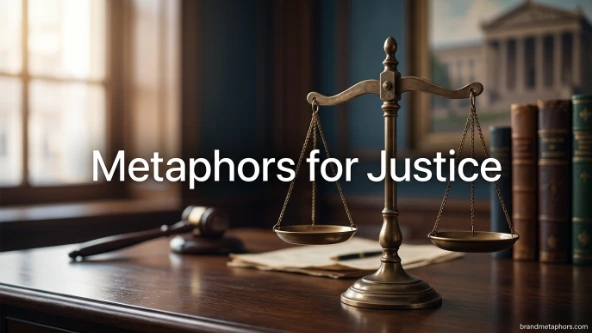
The Lantern in the Fog: Why Justice Needs Metaphors
Picture a crowded courtroom on a rainy afternoon. Shoes squeak against polished floors. Papers rustle like restless birds. A judge raises a hand, and suddenly the room grows still. In that silence, everyone waits for one thing—justice.
But what exactly is justice?
It is not something we can hold in our hands. We cannot pour it into a cup or lock it inside a drawer. Justice is an idea, a hope, a force that shapes families, laws, schools, and entire nations. Because it is abstract, people often turn to metaphors to explain it. Metaphors give justice a face, a sound, and sometimes even a heartbeat.
We call justice “a balancing scale,” “a guiding light,” or “a sword that cuts through lies.” These images help us understand fairness in a deeper and more emotional way. Writers use them in poetry and speeches. Teachers use them in classrooms. Everyday people use them in conversations without even noticing.
This article explores powerful metaphors for justice and how they can improve writing, storytelling, speaking, and creative thinking. You will discover vivid comparisons, practical examples, emotional imagery, and interactive exercises that make the concept unforgettable. Whether you are a student, writer, speaker, or curious thinker, these metaphors can help you express fairness with clarity and beauty.
Justice as a Balancing Scale
Why the Scale Is One of the Most Famous Metaphors
The image of justice as a scale is ancient and powerful. A scale measures weight evenly. In the same way, justice measures truth, actions, and consequences fairly.
This metaphor suggests neutrality. No side should weigh heavier because of wealth, power, or influence.
Example Sentence
“The judge held the balancing scale of justice steady despite public pressure.”
Alternative Ways to Express It
- Justice is an even-handed scale
- Justice weighs every soul equally
- Fairness rests on balanced shoulders
Emotional and Sensory Details
Imagine an old bronze scale creaking softly in a quiet courtroom. Dust floats through sunlight as both sides wait for the final balance to settle. That image creates tension and fairness at the same time.
Mini Storytelling Example
In many cultures, statues of Lady Justice hold scales in one hand. The scales remind society that every voice deserves equal weight, whether rich or poor.
Bonus Tip for Writers
Use the scale metaphor when discussing equality, law, fairness, or difficult choices. It works especially well in essays and speeches.
Justice as a Guiding Light
How Light Represents Truth and Fairness
Darkness often symbolizes confusion or corruption. Light, on the other hand, reveals truth. When justice becomes “a guiding light,” it suggests hope, direction, and honesty.
This metaphor is especially common in literature and motivational writing.
Example Sentence
“Her fight against corruption became a guiding light for the entire community.”
Alternative Expressions
- Justice is a lighthouse in a storm
- Fairness shines through darkness
- Truth glows like a lantern
Sensory Imagery
Picture a small lantern glowing on a cold night. Travelers feel safer because the light helps them avoid danger. Justice works in the same way.
Cultural Reference
Many speeches by civil rights leaders describe justice as light overcoming darkness. The image creates emotional strength and hope.
Bonus Tip for Social Media Writing
Use light metaphors in inspirational captions or awareness campaigns. They feel emotional and uplifting without sounding overly formal.
Justice as a Sword
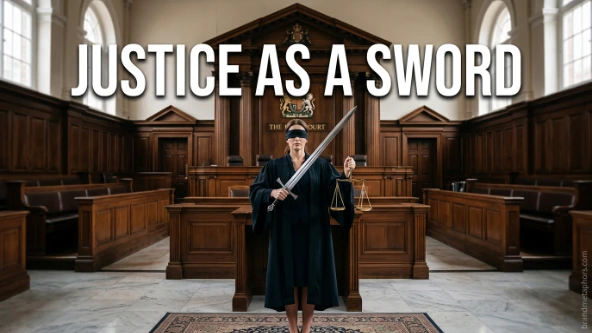
The Sharp Edge of Accountability
Unlike softer metaphors, the sword represents power and action. Justice does not only protect innocence. Sometimes it punishes wrongdoing sharply and decisively.
A sword cuts through lies, corruption, and deception.
Example Sentence
“The prosecutor used the sword of justice to expose the criminal network.”
Alternative Ways to Say It
- Justice cuts through deception
- Fairness strikes like steel
- Truth carries a sharpened edge
Emotional Effect
This metaphor creates intensity. Readers feel danger, urgency, and strength.
Real-Life Inspiration
Ancient rulers often carried ceremonial swords as symbols of lawful authority. Even today, movies and novels use swords to represent moral judgment.
Bonus Tip for Creative Writing
Sword metaphors work well in dramatic scenes, fantasy stories, political speeches, and crime fiction.
Justice as a Bridge
Connecting Divided People
A bridge joins two separated places. Justice can also reconnect broken communities, wounded families, or divided nations.
This metaphor focuses on healing rather than punishment.
Example Sentence
“Community dialogue became a bridge of justice after years of conflict.”
Alternative Expressions
- Justice connects broken paths
- Fairness builds roads between hearts
- Truth creates strong foundations
Sensory Detail
Imagine a wooden bridge stretching over rough waters. Each careful step brings people closer together. That journey reflects reconciliation and trust.
Mini Story Example
After a neighborhood dispute, two families began sharing meals again. Justice was not revenge. It was the bridge that restored peace.
Bonus Tip
Use bridge metaphors in discussions about peace, reconciliation, or teamwork.
Justice as a Seed
Small Actions That Grow Into Change
Seeds begin tiny, yet they can grow into forests. Justice often starts with one brave action, one honest voice, or one courageous decision.
This metaphor highlights patience and long-term impact.
Example Sentence
“One student’s protest planted the seed of justice across the campus.”
Alternative Ways to Express It
- Justice grows slowly like a tree
- Fairness takes root in strong soil
- Truth blossoms over time
Emotional and Sensory Details
Picture dark soil after rain. A fragile green sprout pushes upward toward sunlight. Justice can feel just as delicate and hopeful.
Literary Connection
Many novels about social change describe justice as something planted by ordinary people and harvested by future generations.
Bonus Tip for Daily Life
This metaphor works beautifully in motivational writing or educational discussions.
Justice as a Compass
Finding the Right Direction
A compass helps travelers avoid getting lost. Justice also guides moral decisions.
When people say someone has “a strong moral compass,” they mean that person understands right from wrong.
Example Sentence
“Her sense of justice acted like a compass during difficult times.”
Alternative Expressions
- Justice points toward truth
- Fairness guides every step
- Morality is the north star
Sensory Imagery
Imagine walking through a thick forest with only a compass in your hand. Every direction looks confusing, yet the needle keeps pointing steadily forward.
Real-Life Application
Teachers, leaders, and parents often use this metaphor to encourage ethical behavior.
Bonus Tip
Compass metaphors work well in self-help articles, speeches, and reflective essays.
Justice as a Shield
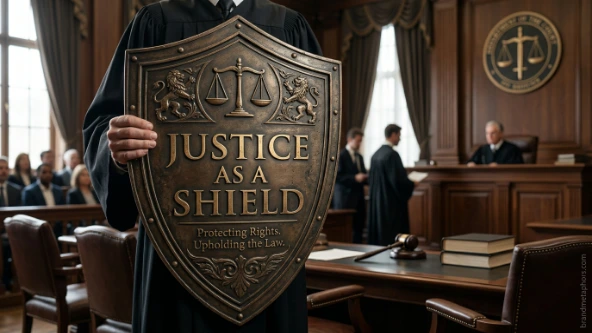
Protection Against Harm
A shield protects people from attack. Justice also protects citizens from abuse, violence, or unfair treatment.
This metaphor emphasizes safety and defense.
Example Sentence
“Human rights laws serve as a shield of justice for vulnerable communities.”
Alternative Ways to Say It
- Justice guards the innocent
- Fairness protects fragile voices
- Truth stands like armor
Emotional Impact
Shield metaphors create feelings of security and courage.
Cultural Reference
Heroes in myths and movies often carry shields to defend others. Justice plays a similar role in society.
Bonus Tip for Public Speaking
Use shield metaphors when discussing human rights, equality, or protection.
Justice as a River
The Flow of Fairness
Rivers move continuously. Justice, too, is often a process rather than a single event.
This metaphor suggests movement, persistence, and unstoppable force.
Example Sentence
“The river of justice continued flowing despite years of resistance.”
Alternative Expressions
- Justice washes away corruption
- Fairness flows through generations
- Truth moves like water
Sensory Details
Hear rushing water crashing against rocks. Feel cool mist in the air. Rivers carve landscapes slowly but powerfully, much like justice reshapes society.
Literary Example
Many poets compare justice to water because water reaches places that walls cannot stop.
Bonus Tip
River metaphors are excellent for emotional or poetic writing.
Justice as a Mirror
Reflecting Society’s True Face
Mirrors reveal what people sometimes avoid seeing. Justice forces society to confront truth honestly.
This metaphor is powerful because it combines truth with self-awareness.
Example Sentence
“The trial became a mirror reflecting the nation’s deepest inequalities.”
Alternative Ways to Express It
- Justice reveals hidden truths
- Fairness reflects reality clearly
- Truth exposes every crack
Emotional Imagery
Imagine staring into a mirror that shows not only faces but also choices, mistakes, and consequences. That uncomfortable honesty is part of justice.
Real-Life Connection
Social movements often act as mirrors, showing societies where fairness is missing.
Bonus Tip
Use mirror metaphors in analytical essays or reflective storytelling.
Justice as a Flame
Passion That Refuses to Die
Flames symbolize energy, courage, and determination. Justice often survives because passionate people refuse to stay silent.
This metaphor feels emotional and inspiring.
Example Sentence
“The flame of justice continued burning in the hearts of activists.”
Alternative Expressions
- Justice sparks change
- Fairness ignites courage
- Truth burns through silence
Sensory Details
Picture fire crackling in darkness. Warm light dances across determined faces. Flames can comfort, but they can also destroy barriers.
Historical Reference
Many freedom movements around the world used fire imagery in speeches and protest songs.
Bonus Tip for Writers
Flame metaphors are ideal for persuasive writing and emotional storytelling.
Interactive Exercises to Practice Justice Metaphors
Exercise 1: Create Your Own Metaphor
Choose one object around you right now. It could be a clock, a window, or even a tree. Ask yourself:
“How is justice similar to this object?”
Write three sentences explaining the comparison.
Exercise 2: Rewrite a Plain Sentence
Plain sentence:
“Justice is important in society.”
Now rewrite it using a metaphor:
“Justice is the heartbeat keeping society alive.”
Practice with five different images.
Exercise 3: Build a Mini Story
Write a short paragraph where justice appears as:
- A river
- A shield
- A lantern
This exercise improves creativity and emotional expression.
Exercise 4: Social Media Challenge
Create a short caption using a justice metaphor:
“Truth became the lighthouse guiding the community through corruption.”
Short metaphors often perform well online because they are memorable and emotional.
Tips for Using Metaphors for Justice Effectively
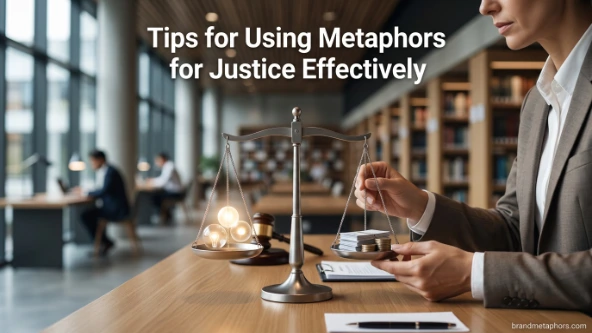
Keep the Image Clear
Readers should understand the metaphor quickly. Avoid confusing comparisons.
Match the Tone
A sword metaphor feels dramatic. A seed metaphor feels hopeful. Choose carefully.
Avoid Overusing Metaphors
Too many metaphors in one paragraph can overwhelm readers.
Use Sensory Language
Add sound, texture, color, or movement to make metaphors vivid.
Connect Metaphors to Emotions
Justice is deeply emotional. Strong metaphors create empathy and reflection.
Why Metaphors for Justice Matter in Everyday Life
They Simplify Complex Ideas
Justice can feel abstract or legalistic. Metaphors make it understandable.
They Create Emotional Connection
People remember emotional images more than plain facts.
They Improve Communication
Teachers, writers, activists, and leaders use metaphors to inspire others.
They Strengthen Creative Writing
Metaphors add beauty and depth to poems, essays, novels, and speeches.
They Encourage Reflection
A good metaphor makes people pause and think differently.
Conclusion
Justice is more than a legal word. It is a living idea carried through stories, speeches, protests, classrooms, and conversations. Metaphors help transform justice from an abstract concept into something readers can see, hear, and feel.
Sometimes justice is a balancing scale weighing truth carefully. Sometimes it is a flame burning against silence. Other times it becomes a bridge healing divided hearts or a river flowing through generations.
These metaphors matter because language shapes understanding. When we describe justice vividly, we make fairness more memorable and emotionally powerful. Writers gain stronger imagery. Speakers connect with audiences. Everyday conversations become richer and more meaningful.
The next time you write about fairness, equality, or truth, try using one of these metaphors. You may discover that the right image can illuminate an idea more brightly than a hundred plain explanations ever could.
FAQs About Metaphors for Justice
What is a metaphor for justice?
A metaphor for justice compares justice to another object or idea to explain it creatively. Examples include scales, light, bridges, or rivers.
Why are metaphors for justice important?
They help people understand complex ideas emotionally and visually. Metaphors also make writing more memorable and engaging.
What is the most famous metaphor for justice?
The balancing scale is one of the most recognized metaphors because it represents fairness and equality.
Can metaphors for justice improve writing?
Yes. They add emotion, imagery, creativity, and depth to essays, poems, speeches, and stories.
How can students practice using justice metaphors?
Students can rewrite plain sentences with vivid comparisons, create mini stories, or describe justice using everyday objects.