
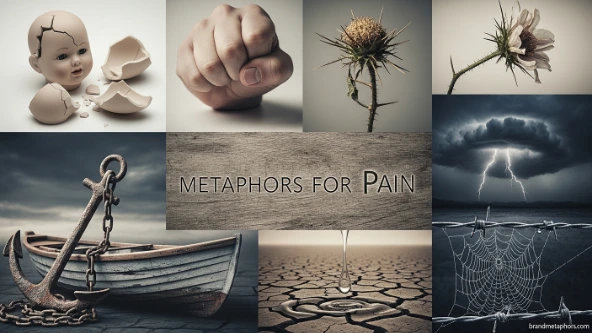
Pain rarely arrives quietly. Sometimes it crashes into life like a storm shattering windows in the middle of the night. Other times, it settles softly into the bones like winter fog, lingering long after the sky has cleared. Everyone experiences pain differently, yet almost all of us struggle to explain it. A broken heart, a grieving memory, physical suffering, or emotional exhaustion can feel too large for ordinary words. That is where metaphors become powerful.
Metaphors for pain help transform invisible feelings into vivid images people can understand, relate to, and remember. Writers use them to deepen storytelling. Speakers use them to connect emotionally. Everyday people use them to express experiences that seem impossible to describe directly.
Imagine saying, “My sadness felt like carrying shattered glass inside my chest,” instead of simply saying, “I was hurt.” The second sentence informs. The first makes readers feel.
In this article, you will explore creative, emotional, and poetic metaphors for pain. You’ll discover how they work, why they matter, and how to use them in writing, conversation, journaling, social media captions, and storytelling. Along the way, you’ll find examples, exercises, sensory details, and practical tips to make your expressions more vivid and unforgettable.
Why Metaphors for Pain Matter in Writing and Life
Pain is deeply personal. Yet language often feels too small to hold it. Metaphors bridge that gap by turning emotions into experiences people can visualize.
When someone says:
- “Heartbreak is a house fire.”
- “Grief is an ocean tide.”
- “Anxiety is a cage tightening around the ribs.”
the listener instantly understands something emotional beyond literal meaning.
Metaphors matter because they:
- Make emotional writing stronger
- Help readers empathize
- Add beauty and depth to storytelling
- Create memorable imagery
- Help people process emotions creatively
Great poets and novelists have always used pain metaphors. In Shakespeare’s tragedies, pain often appears as poison, storms, or wounds. Modern songs compare heartbreak to earthquakes, bullets, and drowning seas. Across cultures, pain becomes fire, darkness, chains, storms, deserts, or shattered mirrors.
The reason is simple: human beings understand emotions through images.
Pain as a Burning Fire
One of the oldest and strongest metaphors for pain is fire. Emotional suffering often feels hot, consuming, and destructive.
Meaning and Explanation
Fire represents intensity. It spreads quickly, destroys peace, and leaves scars behind. Emotional pain can feel exactly like that.
Example Sentence
“Her betrayal burned through him like wildfire racing across dry fields.”
Alternative Ways to Express It
- Pain like glowing embers
- A slow-burning ache
- Flames licking at the heart
- Emotional ashes after destruction
Sensory and Emotional Details
Fire metaphors evoke:
- Heat
- Smoke
- Suffocation
- Destruction
- Sharp urgency
Readers can almost smell smoke or feel heat rising from the page.
Mini Storytelling Example
A man sits alone after losing someone he loves. The apartment is silent except for the ticking clock. Yet inside him, anger crackles like sparks trapped beneath old wood, threatening to ignite again at any second.
That image creates emotional tension instantly.
Bonus Writing Tip
Use fire metaphors carefully. Too many “burning hearts” can sound repetitive. Add unique details like ash, smoke, sparks, candles, or molten metal to keep imagery fresh.
Metaphors for Emotional Pain and Heartbreak
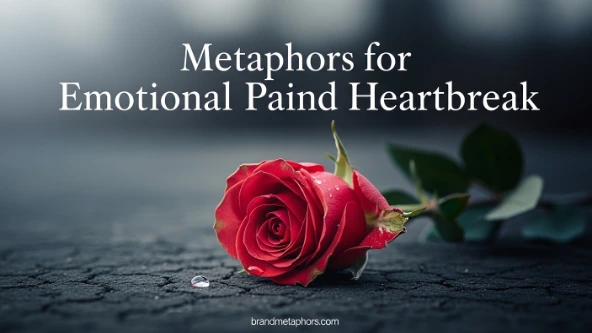
Heartbreak creates some of the most powerful metaphors in language. Emotional pain often feels physical, which is why people describe it using wounds, fractures, or storms.
Common Heartbreak Metaphors
- A shattered mirror
- A knife to the chest
- An empty room
- A sinking ship
- A dying garden
Each image reflects loss differently.
Example and Meaning
“After the breakup, her heart felt like a cracked window letting winter air inside.”
This metaphor combines vulnerability, coldness, and damage in one image.
Literary and Cultural References
In many classic love stories, heartbreak appears as death-like suffering. In Romeo and Juliet, love and pain become inseparable. Modern music continues this tradition with lyrics about drowning, bleeding, or collapsing under emotional weight.
Alternative Expressions
- Love turned to rust
- Memories became ghosts
- His absence was an endless hallway
- Her silence was a locked door
Practical Use
These metaphors work beautifully in:
- Poetry
- Song lyrics
- Journals
- Romantic fiction
- Social media captions
For example:
“Some people leave quietly. Others leave earthquakes behind.”
Short, emotional, and memorable.
Pain as a Storm in the Mind
Storm metaphors capture chaos, unpredictability, and emotional overwhelm.
Meaning and Explanation
Pain often arrives suddenly, just like thunderclouds. It disrupts calmness and creates emotional turbulence.
Example Sentence
“Grief rolled through her mind like thunder tearing apart the summer sky.”
Alternative Ways to Express It
- Emotional hurricanes
- Waves crashing endlessly
- Lightning inside the chest
- A tornado of thoughts
Sensory Details
Storm imagery creates:
- Loudness
- Darkness
- Rain
- Wind
- Loss of control
This makes the metaphor dynamic and cinematic.
Real-Life Connection
People dealing with anxiety or depression often describe emotions as weather because emotions change, intensify, and eventually pass.
That makes storm metaphors relatable and comforting.
Bonus Tip for Writers
Combine storm metaphors with physical settings:
“The rain battered the roof while guilt flooded his thoughts.”
This blends external atmosphere with internal emotion.
Metaphors for Physical Pain
Physical pain is often described through sharp, crushing, or stabbing imagery.
Common Physical Pain Metaphors
- Needles under the skin
- Glass in the bones
- A hammer pounding the skull
- Electric currents through nerves
- Rusted knives twisting slowly
Meaning and Explanation
These comparisons help readers imagine sensations they cannot directly experience.
Example Sentence
“The migraine hammered against her temples like drums in a war march.”
Alternative Ways to Express It
- Pain crawling like insects
- Muscles tied in knots
- Bones grinding like broken gears
- A body carrying invisible stones
Emotional Layer
Physical pain metaphors become even stronger when mixed with emotion.
For example:
“Exhaustion hung from his limbs like wet cement.”
That sentence suggests heaviness, hopelessness, and fatigue together.
Cultural Perspective
Different cultures describe physical suffering differently. Some compare pain to needles or blades, while others compare it to pressure, heat, or darkness.
These differences make metaphor exploration fascinating for writers.
Silent Pain and Hidden Suffering
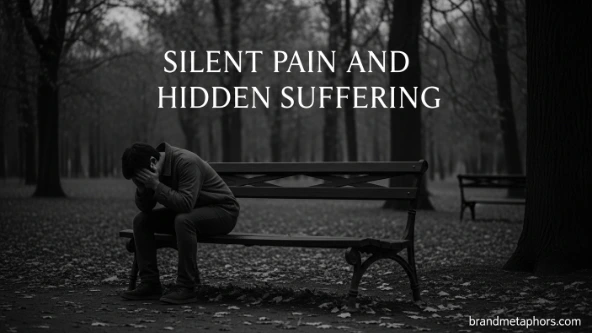
Not all pain screams. Some pain whispers quietly for years.
Silent pain metaphors often involve shadows, masks, cages, or invisible wounds.
Meaning and Explanation
These metaphors represent emotional suffering hidden beneath calm appearances.
Example Sentence
“She carried sadness like a secret stone in her pocket.”
Alternative Expressions
- Smiling through broken glass
- Wearing invisible chains
- A locked room inside the mind
- Shadows stitched into the soul
Emotional Impact
Hidden pain metaphors feel intimate because they reflect real human behavior. Many people hide suffering behind routines, jokes, or silence.
Mini Storytelling Example
At family dinners, he laughed loudly at every joke. Yet inside, grief sat quietly beside him like a ghost no one else could see.
This contrast deepens emotional realism.
Bonus Tip
Subtle metaphors often feel more powerful than dramatic ones. Quiet imagery can create deeper emotional resonance.
Creative Metaphors for Pain in Poetry and Fiction
Creative writing thrives on fresh imagery. Instead of relying on common clichés, writers can invent original metaphors that surprise readers.
Unique Metaphor Ideas
- Pain like rust spreading through metal
- Grief as an unfinished song
- Loneliness as an abandoned train station
- Trauma as cracked ice beneath footsteps
- Regret as smoke trapped in lungs
Why Originality Matters
Readers remember unusual metaphors because they feel fresh and authentic.
Compare these two sentences:
- “He felt sad.”
- “His sorrow sat in the room like furniture nobody wanted to move.”
The second creates atmosphere and emotional texture.
Exercise for Readers
Try this prompt:
Complete the sentence:
- “My pain felt like __________.”
Now avoid obvious answers. Think visually and emotionally.
Examples:
- “a library after a fire”
- “a radio playing underwater”
- “shoes full of rain”
Unexpected images create memorable writing.
Bonus Creative Tip
Combine opposites for stronger imagery:
- Frozen fire
- Silent thunder
- Sweet poison
- Beautiful wreckage
Contrasting images create emotional complexity.
Using Metaphors for Pain in Daily Conversations
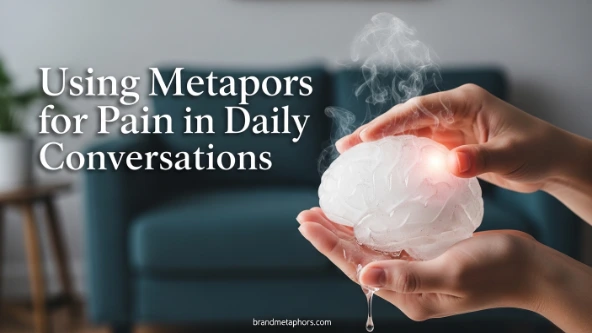
Metaphors are not only for poets and authors. Everyday speech becomes more expressive with them.
Why They Work in Conversation
People emotionally connect with vivid imagery faster than plain explanations.
Instead of:
- “I’m stressed.”
You might say:
- “My brain feels like a browser with fifty tabs open.”
That image instantly communicates overwhelm.
Everyday Examples
- “This week drained me like a dying battery.”
- “The guilt sits on my chest like a heavy stone.”
- “My nerves are stretched like thin wires.”
Social Media and Caption Ideas
Pain metaphors often appear in:
- Instagram captions
- Song-inspired posts
- Reflective tweets
- Personal blogs
Examples:
- “Some scars speak louder than words.”
- “Grief moves like tides. Some days it barely touches you. Some days it drowns you.”
- “Healing isn’t linear. It’s a road full of storms and sunrise.”
Practical Advice
Keep metaphors natural. Overcomplicated imagery can confuse listeners instead of moving them.
Simple but vivid works best.
How to Create Your Own Metaphors for Pain
Anyone can learn to create powerful metaphors with practice.
Step 1: Identify the Emotion
Ask yourself:
- Is the pain sharp?
- Heavy?
- Numb?
- Explosive?
- Quiet?
The emotional texture guides the metaphor.
Step 2: Match It With an Image
Think of physical experiences that feel similar.
Examples:
- Heavy sadness = carrying rocks
- Sudden heartbreak = glass shattering
- Anxiety = buzzing electricity
Step 3: Add Sensory Details
Include:
- Sound
- Texture
- Temperature
- Motion
- Color
Example: “Fear crawled coldly through his veins like icy water.”
Step 4: Make It Personal
The best metaphors often come from personal experience.
A baker may describe pain differently than a sailor or musician.
Interactive Exercise
Write metaphors for these emotions:
- Loneliness
- Regret
- Anger
- Exhaustion
- Fear
Challenge yourself to avoid words like “sad,” “hurt,” or “broken.”
This strengthens creative thinking.
Powerful Metaphors for Pain in Literature and Music
Some of history’s greatest art comes from pain transformed into language.
Literary Examples
Writers often compare suffering to:
- Darkness
- War
- Winter
- Oceans
- Prisons
In classic poetry, grief frequently appears as endless night. In modern fiction, emotional pain may appear as collapsing buildings or fading stars.
Music and Pain Metaphors
Songs rely heavily on emotional imagery.
Common themes include:
- Drowning in sorrow
- Burning love
- Falling apart
- Bleeding memories
Music works because metaphors create emotional pictures listeners feel immediately.
Why Audiences Remember Them
Facts fade. Images stay.
People may forget exact lyrics but remember lines like:
- “You were the storm I mistook for rain.”
- “My heart became a battlefield.”
That is the power of metaphor.
Bonus Insight
Pain metaphors often help people heal because naming emotions gives them shape and meaning.
Art transforms suffering into connection.
Exercises and Writing Prompts for Practicing Pain Metaphors
Creative practice strengthens emotional writing skills.
Exercise 1: Object Comparison
Choose an object and compare pain to it.
Examples:
- A cracked clock
- Wilted flowers
- Rusted keys
Write three sentences using the comparison.
Exercise 2: Weather Emotions
Describe emotional pain as:
- Rain
- Snow
- Fog
- Lightning
- Drought
This builds atmosphere in writing.
Exercise 3: Sensory Rewrite
Take a simple sentence: “I was heartbroken.”
Rewrite it with sensory imagery.
Example: “Heartbreak echoed through her ribs like footsteps in an empty cathedral.”
Exercise 4: Memory Prompt
Think about a painful memory. Without naming the emotion directly, describe it through images only.
This develops subtle storytelling.
Bonus Tip for Social Media Writers
Short metaphors often perform best online.
Examples:
- “Healing has splinters.”
- “Some memories rust slowly.”
- “Grief wears familiar perfume.”
Short lines feel poetic and shareable.
Common Mistakes to Avoid When Using Pain Metaphors
Even beautiful metaphors can lose impact if overused.
Avoid Clichés
Phrases like:
- “Broken heart”
- “Drowning in sorrow”
- “Knife in the heart”
can feel repetitive without fresh detail.
Instead, personalize them.
Don’t Overload Every Sentence
Too many metaphors overwhelm readers.
Balance vivid imagery with clear language.
Match Tone Carefully
A dramatic metaphor may feel inappropriate in lighthearted writing.
For example:
- “Homework murdered my soul” may sound exaggerated unless used humorously.
Keep Imagery Consistent
Avoid mixing unrelated metaphors.
Example: “Her sadness was a burning ocean of shattered thunder.”
That becomes confusing instead of emotional.
Final Writing Advice
The strongest metaphors feel natural, visual, and emotionally honest.
Readers connect with authenticity more than complexity.
Conclusion
Pain is one of the most universal human experiences, yet it remains one of the hardest to describe. That is why metaphors matter so deeply. They give shape to invisible emotions. They turn heartbreak into storms, grief into oceans, and silent suffering into shadows that readers can almost touch.
Whether you are writing poetry, journaling personal thoughts, crafting fiction, creating song lyrics, or simply trying to explain your emotions more clearly, metaphors for pain can make your language richer and more meaningful. They help transform private feelings into shared understanding.
The beauty of metaphor lies in its creativity. No two people experience pain exactly the same way, and no two metaphors need to be identical. One person’s grief may feel like winter fog, while another’s feels like collapsing walls. Both are true. Both are powerful.
As you continue exploring emotional writing, remember this: the most unforgettable metaphors are not always the most dramatic. Often, they are the most honest. A single vivid image can carry more emotion than an entire paragraph of explanation.
So the next time words fail you, try painting pain with imagery instead. You may discover that metaphors do not just describe suffering — they help transform it into art.
FAQs About Metaphors for Pain
What are metaphors for pain?
Metaphors for pain are creative comparisons that describe emotional or physical suffering through vivid imagery. Instead of saying “I feel hurt,” someone might say, “My chest felt like shattered glass.”
Why are pain metaphors important in writing?
Pain metaphors create emotional depth and help readers connect with feelings more vividly. They make storytelling, poetry, and personal writing more memorable and expressive.
How can I create original metaphors for pain?
Focus on the sensation or emotion first, then compare it to something visual or physical. Add sensory details like texture, temperature, movement, or sound to make the metaphor unique.
Can metaphors help express emotional pain better?
Yes. Emotional experiences are often difficult to explain directly. Metaphors turn abstract feelings into images people can understand emotionally and visually.
What are some common examples of pain metaphors?
Popular examples include:
- “Grief is an ocean.”
- “Heartbreak is shattered glass.”
- “Anxiety is a storm.”
- “Pain burns like fire.”
- “Sadness is a heavy stone.”