
Introduction
Imagine standing in front of a blank canvas at midnight. The room is silent except for the faint hum of a lamp. Your thoughts drift like fireflies in the dark, flickering with possibilities but refusing to settle. Then suddenly, an idea appears — small at first, then glowing brighter until it fills the room. That mysterious spark is creativity, one of the most fascinating forces in human life.
Yet creativity is often difficult to explain directly. It slips through ordinary language like water through open fingers. That is why metaphors for creativity matter so much. Metaphors transform abstract ideas into vivid images we can feel, see, and understand. They help writers describe inspiration, artists express emotion, and everyday people make sense of imagination itself.
Whether you are a student, writer, teacher, marketer, poet, or simply someone searching for fresh ideas, creative metaphors can deepen your communication and sharpen your thinking. A strong metaphor turns ordinary writing into memorable storytelling. It can make social media captions sparkle, essays feel alive, and conversations more meaningful.
In this article, you will explore powerful metaphors for creativity, discover how they work, practice using them through exercises, and learn ways to apply them in daily life. By the end, you may find that creativity is not just a skill — it is a living landscape waiting to be explored.
Creativity as a Spark in the Darkness
One of the most common metaphors for creativity compares it to a spark lighting up darkness. This image captures the sudden and electric nature of inspiration.
A spark is small, but it can start a roaring fire. In the same way, a tiny idea can become a novel, a painting, a business, or a life-changing invention.
Meaning and Symbolism
This metaphor emphasizes:
- Sudden inspiration
- Hidden potential
- Energy and transformation
- Hope emerging from uncertainty
Example Sentence
“Her imagination was a spark in the darkness, illuminating solutions nobody else could see.”
Alternative Expressions
- A flash of lightning
- A glowing ember
- A flicker of possibility
- A fire waiting to spread
Emotional Details
The metaphor feels exciting and dramatic. It evokes warmth, light, and movement. Readers can almost hear the crackle of the flame.
Mini Storytelling Example
Many famous inventions began as “sparks.” The idea for the Post-it Note reportedly emerged from a failed adhesive experiment. What seemed useless at first became revolutionary once someone saw the hidden glow within the mistake.
Creative Exercise
Think about a recent idea you had. Describe it as a type of light:
- Was it a candle?
- A wildfire?
- A shooting star?
Write three sentences using that comparison.
Creativity as a Garden That Needs Care
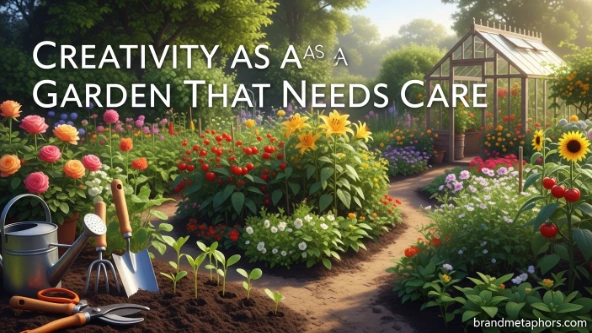
Another beautiful metaphor for creativity is the image of a garden. Ideas are like seeds that grow when nourished with attention, patience, and time.
This metaphor reminds us that creativity is not always instant. Sometimes it develops slowly beneath the surface.
Meaning and Explanation
Gardens require:
- Water
- Sunlight
- Space
- Patience
Likewise, creative thinking grows through practice, curiosity, and persistence.
Example Sentence
“His imagination was a wild garden where unexpected ideas bloomed in every corner.”
Alternative Ways to Express It
- Planting seeds of innovation
- Harvesting inspiration
- Watering creative thoughts
- Pulling weeds of self-doubt
Sensory Details
This metaphor creates vivid imagery:
- The smell of soil after rain
- Bright flowers opening in sunlight
- Tangled vines reaching outward
Real-Life Connection
Writers often keep notebooks because ideas behave like plants. Some bloom immediately. Others stay dormant for years before suddenly growing into something meaningful.
Interactive Prompt
Create your own “creativity garden” list:
- What waters your imagination?
- What blocks growth?
- Which ideas are blooming right now?
Creativity as an Ocean Full of Hidden Depths
The ocean metaphor captures the mystery and vastness of human imagination. Some thoughts float near the surface, while others remain hidden deep below.
Meaning
This metaphor suggests:
- Endless possibilities
- Emotional depth
- Exploration and discovery
- Hidden treasures
Example Sentence
“Her mind was an ocean where brilliant ideas drifted beneath the waves.”
Alternative Expressions
- Diving into imagination
- Surfing waves of inspiration
- Sailing through ideas
- Exploring uncharted waters
Literary and Cultural Reference
Many poets and philosophers have compared creativity to the sea. The ocean symbolizes both freedom and uncertainty, much like artistic expression itself.
Emotional Tone
This metaphor feels dreamy, reflective, and expansive. It encourages curiosity.
Bonus Tip for Writers
Use ocean metaphors when describing:
- Deep emotions
- Complex artistic ideas
- Mental exploration
- Unpredictable inspiration
Practice Activity
Write about your imagination as a sea:
- Is it calm or stormy?
- Clear or foggy?
- Shallow or endless?
Creativity as a Key That Unlocks Doors
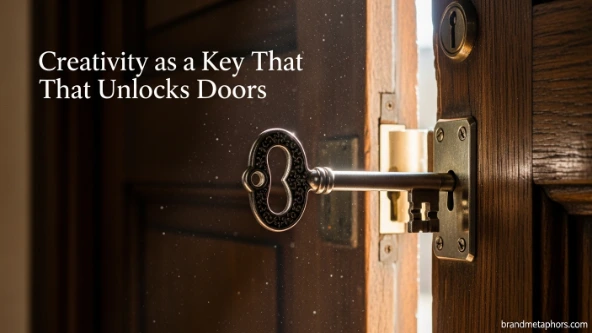
Some metaphors focus on creativity as a tool for opportunity. A key unlocks hidden rooms, secret paths, and new possibilities.
Meaning
This metaphor highlights:
- Problem-solving
- Discovery
- Access to opportunities
- Personal growth
Example Sentence
“Creativity became the key that unlocked new directions in her life.”
Alternative Phrases
- Opening doors of possibility
- Unlocking hidden talent
- Breaking mental barriers
- Discovering secret pathways
Real-Life Example
Entrepreneurs often use creativity to solve everyday problems. Many successful companies began because someone unlocked a simpler way to do something ordinary.
Sensory Imagery
The metallic click of a lock opening creates a satisfying emotional response. Readers feel movement and progress.
Interactive Exercise
Complete this sentence five different ways:
“Creativity unlocked the door to ________.”
Possible answers:
- confidence
- adventure
- freedom
- healing
- innovation
Creativity as a River That Never Stops Flowing
A river metaphor emphasizes movement and continuous change. Creativity rarely stays still. It twists, shifts, and adapts over time.
Meaning and Symbolism
This metaphor represents:
- Momentum
- Adaptability
- Natural expression
- Constant evolution
Example Sentence
“Ideas flowed through her mind like a restless river after spring rain.”
Alternative Expressions
- Streams of inspiration
- Flowing thoughts
- Creative currents
- Rivers of imagination
Emotional and Sensory Details
Readers may imagine:
- Rushing water
- Cool mist
- Smooth stones beneath the surface
- The calming sound of movement
Mini Storytelling
Some artists experience “creative flow,” a mental state where ideas come naturally and time seems to disappear. Athletes, musicians, and writers often describe this feeling as floating down a river without resistance.
Creative Prompt
Describe a moment when ideas came naturally to you. Compare the experience to water:
- a waterfall
- a quiet stream
- a flood
- rain
Creativity as a Bridge Between Worlds
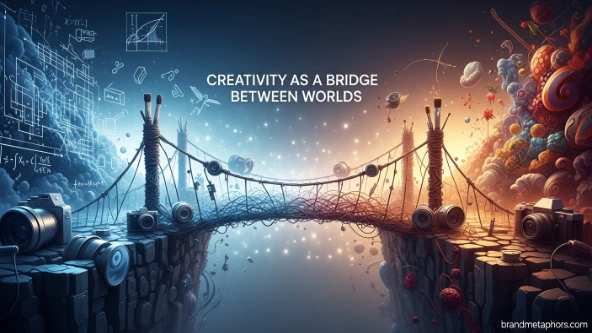
Creativity often connects ideas that seem unrelated. That is why bridges make powerful metaphors.
A bridge joins separated places, just as imagination connects emotions, cultures, disciplines, and perspectives.
Meaning
This metaphor symbolizes:
- Connection
- Understanding
- Innovation
- Communication
Example Sentence
“Art became a bridge between her inner world and reality.”
Alternative Expressions
- Connecting distant ideas
- Crossing creative boundaries
- Linking imagination with truth
- Building pathways between thoughts
Cultural Reference
Many great inventions emerged by combining unrelated fields:
- Technology and art
- Science and storytelling
- Nature and engineering
Creativity thrives where bridges exist.
Bonus Tip for Social Media
Bridge metaphors work beautifully in captions:
- “Creativity builds bridges where fear builds walls.”
- “Every idea is a bridge to somewhere new.”
Practice Exercise
Think of two unrelated things:
- music and weather
- cooking and space
- books and mountains
Now create a metaphor connecting them creatively.
Creativity as a Wild Animal
This metaphor portrays creativity as something untamed, instinctive, and alive.
Sometimes imagination refuses control. It runs freely like a wolf, bird, or horse.
Meaning
The metaphor highlights:
- Freedom
- Instinct
- Unpredictability
- Raw energy
Example Sentence
“His creativity was a wild horse that refused to stay inside fences.”
Alternative Comparisons
- A roaring lion
- A soaring eagle
- A restless fox
- A dancing firefly
Emotional Details
Animal metaphors add movement and emotion. They make creativity feel alive instead of mechanical.
Real-Life Example
Some artists describe inspiration as unpredictable. It appears suddenly and disappears just as quickly, much like a shy creature in the forest.
Interactive Prompt
If your creativity were an animal:
- What would it be?
- How would it move?
- What sounds would it make?
Write a short paragraph describing it.
Creativity as a Storm of Possibilities
Storm metaphors capture the chaos and intensity of imagination. Creative moments are not always calm. Sometimes they arrive like thunder.
Meaning
This metaphor represents:
- Emotional intensity
- Powerful transformation
- Chaos leading to beauty
- Sudden bursts of energy
Example Sentence
“Brainstorming ideas felt like standing inside a thunderstorm of possibilities.”
Alternative Expressions
- Lightning-fast ideas
- Thunderous inspiration
- A whirlwind of imagination
- A hurricane of thoughts
Sensory Elements
Storm imagery creates excitement:
- flashing lightning
- rolling thunder
- rushing wind
- dramatic skies
Literary Reference
Many Romantic poets used storms to symbolize artistic passion and emotional power.
Writing Exercise
Describe your last creative project as weather:
- sunny
- foggy
- stormy
- snowy
- windy
Explain why.
Creativity as a Treasure Hunt
Creativity can feel like searching for hidden treasure. Ideas are not always visible immediately. Sometimes they must be discovered through exploration.
Meaning
This metaphor symbolizes:
- Curiosity
- Adventure
- Persistence
- Reward
Example Sentence
“Writing the novel became a treasure hunt filled with surprising discoveries.”
Alternative Ways to Express It
- Digging for ideas
- Unearthing inspiration
- Searching for hidden gems
- Following clues of imagination
Emotional Impact
Treasure metaphors make creativity feel exciting and playful rather than stressful.
Real-Life Example
Scientists and artists alike often discover breakthroughs accidentally while searching for something else entirely.
Interactive Exercise
Make a “creative treasure map”:
- Draw a goal.
- Add obstacles.
- Include hidden opportunities.
- Mark where inspiration might appear.
Creativity as a Window to Another Reality
A window metaphor suggests that creativity allows people to see beyond ordinary life.
Through imagination, we glimpse different possibilities, emotions, and perspectives.
Meaning
This metaphor reflects:
- Vision
- Escape
- Perspective
- Transformation
Example Sentence
“Poetry became a window into worlds he could never physically visit.”
Alternative Expressions
- Looking beyond limits
- Opening the mind
- Seeing through new lenses
- Gazing into possibility
Sensory and Emotional Details
Window imagery often feels:
- hopeful
- peaceful
- reflective
- inspiring
Readers imagine sunlight pouring into a room or distant landscapes waiting outside.
Mini Storytelling
Books often function as windows. A reader sitting quietly in one country can suddenly experience another culture, century, or universe through storytelling.
Practice Prompt
Write about a book, movie, or artwork that opened a “window” in your mind.
How to Use Metaphors for Creativity in Everyday Writing
Metaphors are not only for poetry. They improve many forms of communication.
In Creative Writing
Metaphors create emotion and vivid imagery. They help readers feel ideas instead of merely understanding them.
In Social Media Captions
Short metaphorical phrases attract attention quickly:
- “Ideas blooming like spring flowers.”
- “Creativity is my compass.”
- “Chasing sparks in the dark.”
In Public Speaking
Metaphors simplify complex ideas. Audiences remember visual comparisons more easily than plain explanations.
In Daily Conversations
Even casual speech becomes more expressive:
- “My thoughts are all over the map.”
- “I’m fishing for ideas.”
- “That project lit a fire in me.”
Bonus Tips
- Avoid mixing too many metaphors at once.
- Choose images matching the mood.
- Use sensory details for stronger impact.
- Keep comparisons relatable and clear.
Interactive Creativity Challenges for Readers
Practicing metaphors strengthens creative thinking. Try these exercises regularly.
1. The Object Challenge
Pick an ordinary object:
- clock
- candle
- backpack
- mirror
Now compare creativity to it.
2. The Emotion Exercise
Describe creativity using emotions:
- joy
- fear
- excitement
- loneliness
3. The Nature Prompt
Use nature imagery:
- forests
- stars
- rain
- mountains
4. The Five-Senses Method
Describe creativity through:
- taste
- touch
- smell
- sound
- sight
5. The Story Starter
Begin a story with: “Creativity arrived like…”
Complete the sentence in five different ways.
FAQs About Metaphors for Creativity
What is a metaphor for creativity?
A metaphor for creativity is a comparison that describes imagination or innovation using vivid imagery. Examples include “creativity is a spark” or “ideas are seeds.”
Why are metaphors important in writing?
Metaphors make writing more emotional, memorable, and visually engaging. They help readers connect with abstract concepts more easily.
How can I create my own creativity metaphors?
Start by thinking about how creativity feels. Then compare that feeling to something physical, emotional, or natural like fire, water, animals, or storms.
Are metaphors useful in social media content?
Yes. Metaphors make captions and posts more eye-catching and relatable. They can add emotion and personality to short content.
What are the best metaphors for artistic inspiration?
Popular metaphors include:
- a spark of light
- a flowing river
- a blooming garden
- an endless ocean
- a window into another world
Conclusion
Creativity is difficult to define because it constantly changes shape. Sometimes it burns like fire. Sometimes it grows quietly like a garden. Other times it crashes through the mind like a storm or drifts gently like an ocean current. Metaphors help us capture these experiences in ways plain language cannot.
By using metaphors for creativity, you can enrich your writing, deepen emotional expression, and communicate ideas more vividly. Whether you are crafting poetry, social media posts, stories, speeches, or personal reflections, strong metaphors invite readers into your imagination.
More importantly, metaphors remind us that creativity itself is alive. It is not a machine or formula. It is a spark, a river, a bridge, a treasure hunt, and a thousand other beautiful things waiting to be discovered.
The next time inspiration arrives, pause for a moment and ask yourself:
“What does my creativity feel like today?”
The answer may become your most powerful metaphor yet.