
Introduction
There are moments in life when everything feels tight, as if invisible walls are closing in. It might be a job that drains your energy, a routine that feels endless, or a fear that quietly limits your choices. Then, there are other moments—small but powerful—when you feel light, open, and fully yourself. Maybe it’s standing on a quiet hill with wind on your face, or making a decision without fear in your heart. These moments often feel like freedom, even if nothing around you has physically changed.
Freedom is not always easy to define. It is more often felt than explained. That is why metaphors are so powerful. They help us understand freedom in ways simple words cannot. A bird in the sky, a river flowing, a door opening—each image carries a deeper meaning about what it means to be free.
In this article, we will explore metaphors for freedom from many angles. Each one reveals a different layer of meaning—emotional, mental, social, and personal. Together, they help us understand not just what freedom is, but how it lives inside everyday life.
Freedom as Flight: The Sky Without Limits
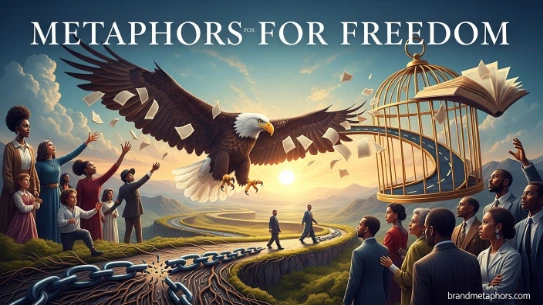
One of the most common metaphors for freedom is flight. Birds soaring through the sky represent movement without barriers. The sky has no visible walls, no borders, no fixed paths. It suggests endless possibility.
When people imagine freedom, they often picture wings. This is because flight represents escape from weight—physical, emotional, or mental. A person who feels trapped might dream of “taking off” from their situation. This does not always mean leaving a place; sometimes it means leaving a thought or fear behind.
Emotional Meaning of Flight
Flight also reflects emotional release. Just like a bird rising higher, a person may feel lighter after letting go of stress or worry. It symbolizes rising above problems instead of being pulled down by them.
In everyday life, this metaphor shows up when someone says, “I finally feel free.” It often means they have found clarity, courage, or peace. The idea of flying reminds us that freedom is not only about where we are—but how high our spirit can rise.
The Open Road: Freedom Through Movement and Choice
The open road is another strong image of freedom. A long, empty road stretching into the distance represents choice, direction, and possibility. There are no fixed rules about where to go or how fast to move.
People often connect roads with life decisions. Each turn can represent a different path. Standing at a crossroads symbolizes moments when we must choose our direction without full certainty.
Life Lessons from the Road
The road teaches that freedom is not just about speed but about direction. Even slow movement can be free if it is chosen willingly. A traveler on an open road may not know the destination, but the ability to choose the journey itself is freedom.
This metaphor also shows that freedom comes with responsibility. Every turn shapes where we end up. In life, freedom is not just escape—it is also creation.
The Ocean: Depth, Flow, and Limitless Space
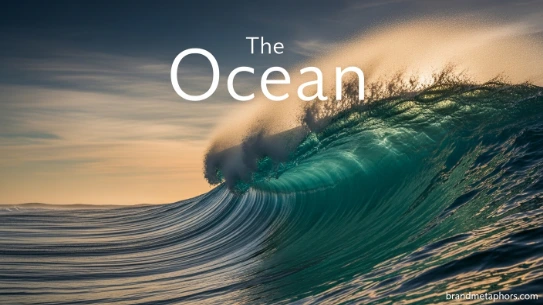
The ocean represents freedom in a deeper and more emotional way. Unlike the sky or road, the ocean is vast, powerful, and sometimes unpredictable. It reflects freedom as something both beautiful and overwhelming.
Waves move constantly, never staying in one place. This motion symbolizes change and flow. Freedom, in this sense, is not stillness but movement through life’s changes.
Emotional Depth of the Ocean
The ocean also represents emotional freedom. Calm waters suggest peace within, while storms reflect emotional struggle. Yet both are part of the same body of water, showing that freedom includes all emotional states.
People often feel “washed clean” after spending time near the ocean. This reflects the idea that freedom can be a reset—a return to something natural and unforced. The ocean teaches us that freedom is not control, but flow.
Breaking Chains: Freedom from Limitations
One of the strongest and most direct metaphors for freedom is breaking chains. Chains represent restriction, control, or limitation. Breaking them symbolizes release from something that once held power over us.
This image is often used in stories about justice, rights, and personal growth. It shows a clear shift from being controlled to being independent.
Personal Meaning of Chains
Chains are not always external. They can represent fear, doubt, or habits. Breaking them means overcoming internal barriers.
For example, someone overcoming fear of failure is “breaking mental chains.” Someone leaving a toxic environment is breaking emotional chains. This metaphor reminds us that freedom often begins inside before it appears outside.
Light and Darkness: Freedom as Awareness
Light is often used as a metaphor for freedom, while darkness represents confusion or limitation. When light appears, it brings clarity. Things become visible, understandable, and less frightening.
Freedom, in this sense, is about awareness. When people “see the light,” they understand their situation more clearly and can make better choices.
Inner Clarity
This metaphor shows that freedom is not always about action—it is also about understanding. A person can be physically free but mentally lost. Light represents the moment when confusion disappears.
Even small insights can feel like light entering a dark room. That moment of understanding can change everything. Freedom begins when we can finally see clearly.
The Door and the Key: Choice and Opportunity
Doors represent opportunities, while keys represent access. Together, they form a powerful metaphor for freedom. A closed door suggests limitation, but a key suggests possibility.
Freedom here is not just about having doors—it is about having the ability to open them.
Symbol of Decision
A person standing in front of many doors must choose which one to open. This reflects life decisions and the uncertainty that comes with them. Freedom is not knowing every outcome but having the ability to choose anyway.
Sometimes the hardest part is not the door itself, but the fear of what lies behind it. The key represents courage—the ability to step forward despite uncertainty.
Wind: Invisible but Powerful Freedom
Wind cannot be seen, but it can be felt. This makes it a powerful metaphor for freedom. It moves without restriction, flowing through open spaces and around obstacles.
Wind represents unseen freedom—something that exists even when it is not obvious. It reminds us that freedom does not always need to be loud or visible.
Emotional Flow
Just like wind, thoughts and emotions can move freely when not blocked. A calm mind feels like a gentle breeze, while a chaotic mind feels like a storm.
Wind also shows that freedom is not control over everything, but movement through everything. It cannot be held, only experienced.
Gardens and Wilderness: Cultivated vs Untamed Freedom
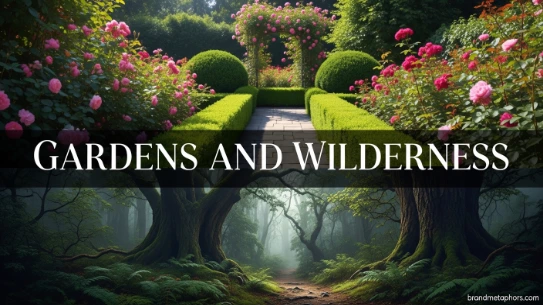
A garden represents controlled, structured freedom. A wilderness represents wild, untouched freedom. Both are forms of freedom, but they express it differently.
In a garden, everything has order. In the wilderness, everything grows freely. This contrast shows that freedom can exist within structure or without it.
Balance Between Order and Wildness
Life often requires both. Too much control can feel like restriction. Too much chaos can feel overwhelming. True freedom may lie somewhere in between.
A well-kept garden still allows growth, while a wild forest still has natural balance. This metaphor teaches that freedom is not one fixed state—it is a balance.
Music and Sound: Freedom in Expression
Music represents freedom through expression. Notes, rhythms, and silence come together to create something emotional and alive. There are no strict rules on how music must feel—only how it is expressed.
Voice Without Limits
When people express themselves freely, it is like music. Their thoughts become sound, their emotions become rhythm. Singing, speaking, or even silence can all be forms of freedom.
Music also shows that freedom includes harmony and contrast. Loud and soft, fast and slow—all work together. This reflects how human emotions also exist in variety.
Inner Freedom vs Outer Freedom
Not all freedom is visible. Outer freedom refers to physical independence, while inner freedom refers to emotional and mental peace.
A person may live in a free society but feel trapped inside. Another may face limits but still feel peaceful within.
True Balance
Inner freedom often matters more than outer conditions. It is the ability to stay calm, make choices, and feel at peace regardless of situation.
This metaphor reminds us that real freedom is not only about changing life circumstances but also about changing how we experience them.
Social and Collective Freedom
Freedom is not only personal. It also exists in communities and societies. When people are allowed to speak, move, and live without unfair limits, collective freedom is present.
Metaphors like “a rising tide” or “shared light” are often used here. They show that freedom grows stronger when shared.
Shared Responsibility
Social freedom also comes with responsibility. One person’s freedom should not harm another’s. This balance is important for long-term peace.
Collective freedom reminds us that we are connected. When one group gains freedom, it often creates space for others too.
Psychological Freedom: Freedom from the Mind
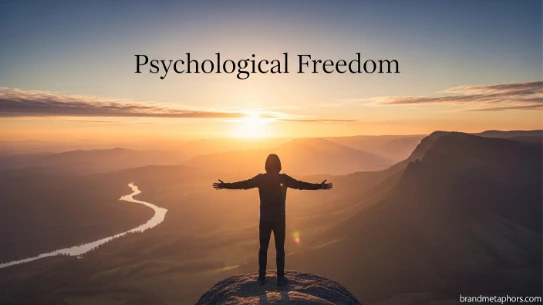
Sometimes the biggest barriers are inside the mind. Fear, doubt, and overthinking can create invisible walls. Psychological freedom means stepping beyond these mental limits.
This metaphor is often described as “unlocking the mind” or “opening mental space.”
Breaking Mental Patterns
When someone lets go of negative thinking, it feels like stepping into open air. Thoughts become clearer, lighter, and more flexible.
This form of freedom is deeply personal. It shapes how we see ourselves and the world. It is often the foundation of all other freedoms.
Conclusion
Freedom is not a single idea—it is a collection of experiences, feelings, and meanings. Through metaphors like flight, roads, oceans, wind, and light, we begin to see how deeply freedom is woven into everyday life. Some metaphors show freedom as movement, others as clarity, and others as emotional release.
What becomes clear is that freedom is both external and internal. It can be found in changing your surroundings, but also in changing your thoughts. It can be loud like breaking chains or quiet like a gentle breeze.
In the end, freedom is not just something we have—it is something we understand, feel, and live through every day in many different forms.
FAQs
What is a simple definition of freedom in metaphors?
Freedom in metaphors is using images like flight, roads, or light to describe the feeling of being unrestricted or independent.
Why are metaphors important for understanding freedom?
They make abstract ideas easier to feel and understand by connecting them to real-life images and experiences.
What is the most common metaphor for freedom?
Flight, especially birds in the sky, is one of the most common metaphors for freedom.
Can freedom be internal as well as external?
Yes, freedom can be mental and emotional, not just physical or social.
What does breaking chains symbolize?
It symbolizes overcoming limitations, fears, or restrictions in life.
How does nature represent freedom?
Nature symbols like wind, oceans, and forests show freedom as natural, flowing, and unrestricted movement.
Is freedom always complete independence?
No, freedom can exist within limits, as long as there is choice, awareness, and peace.