
Introduction (150–200 words)
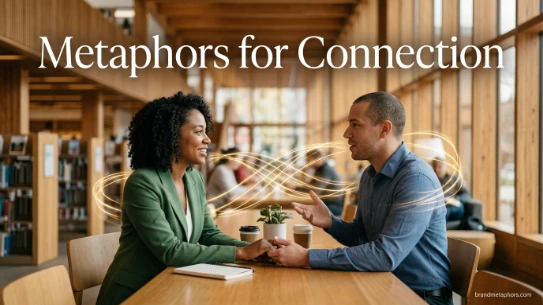
Have you ever stood in a crowded room and still felt completely alone? Or maybe you’ve had a conversation that made you feel instantly understood, as if something invisible had tied you to another person? Human connection is not always easy to explain, yet we constantly try to describe it using images from everyday life. We say we “build bridges,” “feel close,” “stay in touch,” or “grow apart.” These expressions are more than just words—they are metaphors that help us understand something deeply emotional and often hard to define.
Metaphors for connection give shape to invisible bonds between people. They help us express love, friendship, trust, distance, and belonging in ways that feel real and relatable. Without them, it would be difficult to describe how relationships form, break, or evolve over time.
This article explores powerful metaphors for connection and what they reveal about human relationships. Each idea will show how we understand closeness through images from nature, objects, movement, and shared experience. By the end, you will see how these metaphors quietly shape the way we think about others—and even how we connect in your own life.
What “Metaphors for Connection” Really Mean
Metaphors for connection are simple comparisons that help explain how people relate to each other. Since emotional bonds cannot be seen or touched, we use familiar images to describe them. For example, saying “we are on the same wavelength” helps explain understanding without needing long explanations.
These metaphors are not just poetic language. They shape how we think about relationships. If we see connection as a “bridge,” we imagine effort, structure, and two sides coming together. If we see it as a “thread,” we think of something delicate but continuous.
In daily life, we use these expressions without thinking. We might say a friendship is “strong,” a relationship is “breaking,” or someone is “distant.” These words come from physical experiences but describe emotional states.
Why They Matter
Metaphors help people:
- Understand complex emotions quickly
- Communicate feelings that are hard to explain
- Build shared meaning in relationships
- Reflect on how close or distant they feel from others
In simple terms, metaphors for connection act like emotional shortcuts. They help us translate inner experiences into something understandable, both for ourselves and for others.
Bridges: Crossing the Distance Between People

One of the most common metaphors for connection is the bridge. A bridge connects two separate places, just as relationships connect two individuals.
When people say, “Let’s build a bridge,” they mean creating understanding where there was distance before. It suggests effort, patience, and trust. A bridge is not built instantly; it requires support from both sides.
In relationships, bridges represent communication. A misunderstanding is like a gap between two lands. When people talk, listen, and empathize, they slowly build that bridge.
A strong bridge can hold weight, just like a strong relationship can handle challenges. But if neglected, it can weaken over time.
Emotional Insight
This metaphor teaches that connection is active. It is not something that simply exists—it is something people construct. Without effort, the gap remains.
Bridges also remind us that differences do not have to separate us forever. Instead, they can be crossed with understanding.
Threads: The Invisible Weaving of Relationships
Another powerful metaphor for connection is the thread. Threads suggest something small, flexible, and easily overlooked, yet capable of forming strong bonds when woven together.
Threads in Daily Life
When we say “our lives are intertwined,” we imagine threads crossing and looping together. A single thread may seem weak, but many threads woven together create strength.
Examples of Thread Metaphors
- “We are tied together by shared memories.”
- “That moment connected our lives.”
- “Our friendship has many threads of trust.”
Threads also show fragility. A single broken thread may not destroy the entire fabric, but it weakens it. This reflects how relationships depend on care and attention.
Weaving Meaning Together
Connection is not just about two people. It is about shared experiences, conversations, and memories forming a larger pattern. Like weaving, relationships grow stronger with time and repetition.
Threads remind us that even small interactions matter. A simple message or kind word can add strength to the fabric of connection.
Roots: Connection Through Growth and Stability
Roots are another deep metaphor for human connection. Trees are grounded by their roots, which spread beneath the surface and hold them steady.
In relationships, roots represent history, shared experiences, and emotional grounding. Families are often described as having deep roots because their connection grows over time.
Roots also symbolize nourishment. Just as trees absorb water and nutrients from the soil, people draw emotional strength from their connections.
Emotional Meaning
Strong roots mean stability. Even when storms come, the tree remains standing. Similarly, strong relationships can survive difficult times because of their deep emotional foundation.
However, roots also require space. If they are restricted, growth becomes limited. This reminds us that healthy relationships need freedom as well as closeness.
Roots teach us that connection is not always visible. The strongest bonds often exist beneath the surface.
Circles: The Shape of Belonging

Circles are powerful metaphors for connection because they have no beginning or end. They represent unity, equality, and inclusion.
When people form a circle, everyone is equally close to the center. No one stands ahead or behind. This is why circles often symbolize trust and belonging.
H3: Circles in Social Life
- Friendship circles represent groups of trust
- Family circles represent emotional safety
- Support circles represent shared care
A circle also protects what is inside. In relationships, this means emotional security. People inside the circle feel accepted and valued.
H3: Breaking the Circle
When someone is excluded, the circle is broken. This creates feelings of isolation or separation. Repairing the circle means restoring trust and inclusion.
Circles teach us that connection is about equality. No one is above or below—everyone is part of the whole.
Light and Signals: Connection Through Awareness
Light is often used as a metaphor for connection because it represents visibility, understanding, and presence.
When someone says, “You light up my life,” they are expressing emotional warmth and awareness. Light makes things visible, just as connection makes people feel seen.
Signals also play a role. In communication, signals represent messages sent and received. A phone call, a smile, or even eye contact can act as a signal of connection.
Emotional Insight
Without light, things feel unclear. Without signals, people feel distant. Connection depends on clarity and response.
Even small signals matter. A simple reply or gesture can confirm that someone is still present in your life.
Light metaphors remind us that connection is also about recognition—being seen and seeing others.
Rivers and Flow: Connection in Motion
Water is a powerful symbol of connection because it flows, adapts, and links different places together. Rivers connect mountains to oceans, just as relationships connect different experiences of life.
H3: Flow of Emotion
Emotions in relationships are like water. They move, change, and sometimes become still. Healthy connection allows emotions to flow freely without blockage.
H3: When Flow is Interrupted
- Arguments act like dams
- Silence can freeze communication
- Understanding restores flow
Rivers show that connection is not static. It moves constantly, shaped by experiences and interactions.
Like water, relationships need space to flow naturally. Too much control can block connection, while openness allows it to grow.
Music and Harmony: Connection Through Rhythm
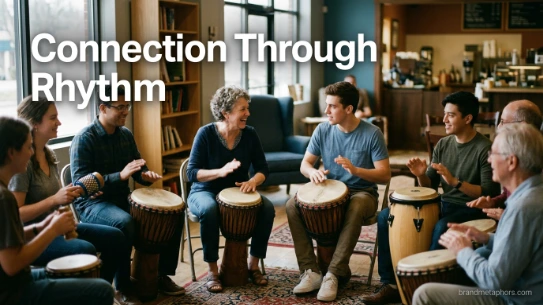
Music is another beautiful metaphor for connection. When people are in harmony, they match each other’s rhythm, tone, and timing.
In relationships, harmony does not mean sameness. Different instruments can create beautiful music together when they work in balance.
Emotional Meaning
Connection is like a song shared between people. Sometimes it is loud and joyful, other times soft and calm. What matters is how well the parts blend.
When harmony is lost, relationships feel out of sync. But with patience, rhythm can be restored.
Music reminds us that connection is both emotional and timing-based. Being in tune with someone requires listening and adjustment.
Doors and Pathways: Opportunities for Connection
Doors represent access. When a door is open, connection is possible. When it is closed, distance remains.
Pathways suggest movement toward someone or something. Walking a path together symbolizes shared direction.
Meaning in Relationships
- Open doors = willingness to connect
- Closed doors = emotional distance
- Shared paths = mutual journey
Connection often begins with opening a door—starting a conversation, showing interest, or reaching out.
These metaphors highlight choice. People decide whether to open or close emotional doors.
Networks and Stars: Connection in Complexity
In modern thinking, connection is often compared to networks. People are like nodes linked through relationships, communication, and shared systems.
H3: Social Networks
Friendships, families, and communities form complex webs. Each connection affects others, creating patterns of influence and support.
H3: Stars in the Sky
Stars also represent connection. Each star is separate, yet together they form constellations. Humans interpret patterns among them, just as we find meaning in relationships.
Networks show that no connection exists alone. Every bond is part of a larger system of interaction.
Hands and Touch: The Human Side of Connection

Touch is one of the oldest forms of communication. It builds immediate emotional awareness.
Hands symbolize direct human connection. A handshake, a hug, or a gentle touch communicates trust and care without words.
Emotional Meaning
When people say, “We are hand in hand,” they express unity and support. It suggests walking through life together.
Hands also represent help. To “lend a hand” means to support someone in need.
This metaphor shows that connection is physical as well as emotional. It is something felt directly.
Broken Connections and Repair
Not all connections stay strong. Sometimes they break due to misunderstanding, distance, or time. But broken connections can often be repaired.
Repair as a Process
- Apology rebuilds trust
- Conversation restores understanding
- Time heals emotional gaps
A broken bridge can be rebuilt. A torn thread can be rewoven. These images remind us that loss is not always final.
Repair requires effort from both sides. It is about rebuilding structure and trust step by step.
This metaphor gives hope. It shows that connection is flexible and can recover if people choose to rebuild it.
Conclusion
Metaphors for connection help us understand one of the most important parts of human life—how we relate to each other. Through bridges, threads, roots, circles, light, water, music, doors, networks, and hands, we see connection as something living, changing, and deeply human.
Each metaphor adds a different layer of meaning. Some show strength, others show fragility. Some focus on movement, while others focus on stability. Together, they form a complete picture of how people bond, separate, and come together again.
At its core, connection is both simple and complex. It is built through small actions, shared moments, and emotional awareness. These metaphors remind us that connection is not just something we have—it is something we create, maintain, and repair throughout life.