
A cup of tea sits on the table, steam curling upward in soft spirals. The color is just right—not too pale, not too dark.
The sweetness balances perfectly with the warmth. For a moment, everything feels… complete. You don’t adjust anything. Thay don’t question it. You simply experience it. And in that quiet second, you might think: this is perfect.
But what does “perfect” really mean? Is it a fixed state, or something shaped by perspective, emotion, and context? In everyday life, perfection is rarely literal. Instead, we rely on metaphors—rich, imaginative comparisons—to describe moments, people, or experiences that feel complete, harmonious, or just right.
This article dives deep into metaphors for “perfect,” not just as linguistic tools, but as windows into how we perceive excellence, beauty, and fulfillment. Through storytelling, reflection, and practical insights, we’ll explore how these metaphors shape our understanding—and sometimes our expectations—of perfection in real life.
The Meaning Behind “Perfect” as a Metaphor
At its core, “perfect” isn’t about flawlessness—it’s about fit. When we describe something as perfect, we’re often saying it aligns seamlessly with our expectations, emotions, or needs. Metaphors help us express this alignment in ways literal language cannot.
Think of phrases like “a puzzle piece that fits” or “a symphony in harmony.” These aren’t just poetic—they capture a deeper truth: perfection is relational. It exists between the object and the observer.
Imagine a student finishing an exam. They might say, “Everything just clicked.” That “click” is metaphorical, yet it perfectly conveys the feeling of completeness and clarity. Another person might describe a sunset as “painted by heaven,” suggesting an ideal beauty beyond human creation.
These metaphors reveal something important: perfection is rarely absolute. It’s filtered through experience, shaped by emotion, and often temporary. What feels perfect in one moment might not in another.
Understanding this helps us move away from rigid standards. Instead of chasing an impossible ideal, we begin to recognize perfection in fleeting, meaningful moments—moments that feel right, even if they’re not technically flawless.
Perfection as a Puzzle Piece: The Metaphor of Fit
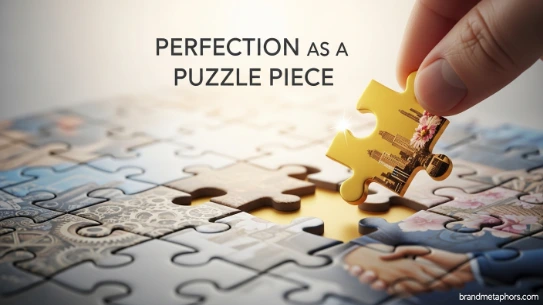
One of the most common metaphors for perfection is the idea of a puzzle piece that fits exactly where it belongs. This metaphor emphasizes alignment, belonging, and completion.
The Feeling of Completion
Picture working on a puzzle for hours. You finally find that one missing piece. It slides into place effortlessly. There’s no forcing, no adjusting—it just fits. That satisfying moment captures what many people mean by “perfect.”
In relationships, we often hear someone say, “They’re my missing piece.” While romanticized, this metaphor reflects a deeper desire for compatibility. It’s not about being identical—it’s about complementing each other in a way that feels natural.
When the Fit Isn’t Forced
The beauty of this metaphor lies in its simplicity: perfection doesn’t require strain. If something has to be forced, it’s likely not the right fit. This applies to jobs, friendships, and even life choices.
A person might struggle in a career that looks impressive on paper but feels wrong internally. Then they switch paths and suddenly say, “This just feels right.” That’s the puzzle piece metaphor in action.
Practical Insight
Instead of asking, “Is this perfect?” try asking, “Does this fit?” The shift in perspective reduces pressure and encourages authenticity. Perfection becomes less about external standards and more about internal alignment.
Perfection as a Symphony: Harmony in Motion
Another powerful metaphor for perfection is a symphony—multiple elements working together in harmony to create something greater than the sum of its parts.
The Balance of Elements
In a symphony, no single instrument dominates for long. Each contributes at the right moment, in the right way. When everything is balanced, the result feels seamless.
This metaphor applies beautifully to life. A “perfect day” isn’t necessarily extraordinary—it’s often a day where everything flows. You wake up on time, conversations feel easy, and tasks fall into place.
Imperfection Within Harmony
Interestingly, even in music, perfection doesn’t mean absolute precision. Slight variations, emotional expression, and human touch often make a performance feel more alive.
Similarly, a family gathering might be noisy, slightly chaotic, but still feel perfect. Why? Because the emotional harmony outweighs minor imperfections.
Practical Insight
Instead of trying to perfect every detail, focus on balance. Ask yourself: are the different parts of my life working together, or competing for attention? Harmony often matters more than control.
Perfection as a Mirror: Reflection Without Distortion
The metaphor of a mirror suggests clarity and truth. A “perfect mirror” reflects reality exactly as it is—without distortion, exaggeration, or omission.
Seeing Clearly
In personal growth, this metaphor is powerful. A moment of self-awareness can feel “perfect” because it reveals something real and unfiltered.
For example, someone might realize, “I’ve been chasing approval instead of happiness.” That clarity—though uncomfortable—can feel like a perfect realization because it aligns with truth.
The Danger of Illusion
However, not all mirrors are perfect. Some distort. In life, we often mistake distorted reflections for perfection—like curated social media images or unrealistic expectations.
A person might strive for a “perfect body” based on edited images, not realizing the standard itself is flawed.
Practical Insight
True perfection often lies in honesty, not idealization. Seek reflections that show you clearly—even if they’re imperfect. Growth begins with accurate perception.
Perfection as a Sunrise: Fleeting and Unique
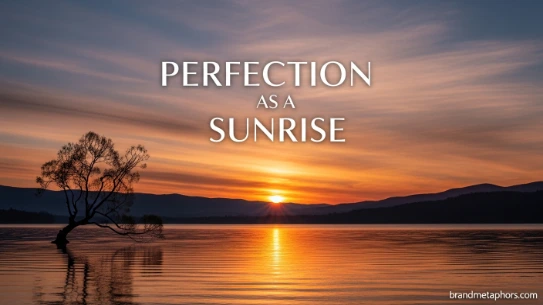
A sunrise is often described as perfect—not because it’s identical every day, but because it’s uniquely beautiful in each moment.
The Beauty of Impermanence
No two sunrises are the same. Colors shift, clouds move, light changes. Yet we still call them perfect. This suggests that perfection doesn’t require consistency—it can exist in variation.
Think about a quiet morning where everything feels calm. That moment might feel perfect, even if it lasts only a few minutes.
Appreciating the Moment
The sunrise metaphor teaches us to appreciate what’s temporary. Trying to “hold onto” perfection often ruins it. Instead, experiencing it fully is what gives it value.
Practical Insight
When something feels perfect, pause. Notice it. Don’t rush to capture or control it. Often, the act of fully experiencing a moment is what makes it perfect.
Perfection as a Circle: Wholeness and Completeness
The circle is a timeless symbol of perfection—no beginning, no end, no breaks.
The Idea of Wholeness
When we describe something as “coming full circle,” we’re often expressing a sense of completion. A story resolves. A lesson is learned. A journey makes sense.
This metaphor is especially meaningful in personal growth. Someone might struggle for years, then finally understand something about themselves. That realization can feel like a perfect ending to a long process.
Not About Being Flawless
A circle doesn’t represent perfection because it’s flawless—it represents it because it’s complete. This shifts the definition from “error-free” to “whole.”
Practical Insight
Instead of chasing flawlessness, aim for wholeness. Ask yourself: am I integrating my experiences, or avoiding parts of myself? True completeness includes both strengths and imperfections.
Perfection as a Key in a Lock: Effortless Alignment
This metaphor emphasizes ease. When a key fits the right lock, it turns smoothly without resistance.
Effortless Progress
In life, we often recognize perfection through ease. A conversation flows naturally. A solution appears without struggle. It feels like things are “falling into place.”
For instance, someone might spend months struggling with a project, then suddenly find the right approach. Everything works. That moment feels perfect—not because it was easy from the start, but because the alignment is finally there.
Recognizing Resistance
If something constantly feels forced, it may not be the right fit. This doesn’t mean avoiding effort—it means distinguishing between meaningful effort and unnecessary friction.
Practical Insight
Pay attention to where things flow versus where they resist. Perfection often reveals itself through smooth alignment, not constant struggle.
Perfection as a Still Lake: Calm and Clarity
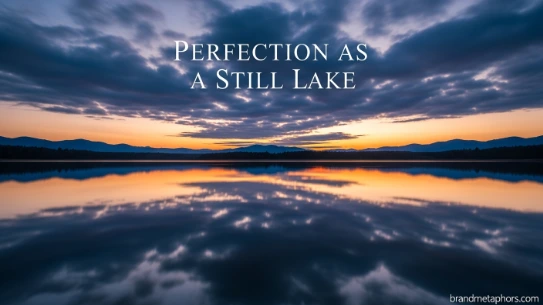
A still lake reflects the sky perfectly, undisturbed by ripples.
Inner Peace
This metaphor captures a different kind of perfection—one rooted in calmness and clarity. A peaceful moment, free from noise and distraction, can feel deeply perfect.
Imagine sitting alone, watching the water, feeling completely present. Nothing extraordinary happens, yet everything feels right.
The Role of Stillness
In a busy world, stillness is rare. That’s why it often feels perfect when it occurs. It allows us to see clearly, think deeply, and feel grounded.
Practical Insight
Create moments of stillness in your life. Even a few minutes of quiet reflection can bring a sense of completeness that feels like perfection.
Perfection as a Story Ending: Resolution and Meaning
A well-crafted story ending often feels perfect—not because it’s predictable, but because it feels earned and meaningful.
Emotional Satisfaction
Think of finishing a book and feeling satisfied, even if the ending isn’t entirely happy. That sense of closure is what makes it feel perfect.
In real life, this might look like resolving a long-standing conflict or achieving a personal goal after a difficult journey.
The Importance of Context
An ending only feels perfect because of what came before it. Without struggle, resolution loses its impact.
Practical Insight
Don’t rush your story. Challenges and setbacks add depth. Perfection often comes from how things come together—not how smoothly they start.
Perfection as a Recipe: Balance of Ingredients
Cooking offers a relatable metaphor for perfection.
The Right Proportions
A dish is perfect when flavors balance—not too salty, not too bland. Each ingredient plays its role.
Similarly, a balanced life includes work, rest, relationships, and personal growth. Too much of one can throw everything off.
Adjusting Along the Way
Even great cooks adjust as they go. Perfection isn’t rigid—it’s responsive.
Practical Insight
Treat your life like a recipe. Taste, adjust, and adapt. Perfection comes from balance, not strict formulas.
Perfection as a Photograph: Captured Moments
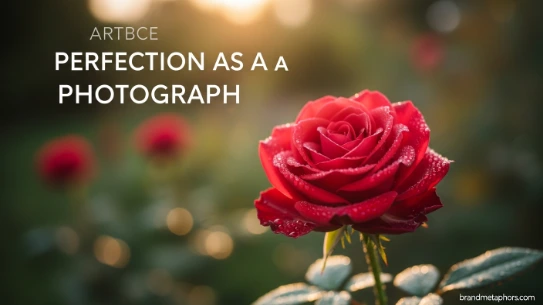
A photograph freezes a moment in time, often highlighting what feels perfect.
Framing Matters
What we choose to include—or exclude—shapes perception. A simple scene can look extraordinary with the right framing.
The Illusion of Permanence
Photos can make moments seem perfect, even if reality was messier. This reminds us that perfection is often curated.
Practical Insight
Be mindful of what you compare yourself to. Not everything that looks perfect tells the full story.
Perfection as a Dance: Rhythm and Flow
Dance represents movement, timing, and connection.
Being in Sync
A perfect dance isn’t about flawless steps—it’s about being in rhythm. Partners move together, adapting to each other.
Embracing Mistakes
Even professional dancers make small errors, but they keep moving. The flow matters more than perfection.
Practical Insight
Life is less about getting every step right and more about staying in rhythm. Adapt, adjust, and keep moving.
Perfection as Light Through Glass: Beauty in Imperfection
Light passing through imperfect glass creates unique patterns.
Flaws Create Beauty
This metaphor challenges traditional ideas of perfection. Sometimes, imperfections enhance rather than diminish.
Think of handmade items or personal quirks—they often feel more meaningful than polished perfection.
Redefining Standards
Perfection doesn’t have to mean uniformity. It can mean authenticity.
Practical Insight
Embrace what makes things unique. Often, what seems imperfect is what makes something truly special.
Common Misunderstandings About Perfection
Many people equate perfection with flawlessness, control, or external validation.
The Pressure to Be Perfect
Chasing unrealistic standards can lead to stress and dissatisfaction. Social expectations often distort our understanding of what “perfect” means.
Letting Go of Rigid Ideals
Perfection isn’t about eliminating flaws—it’s about finding meaning, balance, and alignment.
Practical Insight
Redefine perfection for yourself. Let it be flexible, personal, and grounded in real experience.
Applying These Metaphors in Everyday Life
Metaphors aren’t just descriptive—they’re practical tools.
Shifting Perspective
When you feel stuck, try reframing the situation. Is it a puzzle piece that doesn’t fit? A recipe that needs adjusting? A dance that’s out of rhythm?
Finding Your Own Definitions
Your idea of perfect doesn’t have to match anyone else’s. It can evolve with your experiences.
Living with Awareness
Notice moments that feel complete, even if they’re small. Over time, these moments shape a richer understanding of perfection.
Conclusion
Perfection isn’t a destination—it’s a perspective. Through metaphors like puzzle pieces, symphonies, sunrises, and still lakes, we begin to see that “perfect” is less about flawlessness and more about alignment, balance, and meaning. It lives in moments that feel right, even if they’re temporary or imperfect on the surface.
When we shift our understanding, we free ourselves from unrealistic expectations and start appreciating what already exists. A quiet morning, a meaningful conversation, a sense of clarity—these are the kinds of perfection that truly matter.
In the end, perfection isn’t something you achieve. It’s something you recognize.