
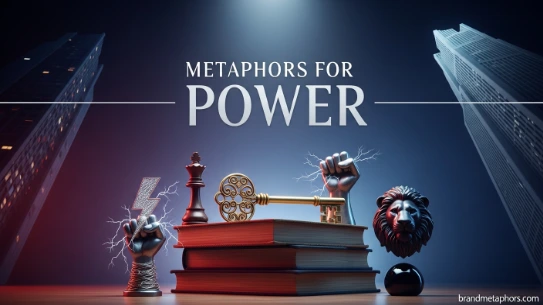
The Silent Thunder of Power: A Captivating Introduction
Power rarely announces itself with noise. More often, it enters like a change in air pressure before a storm—subtle, almost invisible, yet impossible to ignore once it settles in. Think of a room where one person speaks softly, yet every head turns toward them. No raised voice. No visible force. Just presence.
In that moment, power feels less like domination and more like gravity.
We experience power every day—in relationships, workplaces, politics, social media, and even within ourselves. But it is often difficult to describe directly. That is where metaphors for power become essential. They give shape to something intangible, helping us understand influence, control, leadership, and strength through vivid imagery.
This article explores powerful metaphors for power, why they matter, and how you can use them in writing, storytelling, or everyday communication to make your language more expressive and impactful.
What Are Metaphors for Power? Understanding Invisible Force
Metaphors for power are figurative expressions that describe influence, authority, or strength using comparisons to physical or natural phenomena. Instead of saying “someone is powerful,” we might say they are “a force of nature” or “a chess master moving invisible pieces.”
These metaphors matter because power itself is abstract. We cannot touch it, weigh it, or see it directly—but we can feel its effects.
They help us:
- Understand social dynamics
- Communicate leadership and authority
- Describe emotional or psychological strength
- Enrich writing with vivid imagery
In literature, politics, and everyday speech, metaphors shape how we perceive power—sometimes as protection, sometimes as control, and sometimes as danger.
Metaphor 1: Power as a Storm – Unstoppable Natural Force
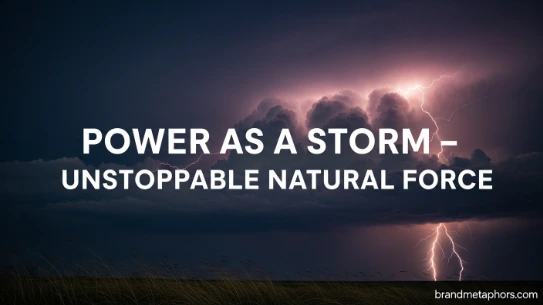
A storm is one of the most common metaphors for power. It represents force, unpredictability, and overwhelming presence.
Meaning & Explanation
When power is described as a storm, it suggests something that cannot be easily controlled. It builds slowly, intensifies, and then spreads its influence everywhere.
Example Sentence
“Her anger wasn’t loud at first—it gathered like a storm on the horizon, until the entire room felt its weight.”
Real-Life Scenario
Think of political revolutions or viral movements online. They often begin quietly—like wind picking up—then suddenly become unstoppable waves of change.
Alternative Expressions
- A rising tide of influence
- A thunderous presence
- A hurricane of authority
Sensory & Emotional Detail
You can almost feel the pressure drop. The air becomes thick. People wait, unsure whether to resist or surrender.
Mini Storytelling Moment
In a small village meeting, a leader stands to speak. At first, his words are gentle, but as he continues, his voice grows stronger. By the end, even skeptics are silent. Not because he shouted—but because his message became a storm they could not ignore.
Metaphor 2: Power as a Chess Game – Strategic Control
Chess is a perfect metaphor for intellectual and political power, where every move is calculated and every decision shapes future outcomes.
Meaning & Explanation
This metaphor emphasizes strategy, foresight, and manipulation of circumstances rather than brute force.
Example Sentence
“In the boardroom, she played power like a chess game, always thinking three moves ahead of everyone else.”
Real-Life Scenario
Corporate leadership, diplomacy, and negotiation often resemble chess matches—silent, deliberate, and deeply strategic.
Alternative Expressions
- A master strategist
- Moving invisible pieces
- Orchestrating outcomes
Literary & Cultural Reference
Many historical leaders, from military generals to CEOs, are described as “grandmasters of influence,” highlighting their ability to anticipate consequences long before they unfold.
Sensory & Emotional Detail
There is no noise here—only thought. A pause before action. A quiet intensity behind every decision.
Interactive Exercise
Try this: Think of a situation where someone had control without being obvious about it. Rewrite it using a chess metaphor. For example:
- Original: “He convinced everyone to agree.”
- Metaphor: “He positioned his arguments like pieces on a board until agreement was the only possible checkmate.”
Metaphor 3: Power as a Magnet – Invisible Attraction

Not all power pushes—it can also pull. The magnet metaphor highlights charisma, influence, and emotional attraction.
Meaning & Explanation
This form of power draws people in naturally. It doesn’t force compliance; it inspires connection.
Example Sentence
“There was something magnetic about his presence—people leaned toward him without realizing it.”
Real-Life Scenario
Great speakers, performers, or leaders often don’t need to demand attention. Their energy quietly pulls others in.
Alternative Expressions
- A gravitational personality
- An invisible pull
- A field of attraction
Sensory & Emotional Detail
You feel warmth, curiosity, and comfort—like standing near a fire on a cold night.
Mini Storytelling Moment
At a crowded gathering, two speakers stand on stage. One shouts. The other speaks softly. Yet people drift toward the second speaker, as if drawn by an unseen thread. That is magnet-like power: effortless, quiet, irresistible.
Interactive Exercise
Write a short paragraph describing someone you admire using the “magnet” metaphor. Focus on how people react to them, not just their actions.
Power as Fire – Destructive and Creative Energy
Fire represents both creation and destruction, making it one of the most complex metaphors for power.
Meaning & Explanation
Fire can warm a home or burn it down. Similarly, power can build civilizations or destroy them depending on how it is used.
Example Sentence
“His ambition burned like fire—bright enough to inspire others, but dangerous enough to consume him.”
Real-Life Scenario
Revolutionary movements often carry “fire” energy—passion that transforms society but can also become uncontrollable.
Alternative Expressions
- Burning ambition
- A blazing force
- A consuming drive
Emotional Tone
Excitement mixed with danger. Inspiration shadowed by risk.
Bonus Tip for Writers
Use fire metaphors when describing emotional intensity, leadership ambition, or transformation. It works especially well in storytelling about personal growth or downfall.
Power as a Mountain – Stability and Authority
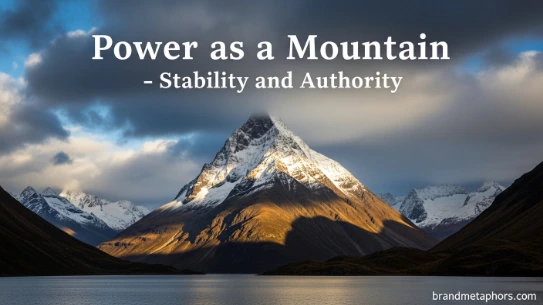
Mountains symbolize permanence, authority, and unshakable presence.
Meaning & Explanation
Unlike storms or fire, mountains represent calm, grounded, long-term power.
Example Sentence
“In the industry, she was a mountain—unchanging, respected, and impossible to ignore.”
Real-Life Scenario
Established institutions or long-standing leaders often embody this metaphor.
Alternative Expressions
- An unmovable force
- A pillar of strength
- A towering presence
Sensory Detail
You imagine stillness, height, and silence—something that does not rush but simply exists with authority.
Interactive Prompt
Describe a person in your life who feels “steady like a mountain.” What qualities make them stable?
Power as Light – Illumination and Clarity
Light as a metaphor represents guidance, knowledge, and inspiration.
Meaning & Explanation
Power here is not control but clarity—helping others see what they couldn’t before.
Example Sentence
“Her leadership was like light in a dark room, revealing paths no one had noticed.”
Real-Life Scenario
Teachers, mentors, and visionaries often embody this form of power.
Alternative Expressions
- A guiding light
- A beacon of influence
- Illuminating presence
Emotional Tone
Hopeful, calm, and inspiring.
Using Power Metaphors in Writing and Communication
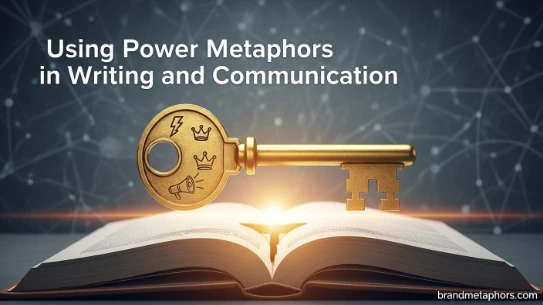
Metaphors for power are not just literary tools—they shape how people perceive authority and influence.
Tips for Writers
- Use storms for chaos or rapid change
- Use chess for strategy and manipulation
- Use magnets for charisma or attraction
- Use fire for passion or danger
- Use mountains for stability
- Use light for guidance and wisdom
Social Media Application
Instead of writing:
- “Strong leader inspires team”
Try:
- “A steady mountain in a shifting world”
This creates emotional resonance and memorability.
Interactive Creative Practice: Build Your Own Power Metaphor
Try this exercise:
- Think of a person or situation involving power
- Choose a natural or physical element (storm, fire, ocean, light, etc.)
- Complete the sentence:
- “Their power is like ___ because ___”
Example:
- “Their power is like the ocean because it is calm on the surface but deep and unpredictable underneath.”
This helps you develop original metaphors instead of relying on common ones.
Cultural Perspectives on Power Metaphors
Different cultures interpret power differently through metaphor:
- Western literature often uses storms, fire, and kingship imagery
- Eastern traditions emphasize balance, flow (like water), and harmony
- Indigenous storytelling often uses nature-based metaphors tied to land and spirit
Understanding these variations enriches your writing and expands creative expression.
Why Metaphors for Power Matter in Modern Communication
In today’s world of fast communication, metaphors make ideas memorable. A single powerful image can replace paragraphs of explanation.
They help:
- Leaders inspire teams
- Writers create emotional depth
- Speakers connect with audiences
- Individuals express complex emotions simply
Metaphors don’t just describe power—they shape how we experience it.
Conclusion
Power is invisible, but its effects are everywhere. Through metaphors—storms, chess games, magnets, fire, mountains, and light—we give shape to something that cannot be held but is always felt.
When you learn to use these metaphors consciously, you are not just improving your language. You are learning how humans understand influence itself.
Because in the end, power is not only about control or authority. It is about perception—and metaphors are the lens through which we see it.
FAQs: Metaphors for Power
1. What are metaphors for power used for?
They are used to describe influence, authority, and strength in vivid, imaginative ways that make abstract ideas easier to understand.
2. Why are metaphors important in describing power?
Because power is intangible, metaphors help visualize and emotionally connect with it.
3. What is the most common metaphor for power?
Storms, fire, and kingship are among the most common, representing force, passion, and authority.
4. Can metaphors for power be negative?
Yes. For example, fire or storms can represent destructive or uncontrolled power.
5. How can I use power metaphors in writing?
Use them in storytelling, speeches, social media posts, or descriptions to create stronger emotional impact and clarity.