
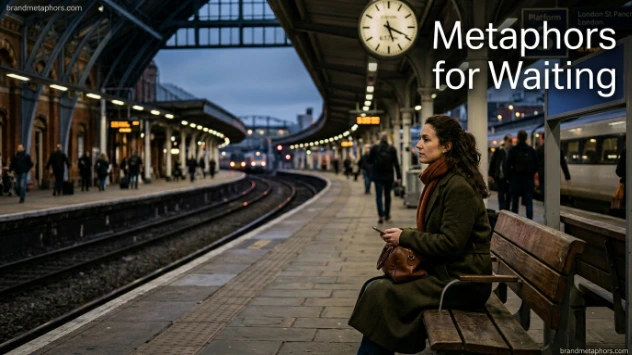
The clock ticks with an almost theatrical patience. You sit by the window, watching the sky change its mood—blue softening into gold, gold melting into dusk.
Somewhere between seconds and sighs, you realize that waiting is not empty. It hums quietly, like a held breath before a song begins.
We all wait—at bus stops, in hospital corridors, for messages that take too long to arrive, for dreams that seem to linger just beyond reach. Waiting can feel like a pause button on life. But what if, instead of resisting it, we learned to describe it, shape it, even beautify it through metaphors?
This is where metaphors for waiting become powerful. They transform an abstract, often frustrating experience into something tangible, expressive, and even poetic.
Whether you’re a writer, a student, a content creator, or simply someone trying to make sense of quiet moments, metaphors help you articulate what waiting feels like—and why it matters.
In this article, we’ll explore vivid and meaningful metaphors for waiting, along with examples, storytelling, and creative exercises to help you use them effectively in writing and daily life.
Why Metaphors for Waiting Matter
Waiting is universal, yet deeply personal. One person’s wait is hopeful; another’s is heavy with uncertainty. Metaphors allow you to:
- Express emotions that are hard to explain directly
- Add imagery and depth to your writing
- Make your experiences more relatable and memorable
- Turn ordinary moments into compelling narratives
Think of metaphors as bridges—connecting feelings to language, and language to imagination.
1. Waiting as a “Seed Beneath the Soil”
Meaning & Explanation
This metaphor suggests that waiting is a period of unseen growth. Just like a seed lies hidden before it sprouts, waiting often involves invisible progress.
Example Sentence
“I waited like a seed beneath the soil, trusting that something within me was quietly growing.”
Mini Storytelling Touch
Imagine a farmer planting seeds before winter. The land looks barren for months, yet beneath the surface, life prepares itself. Waiting, in this sense, becomes an act of faith.
Alternative Expressions
- Waiting like a bud before bloom
- Like roots stretching in silence
- Like a cocoon before transformation
Sensory & Emotional Details
There’s a stillness here—cool, dark, and quiet—but also a sense of anticipation, like holding a secret.
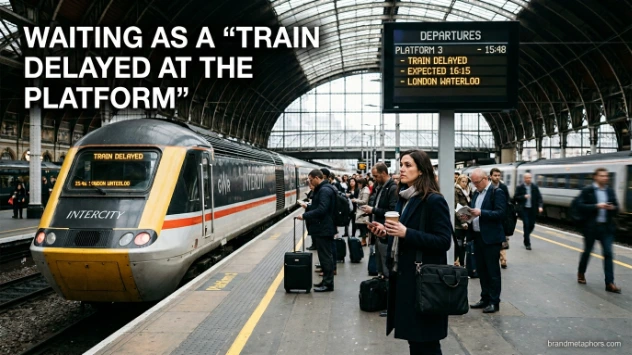
2. Waiting as a “Train Delayed at the Platform”
Meaning & Explanation
This metaphor captures the tension, impatience, and uncertainty of waiting—especially when you don’t know when things will move forward.
Example Sentence
“My thoughts circled like a train delayed at the platform, restless but going nowhere.”
Real-Life Scenario
Picture standing at a crowded railway station. Announcements echo. People check their watches. The train is late—but how late? This metaphor reflects that restless in-between.
Alternative Expressions
- Like a paused journey
- Like luggage with no destination yet
- Like footsteps waiting for a signal
Sensory & Emotional Details
You can almost hear the murmur of voices, the distant rumble of engines, the metallic scent of anticipation.
3. Waiting as “A Candle Burning Slowly”
Meaning & Explanation
This metaphor highlights the passage of time and emotional endurance. Waiting becomes something that consumes energy and patience, little by little.
Example Sentence
“She waited like a candle burning slowly, her hope flickering but still alive.”
Cultural or Literary Reference
Candles often symbolize time and devotion in literature—think of vigils, prayers, or nights spent longing. This metaphor taps into that tradition.
Alternative Expressions
- Like sand slipping through fingers
- Like a fading echo
- Like a clock melting in silence
Sensory & Emotional Details
Warm, dim light. A quiet room. The soft drip of wax. There’s beauty here—but also fragility.
Creative Exercises: Practice Metaphors for Waiting

Exercise 1: Fill the Blank
Complete this sentence with your own metaphor: “Waiting feels like __________.” Try to use imagery from nature, travel, or everyday life.
Exercise 2: Compare Two Types of Waiting
Write two sentences:
- One for hopeful waiting
- One for frustrated waiting
Example:
- Hopeful: “Waiting felt like watching the sunrise inch closer.”
- Frustrated: “Waiting felt like being stuck in a traffic jam with no end in sight.”
Exercise 3: Turn Waiting into a Scene
Write a short paragraph describing a moment of waiting without using the word “wait.” Use sensory details—what do you see, hear, feel?
Bonus Tips: Using Metaphors for Waiting Effectively
1. Match the Emotion
Not all waiting is the same. Choose metaphors that reflect the feeling:
- Joyful waiting → blooming, sunrise, music building
- Painful waiting → storms, shadows, heavy silence
2. Keep It Relatable
Use images your audience understands. Everyday experiences—like traffic, seasons, or cooking—make metaphors more accessible.
3. Use in Social Media
Metaphors make captions more engaging:
- “Still here, waiting like a page before the story begins.”
- “Some days feel like a paused song—waiting for the next note.”
4. Avoid Overloading
One strong metaphor is better than many weak ones. Let your imagery breathe.
More Metaphor Ideas for Waiting (Quick Inspiration List)

- Waiting like a storm gathering on the horizon
- Like a letter unsent
- Like a paused heartbeat
- Like a door half-open
- Like a song stuck on the first note
Use these as prompts to expand your creativity.
Metaphors for Waiting in Everyday Life
Waiting isn’t just poetic—it’s practical. Think about:
- Waiting for exam results
- Waiting for a job response
- Waiting for someone you love
Each moment carries a different emotional weight. By using metaphors, you can:
- Journal your feelings more clearly
- Communicate better with others
- Reflect on your experiences in a deeper way
Turning Waiting into Meaning
There’s a quiet wisdom in waiting. It teaches patience, resilience, and sometimes even self-discovery. When you describe waiting through metaphors, you’re not just filling time—you’re shaping it into something meaningful.
FAQs About Metaphors for Waiting
1. What is a metaphor for waiting?
A metaphor for waiting is a figurative comparison that describes the experience of waiting using imagery, such as “waiting like a seed beneath the soil.”
2. Why should I use metaphors for waiting in writing?
They add emotional depth, make your writing more vivid, and help readers connect with your experiences on a deeper level.
3. Can metaphors for waiting be used in everyday conversation?
Yes! Simple metaphors can make your speech more expressive and relatable.
4. How do I create my own metaphors for waiting?
Think about how waiting feels, then compare it to something familiar—nature, objects, or experiences.
5. What are examples of positive metaphors for waiting?
Examples include:
- Waiting like a sunrise
- Like a flower about to bloom
- Like a story about to unfold
Conclusion
Waiting is often misunderstood as wasted time. But in truth, it’s a space—quiet, stretching, alive with possibility. Through metaphors, we learn to see waiting not as a void, but as a canvas.
It can be a seed growing unseen. A train paused before its journey. A candle glowing in the dark.
When you give waiting a metaphor, you give it meaning. And when you give it meaning, you transform it—from something endured into something understood.
So next time you find yourself waiting, ask yourself: What does this moment feel like—and how can I describe it?