
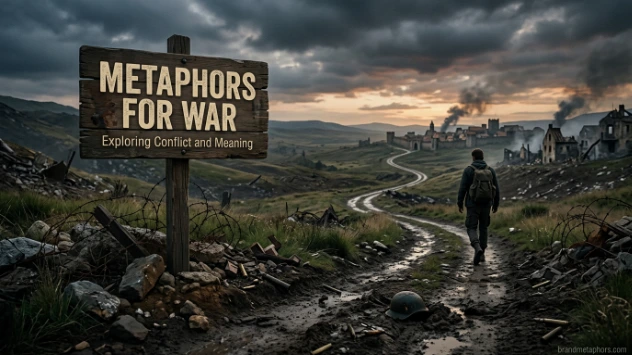
The air trembles before the first sound arrives.
A distant boom—low, almost like thunder—rolls across the horizon. Dust lifts in slow spirals. Somewhere, boots grind against gravel, metal clicks into place, and hearts beat louder than the drums of any marching band. War, even when unseen, has a way of entering the senses—through vibration, tension, anticipation.
But most of us will never stand on a literal battlefield. Instead, we encounter war in subtler, everyday ways: a heated argument, a personal struggle, a deadline that feels like an ambush. And this is where language steps in. Through metaphor, we borrow the intensity of war to describe conflict, effort, and survival in our own lives.
Metaphors for war are powerful linguistic tools. They help us articulate struggle, convey urgency, and dramatize experiences that might otherwise feel flat or abstract. Whether in literature, speeches, social media, or daily conversation, these metaphors shape how we perceive challenges—and how we respond to them.
In this article, we’ll explore vivid, meaningful war metaphors, unpack their emotional resonance, and show you how to use them creatively and responsibly.
Why Use War Metaphors in Writing and Speech?
War metaphors are not just dramatic—they are deeply human.
They tap into universal themes: conflict, courage, fear, strategy, loss, and resilience. From ancient epics to modern storytelling, war has always been a symbol of transformation. When used thoughtfully, these metaphors can:
- Add intensity and urgency to your writing
- Clarify complex emotional or psychological struggles
- Make abstract challenges feel concrete and relatable
- Inspire action, determination, or reflection
However, because war carries real historical and emotional weight, these metaphors should be used with awareness. The goal is not to glorify violence—but to translate struggle into meaning.
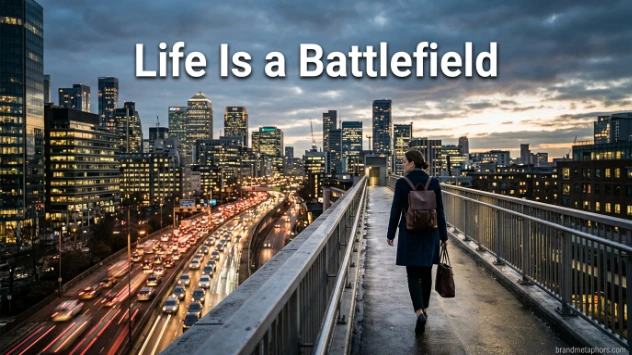
1. “Life Is a Battlefield” — The Universal Struggle
Meaning and Explanation
This is one of the most common war metaphors. It frames life as a constant series of challenges where survival, effort, and resilience are required.
It suggests that obstacles are not random—they are part of an ongoing “fight,” and success depends on strategy and endurance.
Example Scenario
A student preparing for final exams might say: “Right now, life feels like a battlefield, and I’m just trying to survive each test.”
Alternative Expressions
- Life is a war zone
- Every day is a fight
- Living feels like stepping into combat
Sensory and Emotional Layer
Think of the tension: the mental noise, the pressure, the exhaustion after “fighting” through a difficult day. The metaphor evokes grit, but also vulnerability.
Mini Storytelling Moment
Imagine a young entrepreneur launching a startup. Emails flood in like arrows. Deadlines crash like artillery. Investors question, competitors advance. Every decision feels tactical. For them, “life is a battlefield” isn’t exaggeration—it’s a lived experience.
2. “Fighting an Inner War” — The Conflict Within
Meaning and Explanation
Not all wars are visible. This metaphor captures internal struggles—emotional turmoil, mental health challenges, moral dilemmas.
It suggests a division within oneself: opposing thoughts, desires, or fears locked in conflict.
Example Sentence
“She smiled in public, but inside, she was fighting an inner war no one could see.”
Alternative Ways to Express It
- Battling my demons
- At war with myself
- Torn between two sides
Emotional Depth
This metaphor is deeply intimate. It conveys loneliness, intensity, and the exhausting nature of internal conflict.
Cultural Reference
Many literary characters embody this metaphor—heroes who wrestle not with enemies, but with themselves. Their greatest battles are fought in silence, behind calm expressions.
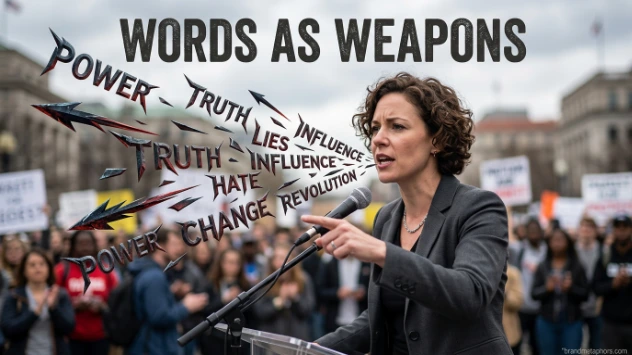
3. “Words as Weapons” — The Power of Language
Meaning and Explanation
This metaphor highlights how language can be used to harm, defend, or influence—just like weapons in war.
It applies to arguments, debates, or even social media interactions where words carry emotional impact.
Example Scenario
During a heated argument: “Be careful—your words can be weapons.”
Alternative Expressions
- Verbal ammunition
- Sharp tongue
- Cutting remarks
Sensory Imagery
Words become arrows, slicing through silence. A sentence lands like a blow. The room tightens with tension.
Real-Life Application
In the age of online communication, this metaphor feels more relevant than ever. A tweet, a comment, a message—each can escalate conflict or diffuse it.
Interactive Exercise: Craft Your Own War Metaphor
Try this simple exercise to sharpen your creativity:
Step 1: Identify a Struggle
Think of a challenge in your life—big or small.
Step 2: Translate It into War Language
Ask yourself:
- What is the “enemy”?
- What are your “weapons”?
- What does “victory” look like?
Step 3: Write a Sentence
Example:
- “Procrastination is my enemy, and discipline is my shield.”
Bonus Prompt
Write a short paragraph describing your current goal as a battlefield. Use at least three war-related metaphors.
Using War Metaphors in Different Contexts
In Writing
War metaphors can elevate storytelling. They add stakes, tension, and emotional weight. Use them sparingly for maximum impact.
Tip: Pair them with sensory details—sound, movement, texture.
On Social Media
Short, striking metaphors perform well:
- “Another day, another battle—but I’m still standing.”
- “Winning my silent wars, one step at a time.”
These resonate because they feel both personal and universal.
In Daily Life
Even casual speech uses these metaphors:
- “I’m battling a cold.”
- “We fought hard to make this happen.”
Be mindful of tone—sometimes softer metaphors (like “journey” or “challenge”) may be more appropriate depending on context.
Bonus Tips for Using War Metaphors Effectively

1. Avoid Overuse
Too many war metaphors can feel heavy or repetitive. Mix them with other imagery (nature, journey, light/dark).
2. Match the Tone
Use intense metaphors for serious topics. For lighter situations, consider softer alternatives.
3. Be Sensitive
Remember that war is a real experience for many. Use these metaphors with respect and awareness.
4. Combine Metaphors Creatively
Blend war imagery with other themes:
- “She planted hope in a battlefield of doubt.”
The Double-Edged Nature of War Metaphors
Like the very concept they draw from, war metaphors are powerful—but they can cut both ways.
On one hand, they empower. They frame us as fighters, survivors, strategists. They remind us that struggle is part of growth.
On the other hand, they can intensify stress or make situations feel more hostile than they are. If everything is a “battle,” rest becomes difficult.
The key is balance.
Use these metaphors to illuminate, not overwhelm.
Creative Practice: Rewrite Without War Metaphors
Take a sentence like:
“I’m fighting a battle against time.”
Now rewrite it without war imagery:
“I’m racing against time.”
Notice how the tone shifts. This exercise helps you understand the emotional weight metaphors carry—and gives you more control as a writer.
Conclusion
War metaphors are not just about conflict—they are about understanding conflict.
They give shape to struggle, voice to tension, and meaning to effort. When used thoughtfully, they can transform ordinary language into something vivid, emotional, and deeply human.
But remember: not every challenge needs to be a war.
At times, it’s a journey. Sometimes, a storm. Sometimes, simply a moment that asks for patience rather than battle.
Choose your metaphors wisely—and let them serve your story, not overpower it.
FAQs About Metaphors for War
1. What are war metaphors?
War metaphors are figures of speech that use the language or imagery of war to describe non-military situations, such as personal struggles, competition, or emotional conflict.
2. Why are war metaphors so common?
They are common because war represents intense, universal experiences like conflict, survival, and strategy, making them relatable and impactful.
3. Are war metaphors appropriate in all contexts?
Not always. They should be used carefully, especially in sensitive situations, as they can feel overly intense or insensitive.
4. Can war metaphors be used in professional writing?
Yes, but sparingly. In professional settings, clarity and tone matter, so use them only when they enhance meaning without sounding aggressive.
5. How can I create my own war metaphors?
Start by identifying a struggle, then map its elements (enemy, weapons, strategy) onto your situation. Use vivid language to bring it to life.
6. What are alternatives to war metaphors?
Alternatives include journey metaphors (“a long road”), nature metaphors (“weathering a storm”), or growth metaphors (“planting seeds of success”).
If you’d like, I can also create more metaphor examples, or write a similar article for another theme like love, anxiety, or success.