
A butterfly can cross a garden in seconds, yet its quiet flight can tell a much bigger story. One moment, it rests with folded wings; the next, it opens them to the sun and drifts away like a tiny piece of living art. Because of this, butterflies have long inspired writers, poets, artists, and anyone trying to describe change. Metaphors for Butterflies can turn a simple description into something vivid, emotional, and memorable. They can represent beauty, freedom, hope, growth, or a fresh beginning. Moreover, the right metaphor helps readers picture not only what a butterfly looks like but also what it can mean. Whether you are writing a poem, story, school assignment, social media caption, or personal reflection, these comparisons can give your words more color and feeling.
Why Butterfly Metaphors Matter in Writing and Life

Metaphors are more than decorative language—they are bridges between ideas and emotions. When you say someone is “like a butterfly,” you’re not just describing them; you’re revealing something deeper: fragility, freedom, change, or fleeting beauty.
Butterfly metaphors are especially powerful because they connect to universal experiences:
- Growth and transformation
- Letting go of the past
- Embracing change
- Finding beauty in impermanence
In writing, they help create vivid imagery. In life, they help us understand ourselves.
The Butterfly as a Symbol of Transformation
At its core, the butterfly represents transformation. From caterpillar to chrysalis to winged being, its life cycle is a living metaphor.
Meaning
A butterfly can symbolize personal growth, rebirth, or a major life transition.
Example
“She stepped into her new life like a butterfly leaving its cocoon—uncertain, trembling, but radiant.”
Alternative Expressions
- “Like a phoenix rising”
- “Unfolding into herself”
- “Breaking free from old skin”
Sensory Layer
Imagine the tight confinement of the cocoon, the pressure, the darkness—and then the sudden expansion into light and air.
Mini Story
Think of someone leaving a long, difficult chapter—perhaps a job, a relationship, or a phase of self-doubt. The metaphor of the butterfly captures not just the end result, but the struggle required to get there.
Metaphors for Butterflies in Emotional Expression
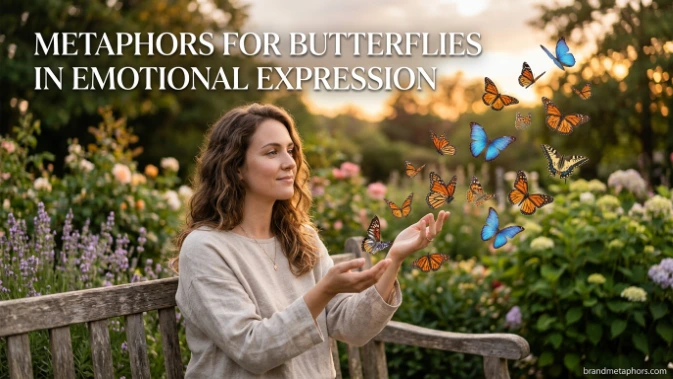
Butterflies are often used to describe emotions—especially the delicate, fleeting ones.
Meaning
They represent feelings that are light, fluttering, and hard to hold onto—like nervous excitement or new love.
Example
“My thoughts were butterflies, impossible to catch, dancing just beyond reach.”
Alternative Ways
- “My emotions flickered like candlelight”
- “My heart skipped like a loose page in the wind”
Emotional Texture
There’s a softness here—a sense of vulnerability mixed with beauty.
Butterflies as Symbols of Freedom and Lightness
Butterflies don’t just transform—they fly. Their movement is unpredictable, playful, and free.
Meaning
A butterfly can symbolize liberation, independence, or a carefree spirit.
Example
“He wandered through life like a butterfly, touching moments lightly and never staying too long.”
Alternative Expressions
- “Like a drifting cloud”
- “Like a song carried by the wind”
Sensory Detail
Picture sunlight catching translucent wings, the erratic but graceful movement, the sense that nothing binds it.
Three Powerful Butterfly Metaphors (With Deep Exploration)
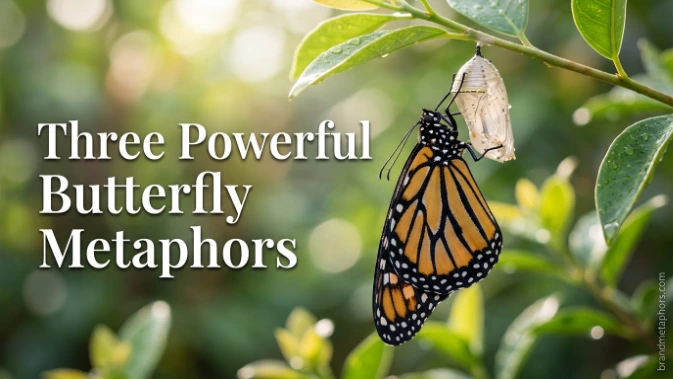
A Butterfly Emerging from the Cocoon”
Meaning: Growth through struggle; transformation after hardship.
Example Scenario: After years of self-doubt, a young artist finally shares her work publicly.
Sentence: “She revealed her art like a butterfly emerging from its cocoon—fragile, yet undeniably alive.”
Alternative Ways to Express It:
- “Like dawn breaking after a long night”
- “Like a flower blooming after frost”
Emotional Layer: This metaphor carries quiet courage. It acknowledges the pain that precedes growth.
Mini Story: Imagine a student who once feared speaking in class. Over time, they find their voice. One day, they present confidently. That moment? A butterfly moment.
Butterflies in the Stomach”
Meaning: Nervous excitement or anticipation.
Example Scenario: Waiting to meet someone you deeply admire.
Sentence: “Before the interview, butterflies filled her stomach, fluttering wildly with every breath.”
Alternative Ways:
- “My heart raced like a drum”
- “Electric sparks ran through me”
Sensory Detail: A light, fluttering sensation—half anxiety, half excitement.
Cultural Note: This is one of the most widely recognized butterfly metaphors, used across languages and cultures.
A Butterfly’s Lifespan”
Meaning: The fleeting nature of beauty, time, or happiness.
Example Scenario: A perfect summer evening that ends too soon.
Sentence: “The moment passed like a butterfly’s life—brief, beautiful, and impossible to hold.”
Alternative Expressions:
- “Like a shooting star”
- “Like a fading echo”
Emotional Layer: This metaphor carries a bittersweet tone—beauty intensified by its impermanence.
Mini Story: Think of childhood summers, first loves, or fleeting friendships. Their brevity is what makes them unforgettable.
Literary and Cultural Uses of Butterfly Metaphors
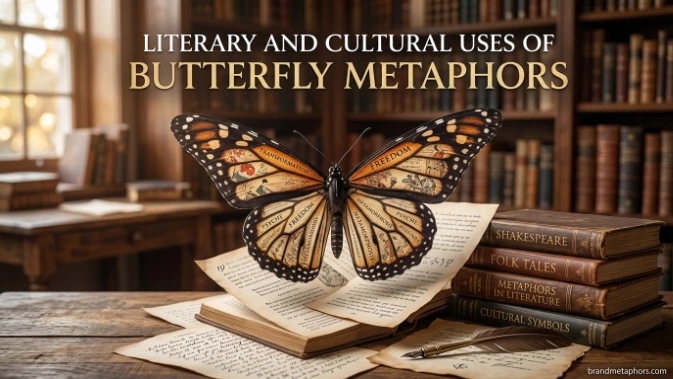
Butterflies appear across literature and philosophy. They often symbolize the soul, change, or illusion.
In storytelling, a butterfly might represent:
- A character’s inner transformation
- The fragility of life
- The unpredictability of fate
Even in everyday storytelling, people use butterflies to describe pivotal emotional moments.
How to Create Your Own Butterfly Metaphors
Creating metaphors is like painting with words. Here’s how you can craft your own:
Identify the Emotion or Idea
What are you trying to express? Growth? Anxiety? Freedom?
Match It to a Butterfly Trait
- Transformation → metamorphosis
- Lightness → flight
- Fragility → delicate wings
Build the Comparison
Combine the idea with imagery.
Example: “Her confidence grew like wings she didn’t know she had.”
Interactive Exercises to Practice Butterfly Metaphors
Complete the Sentence
Finish this in your own way:
- “My dreams are butterflies because…”
Memory Reflection
Think of a moment in your life that changed you. Describe it using a butterfly metaphor.
Sensory Writing Prompt
Write a short paragraph describing a butterfly without naming it. Focus on:
- Color
- Movement
- Light
Bonus Tips for Using Butterfly Metaphors Creatively
In Writing
Use them sparingly for maximum impact. Too many metaphors can overwhelm the reader.
In Social Media
Short, poetic lines work best:
- “Still becoming. Still unfolding.”
- “Wings take time.”
In Daily Life
Use metaphors to reframe challenges:
- Instead of “I’m stuck,” think “I’m in the cocoon stage.”
Common Mistakes to Avoid
- Overusing clichés without adding originality
- Mixing metaphors (e.g., butterfly + storm + fire all at once)
- Forcing meaning where it doesn’t fit
Keep it natural. Let the metaphor breathe.
The Emotional Power of Butterfly Imagery
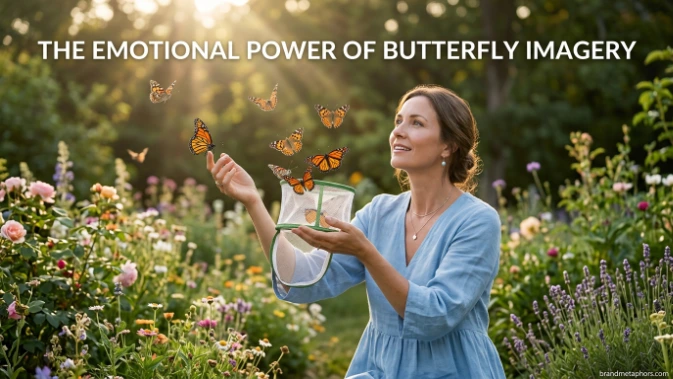
Butterflies resonate because they are both fragile and strong. Their wings look delicate, yet they travel great distances. This duality makes them perfect symbols for human resilience.
When you use a butterfly metaphor, you’re tapping into something timeless and universal.
FAQs About Butterfly Metaphors
Why are butterflies commonly used in metaphors?
Because they represent transformation, beauty, and fleeting moments—universal human experiences.
What does a butterfly symbolize in emotions?
It often symbolizes nervous excitement, freedom, or delicate feelings.
How can I make my butterfly metaphors unique?
Add sensory details, personal experiences, or unexpected comparisons.
Are butterfly metaphors suitable for formal writing?
Yes, if used thoughtfully and appropriately within context.
Can butterfly metaphors be used in storytelling?
Absolutely—they’re powerful tools for character development and emotional depth.
What is a good metaphor for a butterfly?
A strong metaphor is “a flower that learned to fly.” It connects the butterfly’s beauty with movement, growth, and freedom.
What can a butterfly symbolize in writing?
A butterfly can symbolize transformation, beauty, freedom, hope, renewal, or personal growth. The meaning depends on the context.
How can I describe a butterfly poetically?
You can describe it as a “painted whisper,” “living brushstroke,” “jewel with wings,” or “tiny flag of freedom.” Choose an image that matches the mood.
Why are butterflies used as symbols of transformation?
Butterflies are often connected with transformation because their life cycle includes major physical changes. In writing, that makes them useful images for personal growth and new beginnings.
How can I use butterfly metaphors in a caption?
Keep the image short and meaningful. Phrases such as “Small wings, wide skies” or “Learning to unfold” can work well for reflective or inspirational captions.
Conclusion
Butterflies give writers a simple but powerful way to talk about beauty, growth, freedom, hope, and change. Their colors create vivid images, while their flight suggests movement and possibility. At the same time, their delicate nature can express softness and fragility.
The three main metaphors show different sides of this symbolism: a butterfly can be a flower that learned to fly, a painted whisper, or a tiny flag of freedom. Each comparison creates a different mood and meaning.
Ultimately, the strongest metaphor is the one that fits your feeling. So, the next time you see a butterfly drifting through the air, look beyond its wings. You may find a small lesson about becoming, changing, and finally finding your way into the open sky.