
Introduction
Strong writing is more than using correct grammar. It also includes choosing the right words, building clear sentences, and using figurative language to make ideas more memorable. Devices such as metaphors, similes, idioms, and descriptive language help readers understand complex ideas while making writing more engaging. Whether you are writing an essay, preparing a CV, creating a cover letter, or speaking in an interview, the words you choose can shape how others understand your message.
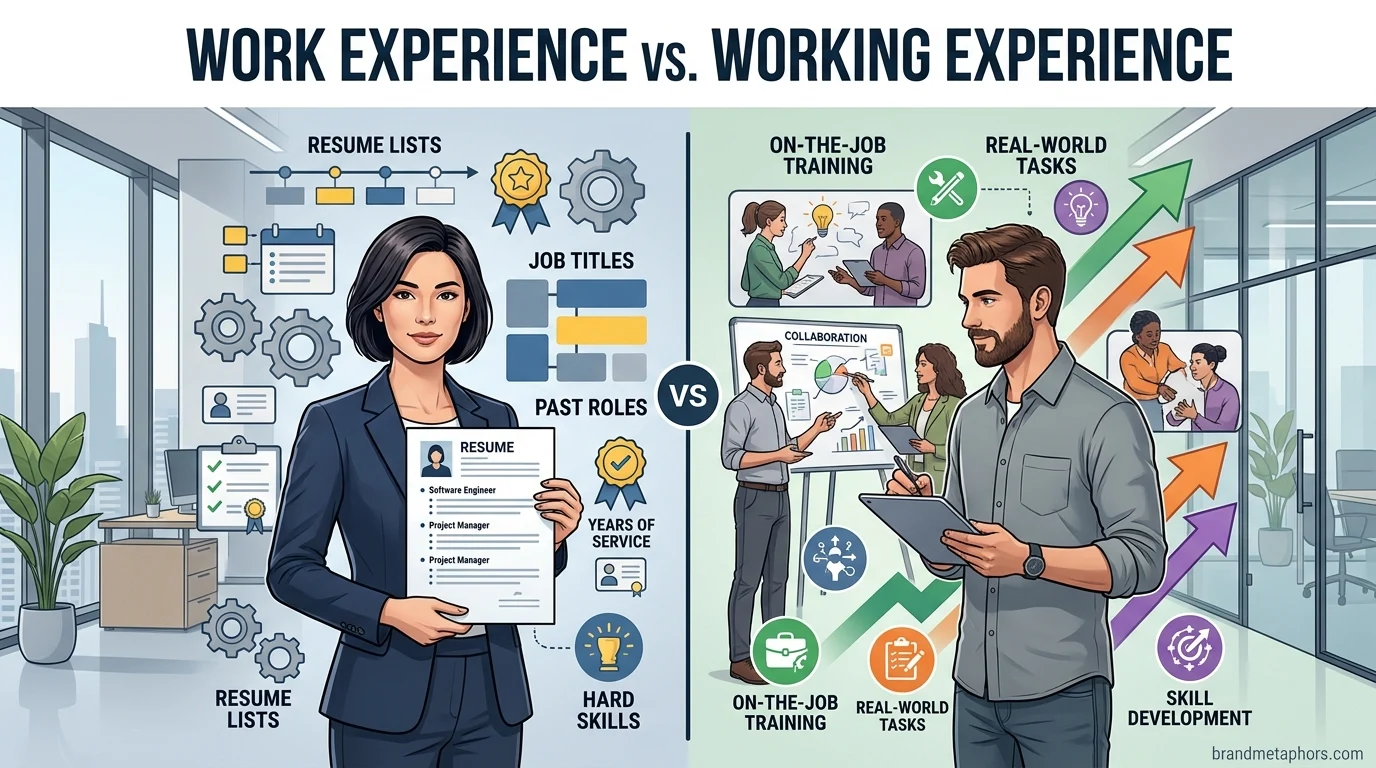
One area that often confuses students and English learners is the difference between work experience and working experience. These two expressions look similar, but they are not used in the same way. One is the standard phrase used by native English speakers, employers, universities, and professional organisations. The other appears occasionally but is often considered unnatural or incorrect in many situations.
Understanding this difference will improve your vocabulary, strengthen your writing skills, and help you communicate more confidently in academic, professional, and everyday English. This guide explains each expression in simple language, provides many examples, compares their meanings, highlights common mistakes, and includes useful exercises to help you master the topic.
What Does “Work Experience” Mean?
Work experience refers to the knowledge, skills, and practical understanding that someone gains by doing a job. It can also describe a short placement where students learn about a profession.
It is the standard expression in British and American English.
Common meanings
- Experience gained from employment
- Practical knowledge from performing job duties
- Student placement in a workplace
- Professional background shown on a CV
Examples
- She has five years of work experience in marketing.
- Employers usually ask for relevant work experience.
- My work experience helped me develop communication skills.
- The university requires students to complete work experience before graduation.
- His work experience made him confident during the interview.
Where it is commonly used
- CVs and résumés
- Cover letters
- Job interviews
- University applications
- Business reports
- Professional conversations
What Does “Working Experience” Mean?
Working experience is much less common in native English. Although many English learners use it, especially in some parts of Asia and Africa, native speakers usually prefer work experience.
Sometimes “working experience” can appear in special contexts where the writer wants to emphasise the experience of working in a particular environment.
Rare examples
- Her working experience abroad changed her perspective.
- Their working experience during the pandemic was very different.
Even in these examples, work experience would sound more natural.
Quick Comparison Table
FeatureWork ExperienceWorking ExperienceStandard English✔ YesRareCommon in CVs✔ Yes✘ NoUsed by employers✔ YesRareSounds natural✔ YesSometimes unnaturalRecommended for students✔ YesUsually avoid
Remember: In almost every situation, work experience is the better choice.
Why Native Speakers Prefer “Work Experience”
English often combines nouns to create compound nouns.
Examples include:
- school uniform
- bus station
- computer screen
- work experience
In these examples, the first noun describes the second noun.
“Work experience” means experience gained through work.
Adding working changes the structure and makes the phrase less natural because English speakers rarely use a present participle before experience in this way.
That is why dictionaries, employers, universities, and professional writers almost always use work experience.
Examples in Different Situations
Job Interview
Correct:
- I have three years of work experience in customer service.
Less natural:
- I have three years of working experience in customer service.
CV
Correct:
Work Experience
Sales Assistant
ABC Company
2022–2025
University Application
Correct:
- My work experience helped me understand real business situations.
Classroom Discussion
Correct:
- Students gain valuable work experience during internships.
Conversation
- Do you have any work experience?
- Yes, I worked at a local café last summer.
Common Sentence Examples
Correct Examples
- She has extensive work experience.
- My work experience improved my leadership skills.
- Employers value practical work experience.
- The internship provided useful work experience.
- His work experience prepared him for management.
Incorrect or Less Natural Examples
- She has extensive working experience.
- I added my working experience to my CV.
- Employers ask about working experience.
- My working experience helped me.
- Students need working experience.
These should usually be replaced with work experience.
Common Mistakes to Avoid
1. Using “working experience” on a CV
Incorrect:
Working Experience
Correct:
Work Experience
2. Mixing both expressions
Incorrect:
- My work and working experience helped me.
Correct:
- My work experience helped me.
3. Copying non-native English
Many websites incorrectly teach “working experience.”
Always check reliable English sources before learning new expressions.
4. Confusing experience with employment
Experience refers to knowledge gained.
Employment refers to having a job.
Example:
- She has employment.
- She has work experience.
These do not always mean the same thing.
Tone and Usage

Formal
- Applicants should have at least two years of work experience.
- Relevant work experience is required.
Neutral
- My work experience taught me teamwork.
Informal
- I got some work experience during the holidays.
When to Use It
Use work experience when talking about:
- Jobs
- Careers
- Internships
- Volunteering
- Professional skills
- Student placements
- Career advice
- Employment history
Examples
- My work experience includes teaching and writing.
- She gained work experience while studying.
- Volunteer work gave him useful work experience.
When to Avoid “Working Experience”
Avoid it in:
- Academic essays
- CVs
- Job applications
- Cover letters
- Professional emails
- Business reports
- Interviews
- Formal presentations
Although some people use it, it may sound unnatural to native speakers.
Related Vocabulary
Learning related words helps improve vocabulary enhancement and writing skills.
WordMeaningEmploymentHaving a jobInternshipTemporary work for learningPlacementShort work assignmentCareerLong-term professionOccupationType of jobProfessionSkilled careerExpertiseHigh level of skillQualificationOfficial education or trainingSkillsAbilities learnedExperienceKnowledge gained through practice
Figurative Language and Creative Writing Connections
Although this topic is mainly about grammar and vocabulary, understanding figurative language improves communication and writing.
Metaphor Example
Work experience is a bridge connecting education to success.
Meaning:
Experience helps people move from learning to real careers.
Simile Example
Work experience is like a toolbox filled with useful skills.
Meaning:
Every job teaches something valuable.
Idiom Example
Learning through work helps you hit the ground running.
Meaning:
Begin a new job confidently.
Personification Example
Experience opens doors that qualifications alone cannot.
Meaning:
Experience creates opportunities.
Descriptive Language Example
Years of practical training built a strong foundation of confidence and professional knowledge.
These literary devices make essays, speeches, and creative writing more interesting.
Comparison Examples
SentenceBetter ChoiceI have work experience in banking.✔ CorrectI have working experience in banking.Less naturalMy work experience helped me grow.✔ CorrectEmployers ask about work experience.✔ CorrectUniversities value work experience.✔ Correct
Practice Exercises
Exercise 1
Choose the correct expression.
- I have three years of ________.
Answer:
work experience
- Employers usually ask about ________.
Answer:
work experience
- My internship gave me valuable ________.
Answer:
work experience
Exercise 2
Correct the sentence.
She has working experience in finance.
Answer:
She has work experience in finance.
Exercise 3
Fill in the blanks.
- My ________ helped me become confident.
Answer:
work experience
- Students should gain practical ________ before graduation.
Answer:
work experience
Tips for Better Writing

- Learn common English collocations.
- Read books and newspapers written by native speakers.
- Use dictionaries when unsure.
- Avoid translating directly from your first language.
- Practise writing complete sentences.
- Read professional CV examples.
- Keep learning vocabulary through real examples.
- Notice how experienced writers use descriptive language.
- Study metaphor examples, simile examples, and idiom meaning to improve creative writing.
- Review your writing before submitting it.
Frequently Asked Questions
1. Which phrase is grammatically correct?
Work experience is the standard and most natural expression in English.
2. Is “working experience” wrong?
It is not always grammatically wrong, but it is uncommon and usually sounds unnatural. In most situations, use work experience instead.
3. Which phrase should I write on my CV?
Always use Work Experience as the section heading.
4. Why do some people say “working experience”?
Some learners translate directly from their native language or follow regional English usage. However, native speakers generally prefer work experience.
5. Can volunteers gain work experience?
Yes. Volunteer positions, internships, part-time jobs, and freelance work can all provide valuable work experience.
Conclusion
Choosing the right expression is an important part of writing clear and professional English. While working experience may occasionally appear in conversation or regional varieties of English, work experience is the standard expression used by native speakers, employers, educators, and professional writers.
It is the phrase you should use in CVs, cover letters, interviews, university applications, and everyday communication.
Learning the difference also strengthens your vocabulary, improves your grammar, and builds confidence in both speaking and writing.
As you continue developing your English, pay attention to common collocations, read authentic materials, and practise using new expressions in real-life situations. Combined with figurative language, descriptive writing, and strong communication skills, choosing the correct words will help you become a more effective writer, student, and professional.