
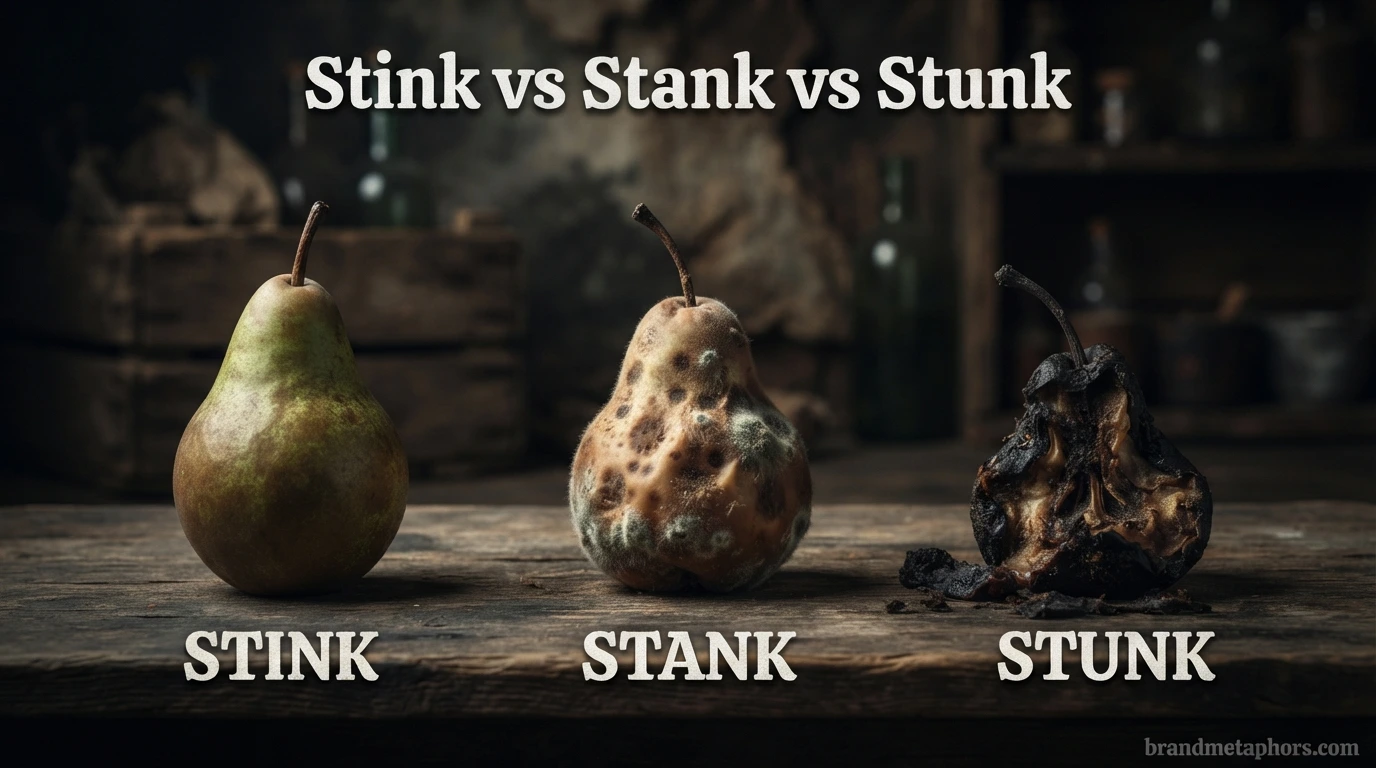
Introduction
Strong writing is not only about using correct grammar. It is also about choosing the right words to paint clear pictures in the reader’s mind. Figurative language, descriptive language, similes, metaphors, and other literary devices help writers express ideas in a more colourful and memorable way. Whether you are writing a story, an essay, a poem, or even a simple email, selecting the correct verb tense makes your writing more professional and easier to understand.
Many English learners become confused when they see the words stink, stank, and stunk. These three words belong to the same irregular verb, but each has a different job in a sentence. Using the wrong form can make your writing sound unnatural or grammatically incorrect.
This complete guide explains each form in simple language. You will learn the meanings, grammar rules, comparison tables, sentence examples, common mistakes, creative writing tips, figurative uses, and practical exercises. By the end, you will confidently know when to use each word in everyday English and formal writing.
What Do These Words Mean?
These three words come from the irregular verb to stink, which means:
- To have a very bad smell
- To be unpleasant or offensive
- To be very bad at something (informal)
- To seem unfair or suspicious (informal expression)
Like many irregular verbs, its forms do not simply end in -ed.
Verb FormWordExampleBase FormStinkFish can stink.Past SimpleStankThe rubbish stank yesterday.Past ParticipleStunkThe kitchen has stunk all day.
Understanding the Base Form
The base form is used for:
- Present tense
- Infinitives
- Commands
- After modal verbs
Structure
Subject + stink/stinks
Examples
- Dirty socks stink.
- The garbage begins to stink after two days.
- Do not let the milk stink.
- This room always stinks after football practice.
- Flowers never stink.
After Modal Verbs
- The fish might stink.
- It could stink tomorrow.
- It may stink if you leave it outside.
- It will stink in the summer heat.
Understanding the Past Simple
The past simple describes something that happened and finished in the past.
Structure
Subject + stank
Examples
- The old carpet stank.
- His shoes stank after the hike.
- The rubbish stank because nobody emptied the bin.
- The river stank during the hot weather.
- The gym locker room stank yesterday.
Notice that stank is only used for completed past events.
Correct:
- The room stank all night.
Incorrect:
- The room has stank all week.
Understanding the Past Participle

The past participle is used with helping verbs like:
- has
- have
- had
- had been
- has been
Structure
Subject + has/have/had + stunk
Examples
- The fridge has stunk for days.
- The room had stunk before we cleaned it.
- The rubbish has stunk since Monday.
- My shoes have stunk ever since the rainstorm.
- The basement had stunk because of the flood.
Never use stunk alone without a helping verb unless it is functioning as an adjective in informal speech.
Quick Comparison Table
SituationCorrect FormExamplePresentstinkThese socks stink.Present third personstinksThe cheese stinks.PaststankThe cheese stank yesterday.Present perfecthas stunkThe cheese has stunk all week.Past perfecthad stunkThe cheese had stunk before we arrived.Futurewill stinkIt will stink tomorrow.Modal verbmight stinkIt might stink later.
Meanings Beyond Bad Smells
English often uses this verb figuratively.
Something Is Terrible
- That movie stinks.
- My internet connection stinks.
- This plan stinks.
Meaning:
It is very bad or disappointing.
Something Seems Suspicious
- This deal stinks.
- The whole situation stinks.
Meaning:
Something feels dishonest or unfair.
Someone Performs Poorly
- I stink at basketball.
- He stinks at singing.
- They stink at maths.
This informal meaning means someone is not good at something.
Figurative Language and Creative Writing
Writers often use unpleasant smells to create mood and atmosphere.
Metaphor Example
The city was a giant rubbish bin that never stopped breathing.
Simile Example
The alley smelled like forgotten food left in the sun.
Personification
The rubbish whispered its foul smell through the street.
Hyperbole
The smell could wake the entire town.
Imagery
The air carried a sour, rotten smell that clung to everyone’s clothes.
These literary devices make descriptive writing stronger and more memorable.
Sentence Examples for Every Situation
Everyday Conversation
- Your shoes stink.
- The milk stank yesterday.
- The room has stunk for hours.
- This fish stinks.
- The drain stank after the storm.
School Writing
- The laboratory stank because of the chemical spill.
- The classroom has stunk since the rubbish was left inside.
- The campsite stank after several days of rain.
Story Writing
- The cave stank of damp earth.
- The abandoned house had stunk for years.
- The battlefield stank of smoke and decay.
- Every breath carried an unpleasant smell.
- The old harbour stank during the hot summer afternoon.
Informal Speech
- This game stinks.
- My luck stinks.
- That excuse stinks.
- Your idea doesn’t stink.
- Their performance really stank.
Tone and Style
Different situations require different tones.
ToneExampleCasualThis homework stinks.InformalThat movie stinks.DescriptiveThe cellar stank of mould.FormalThe building emitted an unpleasant odour.CreativeThe forest breathed a rotten smell into the evening air.
In formal reports, avoid saying something “stinks.” Instead use words like:
- smells unpleasant
- emits an odour
- has a foul smell
- produces an offensive smell
When to Use and When to Avoid

Use These Words
Descriptive essays
Stories
Novels
Casual conversations
Personal blogs
Creative writing
Avoid in Formal Situations
Instead of:
The office stinks.
Write:
The office has an unpleasant smell.
Instead of:
Your report stinks.
Write:
Your report needs improvement.
Professional writing should remain respectful.
Common Mistakes
Mistake 1
❌ The room stunk yesterday.
Correct? Yes.
Mistake 2
❌ The room has stank.
✅ The room has stunk.
Mistake 3
❌ Yesterday the room stink.
✅ Yesterday the room stank.
Mistake 4
❌ The fish has stink.
✅ The fish has stunk.
Mistake 5
❌ The shoes had stank.
✅ The shoes had stunk.
Comparison with Other Irregular Verbs
Many English verbs follow a similar pattern.
BasePastPast Participlesingsangsungringrangrungdrinkdrankdrunkswimswamswumstinkstankstunk
Learning these families together makes irregular verbs easier to remember.
Vocabulary Enhancement
Instead of repeating “stink,” try these words depending on context.
Strong Smell
- reek
- smell
- emit an odour
- give off a smell
- smell terrible
Bad Quality
- awful
- terrible
- poor
- disappointing
- dreadful
Descriptive Words
- foul
- rotten
- sour
- mouldy
- stale
- musty
- putrid
- rancid
- unpleasant
Using a variety of vocabulary improves both speaking and writing.
Idioms and Related Expressions
Something Smells Fishy
Meaning:
Something seems suspicious.
Example:
His excuse smells fishy.
Raise a Stink
Meaning:
To complain loudly.
Example:
The customers raised a stink about the delay.
Stink Eye
Meaning:
An angry or unfriendly look.
Example:
She gave him the stink eye after the joke.
Writing Tips for Students

When writing descriptive paragraphs:
- Appeal to the five senses.
- Show rather than tell.
- Use vivid adjectives.
- Add metaphors and similes naturally.
- Avoid repeating the same verb too often.
Instead of writing:
The room stank.
You could write:
The room smelled like forgotten food and damp clothing, making everyone cover their noses.
This creates stronger imagery.
Practice Exercises
Exercise 1
Choose the correct word.
- The socks ______ yesterday.
Answer:
stank
- The milk has ______ since Monday.
Answer:
stunk
- Dirty bins always ______ in summer.
Answer:
stink
- My shoes have ______ all week.
Answer:
stunk
- The river ______ after the flood.
Answer:
stank
Exercise 2
Correct the mistakes.
- The room has stank.
Answer:
The room has stunk.
- Yesterday my shoes stink.
Answer:
Yesterday my shoes stank.
- The rubbish have stink.
Answer:
The rubbish has stunk.
Mini Quiz
Choose the best answer.
- Which word is the past tense?
A. stink
B. stank
C. stunk
Answer: B
- Which word follows “has”?
A. stink
B. stank
C. stunk
Answer: C
- Which sentence is correct?
A. The milk has stank.
B. The milk has stunk.
C. The milk stunk every day.
Answer: B
- Which sentence uses the present tense?
A. The shoes stank.
B. The shoes stink.
C. The shoes have stunk.
Answer: B
- Which sentence is grammatically correct?
A. The fish had stunk before dinner.
B. The fish had stank before dinner.
C. The fish had stink before dinner.
Answer: A
Frequently Asked Questions
1. Is “stank” a real English word?
Yes. It is the past simple form of the irregular verb stink.
2. When should I use “stunk”?
Use stunk as the past participle after helping verbs such as has, have, or had.
3. Can “stink” mean something other than a bad smell?
Yes. Informally, it can mean something is very bad, disappointing, unfair, or that someone performs poorly at an activity.
4. Which is correct: “has stank” or “has stunk”?
The correct form is has stunk because the present perfect tense requires the past participle.
5. How can I remember the three forms?
Think of similar irregular verbs:
- sing – sang – sung
- drink – drank – drunk
- stink – stank – stunk
The pattern makes them easier to remember.
Conclusion
Understanding the differences between stink, stank, and stunk is an important step towards mastering English grammar. The base form is used for the present tense and after modal verbs, the past simple describes completed actions in the past, and the past participle works with helping verbs in perfect tenses.
Beyond grammar, these words also appear in figurative language, creative writing, idioms, and everyday conversation. Learning their correct usage will improve your writing skills, vocabulary, descriptive language, and overall confidence in English. With regular practice, careful reading, and attention to context, choosing the right verb form will soon become second nature.