

Writing becomes stronger when you choose the right words and expressions. Whether you are writing a school essay, a business email, a poem, or a creative story, correct grammar helps your ideas sound clear and professional. At the same time, figurative language, descriptive language, similes, metaphors, and other literary devices make your writing more interesting and memorable. Good writers know that grammar and creativity work together. They use accurate word choices while also adding emotion, color, and style.
One grammar question that often confuses students, writers, and English learners is whether to write “moreso” as one word or “more so” as two words. You may see both versions online, but are they equally correct? Which one should you use in formal writing? Does one sound more natural than the other?
This complete guide answers those questions in simple language. You’ll learn the correct spelling, meanings, grammar rules, examples, common mistakes, comparison tables, writing tips, and practice exercises. By the end, you’ll know exactly when to use the correct form with confidence.
What Does “More So” Mean?
More so is the standard and grammatically accepted form in modern English.
It means:
- To a greater degree
- Even more
- Especially
- More than before
- To an even greater extent
The phrase compares one thing with another and emphasizes that something is true to a greater degree.
Simple Meaning
Think of more so as another way to say:
- Even more
- Particularly
- Especially
- To a greater extent
Examples
- I enjoy reading, but more so during winter.
- She likes history, more so than science.
- This rule applies to adults and more so to children.
- Exercise is important, more so as people grow older.
In every sentence, the phrase adds emphasis.
Is “Moreso” One Word?
The one-word spelling moreso is generally considered nonstandard.
Many dictionaries and style guides recommend writing it as more so.
Although you may see moreso in:
- Social media
- Blogs
- Online forums
- Informal conversations
it is usually avoided in:
- Academic writing
- Professional emails
- Books
- Research papers
- Business communication
Quick Answer
FormCorrect?Best UseMore so✅ YesFormal and informal writingMoreso⚠ NonstandardRare, informal writing only
For students and professional writers, choosing more so is the safest option.
Why People Get Confused
English contains many compound words.
Examples include:
- Already
- Somehow
- Therefore
- Nevertheless
Because these words are written together, many people assume moreso follows the same pattern.
Another reason is that people often see it written online without checking grammar references.
Search engines, social media posts, and informal websites sometimes spread spellings that are not considered standard English.
That is why grammar books still recommend writing more so as two separate words.
Grammar Rule Explained Simply
The phrase contains two separate words.
- More is an adverb showing a higher degree.
- So acts as an adverb meaning “to that extent.”
Together they create an expression that emphasizes comparison.
Structure
Subject + Verb + More So + Comparison
Examples
- This movie is entertaining, more so than the first one.
- Writing becomes easier, more so after regular practice.
- Good communication matters, more so in leadership positions.
Because each word has its own grammatical role, they remain separate.
Comparison Table: More So vs Moreso
FeatureMore SoMoresoStandard English✅ Yes❌ NoDictionary preferredYesRarelyAcademic writingRecommendedAvoidProfessional writingRecommendedAvoidInformal chatsYesSometimes seenExamsCorrectUsually marked incorrectBusiness emailsCorrectNot recommended
Sentence Examples in Different Situations
Learning through examples is one of the best ways to improve grammar.
Everyday Conversation
- I enjoy coffee, more so in the morning.
- She smiles more so when she is with friends.
- We appreciate weekends more so after a busy week.
School Writing
- Reading improves vocabulary, more so when students read every day.
- Practice helps language learners, more so when combined with speaking.
- Group projects teach teamwork, more so than individual assignments.
Business Writing
- Customer service matters, more so during difficult situations.
- Clear communication becomes essential, more so in remote workplaces.
- Planning reduces mistakes, more so on large projects.
Academic Writing
- Climate change affects coastal regions, more so in low-lying areas.
- Sleep supports learning, more so among young students.
- Technology influences education, more so after digital classrooms expanded.
When Should You Use “More So”?
The phrase works best when comparing degrees.
Use it when:
- emphasizing one point over another
- comparing two situations
- strengthening a statement
- adding contrast
- showing increasing importance
Good Examples
- Safety is important, more so when children are involved.
- Confidence grows with experience, more so after repeated success.
- Good listening improves relationships, more so than constant talking.
- Healthy eating matters, more so as people age.
- Clear instructions prevent mistakes, more so in technical work.
When Should You Avoid It?
Sometimes another expression sounds more natural.
Instead of repeating more so, you might use:
- especially
- particularly
- even more
- chiefly
- mainly
- above all
- to a greater extent
Less Natural
- I was more so excited.
Better
- I was especially excited.
- I was particularly excited.
Less Natural
- She is more so happy.
Better
- She is much happier.
- She is especially happy.
Always choose the wording that sounds smooth and natural.
Common Mistakes Students Make
Many English learners repeat the same errors.
Mistake 1: Writing One Word
❌ Moreso
✅ More so
Mistake 2: Using Without Comparison
❌ I am more so.
There is no comparison.
Better:
✅ I enjoy music more so than television.
Mistake 3: Overusing the Phrase
Repeating it in every paragraph makes writing sound repetitive.
Instead, alternate with:
- especially
- particularly
- mainly
- even more
Mistake 4: Using It in Every Formal Sentence
Formal writing benefits from variety.
Choose expressions that fit naturally.
Using “More So” in Creative Writing
Creative writing often combines correct grammar with vivid expression.
Instead of simply stating facts, writers use:
- figurative language
- descriptive language
- literary devices
- imagery
- symbolism
- emotional details
Although more so is not a figurative expression itself, it helps strengthen comparisons.
Example
The wind whispered through the trees, more so after sunset, making the forest feel alive.
Another Example
The silence became heavier, more so when the last candle went out.
Notice how the phrase increases emotional impact.
Figurative Language and Comparison Examples
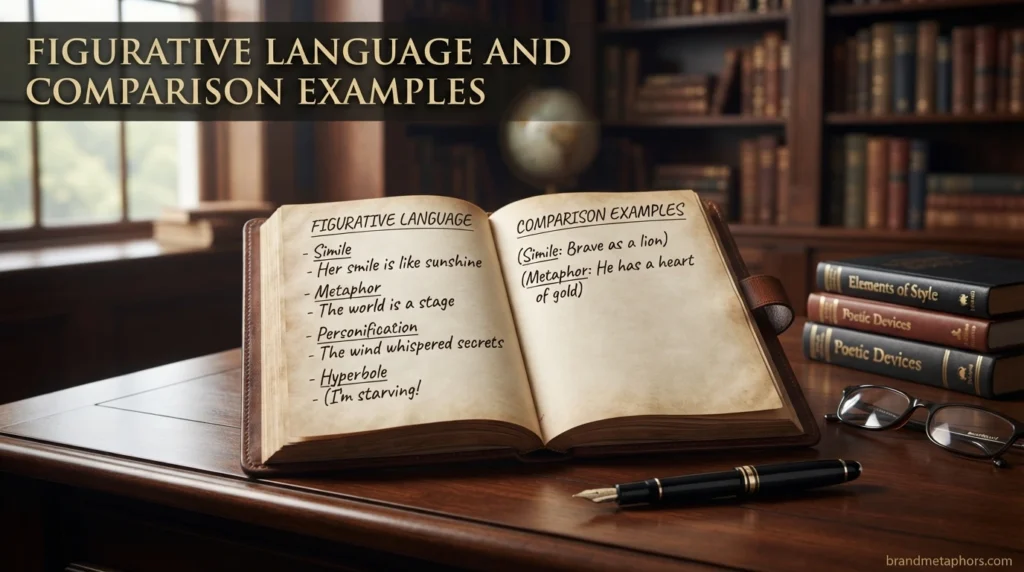
Strong writing often includes creative comparisons.
Simile Examples
- Her smile was like sunshine.
- The river flowed like silk.
- His voice was as calm as the sea.
Metaphor Examples
- Time is a thief.
- Books are windows to the world.
- Hope is a light in darkness.
Personification
- The wind danced across the field.
- The stars smiled overhead.
- The rain whispered softly.
Hyperbole
- I’ve told you a thousand times.
- This backpack weighs a ton.
Idiom Examples
- Break the ice
- Hit the books
- Spill the beans
- Under the weather
- Once in a blue moon
Using literary devices makes writing engaging, while correct grammar keeps it accurate.
How It Improves Writing Skills
Learning grammar is more than passing exams.
Correct word choice improves:
Vocabulary Enhancement
You learn multiple ways to express ideas.
Better Sentence Variety
Instead of repeating words, you create smoother writing.
Stronger Comparisons
Readers understand differences more clearly.
Improved Academic Writing
Teachers expect correct grammar.
Professional Communication
Correct English creates a positive impression.
Clear Creative Writing
Stories become easier to read while remaining expressive.
Practice Exercises
Try these exercises.
Exercise 1
Choose the correct answer.
- I enjoy winter _____ summer.
a) moreso
b) more so
Answer:
✅ more so
- Safety becomes important, _____ around children.
a) more so
b) moreso
Answer:
✅ more so
- Which is correct?
a) Moreso
b) More so
Answer:
✅ More so
Exercise 2
Rewrite correctly.
Incorrect:
- Moreso than before, I like reading.
Correct:
- More so than before, I like reading.
Incorrect:
- This matters moreso in schools.
Correct:
- This matters more so in schools.
Exercise 3
Complete the sentence.
- Learning grammar becomes easier ______ after daily practice.
Answer:
more so
Quick Grammar Cheat Sheet
QuestionAnswerCorrect spellingMore soOne word or two?Two wordsFormal writingYesAcademic papersYesExamsYesInformal chatsYesMoreso acceptable?Usually noBetter alternativesEspecially, particularly, even more
Frequently Asked Questions
1. Is “moreso” a real word?
Some dictionaries acknowledge that it appears in informal writing, but it is generally considered nonstandard. Most grammar experts recommend using more so.
2. Which form should students use in school?
Students should always write more so because it follows standard English grammar and is accepted by teachers and examination boards.
3. Can I use “moreso” in emails?
Professional emails should use more so to maintain a polished and grammatically correct style.
4. Is “more so” formal or informal?
It works in both formal and informal writing. It is commonly found in academic articles, books, reports, and everyday conversation.
5. What words can replace “more so”?
Depending on the sentence, alternatives include especially, particularly, to a greater extent, even more, chiefly, and mainly.
Conclusion
Choosing between more so and moreso is simpler than it first appears. In standard English, more so is the correct and widely accepted form. It clearly expresses that something is true to a greater degree or is especially important. While the one-word spelling may occasionally appear in informal online writing, it is best avoided in school assignments, professional communication, and formal documents.
Mastering small grammar points like this improves your writing skills, strengthens your vocabulary, and helps you communicate with confidence. Pair correct grammar with descriptive language, figurative language, similes, metaphors, idioms, and other literary devices, and your writing becomes both accurate and engaging. With regular practice and attention to detail, you’ll make better word choices and produce clear, polished writing in every context.