
H2: The Quiet Strength of Loyalty – A Story That Opens the Heart
Late in the evening, a small shop stays open long after the street has gone silent. The owner doesn’t expect customers anymore, yet he keeps the lights on—just in case someone he knows returns needing help. Outside, the wind pushes dust across empty roads, but inside, there is warmth, patience, and waiting.
That quiet act—staying, holding, enduring—is what loyalty often looks like in real life. It is rarely loud. It doesn’t always announce itself. Instead, it lingers in decisions, in patience, in presence when leaving would be easier.
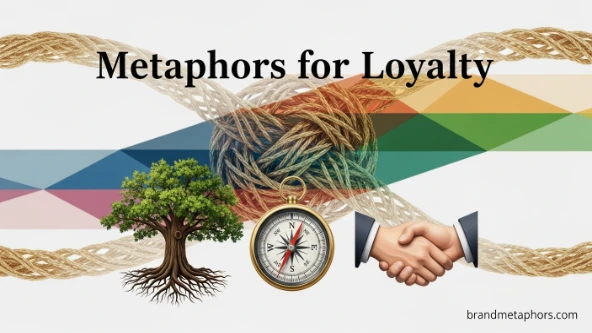
Loyalty is one of those human qualities we feel before we define. It is the reason friendships survive distance, relationships survive storms, and trust survives mistakes. And because it is abstract, we often understand it best through metaphors—those vivid comparisons that turn invisible emotions into something we can see, touch, and feel.
In this article, we explore metaphors for loyalty that bring this powerful concept to life, helping writers, thinkers, and everyday people express devotion in richer, more meaningful ways.
H2: What Are Metaphors for Loyalty and Why They Matter
Metaphors for loyalty are symbolic comparisons that describe steadfastness, trust, and commitment through tangible images—like nature, objects, or light. Instead of saying “someone is loyal,” we say they are “an anchor in a storm” or “a tree with deep roots.”
Why does this matter?
Because loyalty is not just a definition—it is an experience. Metaphors help us:
- Feel emotional depth in communication
- Strengthen storytelling in writing or speech
- Understand relationships more clearly
- Express abstract emotions in relatable ways
In literature, advertising, poetry, and even daily conversation, metaphors turn loyalty into something alive and visible.
Now let’s explore the most powerful ones.
H2: Metaphor 1 – Loyalty as an Anchor in a Storm
An anchor in a storm is one of the strongest metaphors for loyalty.
Meaning and Explanation
An anchor holds a ship steady even when waves are violent. Similarly, a loyal person keeps relationships grounded during emotional storms—conflict, distance, misunderstanding, or hardship.
Emotional Image
You can almost hear the crashing waves, feel the ship rocking, and still sense the invisible force holding everything in place.
Example Sentence
“Through every argument and uncertainty, she remained his anchor in the storm, never letting their bond drift away.”
Alternative Expressions
- A rock in rough waters
- A steady anchor
- A grounding force
- A harbor in chaos
Mini Storytelling Moment
Imagine two friends who have not spoken for months after a misunderstanding. One of them finally reaches out—not with blame, but with patience. That message becomes the anchor line dropped into turbulent water. Slowly, the drifting stops. Connection returns.
Why It Works
This metaphor emphasizes stability, protection, and emotional endurance, making it perfect for relationships, friendship, and even leadership contexts.
Interactive Prompt
Think of someone in your life who stayed when things were difficult. Write a sentence describing them as an “anchor in a storm.” What made them steady?
H2: Metaphor 2 – Loyalty as the Roots of an Ancient Oak Tree
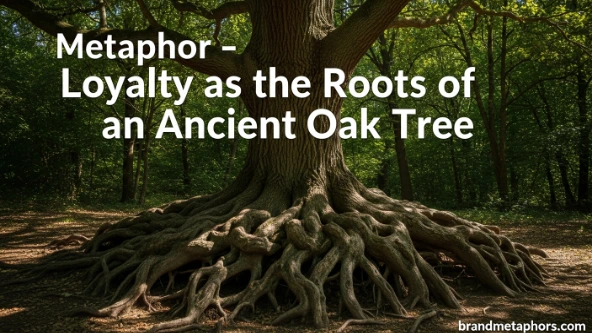
A deep-rooted oak tree represents loyalty that grows quietly but becomes unbreakable over time.
Meaning and Explanation
Roots are invisible, yet they determine how strong and long-lasting a tree becomes. Loyalty, like roots, develops beneath the surface through shared experiences, trust, and time.
Emotional Image
Picture a massive oak standing through seasons—spring blossoms, summer heat, autumn winds, and winter snow—never losing its place.
Example Sentence
“Their friendship was like the roots of an ancient oak, growing deeper with every challenge they survived together.”
Alternative Expressions
- Deep-rooted bond
- Grounded connection
- Intertwined roots
- Unshakable foundation
Cultural and Literary Touch
In many cultures, trees symbolize life, family, and ancestry. Ancient stories often describe family loyalty as “roots that cannot be cut,” reinforcing how deeply this metaphor resonates across generations.
Mini Storytelling Moment
A father teaches his child to plant a sapling. Years later, the child returns to find it grown into a strong tree. That tree becomes a silent witness to years of care, visits, and memories—just like loyalty growing stronger over time.
Interactive Prompt
Draw or imagine a tree representing your closest relationship. What kind of roots does it have? Shallow, growing, or deeply anchored?
H2: Metaphor 3 – Loyalty as a Candle That Never Goes Out
A burning candle represents loyalty that persists through darkness.
Meaning and Explanation
A candle may flicker, bend in the wind, or shrink over time, but it continues to burn. Loyalty, similarly, may be tested, but it does not vanish easily.
Sensory Image
You see soft golden light in a dark room, feel warmth spreading gently, and notice how even the smallest flame changes everything around it.
Example Sentence
“Even when life grew cold and uncertain, her loyalty was a candle that never went out.”
Alternative Expressions
- A steady flame
- An unextinguished light
- A guiding glow
- A warm spark in darkness
Mini Storytelling Moment
A soldier stationed far from home keeps a small candle lit every night, symbolizing his promise to return. Years pass, but the candle remains part of his routine—fragile yet persistent, like devotion itself.
Why It Works
This metaphor highlights hope, endurance, and emotional warmth, making it especially powerful in romantic or inspirational writing.
Interactive Prompt
Write about a time someone’s loyalty “lit up” a dark moment in your life. What did that support feel like?
H2: Loyalty in Relationships – When Commitment Becomes Invisible Strength
In relationships, loyalty is not always dramatic. It often appears in small actions: remembering details, showing up during silence, or staying calm during conflict.
A loyal relationship feels like:
- A shared rhythm rather than constant excitement
- A safe space instead of a performance
- A quiet understanding instead of loud explanations
Think of couples who grow older together. They may not always speak much, but their presence alone carries decades of shared history.
Real-Life Reflection
Many long-term partners describe loyalty not as passion alone, but as choosing the same person repeatedly, even when life becomes complicated.
Writing Insight
When describing loyalty in relationships, combine metaphors with action:
“Their love was an anchor, their patience deep roots, their forgiveness a steady flame.”
H2: Loyalty in Friendship and Work – The Bonds That Shape Everyday Life
Friendship loyalty often shows up in subtle consistency: checking in, defending someone in their absence, or staying supportive during change.
In workplaces, loyalty can look like:
- Trust between teams
- Commitment to shared goals
- Standing by colleagues under pressure
Example Scenario
A coworker stays late to help another finish a project—not because they are asked, but because they believe in the team. That moment reflects loyalty more than any official policy.
Metaphorical Extensions
- Team loyalty as “a well-woven net”
- Workplace loyalty as “a shared engine”
- Friendship loyalty as “a bridge that never collapses”
H2: Creative Exercise – Build Your Own Loyalty Metaphors
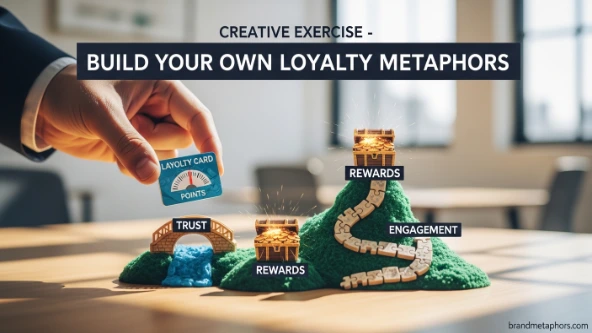
Try creating your own metaphors using this simple structure:
Loyalty is like ______ because ______.
Examples:
- Loyalty is like a mountain because it does not move with passing storms.
- Loyalty is like a handwritten letter because it takes time but lasts forever.
- Loyalty is like a shadow because it follows you without needing attention.
Challenge Exercise
Write three metaphors for loyalty using:
- Nature (river, mountain, wind)
- Objects (clock, bridge, mirror)
- Light or sound (echo, flame, silence)
Bonus Reflection
Which metaphor feels closest to your personal understanding of loyalty? Why?
H2: Using Loyalty Metaphors in Writing, Social Media, and Daily Speech
Metaphors for loyalty are powerful tools in communication. Here’s how to use them effectively:
Writing
- Use them in character descriptions
- Add emotional depth to storytelling
- Strengthen poetry and essays
Social Media
- “True friendship is an anchor in every storm.”
- “Some bonds are roots that distance cannot break.”
- “Loyalty is a flame that never asks for attention.”
Daily Life
Instead of saying:
“Thank you for staying loyal,”
You can say:
“You’ve been my anchor through everything.”
This transforms simple gratitude into emotional impact.
H2: Cultural and Literary Perspectives on Loyalty
Across cultures, loyalty is often tied to nature and endurance:
- In Eastern traditions, bamboo symbolizes flexibility with strength
- In Western literature, oak trees often represent steadfast loyalty
- In poetry, light and flame often symbolize enduring devotion
Writers like Shakespeare often described loyalty as “unbroken bonds,” while modern storytelling frames it as emotional resilience rather than blind obedience.
This shift is important: loyalty today is seen not as restriction, but as conscious commitment rooted in trust.
H2: Deep Reflection – The True Shape of Loyalty

If loyalty had no metaphor, how would we recognize it?
Maybe we would still feel it:
- In the silence someone keeps for us
- In the patience they offer without reward
- In the choice to stay when leaving is easier
Metaphors simply give language to what already exists in human behavior. They remind us that loyalty is not one thing—it is many forms of staying, holding, and believing.
H2: FAQs on Metaphors for Loyalty
1. What are common metaphors for loyalty?
Common metaphors include anchor in a storm, deep-rooted tree, and eternal flame.
2. Why are metaphors important for describing loyalty?
They help express abstract emotions in vivid, relatable images that are easier to understand and feel.
3. Can I create my own loyalty metaphors?
Yes. Combining nature, objects, or emotions with the idea of stability or commitment works best.
4. Where can loyalty metaphors be used?
They are useful in writing, speeches, poetry, social media posts, and storytelling.
5. What makes a loyalty metaphor effective?
It should be simple, emotionally resonant, and easy to visualize while clearly showing endurance or trust.
Conclusion
Loyalty is not always spoken, but it is constantly lived. Through metaphors like anchors, trees, and candles, we begin to see what is usually invisible—the quiet strength that holds people together.
These images are more than literary tools. They are reminders that loyalty is not about perfection; it is about presence. It is about staying rooted when life shakes, glowing when darkness falls, and holding steady when everything else drifts.
When we speak in metaphors, we don’t just describe loyalty—we bring it to life.