
Introduction: The Language Hidden Beneath Our Feet
At dawn, the grass glistens like scattered emeralds beneath the first touch of sunlight. A breeze moves across the field, and suddenly the earth seems alive—whispering, bending, breathing. Most people walk across grass without thinking twice, yet writers, poets, and storytellers have long seen it as far more than a patch of green. Grass becomes hope after rain, resilience after hardship, or even the quiet passage of time.
That is the beauty of metaphors for grass. A simple blade can symbolize growth, fragility, freedom, healing, patience, or survival. In literature and daily speech, grass often mirrors human emotions and experiences because it is something universally familiar. Whether growing through cracks in concrete or stretching endlessly across open meadows, grass carries meaning that readers instantly understand.
Learning metaphors for grass can make your writing more vivid, emotional, and memorable. They help transform ordinary descriptions into imagery readers can feel. From poetry and storytelling to social media captions and speeches, grass metaphors add freshness and depth to language.
In this article, you will explore creative metaphors for grass, discover how to use them effectively, practice building your own comparisons, and learn how these green symbols appear in literature, culture, and everyday life.
Why Grass Makes Such a Powerful Metaphor
Grass may appear ordinary, but that simplicity is exactly why it works so well in figurative language. Nearly everyone has touched grass, smelled freshly cut lawns, or watched fields sway in the wind. Because it is familiar, readers instantly connect with the image.
Grass can symbolize many ideas:
- Growth and renewal
- Humility and simplicity
- Quiet endurance
- Nature’s softness
- Hidden strength
- Freedom and open space
- Fleeting life and change
Unlike mighty mountains or roaring oceans, grass is gentle. Yet it survives storms, droughts, footsteps, and seasons. That balance between delicacy and resilience makes it emotionally powerful.
For example:
- “Hope spread through the town like spring grass.”
- “His thoughts tangled like overgrown grass.”
- “The children laughed like grass dancing in the wind.”
Each sentence creates a mood without directly explaining emotions.
Writers use grass metaphors because they are visual, sensory, and deeply human.
Metaphors for Grass That Symbolize Growth and Renewal
One of the most common symbolic meanings of grass is growth. After winter or destruction, grass often returns first. This makes it a natural metaphor for healing and fresh beginnings.
Grass as a Green Resurrection
This metaphor compares grass to life returning after hardship.
Meaning: Recovery, rebirth, hope after darkness.
Example Sentence: “After months of grief, joy slowly returned like grass after wildfire.”
Alternative Expressions:
- “Hope sprouted like spring grass.”
- “New dreams pushed through the soil.”
- “Life bloomed beneath the ashes.”
Sensory Detail: Imagine soft green shoots emerging from blackened earth after rain. The image feels hopeful and gentle.
Mini Storytelling Example
A farmer loses his crops during a terrible storm. Weeks later, he notices tiny blades of grass growing near the ruined field. That small patch becomes a symbol of survival. In storytelling, moments like this quietly carry emotional weight.
Bonus Writing Tip
Use grass metaphors in motivational writing, personal essays, or graduation speeches to represent fresh starts.
Grass as a Metaphor for Fragility and Innocence
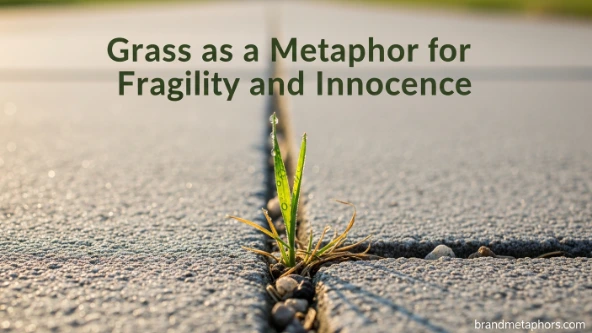
Grass bends easily beneath footsteps or wind. Because of this, it often symbolizes vulnerability and innocence.
Grass Like Delicate Childhood
Meaning: Softness, purity, emotional sensitivity.
Example Sentence: “The child’s trust was as fragile as morning grass covered in frost.”
Alternative Ways to Express It:
- “Tender as new grass.”
- “Soft as a meadow after rain.”
- “Bending like thin blades in the storm.”
Emotional Layer
This metaphor works especially well in emotional storytelling because readers instinctively understand how easily grass can be crushed.
Literary Feeling
Many poets use grassy meadows to represent peaceful youth or fleeting innocence. A grassy field often becomes a symbol of memories that cannot fully return.
Real-Life Example
A parent watching children run barefoot across a lawn may suddenly realize how quickly childhood disappears. Grass becomes tied to nostalgia and passing time.
Metaphors for Grass That Show Strength and Resilience
Grass may look weak, but it survives incredible pressure. It regrows after being cut and bends instead of breaking.
Grass as Quiet Resilience
Meaning: Endurance, adaptability, hidden strength.
Example Sentence: “She survived criticism like grass surviving endless footsteps.”
Alternative Expressions:
- “Flexible as reeds and grass.”
- “Rooted deeply beneath hardship.”
- “Bending without breaking.”
Cultural Reference
There is an old proverb often paraphrased as: “The mighty oak falls in storms, but grass survives because it bends.”
This idea appears in cultures around the world. Flexibility becomes strength.
Sensory Detail
Picture tall grass moving in powerful wind. It bows low but rises again once the storm passes.
Writing Tip
Use resilience-based grass metaphors in:
- Inspirational blogs
- Mental health reflections
- Sports writing
- Character descriptions
These comparisons feel hopeful without sounding overly dramatic.
Grass Metaphors in Poetry and Literature
Poets have loved grass for centuries because it represents both life and mortality. Grass grows everywhere, covering battlefields, graves, gardens, and roadsides alike.
Walt Whitman and Grass
In poetry, grass often represents humanity itself. American poet Walt Whitman famously used grass as a symbol of equality and shared human existence.
Grass grows for everyone:
- Rich and poor
- Young and old
- Joyful and grieving
Example Literary-Style Metaphor
“Time spread over the village like tall summer grass, covering every memory.”
Why It Works
Grass creates layered imagery:
- Visual beauty
- Emotional softness
- Symbolic depth
A reader can interpret it in personal ways.
Creative Exercise
Write three emotions and compare each one to grass.
Example:
- Anxiety tangled like weeds in tall grass.
- Happiness spread like fresh spring lawns.
- Loneliness sat like dry grass in winter.
This exercise strengthens descriptive thinking.
Creative Grass Comparisons for Everyday Writing
You do not need to be a novelist to use metaphors for grass. These comparisons can improve captions, speeches, journals, and casual storytelling.
Example 1: Calmness
“The park rested under the sky like a green blanket.”
Meaning: Peace and comfort.
Example 2: Crowds
“People poured into the stadium like blades of grass covering a hillside.”
Meaning: Large numbers gathering naturally.
Example 3: Overthinking
“My thoughts grew wild like untamed grass.”
Meaning: Mental clutter and chaos.
Social Media Caption Ideas
- “Growing quietly like spring grass.”
- “Soft hearts survive storms too.”
- “Even crushed grass rises again.”
- “Chasing sunshine across green fields.”
Bonus Tip for Daily Life
Metaphors make conversations memorable. Instead of saying “I feel calm,” try: “I feel like grass swaying in a slow breeze.”
It paints emotion instead of merely stating it.
Grass as a Symbol of Freedom and Open Space
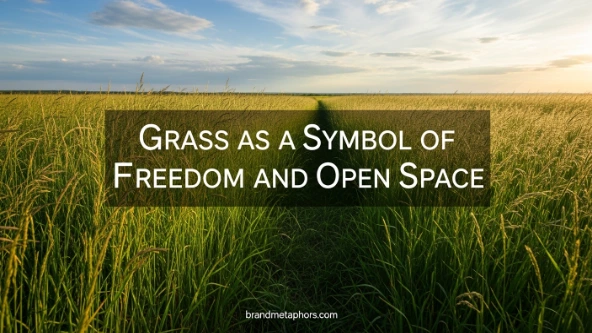
Wide grassy fields often create feelings of openness and possibility. Because of this, grass frequently symbolizes freedom.
Grass Like Endless Opportunity
Meaning: Adventure, openness, emotional release.
Example Sentence: “The future stretched before her like an endless prairie of grass.”
Alternative Expressions
- “Freedom rolled across the hills.”
- “Possibilities spread like green plains.”
- “Dreams grew wild in open fields.”
Mini Storytelling Scene
A teenager leaves a crowded city for the countryside for the first time. Standing in a field, surrounded by wind and endless grass, they suddenly feel emotionally lighter. The landscape becomes symbolic of inner freedom.
Sensory Writing Tip
When using grassy freedom imagery, include:
- Wind movement
- Sunlight
- Smells of earth or rain
- Open sky
These details deepen immersion.
Seasonal Grass Metaphors and Emotional Meaning
Grass changes through the seasons, making it ideal for emotional symbolism.
Spring Grass
Represents:
- Hope
- New beginnings
- Energy
- Youth
Example: “Her confidence returned like spring grass after rain.”
Summer Grass
Represents:
- Fullness
- Joy
- Abundance
Example: “Their laughter spread through the yard like tall summer grass.”
Autumn Grass
Represents:
- Aging
- Reflection
- Transition
Example: “The faded friendship rustled like autumn grass.”
Winter Grass
Represents:
- Loneliness
- Dormancy
- Hidden survival
Example: “His spirit slept beneath the cold like winter grass.”
Writing Exercise
Describe your current mood as a season of grass. This encourages emotional creativity and metaphorical thinking.
Three Detailed Grass Metaphor Examples You Can Use
Here are three fully developed metaphor ideas with meanings, examples, and variations.
1. Grass as a Whispering Crowd
Meaning
Grass moving together can resemble people sharing secrets or emotions.
Example Sentence
“The meadow whispered like a crowd sharing old stories.”
Alternative Expressions
- “Fields murmured softly.”
- “The grass carried hidden voices.”
- “Nature breathed in quiet conversation.”
Emotional Effect
Creates mystery, calmness, or nostalgia.
Best Use
Fantasy writing, poetry, reflective essays.
2. Grass as Nature’s Carpet
Meaning
Grass creates softness, comfort, and beauty.
Example Sentence
“The valley lay beneath them like nature’s emerald carpet.”
Alternative Expressions
- “A green quilt across the earth.”
- “Velvet fields beneath the sky.”
- “The earth wrapped itself in green.”
Sensory Detail
Think of cool grass beneath bare feet on a warm evening.
Best Use
Travel writing, descriptive storytelling, romance scenes.
3. Grass as Silent Persistence
Meaning
Grass survives quietly without demanding attention.
Example Sentence
“Her determination was like roadside grass—ignored but impossible to erase.”
Alternative Expressions
- “Quiet roots beneath pressure.”
- “Steady as field grass.”
- “Soft but enduring.”
Emotional Effect
Inspires resilience and humility.
Best Use
Character development and motivational writing.
Interactive Exercises to Practice Grass Metaphors
Creativity improves with practice. Try these exercises to develop stronger imagery.
Exercise 1: Emotion Mapping
Choose an emotion:
- Joy
- Fear
- Loneliness
- Hope
Now compare it to grass.
Example: “Fear spread like dry grass before fire.”
Exercise 2: Five-Senses Meadow
Describe a grassy field using:
- Sight
- Sound
- Smell
- Touch
- Temperature
This exercise strengthens sensory writing.
Exercise 3: Memory and Grass
Think of a childhood memory involving nature. Turn the grass into a symbolic element.
Example: “The grass around our old home held the last echoes of summer.”
Exercise 4: Social Caption Challenge
Write three short grass metaphors under 15 words each.
Examples:
- “Still growing through concrete days.”
- “Peace smells like fresh-cut grass.”
- “Hope bends but never breaks.”
How to Use Grass Metaphors Effectively in Writing
Good metaphors feel natural rather than forced.
Keep Imagery Clear
Readers should quickly understand the comparison.
Weak: “Grass was like mathematical emotions.”
Strong: “His patience spread quietly like grass after rain.”
Match the Mood
Choose imagery that fits the emotional tone.
- Soft grass = peace
- Dry grass = sadness
- Wild grass = chaos
- Spring grass = hope
Avoid Overusing Metaphors
Too many comparisons can overwhelm readers. Mix metaphorical lines with direct language.
Use Sensory Details
Grass imagery becomes stronger with:
- Wind
- Texture
- Color
- Smell
- Temperature
Example: “The damp grass cooled her feet as evening settled over the hills.”
Grass Metaphors in Modern Media and Culture
Grass symbolism appears everywhere:
- Films
- Song lyrics
- Advertisements
- Photography captions
- Mindfulness writing
Nature imagery feels emotionally authentic in a digital world. Green fields often symbolize peace, escape, or emotional clarity.
Example in Advertising
A company may show grassy landscapes to communicate:
- Freshness
- Health
- Freedom
- Simplicity
Social Media Trends
Nature metaphors perform well online because they feel relatable and visually vivid.
Popular themes include:
- Healing
- Slow living
- Growth
- Mental peace
Bonus Creative Tip
Pair grass metaphors with weather imagery:
- Rain and grass = recovery
- Wind and grass = uncertainty
- Sunlight and grass = optimism
This layering creates richer writing.
Conclusion
Grass may seem simple, but metaphorically it carries extraordinary depth. It can symbolize resilience after hardship, innocence in youth, freedom beneath open skies, or quiet persistence through difficult seasons. Because grass exists in nearly every human landscape, readers instinctively connect with it emotionally.
The best metaphors for grass are vivid yet natural. They do more than decorate sentences—they create mood, deepen emotion, and help readers experience ideas instead of merely understanding them. Whether you are writing poetry, storytelling, captions, speeches, or personal reflections, grass metaphors can bring softness and humanity to your words.
Next time you see grass moving in the wind, pause for a moment. Beneath that ordinary green surface lies an entire language of growth, memory, survival, and hope waiting to be written.
FAQs About Metaphors for Grass
1. Why is grass commonly used in metaphors?
Grass is familiar, visual, and symbolic. It represents growth, resilience, softness, freedom, and the natural cycle of life.
2. What does grass symbolize in literature?
In literature, grass often symbolizes hope, equality, renewal, mortality, innocence, or emotional endurance depending on context.
3. How can I create my own grass metaphors?
Start by connecting grass traits—softness, growth, flexibility, survival—to emotions or situations in human life.
4. Are grass metaphors useful in modern writing?
Yes. They work well in blogs, poetry, storytelling, speeches, social media captions, and personal journals because they feel relatable and vivid.
5. What is an example of a powerful grass metaphor?
“Even crushed grass rises again.” This metaphor symbolizes resilience and emotional strength after hardship.