
Food is more than something we eat. It carries memories, culture, comfort, and celebration. Imagine the smell of fresh bread drifting through a kitchen on a rainy afternoon. Think of a steaming bowl of soup shared with loved ones during winter. Food feeds the body, but it also nourishes stories, emotions, and imagination.
That is why metaphors for food are so powerful. They help writers, speakers, and everyday communicators express ideas in vivid and memorable ways. A person can be described as “the spice of life.” A difficult problem might be “a hard nut to crack.” A joyful moment may feel like “sweet honey on the tongue.” These comparisons transform ordinary language into something colorful and engaging.
Food metaphors appear everywhere—in literature, movies, social media captions, advertising, and daily conversation. They connect with readers because everyone understands the experience of eating, tasting, and sharing meals.
In this guide, you will discover creative metaphors for food, learn how to use them effectively, explore cultural meanings behind them, and practice creating your own. Whether you’re a writer, student, blogger, or language enthusiast, these delicious expressions can enrich your communication and make your words unforgettable.
Understanding Metaphors for Food
What Are Food Metaphors?
A metaphor compares one thing to another without using words like “as” or “like.” Food metaphors use ingredients, meals, flavors, or cooking experiences to describe people, emotions, situations, or ideas.
For example:
- “Her kindness is warm soup on a cold day.”
- “His words were bitter medicine.”
- “The project became a melting pot of ideas.”
These expressions create strong mental images and emotional connections.
Why Food Makes Powerful Metaphors
Food is universal. Every culture has meals, flavors, and traditions that carry meaning. Because people experience food daily, food-related metaphors feel natural and relatable.
They can express:
- Comfort
- Happiness
- Love
- Difficulty
- Growth
- Diversity
- Success
Sweet Food Metaphors for Happiness and Joy
Sweetness as a Symbol of Positive Feelings
Sweet foods often represent pleasure, affection, and satisfaction.
Examples include:
Life Is a Slice of Cake
Meaning: Something is easy or enjoyable.
Example Sentence: After months of practice, the exam felt like a slice of cake.
Alternative Expressions:
- A piece of cake
- Sweet success
- Smooth sailing
Emotional Detail: The phrase creates a feeling of celebration and reward.
Honey on the Tongue
Meaning: Pleasant words or delightful experiences.
Example Sentence: Her compliments were honey on the tongue after a difficult day.
Alternative Expressions:
- Sweet music
- Sugar-coated comfort
- Golden sweetness
A Candy-Colored Dream
Meaning: A beautiful and joyful vision.
Example Sentence: The vacation felt like a candy-colored dream.
Mini Story: A child visiting a carnival for the first time sees bright lights, colorful treats, and smiling faces. Everything feels magical, like stepping into a candy-colored dream.
Savory Food Metaphors for Rich Experiences
When Flavor Represents Depth
Savory foods often symbolize complexity and richness.
A Feast for the Mind
Meaning: Something intellectually stimulating.
Example Sentence: The documentary was a feast for the mind.
Alternative Expressions:
- Food for thought
- Mental banquet
- Intellectual buffet
Rich as a Five-Course Meal
Meaning: Full of detail or depth.
Example Sentence: Her novel was rich as a five-course meal.
Sensory Detail: Readers savor each chapter the way diners enjoy each course.
Seasoned with Wisdom
Meaning: Improved through experience.
Example Sentence: His advice was seasoned with wisdom gained over decades.
Spicy Food Metaphors for Excitement and Passion
The Heat of Emotion
Spicy foods often symbolize energy, adventure, and intensity.
The Spice of Life
Meaning: Something that makes life interesting.
Example Sentence: Travel is the spice of life.
Alternative Expressions:
- Source of excitement
- Burst of adventure
- Spark of energy
A Chili Pepper Personality
Meaning: Bold and energetic character.
Example Sentence: Her chili pepper personality brightened every room.
Fire on the Plate
Meaning: Intense excitement or passion.
Example Sentence: Their performance was fire on the plate.
Cultural Reference
Many cultures use spice to represent courage and excitement. In literature, fiery food often symbolizes passion and determination.
Bitter Food Metaphors for Challenges and Growth
Finding Meaning in Difficult Experiences
Bitterness often represents hardship or truth.
Bitter Medicine
Meaning: Something unpleasant but necessary.
Example Sentence: Accepting criticism was bitter medicine, but it helped him improve.
Alternative Expressions:
- Tough lesson
- Hard truth
- Necessary challenge
A Burnt Toast Moment
Meaning: A disappointing experience.
Example Sentence: Missing the opportunity felt like a burnt toast moment.
Sour Grapes
Meaning: Pretending not to want something after failing to get it.
Example Sentence: His complaints sounded like sour grapes.
Real-Life Application
Many personal growth experiences begin as bitter moments but eventually lead to positive change.
Metaphors for Food and Relationships
Comparing People to Food
Food metaphors frequently describe friendships and relationships.
Warm Bread in Winter
Meaning: A comforting person.
Example Sentence: My grandmother is warm bread in winter.
The Missing Ingredient
Meaning: Something or someone essential.
Example Sentence: Her leadership was the missing ingredient in the team.
A Shared Table
Meaning: Unity and connection.
Example Sentence: The community became a shared table where everyone belonged.
Literary Connection
Many novels use meals as symbols of friendship, trust, and belonging.
Food Metaphors in Literature and Storytelling
Why Writers Love Food Imagery
Food engages multiple senses:
- Taste
- Smell
- Texture
- Sight
- Emotion
This makes writing more immersive.
Words as Chocolate
Meaning: Writing that feels delightful.
Example Sentence: Her poetry was chocolate for the soul.
A Story Simmering on the Stove
Meaning: An idea developing gradually.
Example Sentence: The novel simmered on the stove of his imagination for years.
A Banquet of Characters
Meaning: A diverse cast of personalities.
Example Sentence: The book offered a banquet of characters.
Famous Literary Influence
From ancient myths to modern novels, food often symbolizes abundance, temptation, family, and identity.
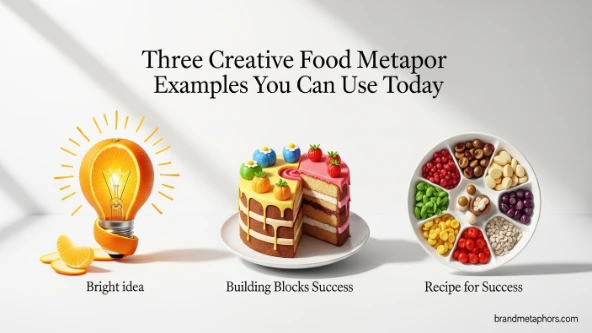
Three Creative Food Metaphor Examples You Can Use Today
Example 1: Life Is a Garden Soup
Meaning and Explanation
Life combines many ingredients and experiences into one unique result.
Example Scenario
Every success and setback became part of life’s garden soup.
Alternative Ways to Express It
- Life is a mixed recipe
- Life is a shared feast
- Life is a simmering stew
Emotional Detail
The image creates warmth, growth, and acceptance.
Example 2: Success Is Fresh Bread
Meaning and Explanation
Success requires patience and effort before rewards appear.
Example Scenario
After years of work, her success emerged like fresh bread from the oven.
Alternative Expressions
- Harvest of effort
- Fruit of labor
- Well-cooked achievement
Example 3: Creativity Is a Spice Rack
Meaning and Explanation
Creativity offers endless possibilities and combinations.
Example Scenario
His creativity was a spice rack filled with surprising flavors.
Alternative Expressions
- Palette of ideas
- Box of colors
- Treasure chest of inspiration
How to Create Your Own Food Metaphors
Simple Strategy for Beginners
Creating food metaphors is easier than it seems.
Step 1: Choose a Food
Examples:
- Bread
- Honey
- Chili
- Coffee
- Cake
Step 2: Identify Its Qualities
For example:
Coffee:
- Energizing
- Strong
- Warm
Step 3: Connect It to an Idea
Example:
“Her determination was morning coffee for the team.”
Practice Prompt
Choose one food from your kitchen and compare it to:
- A friend
- A dream
- A challenge
- A memory
Write one sentence for each.
Using Food Metaphors in Writing, Social Media, and Daily Life
Make Your Language More Memorable
Food metaphors can improve communication.
In Creative Writing
Example:
“The city was a bubbling pot of cultures and voices.”
In Social Media Captions
Example:
“Weekend adventures are the spice of life.”
In Speeches
Example:
“Success is not instant noodles; it takes time to cook.”
Bonus Tips
- Use sensory details.
- Avoid overused expressions.
- Match the metaphor to the mood.
- Consider cultural meanings.
- Keep comparisons clear.
Interactive Exercises to Master Food Metaphors
Exercise 1: Complete the Metaphor
Finish these sentences:
- Friendship is __________.
- Hope is __________.
- Courage is __________.
- Creativity is __________.
Exercise 2: Build a Flavor Story
Choose:
- One sweet food
- One spicy food
- One savory food
Write a short paragraph using all three as metaphors.
Exercise 3: Sensory Writing Challenge
Describe a happy memory using:
- Taste
- Smell
- Texture
Turn those details into metaphors.
Exercise 4: Social Media Practice
Create a caption using one food metaphor.
Example:
“New opportunities are fresh bread straight from the oven.”
Exercise 5: Literary Inspiration
Think about a favorite book or movie.
Ask yourself:
- What food best represents the hero?
- What food represents the conflict?
- Why?
Common Mistakes When Using Food Metaphors
Keep Comparisons Clear and Relevant
Good metaphors feel natural.
Mistake 1: Mixing Too Many Metaphors
Poor Example:
“He was a spicy cake sailing through soup.”
Better Example:
“He was the spice that energized the team.”
Mistake 2: Overusing Clichés
Instead of repeating common phrases, create fresh images.
Example:
Rather than “piece of cake,” try “warm pie cooling on the windowsill.”
Mistake 3: Ignoring Audience Understanding
Choose foods your audience recognizes.
Final Writing Tip
The best food metaphors connect taste with emotion. Readers should not only understand the comparison but also feel it.
Conclusion
Food metaphors add flavor to language. They transform ordinary ideas into memorable images filled with emotion, sensory detail, and meaning. Whether you describe happiness as honey, success as fresh bread, or creativity as a spice rack, food metaphors help readers connect deeply with your message.
The beauty of these expressions lies in their universality. Everyone understands the comfort of warm soup, the excitement of spice, and the sweetness of a favorite dessert. By drawing on these shared experiences, writers can create vivid imagery that lingers long after the final sentence.
Experiment with the examples in this guide, create your own flavorful comparisons, and sprinkle them throughout your writing, conversations, and social media posts. With practice, your words can become as satisfying as a memorable meal.
FAQs
What are metaphors for food?
Food metaphors are figurative comparisons that use food, flavors, or cooking experiences to describe people, emotions, situations, or ideas.
Why are food metaphors effective in writing?
They engage the senses, create vivid imagery, and help readers connect emotionally with the message.
What is a common example of a food metaphor?
“The spice of life” is a common food metaphor used to describe something that makes life exciting and enjoyable.
How can I create my own food metaphors?
Choose a food, identify its qualities, and connect those qualities to a person, feeling, or experience.
Can food metaphors be used on social media?
Yes. Food metaphors make captions more creative, memorable, and engaging, helping posts stand out and connect with audiences.