
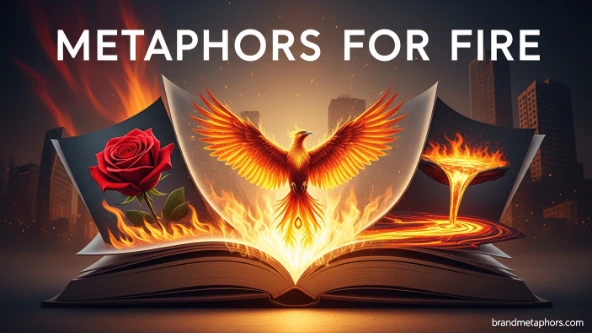
Fire crackles in the darkness. Its orange glow dances across faces, walls, and memories. A campfire can feel warm and welcoming, while a wildfire can inspire fear and respect. Few elements carry as much symbolic power as fire. It has lit human paths for thousands of years, cooked meals, warmed homes, and inspired stories across cultures.
Because fire is so vivid and emotional, it appears constantly in language. Writers, speakers, poets, and everyday people use metaphors for fire to describe passion, anger, determination, creativity, love, destruction, and transformation. A simple fire metaphor can turn an ordinary sentence into something memorable and alive.
Whether you’re writing a story, creating social media captions, improving your poetry, or simply looking for better ways to express emotions, understanding fire metaphors can enrich your language. In this guide, you’ll discover powerful metaphors for fire, their meanings, examples, practical uses, and creative exercises to help you master them.
Why Fire Makes Such a Powerful Metaphor
The Emotional Power of Fire
Fire captures attention instantly. It moves, changes shape, and evokes strong feelings. Because it can both create and destroy, it represents many human experiences.
Think about phrases like:
- Burning desire
- Fiery temper
- Spark of hope
- Flame of love
Each phrase uses fire to communicate something deeper than literal meaning.
Fire Across Cultures and History
Ancient myths often portrayed fire as a divine gift. Many cultures viewed it as a symbol of wisdom, purification, and power. From sacred candles to Olympic flames, fire continues to represent strength and continuity.
This rich history makes fire metaphors easy for readers to understand and emotionally connect with.
Fire as a Metaphor for Passion
A Heart Full of Flames
One of the most common metaphors for fire is passion. Intense emotions often feel hot, energetic, and impossible to ignore.
Metaphor: Passion is a fire.
Meaning: Strong enthusiasm or deep emotional intensity.
Example Sentence:
“Her dream of becoming an artist burned like a fire that could not be extinguished.”
Alternative Expressions:
- A blazing ambition
- A burning desire
- A roaring passion
- An inner flame
Mini Story Example
A young musician practiced every day in a small garage. While others gave up, he continued because a fire inside him refused to go out. Years later, that passion led him to perform on large stages around the world.
This example shows how fire symbolizes persistence and dedication.
Fire as a Metaphor for Anger
Flames That Rise Quickly
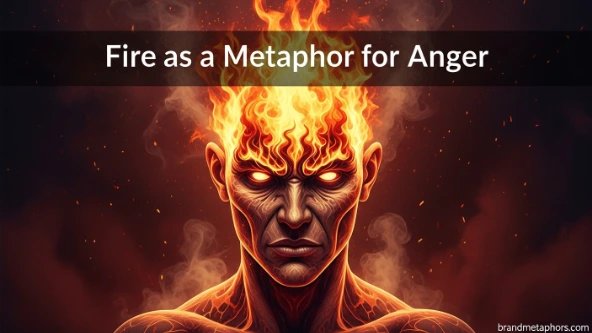
Anger often appears in fire metaphors because both can grow rapidly and become difficult to control.
Metaphor: Anger is a wildfire.
Meaning: Rage spreading quickly and intensely.
Example Sentence:
“His anger spread through the meeting like a wildfire.”
Alternative Expressions:
- A fiery temper
- Boiling rage
- Burning resentment
- Flames of fury
Sensory Details
Imagine heat rising from the ground, sparks flying into the air, and flames consuming everything in their path. These images mirror how anger can overwhelm thoughts and actions.
Writers often use such imagery to make emotional scenes feel more vivid.
Fire as a Metaphor for Love
The Flame of the Heart
Love and fire have been connected in poetry for centuries. Both can bring warmth, comfort, excitement, and sometimes pain.
Metaphor: Love is a flame.
Meaning: A powerful emotional connection that provides warmth and energy.
Example Sentence:
“Their love remained a steady flame despite the passing years.”
Alternative Expressions:
- A spark of romance
- A glowing connection
- An eternal flame
- Hearts on fire
Literary Inspiration
Many famous love poems describe lovers as flames drawn together. This image works because readers easily understand both the beauty and intensity of fire.
Fire as a Metaphor for Determination
Fuel for Success
Determination often feels like a fire that keeps burning even during difficult times.
Metaphor: Determination is a furnace.
Meaning: Continuous strength and resilience.
Example Sentence:
“Her determination became a furnace that powered every challenge she faced.”
Alternative Expressions:
- Burning motivation
- Unquenchable drive
- Relentless flame
- Inner fire
Real-Life Example
Athletes who train despite setbacks often describe having an inner fire. This phrase suggests a deep commitment that remains alive even when obstacles appear.
Fire as a Metaphor for Creativity
Sparks of Imagination
Creative ideas often arrive suddenly, just like sparks jumping from a fire.
Metaphor: Creativity is a spark.
Meaning: The beginning of innovation or inspiration.
Example Sentence:
“A single conversation sparked an entirely new business idea.”
Alternative Expressions:
- A burst of inspiration
- A creative flame
- An imaginative blaze
- A glowing idea
Why This Metaphor Works
Creative thinking starts small and can grow into something extraordinary. A tiny spark can become a roaring fire, just as a simple idea can become a masterpiece.
Fire as a Metaphor for Transformation
Rising from the Ashes
Fire changes everything it touches. This makes it a perfect symbol for personal growth and transformation.
Metaphor: Change is a fire.
Meaning: A force that destroys the old and creates room for something new.
Example Sentence:
“After the setback, she rose from the ashes stronger than before.”
Alternative Expressions:
- Reborn through fire
- Forged in flames
- Phoenix rising
- Tempered by heat
Cultural Reference
The phoenix, a legendary bird, burns and rises anew from its ashes. This image remains one of the most powerful transformation metaphors in literature and storytelling.
Fire as a Metaphor for Energy and Motivation
The Engine of Action
Fire produces heat and movement. Because of this, it often symbolizes energy and productivity.
Metaphor: Motivation is a fire.
Meaning: The force that drives action.
Example Sentence:
“The coach’s speech lit a fire under the team.”
Alternative Expressions:
- Igniting potential
- Fueling ambition
- Lighting the way
- Setting goals ablaze
Everyday Use
People frequently say someone “lit a fire under me” when describing a moment that inspired action or urgency.
Three Powerful Fire Metaphors to Use in Writing
Fire Metaphor #1: A Wildfire of Emotion
Meaning: Emotions spreading rapidly.
Example:
“Excitement raced through the crowd like a wildfire.”
Best Use:
- Dramatic scenes
- Emotional storytelling
- Motivational writing
Fire Metaphor #2: A Candle in the Darkness
Meaning: Hope during difficult times.
Example:
“Her encouragement became a candle in the darkness.”
Best Use:
- Inspirational content
- Personal stories
- Emotional speeches
Fire Metaphor #3: A Forge of Strength
Meaning: Hardship creating resilience.
Example:
“The challenges became a forge that shaped his character.”
Best Use:
- Personal development writing
- Leadership content
- Motivational articles
Creative Exercises for Practicing Fire Metaphors
Exercise 1: Describe an Emotion
Choose one emotion:
- Happiness
- Fear
- Jealousy
- Excitement
Now describe it using fire imagery.
Example:
“Excitement flickered inside me like the first spark of a campfire.”
Exercise 2: Rewrite Ordinary Sentences
Transform simple statements into fire metaphors.
Ordinary:
“I wanted to succeed.”
Metaphorical:
“A burning desire for success filled every corner of my mind.”
Exercise 3: Create a Character
Imagine a character whose personality is represented by fire.
Ask yourself:
- Is their fire gentle or fierce?
- Does it warm others?
- Does it sometimes burn out of control?
Write a short paragraph describing them.
Bonus Tips for Using Fire Metaphors Effectively
Avoid Overusing Common Phrases
Expressions like “burning desire” are effective but familiar. Try creating fresh variations.
Instead of:
“He had a burning desire.”
Try:
“Ambition crackled beneath his calm exterior.”
Match the Intensity
A campfire and a volcano create different images.
Choose the level of fire that matches your message:
- Spark = small beginning
- Flame = steady emotion
- Blaze = strong feeling
- Inferno = overwhelming force
Engage Multiple Senses
Strong writing includes sensory details.
Example:
“Her determination glowed like hot embers, steady and silent beneath the surface.”
This helps readers feel the metaphor rather than simply understand it.
Using Fire Metaphors in Social Media, Writing, and Daily Conversation
For Social Media
Examples:
- “Keeping the flame alive.”
- “Turning sparks into success.”
- “Fueling dreams one step at a time.”
For Creative Writing
Fire metaphors can enrich:
- Poetry
- Novels
- Short stories
- Speeches
They help transform ordinary descriptions into memorable imagery.
For Everyday Conversation
Simple fire metaphors can make communication more expressive.
Examples:
- “She’s full of fire.”
- “That idea sparked something.”
- “His passion still burns bright.”
These phrases feel natural while adding emotional depth.
Frequently Asked Questions
What is a metaphor for fire?
A metaphor for fire is a figurative expression that uses fire to represent ideas such as passion, love, anger, creativity, energy, or transformation.
Why do writers use fire metaphors?
Writers use fire metaphors because fire creates vivid imagery and strong emotional connections, making descriptions more memorable and engaging.
What does “inner fire” mean?
“Inner fire” refers to personal motivation, determination, passion, or drive that pushes someone toward their goals.
How can I create original fire metaphors?
Think about the qualities of fire—heat, light, growth, destruction, movement—and connect them to emotions, experiences, or ideas in unique ways.
Are fire metaphors common in poetry?
Yes. Fire metaphors are extremely common in poetry because they effectively express intense emotions, transformation, desire, and human resilience.
Conclusion
Fire has fascinated humanity for centuries, and its presence in language is just as powerful as its presence in the physical world. Whether it symbolizes passion, anger, love, creativity, determination, motivation, or transformation, fire gives writers a rich collection of images that instantly capture attention and emotion.
The best metaphors for fire do more than decorate a sentence. They illuminate ideas, deepen meaning, and help readers feel what words alone sometimes cannot express. By experimenting with sparks, flames, embers, and blazing infernos, you can bring greater energy and imagination to your writing.
Keep practicing. Observe the emotions around you, connect them to the qualities of fire, and allow your language to glow with fresh, memorable imagery. Every great metaphor begins with a single spark.