

Have you ever watched a leaf float down a quiet stream? It moves without struggle, gliding wherever the water carries it. Or perhaps you’ve seen a skilled musician play a difficult song so smoothly that it seems almost effortless. In moments like these, we often search for words to describe something that feels simple, natural, and easy.
That is where metaphors come in.
Metaphors for easy help us paint vivid pictures of tasks, situations, and experiences that require little effort. Instead of merely saying something is “easy,” we can compare it to a gentle breeze, a walk in the park, or a fish swimming downstream. These comparisons make our writing more engaging, memorable, and expressive.
Whether you’re a student, writer, teacher, marketer, or someone who loves language, learning metaphors for easy can enrich your communication. They add color to conversations, strengthen storytelling, and make everyday descriptions more interesting.
In this guide, you’ll discover powerful metaphors for easy, their meanings, practical examples, cultural references, creative exercises, and tips for using them effectively in writing and daily life.
Why Use Metaphors for Easy?
Understanding the Power of Figurative Language
The word “easy” is useful, but it can become repetitive. Metaphors allow us to communicate the same idea with more imagination.
For example:
- “The test was easy.”
- “The test was a walk in the park.”
The second sentence creates a clearer mental image.
Metaphors help readers:
- Visualize ideas quickly
- Feel emotions connected to the description
- Remember messages longer
- Enjoy more engaging language
When describing something simple, effortless, or straightforward, metaphors make your words come alive.
A Walk in the Park: The Classic Metaphor for Easy
Meaning and Usage
One of the most common metaphors for easy is “a walk in the park.”
It suggests an activity that requires little effort and feels enjoyable.
Example Sentence
“The final exam was a walk in the park after months of preparation.”
Alternative Expressions
- Smooth sailing
- A breeze
- Child’s play
- Like falling off a log
Mini Story
Imagine an athlete training every day for a marathon. On race day, the familiar route feels comfortable. Every step comes naturally. To spectators, it might seem like the race is a walk in the park because of all the preparation behind it.
Sensory Detail
This metaphor evokes images of sunshine, fresh air, and relaxed movement.
Smooth Sailing: When Nothing Gets in the Way
Meaning and Explanation
Smooth sailing compares an easy experience to a boat traveling across calm waters without storms or obstacles.
Example Sentence
“Once we fixed the software issue, the project was smooth sailing.”
Alternative Ways to Express It
- Clear skies ahead
- Calm waters
- Easy navigation
- No rough seas
Literary Connection
Throughout history, sailors faced unpredictable oceans. Calm seas became symbols of ease and success. This imagery appears in countless stories and poems.
Emotional Impact
This metaphor creates feelings of confidence, peace, and control.
A Breeze: Light and Effortless Success

Meaning and Explanation
A breeze is a gentle wind. Since it moves softly and naturally, it became a metaphor for something easy.
Example Sentence
“Learning the new app was a breeze.”
Alternative Expressions
- Effortless
- Simple as can be
- Piece of cake
- No trouble at all
Real-Life Example
A child who has practiced piano for years may find a new song easy to learn. For them, mastering it feels like a breeze.
Sensory Detail
Picture a cool spring wind brushing across your face. That’s the feeling this metaphor captures.
Like Butter Melting on Warm Toast
Meaning and Explanation
This metaphor emphasizes smoothness and ease.
Just as butter spreads effortlessly across warm toast, some tasks unfold naturally without resistance.
Example Sentence
“The negotiations moved like butter melting on warm toast.”
Alternative Comparisons
- Flowing water
- Silk sliding across skin
- Snow melting in sunlight
- A river finding its path
Mini Story
A skilled baker follows a familiar recipe. Every ingredient falls into place perfectly. The process moves like butter melting on warm toast—simple, smooth, and satisfying.
Emotional Tone
Warm, comforting, and pleasant.
Child’s Play: Simplicity at Its Finest
Meaning and Explanation
Children often approach games with ease and enthusiasm. Calling something “child’s play” suggests it requires very little effort.
Example Sentence
“Solving that puzzle was child’s play for the engineer.”
Alternative Expressions
- Beginner level
- Easy as ABC
- Elementary
- Simple task
Cultural Reference
This phrase appears frequently in literature and everyday speech to emphasize simplicity.
Writing Tip
Use this metaphor when comparing expertise to a task that seems difficult to others.
Like a Fish Swimming Downstream
Meaning and Explanation
Fish naturally move through water. Swimming downstream requires even less effort because the current helps.
Example Sentence
“Writing that article felt like a fish swimming downstream.”
Alternative Expressions
- Going with the flow
- Riding the current
- Floating downstream
- Following the path of least resistance
Mini Story
A talented artist sits down with a blank canvas. Inspiration arrives instantly. The brush moves naturally. Creativity flows like a fish swimming downstream.
Emotional Effect
This metaphor conveys harmony and natural progress.
A Well-Oiled Machine
Meaning and Explanation
Machines work best when properly maintained. A well-oiled machine runs smoothly and efficiently.
Example Sentence
“After months of practice, our team operated like a well-oiled machine.”
Alternative Expressions
- Perfectly tuned engine
- Clockwork precision
- Seamless operation
- Flawless system
Real-Life Application
Sports teams often use this metaphor when describing excellent teamwork.
Why It Works
It highlights organization, preparation, and efficiency.
Like Falling Leaves in Autumn
Meaning and Explanation
Leaves fall naturally from trees without effort. This metaphor suggests ease, inevitability, and grace.
Example Sentence
“The answers came to her like falling leaves in autumn.”
Alternative Expressions
- Natural as sunrise
- Gentle as snowfall
- Easy as breathing
- Flowing naturally
Literary Reference
Poets often use autumn leaves to symbolize natural processes and effortless transitions.
Sensory Detail
Imagine golden leaves drifting quietly through crisp autumn air.
Easy as Breathing
Meaning and Explanation
Breathing is automatic for most people. Comparing a task to breathing suggests it is second nature.
Example Sentence
“Public speaking became as easy as breathing after years of experience.”
Alternative Ways to Express It
- Second nature
- Instinctive
- Automatic
- Natural habit
Mini Story
A veteran teacher enters a classroom. Explaining lessons feels as easy as breathing because experience has turned practice into instinct.
Emotional Tone
Confidence and familiarity.
Like a River Following Its Course
Meaning and Explanation
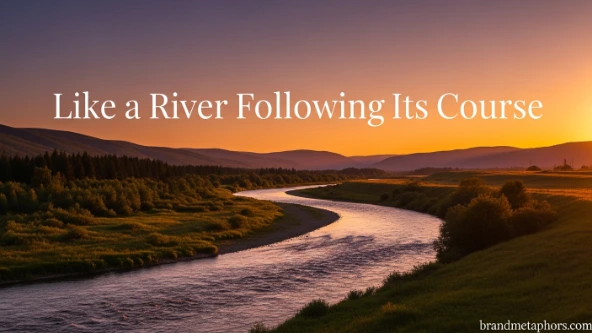
Rivers naturally flow toward their destination. They do not struggle with every turn.
Example Sentence
“The conversation flowed like a river following its course.”
Alternative Expressions
- Natural progression
- Effortless movement
- Continuous flow
- Gentle current
Real-Life Example
When a team communicates well, ideas move naturally from one person to another, like a river following its course.
Sensory Detail
Picture clear water winding through a peaceful valley.
Creative Exercises for Practicing Metaphors for Easy
Exercise 1: Finish the Comparison
Complete these phrases:
- Easy as ___________
- Smooth as ___________
- Simple like ___________
- Effortless as ___________
Try creating unique answers.
Exercise 2: Describe Your Day
Think about a task that felt easy today.
Write:
“Today’s task was like __________ because __________.”
Exercise 3: Storytelling Challenge
Write a short paragraph using three metaphors for easy.
Example:
“The meeting was smooth sailing. Ideas flowed like a river following its course, and decisions came as easily as breathing.”
Exercise 4: Social Media Caption Practice
Create captions using metaphors:
- “This project was a breeze!”
- “Monday felt like smooth sailing.”
- “Success came like butter melting on warm toast.”
Bonus Tips for Using Metaphors for Easy in Writing and Daily Life
Make Your Writing More Vivid
Replace repeated uses of “easy” with creative metaphors.
Match the Context
Choose metaphors that fit the situation.
Examples:
- Business: Well-oiled machine
- Nature: River following its course
- Everyday life: Walk in the park
Avoid Overusing One Metaphor
Variety keeps writing fresh and interesting.
Use Metaphors in Social Media
Creative comparisons often attract more engagement than plain descriptions.
Create Your Own Metaphors
Original metaphors can make your writing stand out.
Example:
“Learning the software was like unlocking a door that was already open.”
Frequently Asked Questions About Metaphors for Easy
What is a metaphor for easy?
A metaphor for easy is a figurative comparison that describes something as simple, effortless, or straightforward without using the word “easy.”
What is the most common metaphor for easy?
“A walk in the park” is one of the most widely used metaphors for easy.
Why are metaphors useful in writing?
Metaphors create vivid imagery, improve reader engagement, and make ideas more memorable.
Can metaphors for easy be used in professional writing?
Yes. Appropriate metaphors can make presentations, articles, speeches, and marketing content more engaging.
How can I create my own metaphor for easy?
Think of activities that feel natural, smooth, or effortless, then compare your situation to those experiences.
Conclusion
Metaphors for easy transform ordinary descriptions into memorable images. Instead of simply saying a task was easy, you can describe it as a walk in the park, smooth sailing, a gentle breeze, or a river following its course. These comparisons add life, color, and emotion to your writing while helping readers instantly understand your meaning.
The best metaphors do more than explain. They create experiences. They allow readers to feel the calm waters of smooth sailing, the comfort of a park stroll, or the natural flow of a river. Whether you’re writing stories, social media posts, essays, speeches, or everyday messages, these metaphors can make your language more engaging and expressive.
Practice using them regularly, experiment with creating your own, and you’ll discover that mastering metaphors can be surprisingly easy—perhaps even a walk in the park.