
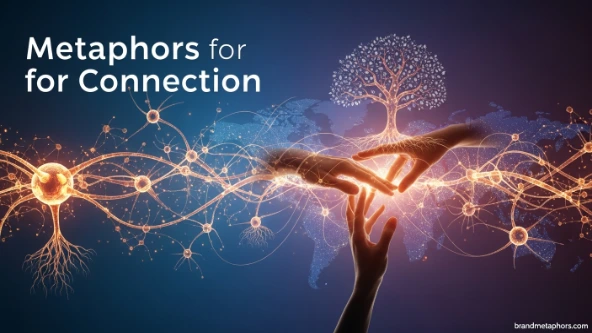
Introduction: The Invisible Threads That Hold Us Together
On a crowded train, two strangers sit side by side in silence. One scrolls through a phone, the other stares out the window as rain traces slow paths down the glass. Yet, without a word, something invisible passes between them—a shared rhythm of breathing, a mutual awareness of presence, a quiet understanding that they are both part of the same moving world.
Connection is not always loud. It doesn’t always announce itself with laughter, hugs, or words. Often, it is subtle—like a flicker of recognition in someone’s eyes or the comfort of knowing you are not alone in a moment of uncertainty. We rely on metaphors to make sense of this invisible bond because connection itself is intangible, yet deeply felt.
In everyday life, we describe relationships as bridges, threads, or flames—not because they literally are those things, but because these images help us understand their depth and fragility. Metaphors for connection give shape to something we cannot touch but constantly experience.
This article explores powerful metaphors for connection, showing how they help us understand relationships in friendships, families, communities, and even within ourselves. Along the way, you’ll find vivid examples, mini-stories, creative exercises, and practical ways to use these ideas in writing and daily life.
1. Connection as a Bridge Between Hearts

A bridge is one of the most enduring metaphors for connection. It spans distance, making it possible to cross from one place—or one person—to another.
A bridge suggests effort and structure. It is not accidental; it is built. Likewise, meaningful relationships require intention, trust, and maintenance.
Meaning & Explanation: This metaphor highlights how connection overcomes separation—emotional, physical, or cultural. It emphasizes effort and stability.
Example Sentence: “Despite years of silence, their conversation rebuilt a fragile bridge between them.”
Alternative Expressions:
- Crossing emotional distance
- Rebuilding trust
- Closing the gap
Sensory / Emotional Detail: Imagine standing on a wooden bridge over a misty river. Beneath you, uncertainty flows. Above you, the other side waits—reachable but requiring courage.
Mini Story: Two childhood friends drift apart after moving to different cities. Years later, one sends a simple message: “Do you remember our old treehouse?” That sentence becomes the first plank in a new bridge, slowly rebuilt through shared memories and hesitant laughter.
Interactive Prompt: Think of someone you feel distant from. What would the first “plank” of your bridge look like—a message, a memory, or a question?
2. Connection as Invisible Threads
Some connections are not built like structures but woven like threads—delicate, flexible, and constantly in motion.
Meaning & Explanation: This metaphor suggests that people are linked in subtle ways, even when apart. It emphasizes emotional bonds and unseen influence.
Example Sentence: “There was a thread between them that time and silence could not completely break.”
Alternative Expressions:
- Emotional ties
- Invisible bonds
- Life connections
Cultural Reference: In East Asian mythology, the “red thread of fate” is believed to connect those destined to meet, regardless of time or place.
Sensory / Emotional Detail: Picture a spiderweb glistening with morning dew. Each strand vibrates slightly when touched—just as human relationships respond to even small gestures.
Mini Story: A mother senses her child is upset hundreds of miles away and sends a message at the exact moment it is needed. Coincidence—or a thread tightening gently across distance?
Interactive Prompt: Write down one invisible thread in your life—someone who influences you without direct contact.
3. Connection as a Flame That Needs Fuel
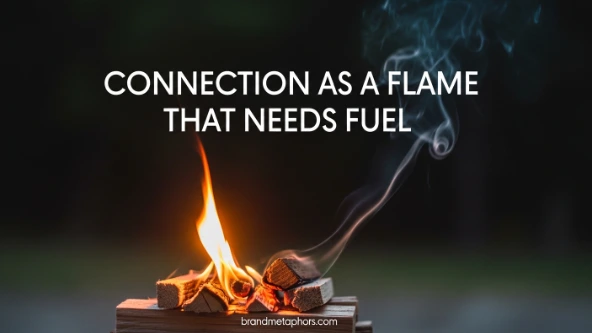
Fire is a powerful metaphor for connection because it represents warmth, energy, and transformation—but also fragility.
Meaning & Explanation: Relationships require attention and care, just as fire needs oxygen and fuel to survive.
Example Sentence: “Their friendship burned brightly at first, but without care, the flame slowly dimmed.”
Alternative Expressions:
- Keeping the spark alive
- Rekindling a relationship
- Emotional warmth
Sensory / Emotional Detail: Imagine sitting around a campfire. The heat draws people closer, but a single gust of wind can scatter the embers.
Mini Story: A couple in a long-distance relationship schedules weekly video calls, sharing small details of their days. These moments act like kindling, keeping the flame steady across time zones.
Interactive Prompt: What “fuel” does one of your relationships need right now—time, honesty, attention, or forgiveness?
4. Connection as a Garden That Grows Over Time
Relationships, like gardens, require patience, care, and seasons of growth.
Meaning & Explanation: This metaphor emphasizes nurturing, patience, and natural development.
Example Sentence: “Their friendship had been a garden they tended together for decades.”
Alternative Expressions:
- Cultivating relationships
- Emotional growth
- Planting trust
Mini Story: Two neighbors begin by exchanging simple greetings. Over years, those greetings grow into shared meals, advice, and support during hardship. What began as seeds becomes a flourishing garden of trust.
Interactive Prompt: What relationships in your life feel like “new seeds” right now?
5. Connection as a Conversation Without Words
Not all connection relies on speech. Sometimes silence communicates more deeply than language.
Meaning & Explanation: This metaphor highlights emotional understanding beyond verbal expression.
Example Sentence: “They sat in silence, but it was the kind of silence that spoke volumes.”
Alternative Expressions:
- Wordless understanding
- Shared silence
- Emotional resonance
Sensory / Emotional Detail: Two friends sit on a rooftop watching city lights. No dialogue is needed; the shared presence feels like language itself.
Mini Story: An elderly couple sits on a porch every evening. They rarely speak, yet they understand each other’s thoughts through small gestures—a cup of tea, a blanket, a glance.
Interactive Prompt: Think of someone you feel comfortable being silent with. What does that silence communicate?
6. Connection as a Network of Light
In modern imagery, connection is often compared to networks—lights that flicker across distances.
Meaning & Explanation: This metaphor reflects digital, social, and emotional interconnectedness.
Example Sentence: “We are nodes in a glowing network of shared experiences.”
Alternative Expressions:
- Social web
- Emotional network
- Human constellation
Mini Story: During a blackout in a city, people realize how dependent they are on unseen systems of connection—both technological and human. Messages of support begin to flow once power returns, illuminating emotional bonds as much as screens.
Interactive Prompt: Who are the “lights” in your personal network?
7. Connection as a River That Flows Between Lives
Rivers connect landscapes, just as relationships connect lives.
Meaning & Explanation: This metaphor emphasizes flow, change, and continuity.
Example Sentence: “Their friendship flowed like a river, sometimes calm, sometimes rushing.”
Alternative Expressions:
- Emotional current
- Life flow
- Shared journey
Sensory Detail: Imagine standing beside a river—never the same twice, yet always present, always moving forward.
8. Connection as a Mirror of the Self
Sometimes connection is not about others but about how they reflect us back to ourselves.
Meaning & Explanation: Relationships help us understand our identity.
Example Sentence: “In her eyes, he saw a version of himself he had forgotten.”
Mini Story: A teacher sees potential in a struggling student, and through that belief, the student begins to see it too.
9. Connection as a Rope That Holds in Storms
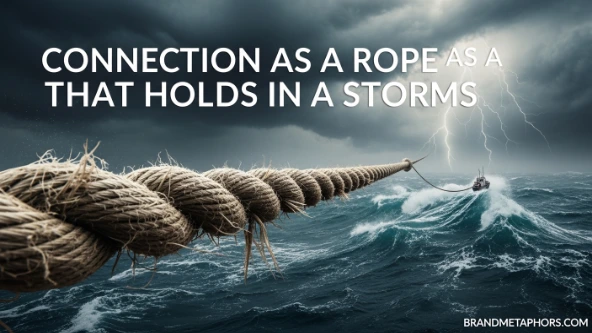
Strong relationships act like ropes that support us during difficult times.
Meaning & Explanation: This metaphor emphasizes strength, reliability, and support.
Example Sentence: “When everything fell apart, their friendship became the rope he held onto.”
10. How to Use Metaphors for Connection in Daily Life and Writing
Metaphors are not just literary tools—they shape how we think and communicate.
Practical Tips:
- In writing, use metaphors to make emotional scenes more vivid.
- On social media, replace plain statements with imagery (e.g., “friendship is a flame we keep alive”).
- In daily conversation, metaphors can soften difficult truths or deepen meaning.
Exercise: Rewrite this sentence using a metaphor: “I miss my friend.” Now try: “My days feel like a room missing a familiar light.”
Conclusion
Metaphors for connection remind us that relationships are not simple transactions—they are living systems of meaning, emotion, and shared experience. Whether we imagine bridges, flames, rivers, or threads, each metaphor helps us see connection as something dynamic and precious.
In a world that often feels fragmented, these images bring coherence. They remind us that even when we feel distant, we are still part of something larger—woven, flowing, and glowing in ways we may not always see but always feel.
FAQs: Metaphors for Connection
1. What are metaphors for connection? They are symbolic comparisons (like bridges or threads) used to describe relationships and emotional bonds.
2. Why are metaphors important in describing relationships? They help express complex emotions in simple, vivid imagery that is easier to understand.
3. Can metaphors improve writing? Yes, they make writing more engaging, emotional, and memorable.
4. What is a common metaphor for friendship? Friendship is often compared to a garden, flame, or bridge.
5. How can I create my own metaphors? Think of an emotion, then compare it to something physical in nature or daily life that shares similar qualities.