
Have you ever sat through a meeting that felt longer than a winter night? Maybe you have read a book chapter that seemed to stretch endlessly, or listened to a story that wandered without direction. In moments like these, we often search for colorful ways to describe the feeling. Simply saying something is “boring” can feel dull itself. That is where figurative language becomes powerful.
Metaphors help us paint vivid pictures with words. They transform an ordinary description into something memorable and emotional. Instead of saying a class was boring, you might describe it as a desert with no oasis in sight. Instantly, readers and listeners understand the feeling more deeply.
Learning creative comparisons for dull situations improves writing, storytelling, communication, and even social media content. Whether you are a student, blogger, novelist, teacher, or casual writer, these expressions can make your language more engaging.
In this guide, you will discover imaginative ways to describe dullness, understand their meanings, see examples in action, and learn how to create your own vivid comparisons. Let’s explore the world of figurative language and bring life to one of life’s most common experiences.
Why Metaphors Make Dull Things Interesting
The Power of Visual Language
A metaphor turns an abstract feeling into a concrete image. Instead of merely stating that something lacks excitement, it allows readers to see, hear, or feel that lack of energy.
For example:
- “The lecture was a desert.”
- “The movie was a sleeping turtle.”
Both create stronger impressions than simply saying “It was boring.”
Creating Emotional Connection
People remember images better than plain statements. Metaphors tap into emotions and experiences that everyone understands.
When readers encounter a strong comparison, they instantly relate to the feeling being described.
Making Writing More Memorable
Writers use figurative language because it leaves a lasting impression. A unique metaphor can stay in a reader’s mind long after the sentence ends.
A Desert Without an Oasis
Meaning and Explanation
A desert is vast, empty, and seemingly endless. Comparing something dull to a desert suggests a lack of excitement, variety, or reward.
Example Sentence
“The training session was a desert without an oasis, and every minute felt like an hour.”
Alternative Expressions
- Endless wasteland
- Dry landscape
- Empty horizon
Sensory Details
Imagine blazing heat, endless sand, and no signs of life. The image perfectly captures mental exhaustion and monotony.
Mini Story
A student once described a three-hour history lecture as “walking across a desert while carrying a backpack full of bricks.” Everyone in the class immediately understood the feeling.
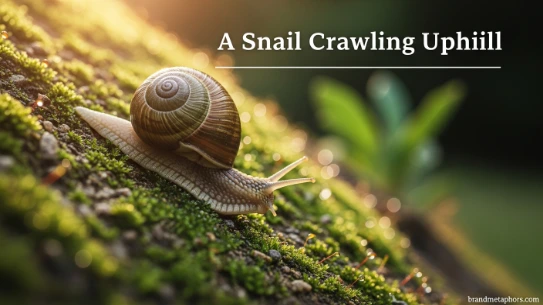
A Snail Crawling Uphill
Meaning and Explanation
This metaphor emphasizes extreme slowness. Events that move at a painfully slow pace often feel boring.
Example Sentence
“The presentation moved like a snail crawling uphill.”
Alternative Expressions
- Slow-motion parade
- Crawling shadow
- Lazy river
Emotional Effect
This comparison creates frustration because the listener imagines progress happening almost imperceptibly.
Real-Life Application
Many people use similar imagery when talking about traffic jams, lengthy meetings, or slow internet connections.
A Broken Record
Meaning and Explanation
A broken record repeats the same sound endlessly. This metaphor describes repetitive conversations, tasks, or stories.
Example Sentence
“His speech became a broken record after the first ten minutes.”
Alternative Expressions
- Endless loop
- Repeating echo
- Stuck melody
Cultural Reference
Before digital music, damaged records would repeat the same section repeatedly. The phrase remains popular because repetition often leads to boredom.
Writing Tip
Use this metaphor when describing situations where nothing new is happening.
An Empty Waiting Room
Meaning and Explanation
Waiting rooms often symbolize inactivity and anticipation. An empty waiting room feels especially lifeless.
Example Sentence
“The party felt like an empty waiting room on a rainy afternoon.”
Alternative Expressions
- Silent hallway
- Vacant station
- Forgotten lobby
Sensory Imagery
Picture flickering lights, quiet walls, and the ticking of a clock. The atmosphere instantly suggests dullness.
A Sleeping Turtle
Meaning and Explanation
Turtles already move slowly. A sleeping turtle suggests almost complete stillness.
Example Sentence
“The plot moved like a sleeping turtle.”
Alternative Expressions
- Frozen statue
- Motionless cloud
- Parked train
Why It Works
The image combines slowness and inactivity, making it a powerful symbol for boring experiences.
Storytelling Use
Novelists often employ animal imagery because it creates memorable mental pictures.
How Writers Use Metaphors for Dull Situations
Building Stronger Descriptions
Good writers avoid repeating simple words. Instead of using “boring” repeatedly, they create fresh comparisons.
Enhancing Character Voices
Characters become more realistic when they describe experiences creatively.
Example:
Instead of saying:
“The movie was boring.”
A character might say:
“The movie was a dusty road that never reached a destination.”
Increasing Reader Engagement
Creative imagery keeps readers interested even when discussing dull subjects.
Creating Your Own Metaphors
Step 1: Identify the Feeling
Ask yourself:
What kind of boredom is it?
- Slow boredom
- Repetitive boredom
- Empty boredom
- Frustrating boredom
Step 2: Find a Matching Image
Think of objects, places, or experiences that create similar feelings.
Examples:
- Desert
- Snail
- Waiting room
- Empty road
Step 3: Connect Them
Create a direct comparison.
Example:
“The meeting was a train stuck in the snow.”
Practice Prompt
Describe:
- A boring class
- A dull television show
- A repetitive job
Using your own original comparisons.
Common Themes Found in Metaphors for Dullness
Slowness
Many comparisons focus on slow movement.
Examples:
- Snail
- Turtle
- Lazy river
Emptiness
Others emphasize a lack of excitement.
Examples:
- Desert
- Empty room
- Blank wall
Repetition
Some highlight the feeling of hearing or seeing the same thing repeatedly.
Examples:
- Broken record
- Endless loop
- Echo chamber
Stagnation
These metaphors suggest no progress.
Examples:
- Stuck car
- Frozen pond
- Parked train
Creative Exercises to Practice Figurative Language
Exercise 1: Compare Everyday Activities
Choose an activity you find dull.
Then complete:
“This activity is a __________.”
Exercise 2: Create Three New Images
Think of:
- An animal
- A place
- An object
Use each to describe boredom.
Exercise 3: Story Expansion
Write a short paragraph using one metaphor.
Example:
“The classroom was a desert. The clock hung on the wall like a distant mirage, and every second seemed buried beneath endless dunes of time.”
Challenge Activity
Create five unique comparisons without using deserts, snails, or waiting rooms.
This develops creativity and strengthens writing skills.
Bonus Tips for Using Metaphors in Writing and Social Media
Keep Images Relatable
Choose comparisons people understand immediately.
Good Example:
“The meeting was a snail race.”
Less Effective Example:
“The meeting was a forgotten quantum fluctuation.”
Match Tone and Audience
Funny content can use humorous comparisons.
Professional writing may require more subtle imagery.
Avoid Overuse
One strong metaphor often works better than several weak ones.
Use Sensory Details
Add sounds, sights, textures, and emotions.
Example:
“The room was an abandoned theater filled with silence and dust.”
Improve Social Media Posts
Creative comparisons attract attention.
Example:
“Today’s meeting was a desert marathon with no finish line.”
Such posts are more likely to spark reactions and engagement.
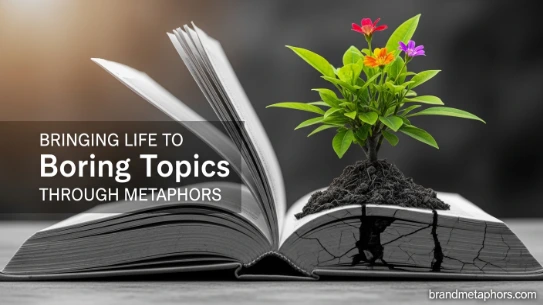
Bringing Life to Boring Topics Through Metaphors
Transforming Ordinary Writing
Even mundane subjects become interesting when described vividly.
Helping Readers Feel the Experience
Strong comparisons allow readers to experience emotions rather than merely reading about them.
Building a Unique Writing Style
Writers who master figurative language develop distinctive voices.
Final Practice Prompt
Think about the most boring experience you’ve ever had.
Now describe it using:
- One place
- One animal
- One object
Turn those images into original metaphors.
The result may surprise you.
Frequently Asked Questions
What is a metaphor for something boring?
A metaphor for something boring is a figurative comparison that describes dullness through vivid imagery. Examples include a desert without an oasis, a broken record, or a sleeping turtle.
Why do writers use metaphors instead of the word boring?
Metaphors create stronger images and emotions. They help readers visualize and feel the experience rather than simply reading a plain description.
Can metaphors make writing more engaging?
Yes. Creative comparisons capture attention, improve readability, and make content more memorable for readers.
How can I create my own metaphor for boredom?
Start by identifying what kind of boredom you feel. Then think of an object, place, animal, or experience that creates a similar feeling and connect the two creatively.
Are metaphors useful in everyday conversation?
Absolutely. They make speech more expressive, humorous, and memorable. People often use figurative language naturally when describing experiences.
Conclusion
Boredom may seem like a simple feeling, but it can be described in countless creative ways. Through vivid comparisons such as deserts, broken records, waiting rooms, and sleeping turtles, writers transform ordinary descriptions into memorable images. These expressions help readers see and feel dullness rather than merely being told about it.
Whether you are crafting stories, writing blog posts, creating social media captions, or simply improving everyday communication, learning to use figurative language adds depth and personality to your words. The best comparisons often come from observation and imagination. Look around, notice the world, and connect feelings to images.
The next time you encounter a dull class, a slow meeting, or an uninteresting book, challenge yourself to describe it creatively. You may discover that even the most boring experiences can inspire surprisingly colorful language.