
Introduction: When Happiness Feels Like a Language of Light
On a quiet morning, sunlight spills through a half-open window, dust particles dancing like tiny golden secrets in the air. A child laughs somewhere outside, a kettle whistles in the kitchen, and for a brief moment the world feels lighter—almost as if it is breathing with you. Happiness often arrives like this: not as a grand announcement, but as a soft metaphor the heart instantly understands.
But how do we explain something so delicate, so deeply personal? This is where metaphors for being happy become powerful. They turn invisible emotions into vivid images we can see, feel, and share. Happiness becomes a garden, a flowing river, a sky-bound balloon—each image giving shape to something that is otherwise hard to hold.
In this article, we’ll explore rich and meaningful metaphors for happiness, uncover how they shape our thinking, and learn how to use them in writing, storytelling, and everyday life. You’ll also find creative exercises to help you build your own emotional metaphors—because sometimes, learning how to describe joy is itself a joyful act.
Understanding Metaphors for Being Happy: Turning Emotion into Imagery
Metaphors are not just literary tools—they are emotional bridges. When we say “I am happy,” we state a fact. But when we say “I am floating like a leaf on warm water,” we invite someone into the feeling.
Metaphors for happiness help us:
- Express emotions that are too complex for simple words
- Share internal experiences with others
- Deepen self-awareness and mindfulness
- Add beauty and creativity to communication
Happiness is abstract, but metaphors make it tangible. They allow us to “see” joy instead of just naming it. Across cultures and literature—from Persian poetry to modern storytelling—happiness is often described through nature, movement, light, and warmth. This is because humans naturally understand feelings through sensory experience.
When we say happiness is a “sunrise inside the chest,” we don’t just describe joy—we feel it again.
Why Metaphors Shape Emotional Wellbeing and Positive Thinking
Metaphors don’t just describe emotions; they influence how we experience them. If happiness is a fragile glass object, we might fear losing it. But if happiness is a flowing river, we might learn to move with it.
Psychologically, metaphors help reframe emotional states:
- They reduce emotional intensity by offering perspective
- They encourage acceptance rather than control
- They create visual anchors for positive memory
For example, in mindfulness practices, happiness is often described as “passing clouds in a wide sky.” This metaphor teaches that emotions are temporary and always moving.
In storytelling and culture, metaphors also shape collective understanding. A “harvest of joy” suggests happiness as something grown and earned, while a “warm hearth” suggests emotional safety and belonging.
When we choose metaphors carefully, we are also choosing how we think about life itself.
Metaphor 1: Happiness as a Sunshine Garden
Imagine happiness as a garden bathed in constant morning light. Flowers bloom not because everything is perfect, but because they are nurtured daily.
Meaning and Explanation
This metaphor suggests that happiness is cultivated, not discovered. It grows with care, attention, and patience—like watering plants or pulling weeds of negativity.
Example Sentence or Scenario
“She treated her happiness like a sunshine garden—watering it with gratitude, pruning away worry, and letting small joys bloom freely.”
Alternative Expressions
- Joy as a blooming orchard
- Happiness as a field of wildflowers
- Inner peace as a sunlit greenhouse
Sensory and Emotional Detail
You can almost smell the soil after rain, feel warm light on your skin, and hear bees moving lazily between flowers. This metaphor is gentle, grounded, and deeply nurturing.
Mini Storytelling Element
In many traditional farming communities, joy is often tied to harvest seasons. People celebrate not only abundance but also the patience it took to grow it. Similarly, happiness grows in cycles—some days bright, some days quiet, all part of the same garden.
Applying the Sunshine Garden Metaphor in Daily Life and Writing
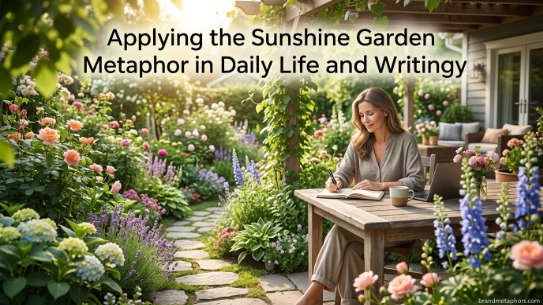
To use this metaphor practically, think of your emotions as living things.
In Daily Life
- Start your day by identifying one “flower” (a small joy)
- Remove one “weed” (a negative thought you can release)
- Water your garden with gratitude journaling
In Writing
- Use imagery like “bloom,” “sprout,” and “sunlight”
- Describe emotional growth over time
- Show contrast between dry seasons and flourishing moments
Interactive Exercise
Write three sentences describing your current mood as a garden:
- What is blooming?
- What needs care?
- What sunlight are you receiving today?
This exercise helps you transform emotional awareness into creative expression.
Metaphor 2: Happiness as a Flowing River
Happiness is not always still—it moves, shifts, and reshapes everything it touches. Like a river, it carves its own path.
Meaning and Explanation
This metaphor represents happiness as dynamic rather than fixed. It suggests that joy is something we experience through movement, not control.
Example Sentence or Scenario
“He stopped chasing perfect happiness and began to flow with life instead, like a river finding its way through stone and valley.”
Alternative Expressions
- Joy as a winding stream
- Happiness as ocean currents
- Emotional peace as flowing water
Sensory and Emotional Detail
Imagine cool water rushing over smooth stones, the sound of movement constant but calming. There is freedom in this image—nothing is forced, yet everything is alive.
Literary Reference
Many poets, including ancient Eastern writers, used rivers to symbolize life’s emotional journey. The river never resists its path; it simply adapts.
Mini Storytelling Element
A traveler once said he found peace not by reaching a destination, but by sitting beside a river and realizing it never argued with obstacles—it simply flowed around them. Happiness works the same way.
Living the River Metaphor: Emotional Flow and Acceptance
This metaphor is especially powerful for emotional resilience.
In Daily Life
- When stressed, ask: “Am I resisting the flow?”
- Accept changes instead of fighting them
- Focus on movement, not perfection
In Writing
- Use verbs like “drift,” “carry,” “bend,” “merge”
- Show transformation through time and movement
- Create scenes with natural progression instead of static moments
Interactive Prompt
Describe a difficult day as a river.
- Where was the current strong?
- Where did it calm down?
- What stones did it flow around?
This builds emotional reframing skills through storytelling.
Metaphor 3: Happiness as a Floating Balloon of Lightness
Sometimes happiness feels weightless—like something lifting you gently above everyday worries.
Meaning and Explanation
This metaphor represents happiness as release, freedom, and emotional lightness. It is the feeling of being unburdened.
Example Sentence or Scenario
“She laughed so freely it felt like her heart had become a balloon, rising above every worry she had carried all week.”
Alternative Expressions
- Joy as floating feathers
- Happiness as drifting clouds
- Emotional freedom as lifted wings
Sensory and Emotional Detail
There is a sense of airiness—like standing on a hill where the wind feels playful instead of harsh. Everything feels slightly slower, softer, and more spacious.
Mini Storytelling Element
In many childhood memories, balloons represent celebration and freedom. Letting one go into the sky often feels like releasing a small piece of joy itself.
Using the Balloon Metaphor in Modern Expression and Social Media
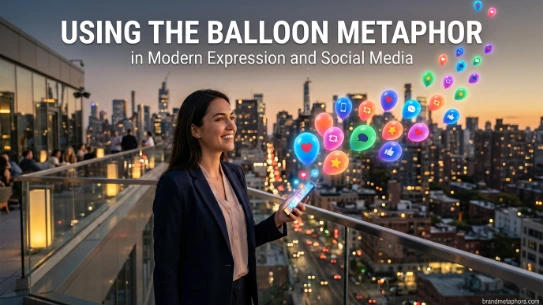
This metaphor works beautifully in creative communication.
In Daily Life
- Imagine worries tied to balloons being released
- Visualize stress lifting upward and away
- Use breathwork as “inflating lightness”
In Writing & Content Creation
- Use imagery of rising, floating, and drifting
- Combine emotional relief with visual freedom
- Create uplifting, inspirational tones
Social Media Tip
Short captions work well:
- “Let your joy rise higher than your worry.”
- “Some days, happiness feels like floating.”
Creative Exercise
Write a 5-line poem using only “air” and “sky” imagery to describe happiness.
Creative Exercises: Building Your Own Metaphors for Happiness
Now it’s your turn to create.
Exercise 1: Emotion Mapping
Choose one feeling of happiness and compare it to:
- A place
- A natural element
- A physical object
Exercise 2: Sensory Expansion
Answer:
- What does your happiness sound like?
- What color is it?
- What texture does it have?
Exercise 3: Story Transformation
Take a simple happy moment (like drinking tea or laughing with a friend) and rewrite it using metaphorical language.
Example: Instead of “I felt happy,” write “Joy spread through me like sunlight pouring into an empty room.”
These exercises help you turn everyday emotions into creative storytelling tools.
Using Happiness Metaphors in Writing, Speech, and Daily Reflection
Metaphors are not just for poets—they are for everyone who wants to communicate emotion more deeply.
Writing
- Enhance essays, blogs, and storytelling
- Create emotional depth in characters
- Replace plain statements with vivid imagery
Conversation
- Make emotional expression more relatable
- Help others understand your feelings
- Build stronger emotional connections
Self-Reflection
- Journal your emotions using imagery
- Reframe difficult feelings positively
- Develop emotional awareness over time
When you start thinking in metaphors, even ordinary days feel more meaningful.
Conclusion
Happiness is not one fixed thing—it is a collection of experiences, sensations, and moments that resist simple explanation. That is why metaphors matter. They allow us to translate joy into gardens, rivers, balloons, and light.
When you see happiness as something living and symbolic, you begin to notice it more often—in small conversations, quiet mornings, and unexpected laughter.
And perhaps the greatest truth of all is this: happiness is not only something we feel, but something we learn to describe, shape, and share.
FAQs: Metaphors for Being Happy
1. What are metaphors for being happy?
They are figurative expressions that describe happiness using imagery, such as nature, light, or movement.
2. Why are metaphors important for expressing emotions?
They help make abstract feelings easier to understand, visualize, and communicate.
3. Can metaphors improve writing skills?
Yes, they add depth, creativity, and emotional impact to writing and storytelling.
4. How can I create my own happiness metaphors?
Start by linking your emotions to sensory experiences like colors, sounds, or natural elements.
5. Are metaphors used in daily speech or only literature?
They are widely used in everyday language, often without people realizing it.
If you’d like, I can also turn this into a blog post format with SEO title tags, meta description, and keyword optimization.