

Have you ever met someone who seemed to light up a room the moment they walked in? Or perhaps you’ve known a person whose presence felt as steady as an old oak tree standing through every storm. Human beings are complex. They carry dreams, fears, strengths, flaws, and stories that are often difficult to describe with ordinary language.
That is where metaphors become powerful. A metaphor allows us to compare a person to something else, helping us express personality, emotions, character, and behavior in a vivid and memorable way. Instead of saying someone is kind, we might call them “a ray of sunshine.” Rather than saying a person is stubborn, we might describe them as “a brick wall.”
Writers, speakers, teachers, and everyday communicators use metaphors to bring people to life in words. These creative comparisons add color to conversations, improve storytelling, and help readers form deeper emotional connections.
In this article, you’ll discover creative metaphors for describing people, learn how to use them effectively, explore examples from literature and everyday life, and practice creating your own memorable descriptions.
Understanding Metaphors for a Person
What Is a Person Metaphor?
A metaphor is a figure of speech that describes one thing as another without using “like” or “as.”
When applied to people, metaphors help capture qualities, emotions, or behaviors through symbolic comparisons.
Examples include:
- She is a lighthouse.
- He is a rock.
- They are walking encyclopedias.
These descriptions reveal much more than simple adjectives ever could.
Why Metaphors Matter
Metaphors help readers:
- Visualize personality traits.
- Feel emotional connections.
- Remember descriptions more easily.
- Create stronger writing and storytelling.
A single metaphor can paint a complete picture in just a few words.
The Power of Metaphors in Describing Personality
Bringing Character to Life
Imagine reading these two sentences:
- Sarah is dependable.
- Sarah is an anchor in every storm.
The second sentence creates a stronger image. You can almost feel the security and stability she provides.
Great writers often use metaphors because they transform ordinary descriptions into unforgettable portraits.
Creating Emotional Impact
Metaphors do more than describe. They make readers feel.
When someone is called “a candle in the darkness,” readers immediately associate them with hope, comfort, and warmth.
That emotional depth makes communication more meaningful.
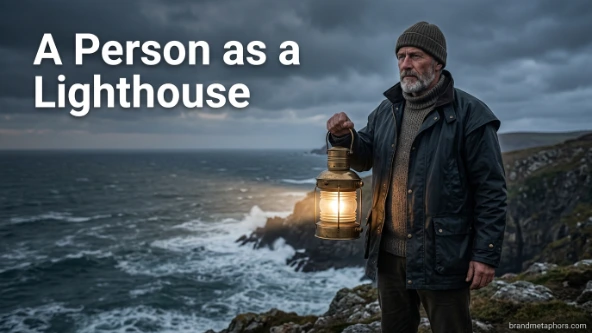
Metaphor Example #1: A Person as a Lighthouse
Meaning and Explanation
A lighthouse symbolizes guidance, safety, and hope.
Calling someone a lighthouse suggests they help others find direction during difficult times.
Example Sentence
“My grandmother was a lighthouse, guiding our family through every challenge.”
Alternative Expressions
- A beacon of hope
- A guiding star
- A northern light
- A shining lantern
Sensory and Emotional Details
Picture crashing waves, dark skies, and thick fog. Then imagine a steady beam cutting through the darkness.
That is the feeling this metaphor creates.
Mini Storytelling Example
During a difficult year, a teacher stayed after school every day to help struggling students. Many of them later said she was their lighthouse, showing them a path when they felt lost.
Metaphor Example #2: A Person as a Tree
Meaning and Explanation
Trees symbolize growth, strength, patience, and resilience.
This metaphor works especially well for people who remain steady despite life’s challenges.
Example Sentence
“My father is a mighty oak, standing strong no matter what storms arrive.”
Alternative Expressions
- An oak tree
- A redwood
- Deep roots
- A sheltering branch
Sensory and Emotional Details
Think of rough bark, rustling leaves, and roots stretching deep into the earth.
The image suggests stability and endurance.
Literary Connection
Many ancient cultures viewed trees as symbols of wisdom and life. Stories, myths, and poems often compare respected individuals to great trees because of their strength and longevity.
Metaphor Example #3: A Person as a Fire
Meaning and Explanation
Fire often represents passion, energy, creativity, and determination.
A fiery person brings excitement and enthusiasm wherever they go.
Example Sentence
“She is a wildfire of ideas, inspiring everyone around her.”
Alternative Expressions
- A spark
- A flame
- A blazing torch
- A burning ember
Sensory and Emotional Details
Imagine warmth, crackling sounds, glowing colors, and powerful movement.
This metaphor creates energy on the page.
Real-Life Scenario
Entrepreneurs, artists, and innovators are often described as flames because they motivate others and spread inspiration.
Using Nature Metaphors for a Person
Why Nature Works So Well
Nature provides endless inspiration for describing people.
Readers instantly recognize natural images and connect them with human qualities.
Popular Nature Metaphors
River
Represents adaptability and movement.
Example: “He is a river, finding a way around every obstacle.”
Mountain
Represents strength and endurance.
Example: “She remained a mountain during difficult times.”
Garden
Represents kindness and growth.
Example: “Her heart is a garden where friendships bloom.”
Writing Tip
Choose a natural image that reflects the person’s strongest characteristic.
Animal Metaphors for Describing People
Capturing Personality Through Animals
Animal comparisons have been used for centuries because they quickly communicate traits.
Common Examples
Lion
Represents courage and leadership.
Example: “He entered the meeting like a lion protecting his pride.”
Owl
Represents wisdom and knowledge.
Example: “Our professor is an owl, always ready with thoughtful advice.”
Butterfly
Represents transformation and beauty.
Example: “She emerged from hardship as a butterfly.”
Cultural References
Many folktales and legends use animals to symbolize human behavior. These symbols remain powerful in modern communication.
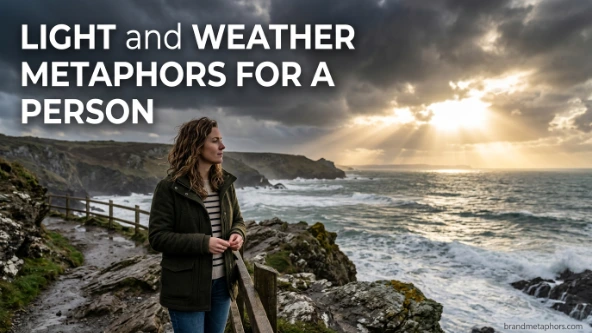
Light and Weather Metaphors for a Person
Expressing Emotions and Influence
Light and weather offer vivid ways to describe how people affect others.
Sunshine
Represents happiness and positivity.
Example: “She is sunshine on a cloudy day.”
Thunderstorm
Represents intensity and power.
Example: “He entered the room like a thunderstorm.”
Rainbow
Represents hope and optimism.
Example: “After the crisis, she became a rainbow for her family.”
Writing Tip
Weather metaphors are especially effective when describing moods and emotional impact.
Literary Metaphors for Character Development
Creating Memorable Characters
Authors often rely on metaphors to make fictional characters unforgettable.
Instead of listing traits, they create symbolic identities.
Examples
Open Book
Represents honesty and transparency.
Example: “He is an open book.”
Puzzle
Represents mystery and complexity.
Example: “She remains a puzzle nobody can fully solve.”
Mirror
Represents reflection and truth.
Example: “His words are a mirror revealing hidden realities.”
Why Readers Love Them
These metaphors encourage imagination and deeper interpretation.
Interactive Exercise: Create Your Own Person Metaphors
Exercise 1: Identify Key Traits
Choose someone you know and write three qualities.
For example:
- Kind
- Patient
- Wise
Now ask:
“What object, place, or force of nature shares those qualities?”
Possible answer:
“A library filled with warmth.”
Exercise 2: Finish the Sentence
Complete these prompts:
- My best friend is a ______.
- My teacher is a ______.
- My sibling is a ______.
- I am a ______.
Exercise 3: Build a Story
Write a short paragraph using one metaphor.
Example:
“My uncle is a bridge. Whenever disagreements divide the family, he connects everyone again.”
This exercise helps strengthen creative thinking.
How to Use Person Metaphors in Writing and Daily Life
In Creative Writing
Metaphors make stories richer and more engaging.
Example:
Instead of: “He was brave.”
Write: “He was a lighthouse standing against the storm.”
In Social Media Captions
Creative metaphors attract attention.
Examples:
- “Be a river, not a rock.”
- “Stay rooted like an oak.”
- “Shine like a lantern in the dark.”
In Speeches
Metaphors make messages memorable.
Leaders often use symbolic language because audiences remember images better than facts.
In Everyday Conversations
Metaphors add warmth and personality to communication.
They help people understand feelings and character traits more deeply.
Bonus Tips for Creating Powerful Metaphors for a Person
Focus on One Strong Trait
Avoid mixing too many comparisons.
A clear image creates a stronger impact.
Use Familiar Symbols
Choose images readers recognize easily.
Examples:
- Tree
- River
- Star
- Fire
- Mountain
Match Tone and Context
A professional biography may require different metaphors than a poem or social media post.
Appeal to the Senses
Add details involving:
- Sight
- Sound
- Touch
- Emotion
This makes metaphors more vivid.
Practice Daily
Try describing one person every day using a new metaphor.
Over time, creativity becomes natural.
Frequently Asked Questions About Metaphors for a Person
What is a metaphor for a person?
A metaphor for a person is a direct comparison that describes someone as another object, force, animal, or symbol to highlight specific traits or qualities.
Why are metaphors useful when describing people?
They create vivid images, strengthen emotional connections, and make descriptions more memorable and engaging.
What are some positive metaphors for a person?
Positive examples include:
- A lighthouse
- A ray of sunshine
- A guiding star
- An oak tree
- A beacon of hope
Can metaphors be used in everyday conversations?
Yes. People often use metaphors naturally when describing friends, family members, coworkers, and public figures.
How can I create my own metaphor for a person?
Identify the person’s strongest trait, then find an object, animal, or natural element that shares that quality and build your comparison around it.
Conclusion
Metaphors for a person are far more than decorative language. They are powerful tools that transform ordinary descriptions into memorable portraits. Whether someone is a lighthouse guiding others through darkness, a mighty oak weathering life’s storms, or a wildfire spreading inspiration, metaphors reveal deeper truths about human character.
By learning to use symbolic comparisons, you can enrich your writing, strengthen communication, and see people through a more imaginative lens. The next time you describe a friend, family member, colleague, or fictional character, look beyond simple adjectives. Search for the image, symbol, or force that truly captures who they are. You may discover that every person is a story waiting to be told through a metaphor.