
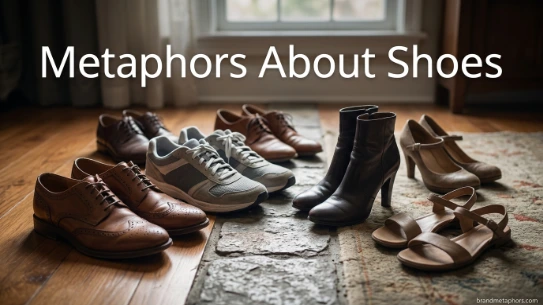
The old leather shoes sat beside the doorway like tired travelers. Their soles were worn thin, their laces frayed, and tiny creases folded across the surface like wrinkles around wise eyes. One glance at them told a story. They had crossed rainy streets, hurried through crowded mornings, wandered under moonlight, and stood still during difficult conversations. Shoes, strangely enough, often become silent witnesses to our lives.
That is why metaphors about shoes feel so powerful. Shoes are more than objects we wear. They symbolize journeys, identity, struggle, growth, freedom, ambition, comfort, and even heartbreak. A polished pair of dress shoes can represent confidence and success, while muddy boots may symbolize endurance and hard work. Across literature, films, songs, and everyday conversations, shoes carry emotional meaning that instantly connects with readers.
From fairy tales like Cinderella to phrases such as “walking in someone else’s shoes,” footwear has long stepped into the world of symbolism. Writers, poets, teachers, and social media creators use shoe metaphors because they are relatable and vivid. Nearly everyone understands the feeling of tight shoes, worn soles, or the excitement of brand-new sneakers.
In this article, we will explore creative metaphors about shoes, their meanings, emotional depth, cultural significance, and practical ways to use them in writing and daily life. Along the way, you’ll discover storytelling examples, creative exercises, and poetic imagery that can help your words walk farther and resonate deeper.
Shoes as a Metaphor for Life’s Journey
Life is often compared to a long road, and shoes naturally become symbols of the traveler moving through it. Every scratch, stain, and crease mirrors experiences we collect over time.
A pair of worn shoes can symbolize resilience. They suggest someone who has survived storms, disappointments, victories, and endless miles of emotional travel.
Example Metaphors
1. “His shoes were maps of every road he survived.”
Meaning: Experience and endurance shape a person. Scenario: A grandfather reflects on decades of hard work and sacrifice. Alternative Expressions:
- “Her boots carried the dust of a thousand battles.”
- “His soles remembered what his heart tried to forget.”
This metaphor works beautifully in memoirs, inspirational writing, or emotional storytelling.
2. “Life is a hallway of changing shoes.”
Meaning: People adopt different roles and identities throughout life. Emotional Detail: The image suggests growth, transformation, and adaptation.
3. “Her sneakers outran yesterday’s fears.”
Meaning: Progress and healing after hardship. Mini Storytelling: Imagine a teenager jogging at sunrise after months of anxiety. Each footstep becomes an act of reclaiming confidence.
Bonus Writing Tip
Use shoe imagery when writing about transitions:
- Graduation
- Divorce
- New careers
- Travel experiences
- Personal growth
Shoes instantly make abstract emotions feel physical and relatable.
Walking in Someone Else’s Shoes: Empathy and Understanding
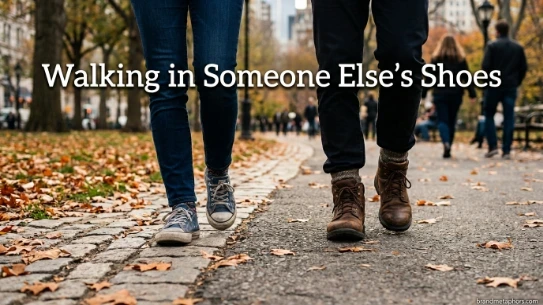
One of the most famous metaphors involving shoes is “walking in someone else’s shoes.” It means understanding another person’s experiences before judging them.
This metaphor remains timeless because shoes physically carry a person through life. To wear another person’s shoes symbolically means to feel their burdens, struggles, and emotions.
Powerful Examples
1. “Before criticizing her silence, try wearing her shoes through the storm.”
Meaning: People often hide invisible struggles.
2. “His polished shoes concealed blistered feet.”
Meaning: Success may hide pain or sacrifice.
3. “Empathy begins where your own shoes stop.”
Meaning: True compassion requires stepping beyond personal perspective.
Literary and Cultural Reference
Harper Lee’s To Kill a Mockingbird echoes this idea through the lesson about understanding others before judging them. The emotional wisdom behind this metaphor appears across cultures because compassion is universal.
Interactive Exercise
Think about someone you misunderstood recently. Write three sentences beginning with:
- “If I walked in their shoes…”
- “Perhaps their road felt…”
- “Maybe the stones beneath their feet were…”
This exercise deepens emotional writing and self-awareness.
Metaphors About Old Shoes and Memories
Old shoes often symbolize nostalgia, memory, and emotional attachment. Throwing away old footwear can feel strangely difficult because memories cling to them like dust.
A pair of old sneakers might remind someone of childhood summers, late-night adventures, or lost friendships.
Emotional Shoe Metaphors
1. “Those shoes carried echoes of another lifetime.”
Meaning: Objects preserve emotional history.
2. “Her faded boots were diaries stitched in leather.”
Meaning: Experiences leave visible marks on people and possessions.
3. “The shoes by the door still waited for footsteps that would never return.”
Meaning: Loss, grief, or absence.
Mini Storytelling Example
A widow discovers her husband’s hiking boots months after his passing. Mud still clings to the soles from their final trip together. Suddenly, the boots become more than footwear. They become memory itself.
SEO Writing Tip
If you write lifestyle or emotional blog content, shoe metaphors work well in:
- Personal essays
- Mental health writing
- Family stories
- Relationship articles
Readers connect deeply with sensory objects tied to memory.
Shoes as Symbols of Identity and Personality
People reveal parts of themselves through shoes. Bright sneakers, elegant heels, combat boots, or simple sandals all communicate personality without words.
That makes shoes excellent metaphors for identity.
Examples and Meanings
1. “His shoes announced confidence before he spoke.”
Meaning: Appearance shapes perception.
2. “She wore rebellion like combat boots.”
Meaning: Bold individuality and defiance.
3. “Her glittering heels hid a trembling heart.”
Meaning: Outward confidence may conceal vulnerability.
Cultural Reference
In fashion culture, shoes often symbolize status and self-expression. Think of Dorothy’s ruby slippers in The Wizard of Oz. They represent power, destiny, and the longing for home.
Alternative Expressions
- “Boots of independence”
- “Sneakers of freedom”
- “Heels of ambition”
- “Sandals of simplicity”
Bonus Social Media Tip
Shoe metaphors make memorable Instagram captions:
- “Still growing into these shoes.”
- “Leaving footprints, not excuses.”
- “Some roads require stronger boots.”
Short metaphors work especially well for emotional or motivational posts.
Metaphors About Tight Shoes and Emotional Pressure
Tight shoes create discomfort with every step. That physical sensation makes them powerful symbols for emotional stress, toxic situations, or restricted freedom.
Vivid Examples
1. “The relationship fit like shoes two sizes too small.”
Meaning: The situation was painful and restrictive.
2. “His responsibilities pinched like tight boots.”
Meaning: Overwhelming pressure and exhaustion.
3. “She smiled through the ache like someone dancing in painful heels.”
Meaning: Enduring suffering while pretending everything is fine.
Sensory Detail
Tight shoe metaphors work because readers can almost feel:
- The rubbing skin
- The burning pressure
- The awkward steps
That sensory connection makes emotional writing more immersive.
Creative Writing Prompt
Describe stress without using the word “stress.” Compare it to uncomfortable shoes:
- heavy boots
- cracked soles
- broken laces
- slippery heels
This strengthens metaphorical thinking.
New Shoes as Metaphors for Fresh Starts
New shoes often symbolize beginnings, optimism, and possibility. There is excitement in wearing unworn soles into unknown places.
Inspiring Examples
1. “Her new shoes squeaked with possibility.”
Meaning: A hopeful beginning.
2. “The fresh sneakers carried dreams not yet tested.”
Meaning: Ambition before hardship.
3. “Every new chapter deserves a new pair of shoes.”
Meaning: Transformation and renewal.
Real-Life Example
Athletes often wear new shoes before important competitions. The footwear becomes symbolic armor, representing confidence and readiness.
Mini Storytelling
A college freshman walks across campus in pristine white sneakers. The shoes reflect uncertainty and hope simultaneously. Every step feels like entering a larger world.
Bonus Tip for Writers
Pair shoe metaphors with movement words:
- stride
- stumble
- wander
- march
- tiptoe
- sprint
This creates more dynamic imagery.
Broken Shoes and Metaphors for Hardship
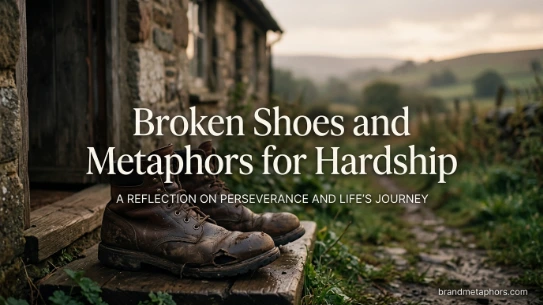
Broken or damaged shoes symbolize struggle, poverty, exhaustion, and survival. In literature, worn footwear often represents difficult journeys.
Strong Emotional Examples
1. “His torn shoes swallowed rain with every step.”
Meaning: Poverty and hardship.
2. “Their cracked boots held together like fragile hope.”
Meaning: Endurance despite adversity.
3. “She dragged her broken shoes through another impossible day.”
Meaning: Emotional exhaustion.
Literary Connection
Classic novels frequently use worn shoes to represent social class and suffering. Charles Dickens often described clothing and footwear to reveal hidden truths about characters.
Emotional Impact
Broken shoe metaphors work because they symbolize vulnerability. Readers immediately understand physical and emotional wear.
Interactive Exercise
Write a character description using only shoe imagery:
- What do their shoes look like?
- Are they polished or damaged?
- Comfortable or painful?
- Expensive or practical?
This technique subtly reveals personality and life circumstances.
Shoe Metaphors in Love and Relationships
Relationships often resemble shoes. Some fit perfectly. Others hurt after a while. Some support us during hard times, while others leave blisters behind.
Romantic Metaphors
1. “Their love fit like perfectly broken-in boots.”
Meaning: Comfortable, dependable love.
2. “He entered her life like new shoes—beautiful but difficult to trust.”
Meaning: Excitement mixed with uncertainty.
3. “Their marriage walked unevenly, like mismatched shoes.”
Meaning: Lack of harmony.
Emotional and Sensory Detail
Relationship metaphors feel stronger when paired with physical sensations:
- warmth
- pressure
- slipping
- stability
- aching feet
Real-Life Reflection
Many people keep old shoes connected to relationships:
- wedding heels
- sneakers from road trips
- shoes worn during first dates
Footwear quietly absorbs emotional history.
Bonus Social Caption Ideas
- “Love shouldn’t leave blisters.”
- “Some people feel like home-built shoes.”
- “Still tying loose ends.”
Metaphors About Shoes in Motivation and Success
Shoes are closely tied to movement and progress, making them ideal motivational symbols.
Athletes, entrepreneurs, travelers, and dreamers all rely on the imagery of stepping forward.
Motivational Examples
1. “Success begins where fear removes its shoes.”
Meaning: Courage is necessary for growth.
2. “Her ambition laced itself tighter every morning.”
Meaning: Determination strengthening over time.
3. “Dreams wear out shoes before they become reality.”
Meaning: Hard work is essential for achievement.
Cultural Example
Running shoes often symbolize persistence. Marathon runners understand that every finish line begins with painful training steps.
Mini Storytelling
A young entrepreneur walks home after another failed interview. His shoes are soaked from rain, but he keeps walking. Months later, those same shoes stand beside his first office desk.
The shoes become symbols of persistence.
Bonus Productivity Tip
Use shoe metaphors in speeches or motivational content because they create movement and momentum.
Examples:
- “Take the first step.”
- “Lace up for the challenge.”
- “Leave fear at the doorstep.”
Creative Ways to Use Shoe Metaphors in Writing and Daily Life

Shoe metaphors are versatile. They fit poetry, novels, blogs, speeches, journaling, social media, and even casual conversation.
3 Creative Strategies
1. Match the Shoe to the Emotion
Different shoes evoke different emotional tones:
- High heels = pressure or elegance
- Hiking boots = endurance
- Bare feet = vulnerability
- Sneakers = youth and freedom
2. Use Movement for Emotional Energy
Instead of saying:
- “She was nervous.”
Try:
- “She shuffled through the moment like loose shoes on slippery pavement.”
Movement adds cinematic quality.
3. Add Sensory Imagery
Include textures, sounds, or physical sensations:
- squeaking soles
- muddy boots
- clicking heels
- soaked sneakers
Readers remember vivid sensory details.
Interactive Creativity Prompt
Complete these sentences:
- “My dreams are like a pair of…”
- “Fear walks in…”
- “Hope sounds like…”
This exercise improves descriptive writing quickly.
Bonus Tip for Content Creators
Metaphorical phrases make strong:
- Pinterest quotes
- TikTok captions
- poetry posts
- motivational graphics
- journaling prompts
Short imagery often spreads farther online because it feels emotional and visual at once.
Why Shoe Metaphors Continue to Resonate Across Cultures
Shoes appear in myths, fairy tales, religion, cinema, and everyday language because they symbolize movement through life itself.
From Cinderella’s glass slipper to the phrase “fill someone’s shoes,” footwear reflects identity, destiny, struggle, and transformation.
Universal Emotional Connections
Shoes represent:
- journeys
- social class
- labor
- ambition
- memory
- empathy
- change
Almost everyone has experienced:
- uncomfortable shoes
- beloved old footwear
- exciting new shoes
- shoes tied to important moments
That shared experience gives shoe metaphors emotional universality.
Poetic Reflection
A person may forget what road they walked, but sometimes their shoes remember. The scratches, dust, and worn soles quietly archive human existence.
And perhaps that is why shoe metaphors endure. They remind us that life is not only about destinations. It is about the footprints left behind.
Frequently Asked Questions About Metaphors About Shoes
1. Why are shoes commonly used in metaphors?
Shoes symbolize journeys, identity, movement, struggle, and personality. Because everyone wears shoes, the imagery feels familiar and emotionally relatable.
2. What does “walking in someone else’s shoes” mean?
It means trying to understand another person’s experiences and emotions before judging them.
3. How can writers use shoe metaphors effectively?
Writers can connect shoe imagery to emotions, life stages, relationships, or challenges. Adding sensory details makes the metaphor more vivid and memorable.
4. What do old shoes symbolize in literature?
Old shoes often represent memory, hardship, resilience, nostalgia, or emotional attachment to the past.
5. Are shoe metaphors useful for social media captions?
Yes. Shoe metaphors create emotional, visual, and motivational captions that are easy for audiences to relate to and share.
Conclusion
Shoes may seem ordinary, yet they carry extraordinary symbolic power. They walk beside us through heartbreak, ambition, exhaustion, celebration, and change. A worn boot can tell a story of survival. A shining heel may hide insecurity. A pair of running shoes can symbolize hope racing toward tomorrow.
Metaphors about shoes resonate because they ground emotions in physical experience. Readers can feel the ache of tight shoes, the comfort of familiar soles, or the thrill of stepping into something new. These metaphors transform abstract feelings into vivid imagery that lingers long after the sentence ends.
Whether you are writing poetry, crafting stories, posting captions, or simply reflecting on life, shoe metaphors can help your words travel farther. After all, every person leaves footprints somewhere. And every pair of shoes carries a story worth telling.