
Introduction
Good writing is not only about using the right words—it is also about using the right grammar at the right time. Whether you are writing a school essay, sending an email, creating a story, or speaking in everyday conversations, choosing the correct verb tense helps your message become clear and professional.
Figurative language, such as metaphors, similes, idioms, and descriptive expressions, makes writing more colorful and engaging. However, even the most beautiful creative writing can become confusing if the grammar is incorrect. Strong grammar works together with figurative language to improve storytelling, poetic expression, vocabulary enhancement, and overall writing skills.
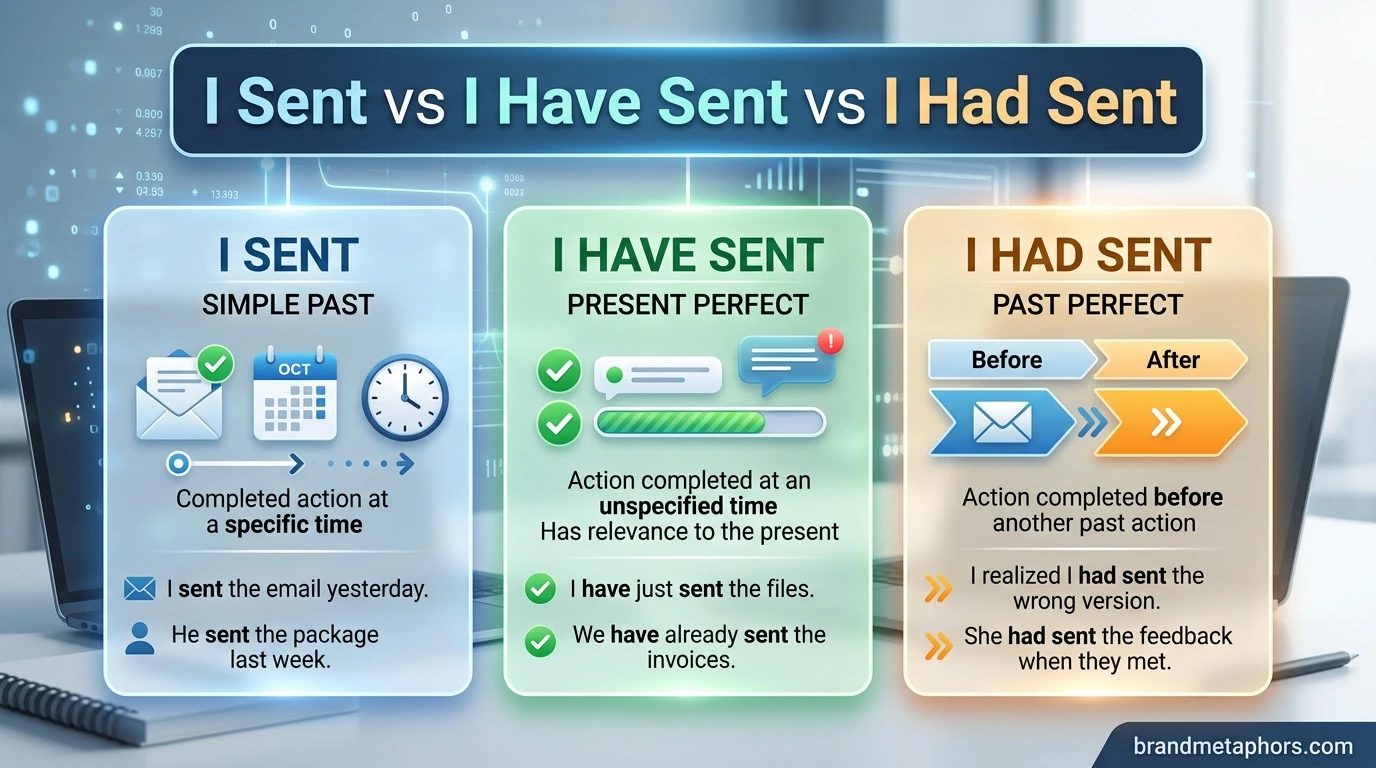
One grammar topic that often confuses English learners is the difference between I sent vs I have sent vs I had sent. These three forms all describe the action of sending something, but they refer to different times and situations.
In this guide, you’ll learn the meaning of each tense, when to use it, common mistakes to avoid, comparison tables, real-life examples, creative writing tips, practice exercises, and much more. By the end, you’ll confidently know which expression fits every situation.
Why Verb Tenses Matter in English
Verb tenses tell readers and listeners when an action happened. Using the wrong tense can completely change the meaning of a sentence.
Consider these examples:
- I sent the email yesterday.
- I have sent the email.
- I had sent the email before the meeting.
All three describe sending an email, but each gives different information about time.
Correct verb tense helps with:
- Better communication
- Clear academic writing
- Professional emails
- Creative writing
- Storytelling
- Business communication
- Speaking naturally
- Writing exams
Understanding verb tenses is one of the most valuable grammar skills for English learners.
What Does “I Sent” Mean?
“I sent” is the Simple Past Tense.
It describes an action that happened at a specific time in the past.
Structure
Subject + Sent
Example:
I sent the package.
Usually, the time is known or understood.
Examples:
- I sent the letter yesterday.
- I sent your homework this morning.
- I sent the invitation last week.
- I sent the files before lunch.
- I sent the message after school.
When to Use
Use “I sent” when:
- The action is finished.
- The time is mentioned.
- The event happened in the past.
Examples:
- I sent the report at 9 a.m.
- I sent my application yesterday.
- I sent her birthday card last month.
What Does “I Have Sent” Mean?
“I have sent” is the Present Perfect Tense.
It connects the past with the present.
The exact time is not important.
Structure
Subject + Have + Past Participle
Example:
I have sent the email.
This means the action is complete, and it matters now.
Examples:
- I have sent the documents.
- I have sent the payment.
- I have sent your homework.
- I have sent my resume.
- I have sent the invitation.
When to Use
Use this tense when:
- The action has just finished.
- The result matters now.
- The exact time isn’t mentioned.
Examples:
- I have sent the report. Please check it.
- I have sent your order confirmation.
- I have sent all the required documents.
What Does “I Had Sent” Mean?

“I had sent” is the Past Perfect Tense.
It describes an action that happened before another action in the past.
Structure
Subject + Had + Past Participle
Example:
I had sent the email before the meeting started.
There are two past events.
The sending happened first.
Examples:
- I had sent the invitation before they arrived.
- I had sent my assignment before the deadline.
- I had sent the payment before the website crashed.
- I had sent the message before my phone died.
- I had sent everything before leaving home.
When to Use
Use it when:
- Comparing two past events.
- Showing which happened first.
- Writing stories or narratives.
Quick Comparison Table
ExpressionTenseTimeMain PurposeExampleI sentSimple PastFinished pastAction happenedI sent the email yesterday.I have sentPresent PerfectPast connected to presentResult matters nowI have sent the email.I had sentPast PerfectBefore another past eventEarlier past actionI had sent the email before lunch.
Side-by-Side Comparison Examples
Example 1
I sent the email yesterday.
The action happened yesterday.
I have sent the email.
The email is already sent.
The receiver should have it now.
I had sent the email before the meeting.
The email was sent first.
Then the meeting happened.
Example 2
Simple Past
I sent the package last Monday.
Present Perfect
I have sent the package.
Past Perfect
I had sent the package before the store closed.
Example 3
Simple Past
I sent my homework yesterday.
Present Perfect
I have sent my homework.
Past Perfect
I had sent my homework before the teacher asked.
When to Use Each One
Use “I Sent”
Choose this tense when:
- Yesterday
- Last week
- Last month
- In 2024
- Two hours ago
- Earlier today
Examples
- I sent the invitation yesterday.
- I sent the payment this morning.
Use “I Have Sent”
Choose this tense when:
- The result matters now.
- The time isn’t important.
- You’re giving someone an update.
Examples
- I have sent the files.
- I have sent your receipt.
- I have sent the application.
Use “I Had Sent”
Choose this tense when another past action follows.
Examples
- I had sent the email before my computer stopped working.
- I had sent the money before the bank closed.
Common Mistakes English Learners Make

Mistake 1
❌ I have sent it yesterday.
Correct:
✅ I sent it yesterday.
Reason:
Present Perfect does not normally use finished time words like yesterday.
Mistake 2
❌ I had sent it yesterday.
Correct:
✅ I sent it yesterday.
Reason:
Past Perfect needs another past event.
Mistake 3
❌ I sent the report. Please check now.
Better:
✅ I have sent the report. Please check now.
Reason:
The report affects the present.
Mistake 4
❌ I have sent it before you arrived.
Correct:
✅ I had sent it before you arrived.
Reason:
Both actions happened in the past.
Sentence Examples for Everyday Situations
School
- I sent my assignment yesterday.
- I have sent my project.
- I had sent my homework before class started.
Office
- I sent the report yesterday.
- I have sent the invoice.
- I had sent the contract before the meeting.
Family
- I sent Mom a birthday card.
- I have sent Dad the photos.
- I had sent Grandma a letter before traveling.
Online Shopping
- I sent the return request.
- I have sent the payment.
- I had sent my order details before contacting support.
Using These Tenses in Creative Writing
Strong grammar helps readers follow the timeline in stories.
Example Story
I had sent the warning letter before the storm arrived.
Later that afternoon, I sent another message to everyone in town.
Now, I have sent all the updates and can finally relax.
Notice how each tense shows a different point in time.
Creative writers often combine these tenses with descriptive language, figurative language, simile examples, metaphor examples, and literary devices to make stories easier to understand and more engaging.
Example:
I had sent the message before hope disappeared like the last light of sunset.
The simile adds emotion while the verb tense keeps the timeline clear.
Figurative Language and Grammar Working Together
Good grammar supports creative expression.
Examples include:
Simile
I have sent my dreams into the world like birds leaving their nest.
Metaphor
I sent my words as bridges between hearts.
Idiom
I had sent the letter before deciding to call it a day.
Personification
I have sent the invitation, and hope is already knocking at the door.
These examples show how correct verb tenses and figurative language work together to improve descriptive language, poetic expression, and writing skills.
Tone Usage: Choosing the Right Expression

SituationBest ChoiceWhyTalking about yesterdayI sentFinished past actionGiving a work updateI have sentPresent result mattersTelling a storyI had sentEarlier past actionAcademic writingDepends on contextMatch the timelineProfessional emailI have sentSounds current and politeHistorical writingI had sentClarifies sequence
When to Avoid Each Expression
Avoid I sent when discussing something that has immediate relevance without mentioning a past time.
Cheerful I have sent with specific finished-time expressions like:
- yesterday
- last year
- last Monday
- two hours ago
Avoid I had sent if there is only one past action.
Incorrect:
I had sent the package yesterday.
Correct:
I sent the package yesterday.
Practice Exercises
Exercise 1
Choose the correct answer.
- I _____ the email yesterday.
A. have sent
B. sent
C. had sent
Answer: B
- I _____ the report. Please review it.
A. sent yesterday
B. have sent
C. had sent yesterday
Answer: B
- I _____ the homework before class began.
A. had sent
B. sent
C. have sent
Answer: A
Exercise 2
Correct the mistakes.
- I have sent it yesterday.
Answer:
I sent it yesterday.
- I had sent the package yesterday.
Answer:
I sent the package yesterday.
- I sent the files. Please check them now.
Better:
I have sent the files. Please check them now.
Exercise 3
Fill in the blanks.
- I ______ my application last week.
sent
- I ______ all the documents.
have sent
- I ______ the invitation before the event was canceled.
had sent
Tips to Remember the Difference
- Simple Past = finished action at a known time.
- Present Perfect = completed action with a present result.
- Past Perfect = earlier action before another past action.
- Look for time words such as yesterday, last week, or before to help choose the correct tense.
- Ask yourself whether the focus is on when the action happened or why it matters now.
Frequently Asked Questions (FAQs)
1. Is “I have sent” more polite than “I sent”?
Not necessarily. “I have sent” is often used in professional emails because it emphasizes that the task is complete and relevant now. “I sent” is equally correct when referring to a finished time.
2. Can I say “I have sent it yesterday”?
No. This is incorrect. Use “I sent it yesterday” because yesterday is a finished time expression.
3. When should I use “I had sent”?
Use it when describing an action that happened before another action in the past.
Example: I had sent the report before the meeting began.
4. Which tense is most common in business emails?
Present Perfect is very common.
Example:
I have sent the requested documents.
5. How can I remember the three forms easily?
Think of this simple timeline:
- I sent → one finished action in the past.
- I have sent → finished action connected to the present.
- I had sent → action completed before another past event.
Conclusion
Mastering the difference between I sent, I have sent, and I had sent is an important step toward becoming a confident English speaker and writer. Although all three forms describe the action of sending something, each one serves a different purpose. The Simple Past focuses on a completed action at a specific time, the Present Perfect highlights a completed action with present importance, and the Past Perfect shows that one past action happened before another.
Using these tenses correctly improves clarity in conversations, academic assignments, professional emails, and creative writing. When combined with figurative language, literary devices, similes, metaphors, idioms, descriptive language, and thoughtful word choice, accurate grammar makes your writing more engaging and effective. Practice recognizing time clues, compare examples, and write your own sentences regularly. With consistent practice, choosing the correct tense will become natural, helping you communicate with confidence in every situation.