
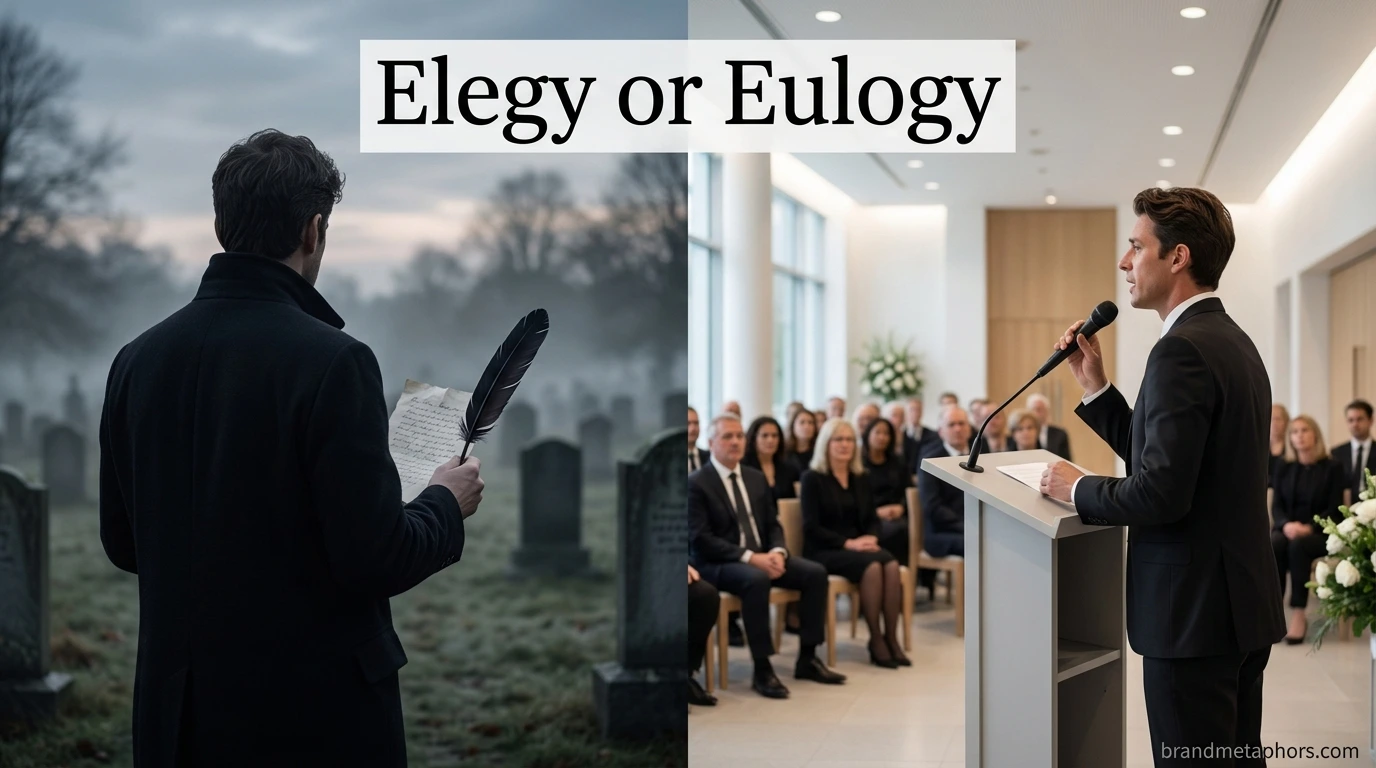
Figurative language makes writing more powerful, emotional, and memorable. It helps writers express feelings, ideas, and experiences in creative ways. Whether you are writing poetry, speeches, essays, or stories, understanding literary terms improves communication and writing skills. One common area of confusion is elegy or eulogy. These two words are related to remembering someone who has died, but they have different meanings and uses.
This detailed guide will help students, writers, and English learners understand the meaning, differences, examples, sentence usage, common mistakes, and practical applications of elegies and eulogies.
What Does Elegy or Eulogy Mean?
Many people confuse these terms because both are connected with death, remembrance, and tribute.
TermMeaningFormElegyA poem or literary work expressing sorrow for someone who has died.Poetry/LiteratureEulogyA speech or written tribute praising a person, usually delivered at a funeral.Speech/Prose
An elegy is generally poetic and emotional, while a eulogy is a spoken or written tribute celebrating a person’s life.
Understanding an Elegy
An elegy is a type of poem that mourns the death of a person. It often expresses grief, reflection, remembrance, and acceptance.
Characteristics of an Elegy
- Expresses sadness and loss
- Honors the deceased
- Uses poetic expression
- Contains figurative language
- Reflects on life and death
- May offer comfort or hope
Simple Example of an Elegy
The garden blooms where you once stood, Yet silence fills the morning wood. Though gone from sight, your memory stays, A guiding light through cloudy days.
This short poem shows sorrow while honoring the memory of someone who has passed away.
Understanding a Eulogy
A eulogy is a speech given to remember and praise a person who has died. It is commonly presented during funerals, memorial services, or celebrations of life.
Characteristics of a Eulogy
- Focuses on achievements and character
- Shares memories and stories
- Celebrates the person’s life
- Provides comfort to family and friends
- Uses respectful language
- Often includes personal experiences
Simple Example of a Eulogy
Today, we remember Sarah not only for her kindness but also for the joy she brought into every room. Her generosity touched countless lives, and her memory will remain with us forever.
Unlike an elegy, this example is written like a speech rather than a poem.
Key Differences Between Elegy and Eulogy
The easiest way to remember the difference is:
FeatureElegyEulogyTypePoemSpeechPurposeExpress griefPraise and rememberStylePoeticConversationalUse of Literary DevicesExtensiveModerateUsually PresentedIn literature or poetryAt funeralsToneSad and reflectiveRespectful and celebratory
Both honor a deceased person, but they do so in different ways.
Figurative Language in Elegies
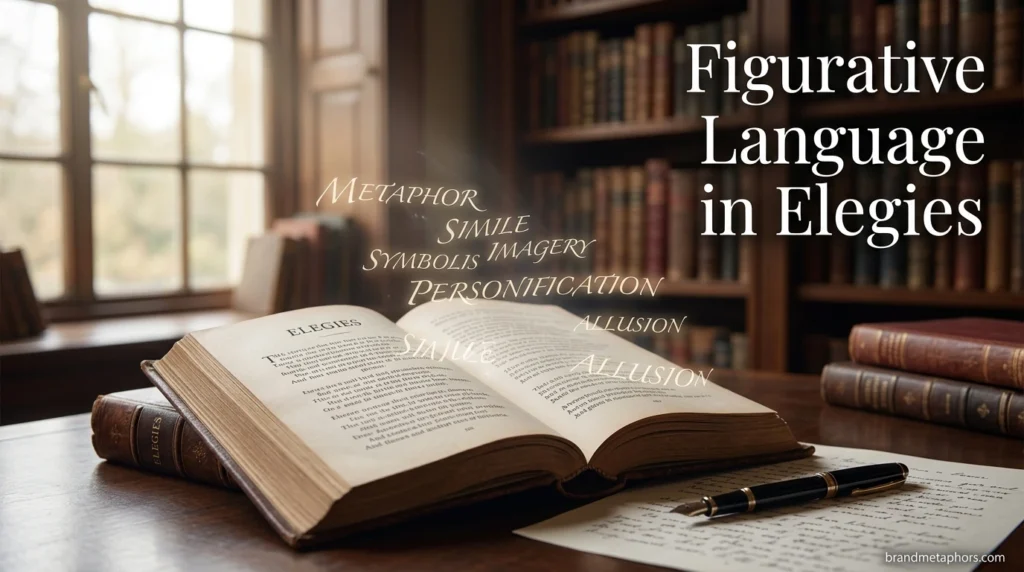
Elegies often contain rich figurative language to express emotions.
Metaphor Examples
A metaphor compares two things without using “like” or “as.”
Examples:
- Her life was a shining star.
- His memory is a lighthouse in the storm.
- Time is a thief that stole our friend.
Simile Examples
A simile compares things using “like” or “as.”
Examples:
- She was as gentle as spring rain.
- His voice echoed like distant music.
- Memories linger like morning mist.
Personification Examples
Personification gives human qualities to non-human things.
Examples:
- The wind whispered her name.
- The moon watched over us.
- The flowers bowed in sadness.
These literary devices create emotional and descriptive language.
Tone and Emotional Impact
Tone refers to the writer’s attitude toward a subject.
Common Tones in an Elegy
- Sad
- Reflective
- Peaceful
- Respectful
- Hopeful
Common Tones in a Eulogy
- Appreciative
- Loving
- Respectful
- Inspirational
- Celebratory
Example
Elegy Tone:
The empty chair remains untouched, reminding us of a cherished presence now gone.
Eulogy Tone:
We are grateful for the laughter, wisdom, and love he shared throughout his life.
Sentence Examples
Here are practical sentence examples for both words.
Elegy in Sentences
- The poet wrote an elegy for his late friend.
- Her elegy captured the sadness of loss beautifully.
- Students studied a famous elegy in literature class.
- The elegy used vivid imagery and symbolism.
- The writer composed an elegy to honor his grandmother.
Eulogy in Sentences
- His daughter delivered a heartfelt eulogy at the funeral.
- The eulogy highlighted her kindness and generosity.
- Friends helped prepare the eulogy before the memorial service.
- The eulogy brought comfort to grieving family members.
- Everyone was moved by the touching eulogy.
Literary Devices Commonly Used in Elegies
Literary devices enhance emotional expression and creativity.
Imagery
Imagery appeals to the senses.
Example:
Golden leaves drifted through the silent autumn air.
Symbolism
Symbols represent deeper meanings.
Examples:
- Dove = peace
- Candle = remembrance
- Sunset = end of life
Alliteration
Repetition of beginning sounds.
Example:
Silent shadows softly spread.
Repetition
Repeating words for emphasis.
Example:
We remember, cherish. We honor.
These devices strengthen poetic expression and vocabulary enhancement.
When to Use an Elegy
Use an elegy when:
- Writing poetry about loss
- Studying literature
- Expressing grief creatively
- Honoring someone through verse
- Practicing creative writing
Example Situations
- School poetry assignments
- Literary competitions
- Personal remembrance poems
- Memorial publications
When to Use a Eulogy

Use a eulogy when:
- Speaking at a funeral
- Preparing a memorial speech
- Celebrating someone’s life
- Sharing personal memories
- Offering comfort to others
Example Situations
- Funeral services
- Memorial ceremonies
- Celebration-of-life events
- Tribute gatherings
When to Avoid Using Them
Avoid an Elegy When
- You need a factual report.
- You are writing business documents.
- The audience expects objective information.
Avoid a Eulogy When
- Writing academic analysis.
- Creating fictional poetry.
- Discussing unrelated professional topics.
Choosing the correct form improves communication and clarity.
Common Mistakes Learners Make
1. Thinking They Mean the Same Thing
Incorrect:
She read an elegy at the funeral.
This may be correct only if she read a poem.
More commonly:
She delivered a eulogy at the funeral.
2. Using Eulogy for Poetry
Incorrect:
The poet wrote a beautiful eulogy.
Better:
The poet wrote a beautiful elegy.
3. Ignoring Tone
A tribute should remain respectful and appropriate.
4. Overusing Dramatic Language
Too much emotional language may sound unnatural.
5. Confusing Speech with Poem
Remember:
- Poem = Elegy
- Speech = Eulogy
Creative Writing Tips

Understanding these terms improves writing skills and descriptive language.
For Writing Elegies
- Use vivid imagery.
- Include metaphor examples.
- Add simile examples.
- Focus on emotions.
- Create meaningful symbolism.
For Writing Eulogies
- Share personal stories.
- Highlight positive qualities.
- Use sincere language.
- Keep the speech organized.
- End with a memorable tribute.
Example Opening for an Elegy
Beneath the quiet evening sky, memories bloom like flowers that never fade.
Example Opening for a Eulogy
Today we gather to celebrate a remarkable life filled with kindness, courage, and love.
Practice Exercises
Exercise 1: Identify the Type
Determine whether each example is an elegy or a eulogy.
- A poem mourning a friend’s death.
- A funeral speech praising a loved one.
- A literary work reflecting on loss.
- A memorial address sharing memories.
Answers:
- Elegy
- Eulogy
- Elegy
- Eulogy
Exercise 2: Complete the Sentence
- The minister delivered a ______ at the funeral.
- The poet wrote an ______ for his mentor.
Answers
- Eulogy
- Elegy
Exercise 3: Create Figurative Language
Write:
- One metaphor about remembrance.
- One simile about grief.
- One example of personification.
This exercise strengthens vocabulary enhancement and creative writing skills.
Quick Comparison Summary
QuestionElegyEulogyIs it poetry?YesNoIs it a speech?NoYesExpresses grief?YesYesPraises a person?SometimesYesUses poetic devices heavily?YesUsually lessCommon at funerals?SometimesVery common
Frequently Asked Questions (FAQs)
1. What is the main difference between an elegy and a eulogy?
An elegy is a poem expressing sorrow and remembrance, while a eulogy is a speech praising and honoring a deceased person.
2. Can an elegy be read at a funeral?
Yes. An elegy may be read during a funeral, but it remains a poem rather than a speech.
3. Does a eulogy have to be sad?
No. A eulogy can include humor, happy memories, and celebrations of life while remaining respectful.
4. Are literary devices important in elegies?
Yes. Imagery, symbolism, metaphors, similes, and other literary devices help convey emotions effectively.
5. Why do English learners confuse these words?
Both relate to remembering someone who has died, but one is poetry and the other is a speech.
Conclusion
Understanding the difference between an elegy and a eulogy is important for students, writers, and English learners. An elegy is a poetic expression of grief and remembrance, often filled with figurative language, literary devices, metaphors, similes, imagery, and emotional reflection. A eulogy, on the other hand, is a speech that celebrates and honors a person’s life, character, and achievements.
By learning their meanings, sentence examples, tone, usage, and common mistakes, you can communicate more accurately, improve writing skills, strengthen vocabulary, and create more meaningful and effective pieces of writing. Whether you are studying literature, preparing a memorial speech, or exploring creative writing, knowing when to use each term will help you express ideas with confidence and clarity.