
1. Introduction: Figurative Language & Communication
Language is not only about grammar rules. It is also about expression, imagination, and meaning. When we use figurative language, we make our writing more powerful and interesting. It helps readers see pictures in their minds.
For example, instead of saying “he is powerful,” a writer might say “he is a lion in the jungle of business.” This is called a metaphor. Such tools improve creative writing, descriptive language, vocabulary enhancement, and communication skills.
Figurative language also improves understanding in semantic SEO and NLP (Natural Language Processing) because search engines understand meaning, not just words. That is why writers use similes, metaphors, idioms, and descriptive phrases to make content richer and more meaningful.
In this article, we will explore meaning, comparisons, and writing usage in a simple and educational way.
2. Understanding Figurative Language in Writing and SEO
Figurative language is when words are used in a non-literal way to create strong meaning.
Common types include:
- Similes (as brave as a lion)
- Metaphors (time is money)
- Idioms (spill the beans)
- Personification (the wind whispered)
Why it matters in writing:
- Improves creative writing skills
- Enhances descriptive language
- Makes content engaging and emotional
- Helps storytelling in essays and blogs
In SEO and NLP:
Search engines understand related meaning (LSI keywords). For example:
- “strong organization”
- “criminal network”
- “business syndicate”
These help build topic authority.
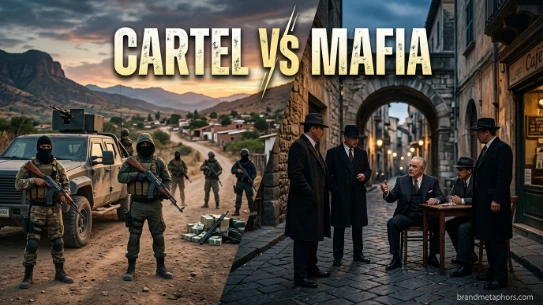
3. What is Cartel vs Mafia in Meaning and Context
The term cartel vs mafia is often used in discussions about organized groups, power structures, and illegal networks.
A cartel is generally a group of organizations or businesses that work together to control prices or supply in a market. A mafia refers to a secret criminal organization involved in illegal activities like protection rackets, smuggling, and control through fear.
Both words are also used metaphorically in writing to describe powerful groups or systems that operate in secret or control others.
Understanding this comparison helps learners improve:
- Vocabulary usage
- Analytical writing
- Academic discussion skills
4. Key Differences Overview (Quick Comparison Table)
FeatureCartelMafiaNatureBusiness/organized groupCriminal organizationPurposeControl market prices or supplyIllegal control and powerStructureCooperative networkHierarchical secret societyMethodEconomic influenceViolence and fearExample usageOil cartel, drug cartelItalian mafia, criminal syndicate
5. Understanding Cartel with Simple Examples
A cartel is a group that works together to control something, often in business or illegal markets.
Simple explanation:
Think of several companies agreeing to sell products at the same price. This limits competition.
Examples in sentences:
- The oil cartel decided to reduce production to increase prices.
- A drug cartel controls the supply chain in illegal markets.
- The business cartel affected global trade prices.
Writing tip:
In creative writing, “cartel” can be used as a metaphor for control:
- “The tech giants formed a digital cartel over data.”
6. Understanding Mafia with Simple Examples
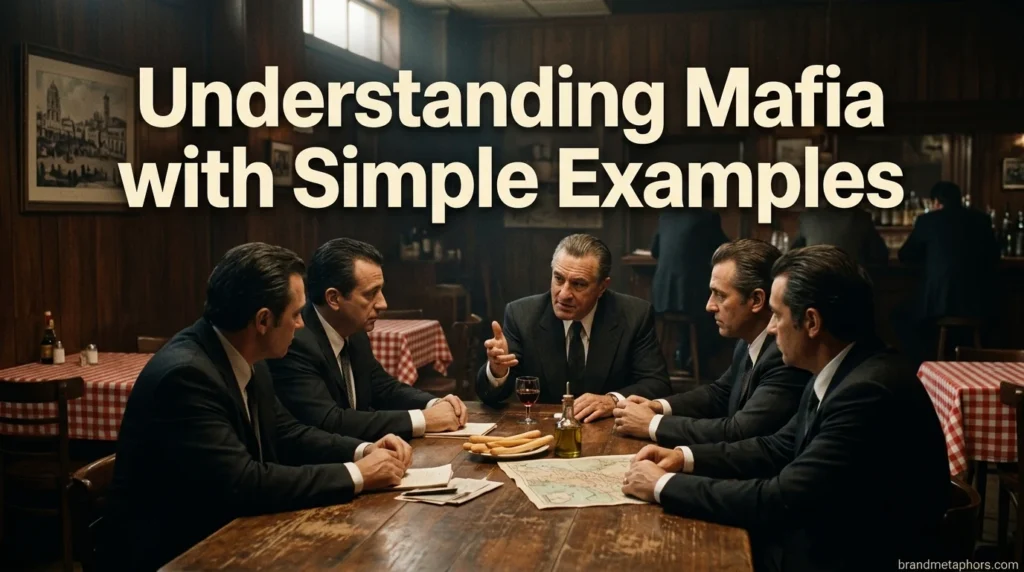
A mafia is a secret criminal group that uses fear and power to control people or areas.
Simple explanation:
It is like a hidden organization that operates outside the law.
Examples in sentences:
- The mafia controlled illegal activities in the city.
- He was threatened by a mafia group.
- The story described a powerful mafia boss.
Writing tip:
In storytelling, “mafia” adds drama and tension:
- “The city lived under the shadow of the mafia.”
7. Figurative Language: Similes and Metaphors for Better Understanding
Writers often use figurative language to compare powerful groups like cartels and mafias.
Simile examples:
- The cartel works like a silent machine controlling the market.
- The mafia spreads like a shadow over the city.
Metaphor examples:
- The cartel is a web controlling global trade.
- The mafia is a kingdom built on fear.
Idiom usage:
- “Behind closed doors” (secret operations)
- “Call the shots” (control decisions)
These expressions improve creative writing and descriptive power.
8. Vocabulary Enhancement & Descriptive Language
To improve writing skills, learners should use rich vocabulary.
Useful words:
- Syndicate
- Organization
- Network
- Operation
- Influence
- Control
- Power structure
Descriptive phrases:
- “Hidden network of power”
- “Coordinated economic control”
- “Secret criminal empire”
These phrases help in essays, storytelling, and academic writing.
9. Sentence Examples for Writing Practice
Here are categorized examples for learners:
Simple sentences:
- The cartel controls the market.
- The mafia is very secretive.
Intermediate sentences:
- The cartel influences global oil prices through coordinated actions.
- The mafia operates through fear and secrecy.
Advanced sentences:
- The cartel functions as an economic alliance that manipulates supply chains.
- The mafia symbolizes a shadow society built on loyalty, silence, and power.
10. When to Use and When to Avoid These Terms
At to use:
- Academic writing
- Essays about economics or crime
- Storytelling and fiction
- Analytical comparisons
When to avoid:
- Informal conversations without context
- Sensitive discussions without understanding meaning
- Misusing terms interchangeably
Writing tip:
Always match the word with correct context to avoid confusion.
11. Common Mistakes Learners Make
Mistake 1: Mixing meanings
Many learners think cartel and mafia are the same. They are different in structure and purpose.
Mistake 2: Literal confusion
Using them only as criminal terms without understanding business meaning of cartel.
Mistake 3: Overuse in writing
Repeating the same word reduces writing quality.
Mistake 4: Weak vocabulary
Using simple words instead of descriptive language.
Solution:
Practice synonyms and context-based writing.
12. Writing Exercises for Students

Try these activities:
Exercise 1:
Write 3 sentences using “cartel” in a business context.
Exercise 2:
Write 3 sentences using “mafia” in a storytelling context.
Exercise 3:
Create one metaphor for each:
- Cartel
- Mafia
Exercise 4:
Rewrite simple sentences into descriptive ones.
Example:
- Simple: The mafia is dangerous.
- Improved: The mafia spreads fear like a dark cloud over the city.
13. 5 FAQs (Frequently Asked Questions)
1. What is the main difference between cartel and mafia?
A cartel controls markets, while a mafia controls through illegal power and fear.
2. Is cartel always illegal?
Not always. Some cartels operate in business contexts, but many are illegal.
3. Is mafia only Italian?
No, mafia is a general term used for many organized criminal groups worldwide.
4. Can these words be used in writing?
Yes, especially in essays, fiction, and descriptive writing.
5. Why are these terms important in language learning?
They improve vocabulary, analytical thinking, and creative expression.
Conclusion
Understanding complex terms like cartel and mafia helps learners improve both language skills and critical thinking. These words are not only factual but also powerful tools in figurative language, creative writing, and descriptive expression.
By learning how to use comparisons, metaphors, and contextual vocabulary, writers can create stronger essays, stories, and SEO-friendly content. Mastering such terms builds confidence and improves communication in academic and real-world writing.
In the end, strong writing is not about using difficult words—it is about using the right words in the right way.