
Introduction
Words have power. The way we choose words can change the emotion, tone, and meaning of our writing. Whether you are a student, writer, or English learner, understanding word differences helps improve communication and writing skills.
One common question is the difference between beloved vs loved. Both words express affection, care, and emotional connection, but they are not always used in the same way. Knowing when to use each word can make your writing more expressive, emotional, and accurate.
This guide explains the meanings, differences, examples, literary usage, poetic expression, sentence structures, and practical exercises to help you master these important vocabulary words.
What Do “Beloved” and “Loved” Mean?
Before comparing them, let’s understand their individual meanings.
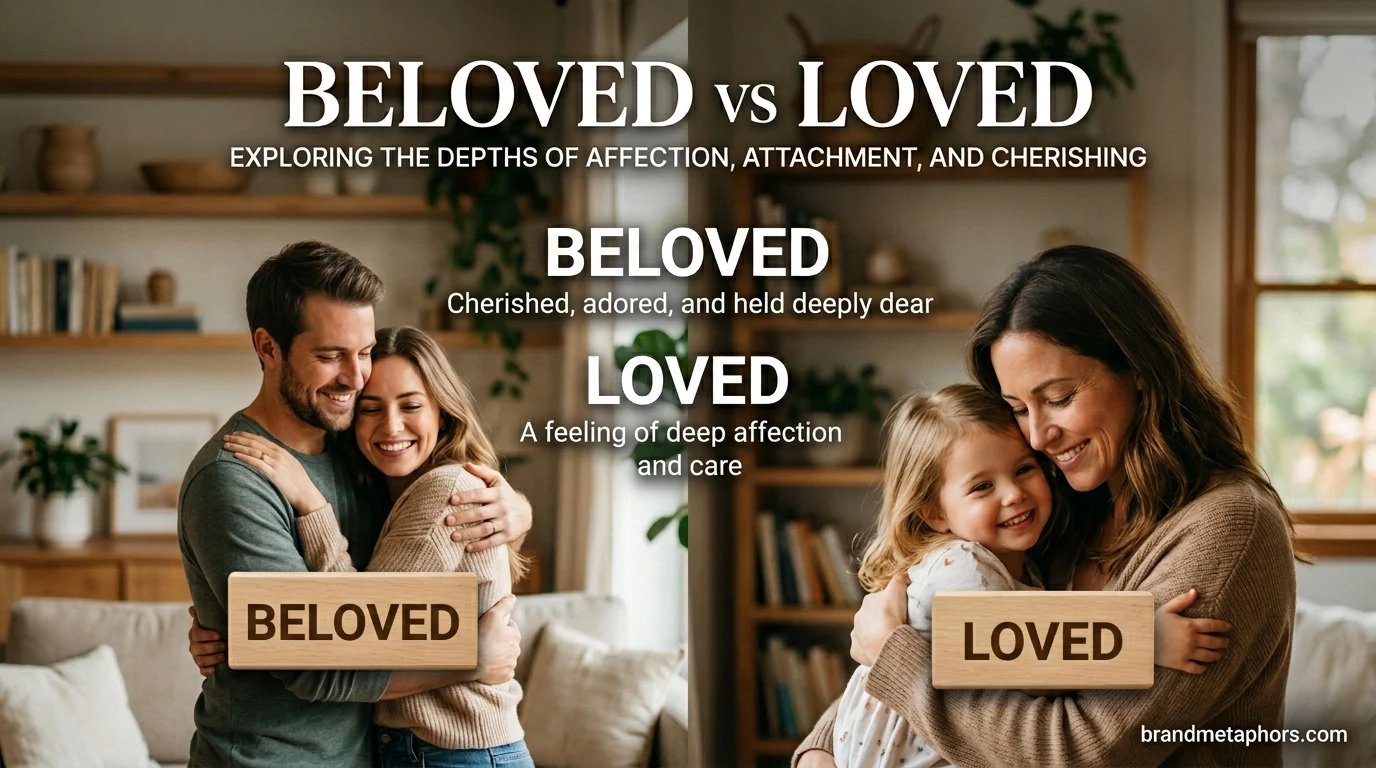
WordMeaningBelovedDeeply cherished, treasured, and admired by someone or many peopleLovedCared for, valued, or felt affection toward
The word loved simply shows affection or care. The word beloved carries a stronger emotional meaning and often suggests special importance.
Examples
- She is loved by her family.
- She is the beloved daughter of the family.
The second sentence sounds warmer and more emotional.
Key Difference Between Beloved and Loved
The main difference is emotional intensity.
FeatureBelovedLovedEmotional StrengthVery strongModerate to strongFormalityMore formal and literaryCommon and everydayEmotional DepthDeep admiration and affectionGeneral affectionCommon UsagePoems, speeches, literatureDaily conversationToneWarm, respectful, heartfeltNatural and simple
Quick Comparison
- Loved = cared for.
- Beloved = deeply cherished and treasured.
Think of “beloved” as a stronger and more expressive version of “loved.”
When to Use “Loved”
“Loved” is commonly used in everyday English.
It describes affection, care, appreciation, or emotional attachment.
Sentence Examples
- I loved the movie.
- She loved her grandparents.
- They loved spending time together.
- The children loved the new playground.
- He was loved by everyone in the office.
Common Situations
Use “loved” when:
- Speaking casually.
- Writing everyday conversations.
- Describing normal affection.
- Talking about experiences or preferences.
Examples
- I loved the food.
- We loved our vacation.
- She loved reading books.
These sentences sound natural and conversational.
When to Use “Beloved”
“Beloved” is used when someone or something holds a special place in the heart.
It often appears in:
- Literature
- Poetry
- Speeches
- Tributes
- Memorial messages
- Creative writing
Sentence Examples
- He was a beloved teacher.
- The beloved king ruled wisely.
- Her beloved grandmother inspired her life.
- The town lost its beloved doctor.
- This beloved novel remains popular today.
Common Situations
Use “beloved” when:
- Expressing deep affection.
- Writing emotional content.
- Creating poetic expression.
- Honoring a person.
Emotional Tone and Writing Impact

Choosing between these words affects tone.
Loved Tone
- Simple
- Friendly
- Everyday
- Direct
Example:
The students loved their teacher.
Beloved Tone
- Emotional
- Respectful
- Heartfelt
- Memorable
Example:
The students remembered their beloved teacher for many years.
The second sentence creates a stronger emotional connection.
Beloved and Loved in Creative Writing
Creative writing depends on descriptive language and emotional depth.
Writers often choose words carefully to create mood and feeling.
Using Loved
Example:
Maria loved her garden.
This sentence communicates affection clearly.
Using Beloved
Example:
Maria’s beloved garden bloomed with memories of her childhood.
This version feels richer and more emotional.
Writing Tip
Use “beloved” when you want readers to feel emotional attachment.
Use “loved” when you simply want to state affection.
Literary Devices and Emotional Expression
Both words can be used alongside literary devices.
Figurative Language
Figurative language adds imagination and emotion to writing.
Example:
Her beloved memories were stars shining in the darkness.
This creates a vivid image.
Poetic Expression
Poets often prefer “beloved” because it sounds emotional and elegant.
Example:
My beloved waits beyond the horizon.
Descriptive Language
Example:
The beloved cottage stood quietly among ancient trees.
The word “beloved” helps create emotional imagery.
Simile Examples Using Beloved and Loved
A simile compares two things using “like” or “as.”
Simile Examples with Loved
- She was loved like a sister.
- The puppy was loved as much as a family member.
- He felt loved like never before.
Simile Examples with Beloved
- She was cherished like a beloved treasure.
- The village protected him like a beloved hero.
- The child was adored like a beloved prince.
These comparisons strengthen emotional meaning.
Metaphor Examples Using Beloved and Loved
A metaphor directly compares two things without using “like” or “as.”
Metaphor Examples with Loved
- Her love was a warm blanket.
- His family was his anchor.
- Their friendship was a lighthouse.
Metaphor Examples with Beloved
- She was the heart of the village.
- The beloved teacher was a guiding star.
- His beloved dog was sunshine in difficult times.
Metaphors make writing more memorable and engaging.
Common Sentence Examples
Everyday Examples with Loved
- I loved the concert.
- They loved the surprise gift.
- We loved visiting the museum.
- She loved her new job.
- He loved playing football.
Emotional Examples with Beloved
- The beloved actress inspired millions.
- His beloved wife supported him through every challenge.
- The town celebrated its beloved founder.
- She kept a picture of her beloved grandfather.
- The beloved tradition continues today.
Academic Examples
- The author describes a beloved homeland.
- The character is loved by readers worldwide.
- The beloved hero symbolizes hope.
Common Mistakes to Avoid

1. Using Beloved for Everything
Incorrect:
I beloved the movie.
Correct:
I loved the movie.
“Beloved” is not normally used as a replacement for the verb “loved.”
2. Overusing Beloved
Incorrect:
My beloved pen, beloved notebook, beloved desk, and beloved chair.
Too much repetition sounds unnatural.
3. Using Loved in Highly Emotional Tributes
Less emotional:
He was a loved community leader.
Better:
He was a beloved community leader.
4. Confusing Formal and Informal Contexts
Choose words according to audience and purpose.
Vocabulary Enhancement and Related Words

Learning related words improves vocabulary and writing skills.
Synonyms of Loved
- Adored
- Cherished
- Appreciated
- Valued
- Cared for
- Admired
Synonyms of Beloved
- Cherished
- Treasured
- Adored
- Precious
- Dear
- Esteemed
Example
Instead of repeating “loved,” try:
- The students adored their teacher.
- The community cherished the tradition.
This creates more variety in writing.
Practice Exercises
Exercise 1: Choose the Correct Word
- The town honored its _____ doctor.
- I _____ the new restaurant.
- She was a _____ grandmother.
- We _____ our vacation.
- The _____ author inspired generations.
Answers
- Beloved
- Loved
- Beloved
- Loved
- Beloved
Exercise 2: Rewrite the Sentences
Change the sentences to create stronger emotional impact.
- The people loved the king.
- She loved her childhood home.
- Students loved their teacher.
Possible Answers:
- The people cherished their beloved king.
- Her beloved childhood home remained in her heart.
- Students deeply admired their beloved teacher.
Exercise 3: Create Your Own Sentences
Write:
- Two sentences using “loved.”
- Two sentences using “beloved.”
- One simile.
- One metaphor.
This exercise strengthens vocabulary and descriptive language skills.
Tips for Students and Writers
Use “Loved” When:
- Writing everyday English.
- Describing common feelings.
- Speaking casually.
- Explaining preferences.
Use “Beloved” When:
- Writing stories.
- Creating emotional scenes.
- Writing speeches.
- Composing poems.
- Honoring people.
Professional Writing Tip
Ask yourself:
Do I want simple affection or deep emotional attachment?
If simple affection is enough, use “loved.”
If deep emotional value is important, use “beloved.”
Frequently Asked Questions (FAQs)
1. Is “beloved” stronger than “loved”?
Yes. “Beloved” usually expresses deeper affection, admiration, and emotional significance.
2. Can “beloved” replace “loved” in every sentence?
No. “Beloved” is often used as an adjective, while “loved” commonly functions as a verb or adjective depending on context.
3. Is “beloved” formal?
Yes. It is generally more formal, literary, and emotional than “loved.”
4. Which word is better for poetry?
“Beloved” is often preferred because it sounds more emotional and poetic.
5. Which word is more common in daily conversation?
“Loved” is much more common in everyday speaking and writing.
Conclusion
Understanding the difference between beloved and loved can greatly improve your writing and communication. While both words express affection, they carry different emotional strengths. “Loved” is common, simple, and suitable for everyday situations. “Beloved” conveys deeper admiration, emotional attachment, and special importance.
For students, writers, and English learners, mastering this distinction enhances vocabulary, strengthens descriptive language, improves creative writing, and helps create more powerful emotional expression. By practicing sentence examples, literary devices, metaphors, similes, and figurative language, you can choose the right word for every situation and make your writing more engaging, meaningful, and memorable.