
Introduction
Good writing is more than using correct grammar. It is also about choosing the right words to express ideas clearly and creatively. Writers often use figurative language, descriptive language, metaphors, similes, and other literary devices to make their sentences more interesting. Whether you are writing a school essay, a story, a poem, or a social media post, selecting the correct word helps readers understand your message.
One pair of words that often confuses students and English learners is awoke vs woke. Since both words come from the same verb, many people wonder if they mean the same thing or if one is more correct than the other. The confusion has also grown because the word woke has developed a modern social meaning that is different from its original grammar use.
This guide explains the difference in simple language. You will learn when each word should be used, see many sentence examples, understand common mistakes, improve your vocabulary, and build stronger writing skills. By the end, you will know exactly which word fits different situations.
What Do “Awoke” and “Woke” Mean?
Both words are past forms of the verb awake, which means:
- To stop sleeping
- To become conscious
- To become aware of something
Although they share the same basic meaning, they are used differently depending on grammar, style, and context.
Basic Meanings
WordMeaningCommon UseAwokePast tense or literary past form of awakeFormal writing, literatureWokePast tense of wake or awakeEveryday conversation
Simple Examples
- She awoke before sunrise.
- She woke before sunrise.
Both sentences are grammatically correct.
Understanding the Verb “Awake”
The verb awake has several forms.
Verb FormExampleBase FormawakePresentawake / awakesPastawoke or wokePast Participleawoken or awakenedPresent Participleawaking
Examples:
- I awake early every morning.
- Yesterday I awoke early.
- Yesterday I woke early.
- I have awakened.
- I had awoken before dawn.
The Main Difference Between the Two Words
The biggest difference is style.
Awoke
- More formal
- Often appears in books
- Common in stories and poetry
- Sounds dramatic or elegant
Example:
The princess awoke to the sound of singing birds.
Woke
- More common in everyday English
- Natural in conversations
- Frequently used in speech
- Preferred in casual writing
Example:
I woke up late because my alarm didn’t ring.
Quick Comparison
FeatureAwokeWokeFormalYesUsually NoCasualRareYesLiteratureVery CommonSometimesDaily SpeechLess CommonVery CommonEasy for BeginnersModerateVery Easy
When Should You Use “Awoke”?
Use awoke when you want your writing to sound elegant, descriptive, or literary.
It works well in:
- Stories
- Novels
- Fairy tales
- Historical writing
- Poetry
- Creative writing
Examples
- The king awoke before the battle.
- She awoke with hope in her heart.
- The child awoke from a frightening dream.
- He awoke to complete silence.
- The village awoke under fresh snow.
Tone
Using awoke creates a feeling of:
- Beauty
- Mystery
- Emotion
- Drama
Example:
She awoke beneath a sky filled with stars.
This sounds more poetic than:
She woke beneath a sky filled with stars.
Both are correct, but the first sounds richer.
When Should You Use “Woke”?

Use woke in everyday communication.
It is the better choice for:
- Conversations
- Emails
- School writing
- Text messages
- Daily storytelling
Examples:
- I woke at six.
- We woke early for school.
- My brother woke before me.
- They woke after the storm.
- She woke smiling.
Natural Conversation
- What time did you wake?
- I woke around seven.
- Everyone woke when the dog barked.
This sounds completely natural.
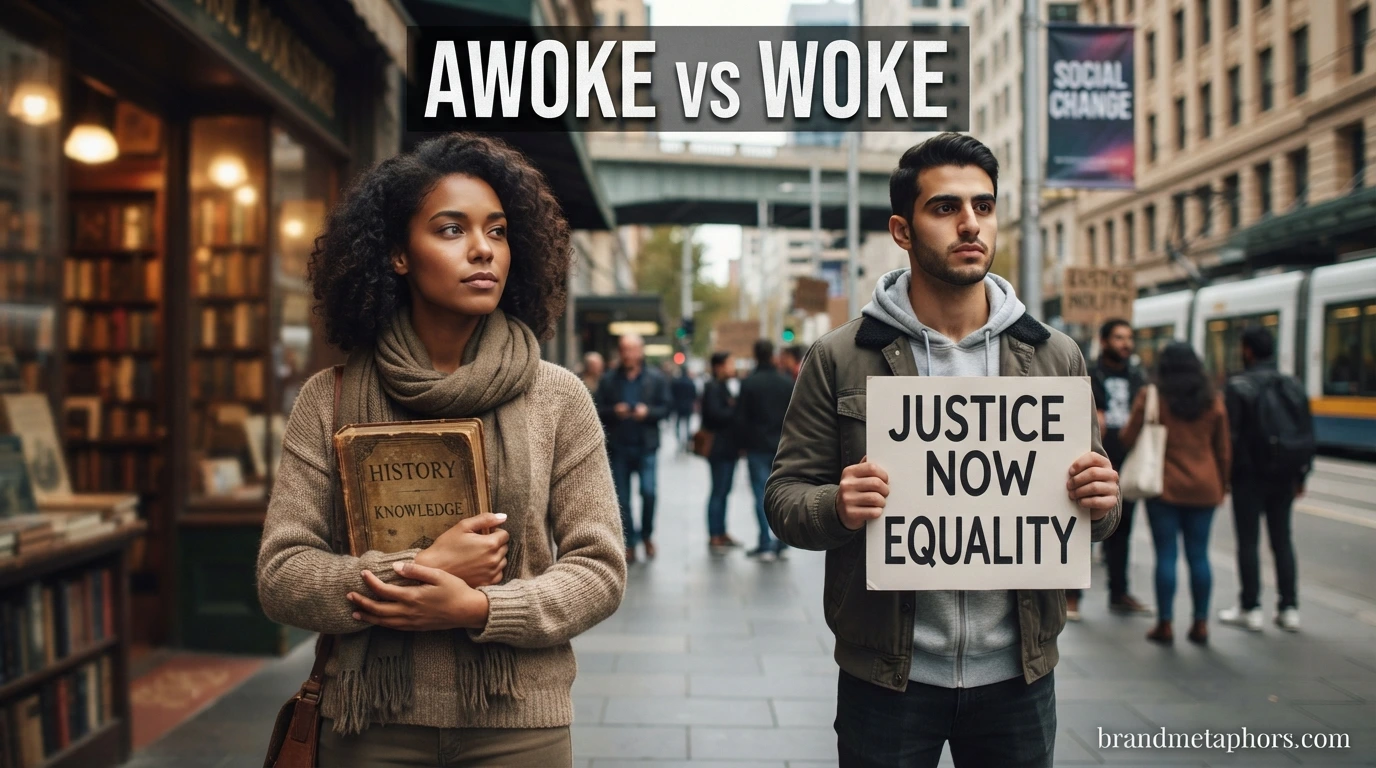
The Modern Meaning of “Woke”
Today, the word woke has another meaning.
It can describe someone who is:
- Socially aware
- Aware of unfair treatment
- Interested in justice and equality
Example:
- Many young people describe themselves as woke.
This meaning is different from the grammar meaning related to sleeping.
Two Different Meanings
SentenceMeaningI woke at seven.Stopped sleepingShe is woke.Socially aware (modern meaning)
Always use context to understand which meaning is intended.
Sentence Examples for Different Situations
Everyday Examples
- I woke before my alarm.
- We woke feeling refreshed.
- They woke late on Sunday.
- My parents woke early.
- The baby woke during the night.
Formal Examples
- The queen awoke at dawn.
- He awoke surrounded by silence.
- The traveler awoke to the sound of rain.
- She awoke with renewed courage.
- The city awoke slowly.
School Writing
- The class woke excited for the field trip.
- The character awoke after the explosion.
- The scientist awoke with a new idea.
Story Writing
- Deep inside the forest, the dragon awoke.
- The castle awoke beneath golden sunlight.
- She awoke and discovered a mysterious letter.
Using Figurative Language with These Words
Figurative language makes writing more colorful.
Metaphor Examples
- Hope awoke inside him.
- The city awoke like a giant.
- Courage woke within her.
Simile Examples
- She awoke like a flower opening to the sun.
- He woke like a bear after winter.
- The village awoke like children on a holiday.
Personification
- The forest awoke with birdsong.
- The mountains awoke under morning light.
- The river awoke with spring rain.
Imagery
- She awoke to golden sunlight spilling across the room.
- He woke beneath soft clouds.
- The world awoke wrapped in morning mist.
These examples improve creative writing by helping readers imagine the scene.
Literary Devices and Creative Writing
Professional writers often choose awoke because it sounds more elegant.
Symbolism
Awakening often symbolizes:
- New beginnings
- Learning
- Hope
- Change
- Personal growth
Example:
He awoke to a new understanding of life.
Foreshadowing
She awoke suddenly, unaware that everything was about to change.
Imagery
The village awoke beneath pink skies and singing birds.
Mood
Using awoke can create:
- Peace
- Wonder
- Mystery
- Suspense
Common Idioms and Related Expressions
Although there are few idioms using these exact words, similar expressions are common.
ExpressionMeaningWake up and smell the coffeePay attentionWake-up callImportant warningAwake to realityAccept the truthWide awakeFully alertSleeping on itWaiting before deciding
Examples
- Losing the game was a wake-up call.
- You need to wake up and smell the coffee.
- She finally became awake to the problem.
Common Mistakes to Avoid
Many learners make these errors.
Mistake 1
❌ I have woke early.
✅ I have woken early.
or
✅ I have awakened early.
Mistake 2
❌ He awoke up.
Better:
✅ He awoke.
or
✅ He woke up.
Do not combine awoke with up in most situations.
Mistake 3
Using awoke in casual conversation too often.
Example
Instead of
I awoke at eight.
Most native speakers say
I woke at eight.
Mistake 4
Confusing the social meaning of woke with the past tense.
Always read the sentence carefully.
Example:
I woke early.
Grammar meaning.
She is woke.
Modern social meaning.
Choosing the Right Word

Ask yourself these questions.
Are you writing a story?
Choose:
- Awoke
Talking with friends?
Choose:
- Woke
Writing poetry?
Usually choose:
- Awoke
Writing homework?
Either is acceptable, but woke usually sounds more natural.
Vocabulary Enhancement
Learning related words builds stronger English.
WordMeaningAwakeNot sleepingWakeBecome awakeAwakenCause someone to wakeAwakenedBecame awareAwarenessKnowledgeConsciousAwake and awareAlertPaying attentionRiseGet out of bed
Example sentences
- The loud bell awakened everyone.
- She became more aware of nature.
- The guard remained alert.
- The children rose early.
Practice Exercises
Exercise 1
Choose the correct word.
- She _____ before sunrise.
Answer:
Awoke or woke (both correct)
- I _____ up late yesterday.
Answer:
Woke
- The prince _____ from a magical sleep.
Answer:
Awoke
- We _____ early for our trip.
Answer:
Woke
- The whole town _____ with excitement.
Answer:
Awoke
Exercise 2
Rewrite the sentence.
Original:
I woke and saw snow outside.
Possible creative version:
I awoke to a world covered in sparkling snow.
Exercise 3
Fill in the blanks.
- The baby _____ at midnight.
Answer:
woke
- The old castle _____ beneath the morning sun.
Answer:
awoke
- We _____ excited for vacation.
Answer:
woke
Quick Comparison Table
SituationBetter ChoiceDaily conversationWokeCreative writingAwokeNovelAwokeText messageWokeSchool essayEitherPoetryAwokeFairy taleAwokeCasual storytellingWoke
Frequently Asked Questions
1. Is “awoke” old-fashioned?
Not exactly. It is still correct but is more common in literature, formal writing, and storytelling than in everyday conversation.
2. Is “woke” grammatically correct?
Yes. It is a correct past tense form of wake or awake and is the form most people use in daily speech.
3. Can both words be used in the same sentence?
Yes.
Example:
She awoke suddenly, but everyone else woke much later.
4. Which word should students use in school?
For most school assignments, woke is the easiest and most natural choice. In creative writing or literature assignments, awoke can make the writing sound more expressive.
5. Does “woke” always mean socially aware?
No. Most of the time, especially in sentences about sleeping, it simply means the past tense of wake. The social meaning depends entirely on context.
Conclusion
Both awoke and woke are correct English words, but they serve different purposes in writing. Woke is the everyday choice for conversations, school assignments, and casual communication because it sounds natural and familiar. Awoke, on the other hand, is often used in stories, poems, and formal writing to create a more elegant or dramatic effect.
Understanding this difference helps you choose the right tone for your audience. Whether you are improving your vocabulary, practicing descriptive language, writing creative stories, or learning English grammar, knowing when to use each form will make your writing clearer and more engaging. Combine these words with figurative language, similes, metaphors, and vivid imagery to create writing that is both correct and memorable.