
Introduction
Good writing is more than using correct grammar. It is also about choosing the right words to create clear pictures in the reader’s mind. Figurative language, descriptive language, metaphors, similes, and other literary devices help writers express ideas in interesting ways. Whether you are writing a school essay, a travel blog, a story, or a poem, understanding vocabulary makes your writing stronger and more engaging.
One word that often causes confusion is the French term for a grand country house or castle. Many English learners wonder which plural form is correct. Should you write chateaus or chateaux? Because the word comes from French, both spellings appear in English, but one is generally preferred depending on the writing style and audience.
This guide explains the differences between the two forms in simple language. You will learn their meanings, pronunciation, grammar rules, examples, common mistakes, writing tips, and practical exercises. Along the way, you will also discover how using accurate vocabulary improves creative writing, descriptive language, and overall communication.
What Does “Château” Mean?
A château is a large country house, palace, manor, or castle, especially in France. Many famous French wine estates are also called châteaux.
Examples include:
- Château de Chambord
- Château de Versailles
- Château Margaux
Unlike a military fortress, a château is often associated with elegance, history, luxury, and beautiful architecture.
Meaning in simple words
A château is:
- A French castle
- A grand country home
- A historic palace
- A luxurious estate
- Sometimes a famous vineyard
Example sentences
- We visited a beautiful château during our holiday in France.
- The old château stood on top of the hill.
- Artists painted the elegant château surrounded by gardens.
Chateaus or Chateaux: Which Is Correct?
Both chateaus and chateaux are accepted English plurals, but they are not equally common.
FormCorrect?Common UsageChâteauxYesMost common and preferredChateausYesLess common, anglicised form
Why are there two plurals?
English borrows thousands of words from French.
Many borrowed words keep their original French plural.
Examples include:
SingularFrench PluralBureauBureauxTableauTableauxChâteauChâteaux
However, English sometimes creates a regular plural by adding -s, producing chateaus.
Today, dictionaries generally recognise both forms, although châteaux is preferred in formal writing.
Why Does English Keep the French Plural?
English has borrowed vocabulary from many languages.
Some borrowed words keep their original endings because:
- They are widely recognised.
- They appear in history and literature.
- They preserve cultural identity.
- They are common in art, architecture, and travel writing.
Examples include:
SingularPreferred PluralCactusCactiFungusFungiChateauChâteauxTableauTableaux
Over time, English may also create simpler forms.
Pronunciation Guide
Many learners struggle with pronunciation.
Singular
Château
Approximate pronunciation:
sha-TOE
Plural
Châteaux
Approximate pronunciation:
sha-TOES
The final x is usually silent.
Using the Word in Everyday English

The word appears in several types of writing.
Travel Writing
- The Loire Valley contains magnificent châteaux.
History
- Many French kings lived in famous châteaux.
Architecture
- Renaissance châteaux often include elaborate towers.
Wine
- Bordeaux wines are frequently named after the château where they are produced.
Tourism
- Visitors explore ancient châteaux every summer.
Comparison Table: When to Use Each Form
SituationBest ChoiceAcademic writingChâteauxHistory essaysChâteauxTravel blogsChâteauxCasual conversationEither formChildren’s writingChateaus may be easierFormal publishingChâteauxAmerican informal writingChateaus occasionally appears
The French plural usually sounds more natural to experienced readers.
Sentence Examples in Different Contexts
Education
- Students researched medieval châteaux in French history.
Travel
- Our tour included three magnificent châteaux.
Architecture
- The Renaissance châteaux featured elegant gardens.
Fiction
- The mysterious châteaux hid many secrets.
Poetry
- Moonlight covered the silent châteaux with silver.
Journalism
- The region’s famous châteaux attract millions of visitors each year.
Conversation
- We photographed several beautiful châteaux during our holiday.
Figurative Language and Creative Writing
Although the word itself is literal, it works well in figurative language.
Metaphor Examples
- Her dream was a château built from hope.
- His imagination became a grand château filled with endless ideas.
- Knowledge is a château with many open doors.
Simile Examples
- The mansion stood like a French château.
- Her home looked as elegant as a royal château.
- The palace rose like an ancient château above the valley.
Personification
- The old château watched over the village.
- The lonely château remembered forgotten kings.
Imagery
Instead of writing:
“The house was big.”
Write:
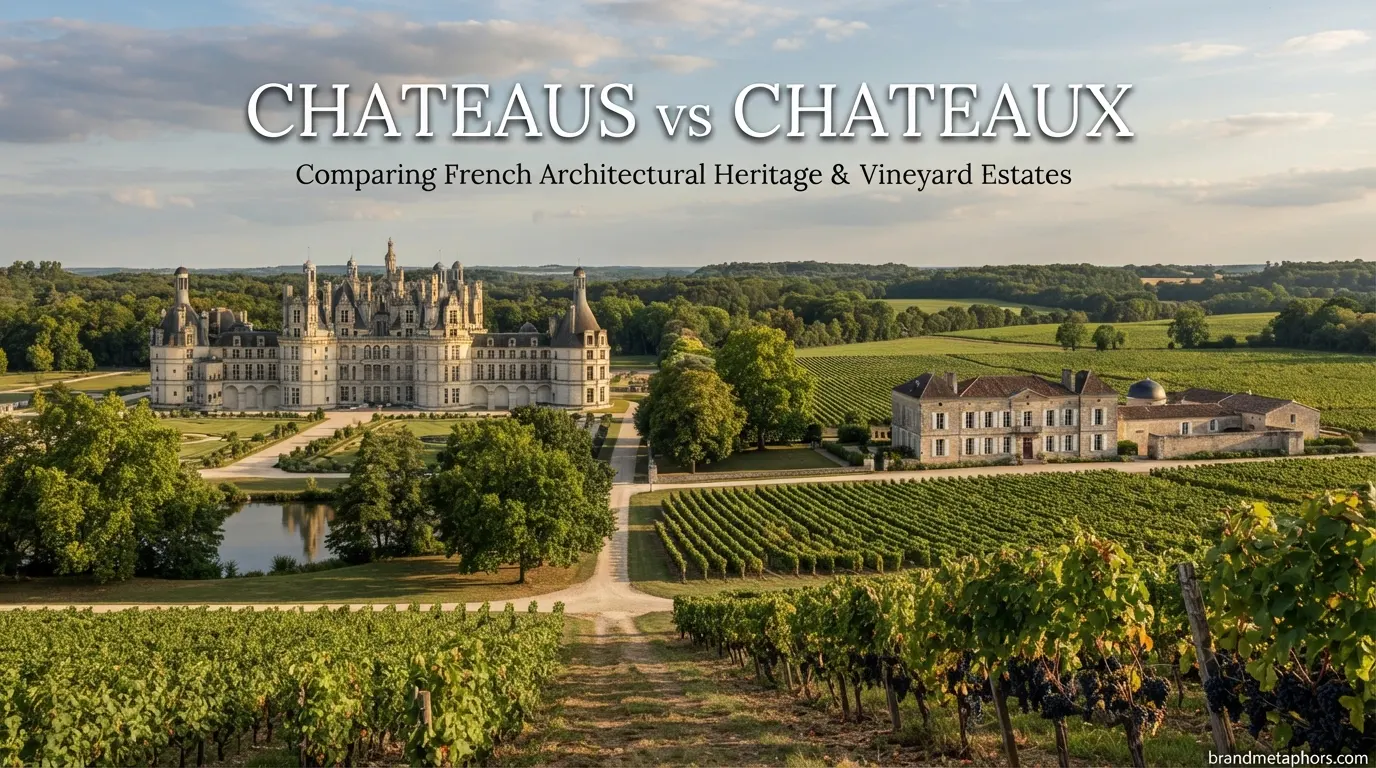
“The château overlooked colourful vineyards beneath a bright blue sky.”
This creates stronger descriptive language.
Tone and Style: When the Word Fits Best
Different writing styles use the word differently.
Formal Tone
- Historians studied Renaissance châteaux.
Informative Tone
- The Loire Valley contains hundreds of historic châteaux.
Creative Tone
- The abandoned château whispered forgotten legends.
Poetic Tone
- Golden sunlight embraced the quiet château each morning.
Descriptive Tone
- Ivy covered the ancient stone walls of the magnificent château.
Common Mistakes to Avoid

Mistake 1: Thinking only one plural is correct
Both are accepted.
Preferred:
- Châteaux
Less common:
- Chateaus
Mistake 2: Using unnecessary apostrophes
Incorrect:
❌ Chateau’s
Correct:
✅ Châteaux
Mistake 3: Mixing singular and plural
Incorrect:
❌ Many château
Correct:
✅ Many châteaux
Mistake 4: Confusing with castles
Although similar, not every castle is a château.
Many châteaux were luxurious homes rather than military forts.
Mistake 5: Ignoring accents
The accent (â) is preferred in formal writing.
However, many English publications omit accents when typing.
Writing Tips for Students
Improve your vocabulary by following these tips.
Use precise nouns
Instead of:
“The building”
Write:
“The historic château”
Add descriptive adjectives
Examples:
- magnificent château
- medieval château
- elegant château
- abandoned château
- luxurious château
Build richer sentences
Simple:
- We visited a château.
Better:
- We visited a magnificent château surrounded by colourful gardens.
Combine with literary devices
Example:
“The ancient château stood like a silent guardian above the valley.”
This combines imagery and a simile.
Practice Exercises
Exercise 1
Choose the correct plural.
- We visited several ________.
A. chateaus
B. châteaux
Answer: B (preferred)
- Historians studied French ________.
A. châteaux
B. chateau
Answer: A
Exercise 2
Correct the sentence.
Incorrect:
“We explored many château.”
Correct:
“We explored many châteaux.”
Exercise 3
Rewrite using descriptive language.
Simple:
“The château was old.”
Possible answer:
“The ancient stone château overlooked peaceful vineyards.”
Exercise 4
Create a simile.
Example:
“The palace stood like a majestic château.”
Exercise 5
Create a metaphor.
Example:
“Her imagination was a château filled with endless rooms.”
Quick Grammar Summary
QuestionAnswerIs château French?YesIs châteaux correct?YesIs chateaus correct?YesWhich is preferred?ChâteauxIs the x pronounced?Usually noCan the accent be omitted?Sometimes in English typing
Vocabulary Enhancement

Learning this word expands your vocabulary in history, travel, literature, and architecture.
Related words include:
- castle
- palace
- manor
- estate
- fortress
- mansion
- residence
- vineyard
- architecture
- heritage
- landmark
- countryside
- nobility
- royalty
Using varied vocabulary makes essays and stories more interesting.
Frequently Asked Questions
1. Which is more correct: chateaus or chateaux?
Both are correct, but châteaux is the preferred plural in formal English because it follows the original French form.
2. Can I write chateaus in school assignments?
Yes. Most teachers will accept it, although châteaux is generally considered more elegant and accurate.
3. Is château the same as a castle?
Not always. A château is often a grand country house or palace. Some are castles, while others are luxurious estates.
4. Why does English use French plurals?
English has borrowed many French words over centuries. Some retain their original plural forms because they are widely recognised and traditionally used.
5. Should I include the accent mark?
Including the accent (â) is best in formal writing. In informal contexts, some writers omit it if their keyboard does not easily support accented characters.
Conclusion
Understanding the difference between chateaus and châteaux helps you write with greater confidence and accuracy. While both forms are accepted in English, châteaux remains the preferred choice in formal writing, academic work, travel guides, and historical discussions because it preserves the original French plural. The anglicised form chateaus is also recognised and may appear in more informal contexts.
Beyond choosing the correct plural, learning words like château enriches your vocabulary and improves your ability to write descriptively. Whether you are crafting essays, stories, poems, or travel articles, precise word choice, figurative language, metaphors, similes, and vivid imagery make your writing more engaging and memorable. By practising the examples, avoiding common mistakes, and applying the exercises in this guide, students, writers, and English learners can strengthen both their grammar and their creative writing skills.