
Introduction
Good writing is more than using correct grammar. It also means choosing the right words, creating clear images, and helping readers understand exactly what you mean. Figurative language, descriptive language, similes, metaphors, and other literary devices make writing more colourful and memorable. Whether you’re writing a story, poem, essay, or everyday message, strong vocabulary improves communication and makes your ideas come alive.
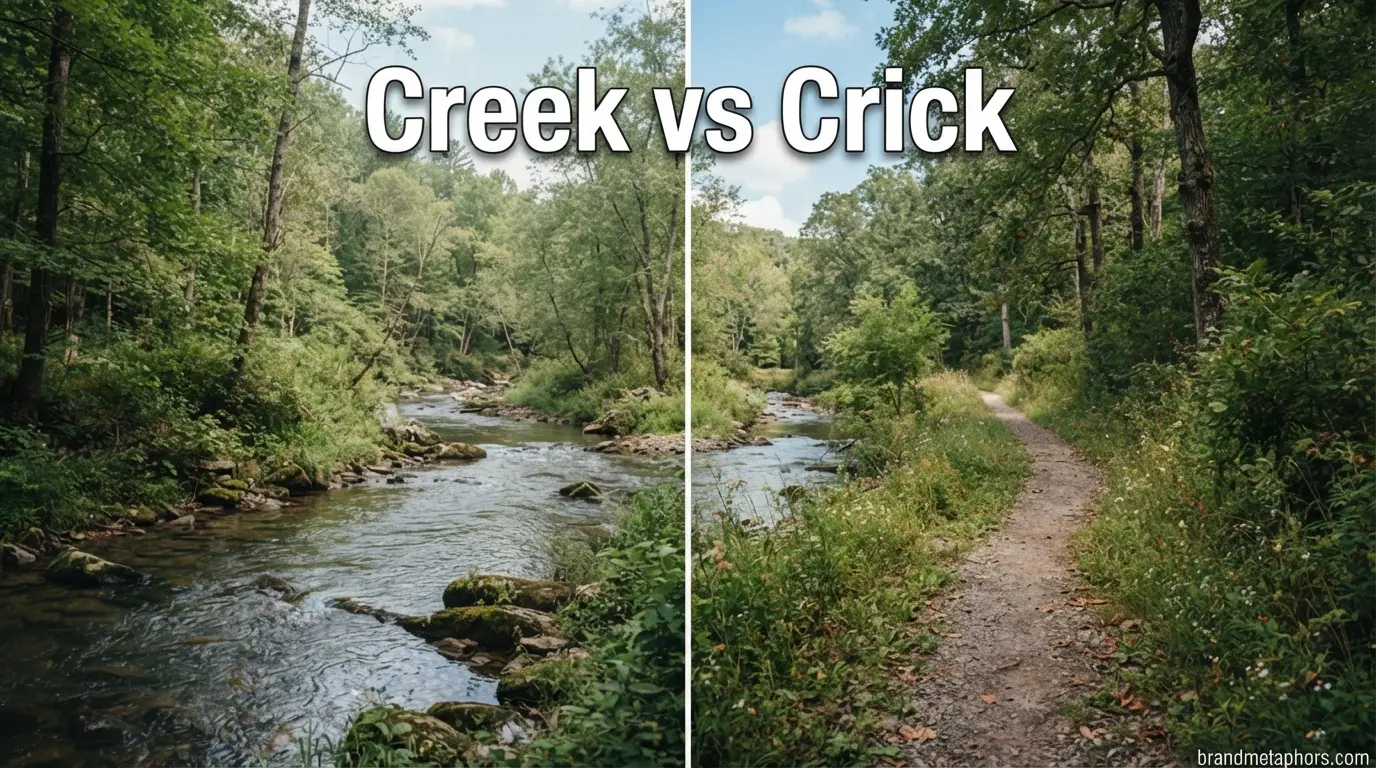
Many English learners become confused by words that sound similar but have different meanings or regional uses. One common example is creek vs crick. At first glance, these words seem interchangeable, but their usage depends on geography, pronunciation, and context. Understanding the difference helps you avoid mistakes in school assignments, creative writing, travel writing, and everyday conversations.
This guide explains the meaning, pronunciation, regional differences, examples, common mistakes, and writing tips in simple language. By the end, you’ll know exactly when to use each word and how to use them naturally in both formal and informal English.
What Is a Creek?
A creek is a small natural stream of water. It is usually smaller than a river but larger than a tiny trickle. Creeks often flow through forests, valleys, farms, or parks before joining larger rivers.
The word is widely accepted in standard English across the world.
Characteristics of a Creek
- A natural flowing stream
- Smaller than most rivers
- Can flow all year or only after rain
- Found in both cities and rural areas
Sentence Examples
- The children skipped stones across the creek.
- Deer often drink water from the nearby creek.
- We built a small bridge over the creek.
- The clear creek reflected the morning sunlight.
What Is a Crick?
A crick has two different meanings depending on where it is used.
Meaning 1: Regional Pronunciation
In many parts of the United States, especially rural areas such as Appalachia, the South, and parts of the Midwest, people pronounce creek as crick. In these places, “crick” simply means the same thing as creek.
Example:
- We went fishing down by the crick.
The speaker is talking about a small stream.
Meaning 2: A Pain in the Neck
In standard English, crick also means a painful stiffness or muscle strain, especially in the neck or back.
Example:
- I woke up with a crick in my neck.
The meaning depends entirely on the context.
Quick Comparison Table
FeatureCreekCrickStandard EnglishYesNo (regional for stream)Means small streamYesYes (regional dialect)Means neck painNoYesCommon in formal writingYesNoCommon in rural American speechSometimesVery commonUsed in dictionariesYesYes
Pronunciation Differences
Although the spelling differs by only one letter, pronunciation changes based on accent.
WordPronunciationCreek/kreek/Crick (stream)/krik/Crick (neck pain)/krik/
Many Americans naturally say “crick” even when writing “creek.”
Examples:
- Written: The creek flows behind our house.
- Spoken in some regions: The crick flows behind our house.
Regional Differences Around the English-Speaking World
English changes from place to place. The preferred word depends on location.
United States
- Standard writing uses creek.
- Many rural communities say crick.
Canada
People almost always use creek.
United Kingdom
British English uses stream, brook, or creek, depending on the type of water. “Crick” almost always means neck pain.
Australia
Creek is the normal word for a small waterway.
Academic Writing
Always use creek unless quoting someone’s dialect.
When to Use Creek
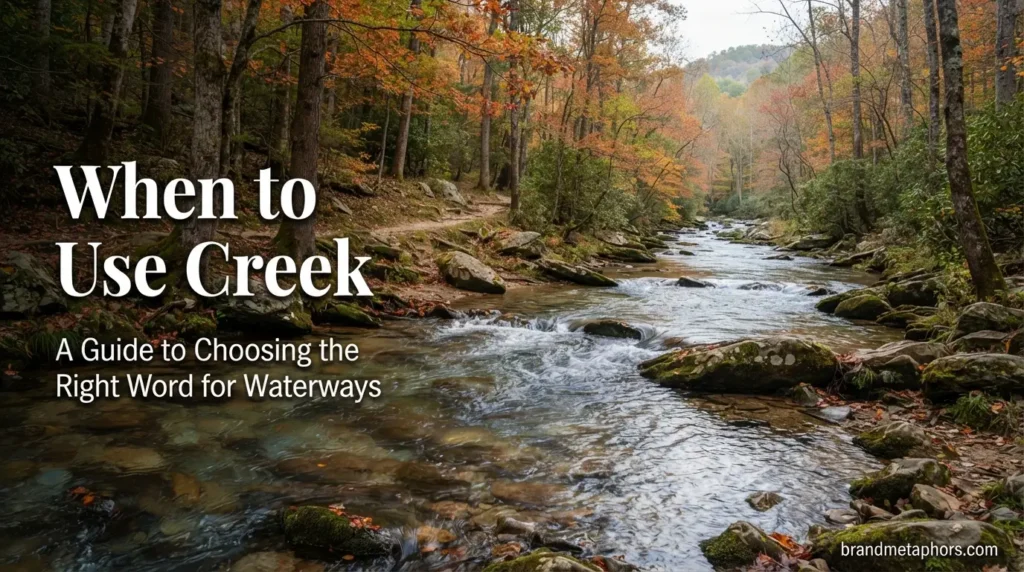
Use creek whenever you’re writing formally or describing a small stream.
Examples include:
School Essays
- The creek provides water for local wildlife.
News Reports
- Heavy rain caused the creek to overflow.
Science Reports
- Fish species were studied in the mountain creek.
Travel Writing
- Visitors enjoy hiking beside the peaceful creek.
Story Writing
- The old wooden bridge crossed a quiet creek.
When to Use Crick
Use crick in two situations.
1. When Writing Regional Dialogue
Example:
“Let’s meet by the crick after supper,” Grandpa said.
This makes dialogue sound authentic.
2. When Talking About Muscle Pain
Examples:
- She has a crick in her neck.
- Sleeping badly gave him a crick.
- Stretching helped remove the crick.
Avoid using “crick” for a stream in school essays unless discussing regional speech.
Common Mistakes and How to Avoid Them
Mistake 1
❌ The crick runs through the national park.
✔ The creek runs through the national park.
(Standard English)
Mistake 2
❌ I have a creek in my neck.
✔ I have a crick in my neck.
Mistake 3
Using regional pronunciation in formal reports.
Formal:
✔ Scientists measured the creek’s water quality.
Informal Dialogue:
✔ We walked down to the crick.
Mistake 4
Assuming everyone understands regional vocabulary.
If writing for an international audience, choose creek.
Comparison Examples
Example 1
Formal:
The creek supplies fresh water to nearby farms.
Regional:
The crick supplies fresh water to nearby farms.
Example 2
Formal Story:
The children played beside the creek.
Regional Story:
The children played beside the crick.
Example 3
Health Context:
He couldn’t turn his head because of a crick in his neck.
Using Figurative Language with Creek

Descriptive writing becomes stronger when you use literary devices.
Simile Examples
- The creek flowed like a silver ribbon.
- The water sparkled like tiny diamonds.
- The stream moved like dancing glass.
Metaphor Examples
- The creek was nature’s heartbeat.
- The creek became a mirror for the sky.
- The flowing water was a living song.
Personification
- The creek whispered through the forest.
- The creek laughed over smooth rocks.
- The creek carried secrets to the river.
Hyperbole
- The creek could wash away the whole world.
Imagery
The cool water slipped quietly over smooth stones while birds sang above the green trees.
These literary devices improve creative writing, poetry, and descriptive essays.
Creative Writing Tips
When describing a creek, include sensory details.
Sight
- sparkling water
- green banks
- smooth rocks
Sound
- gentle splashing
- bubbling water
- singing birds
Smell
- fresh grass
- wet earth
- pine trees
Touch
- cool water
- smooth pebbles
- soft mud
Emotion
- peaceful
- relaxing
- adventurous
- mysterious
Adding these details creates vivid scenes.
Tone Usage
Different tones suit different types of writing.
ToneExampleFormalThe creek supports local ecosystems.InformativeA creek is a small natural stream.NarrativeWe crossed the creek before sunset.PoeticThe creek sang beneath the moonlight.HumorousEven the ducks seemed to own the creek.
Vocabulary Enhancement
Learning related words improves writing skills.
WordMeaningStreamSmall flowing waterBrookTiny streamRiverLarge flowing waterTributarySmaller stream joining a riverWaterwayAny route of flowing waterChannelPath water followsSpringPlace where water beginsRapidsFast-moving waterBankSide of a streamCurrentDirection water flows
Using varied vocabulary makes writing richer and avoids repetition.
Literary Devices in Nature Writing
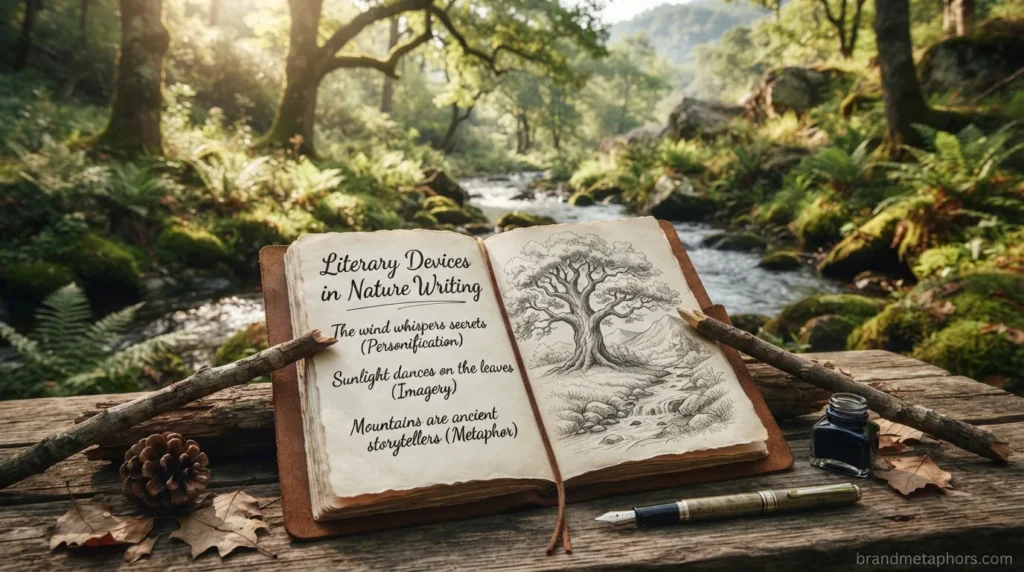
Nature descriptions often include literary devices.
Alliteration
Crystal-clear creek.
Assonance
The creek dreamed beneath green trees.
Onomatopoeia
Splash.
Gurgle.
Babble.
Symbolism
A flowing creek may symbolise:
- hope
- life
- renewal
- peace
- time
- change
These techniques help readers connect emotionally with your writing.
Practice Exercises
Exercise 1
Choose the correct word.
- The ______ flowed through the valley.
Answer:
Creek
- I woke up with a ______ in my neck.
Answer:
Crick
- Grandpa said, “Meet me by the ______.”
Answer:
Crick (regional dialogue)
- Scientists tested the water in the ______.
Answer:
Creek
Exercise 2
Rewrite the sentence.
Original:
The creek was beautiful.
Better:
The clear creek shimmered beneath golden sunlight as birds sang overhead.
Exercise 3
Add Figurative Language
Simple:
The creek moved.
Improved:
The creek danced like silver silk beneath the morning sky.
Exercise 4
Identify the Literary Device
“The creek whispered through the forest.”
Answer:
Personification
Exercise 5
Write Your Own
Describe a creek using:
- one simile
- one metaphor
- one sensory detail
Frequently Asked Questions
1. Is “crick” a real English word?
Yes. It is both a regional pronunciation of creek and a word meaning a stiff pain in the neck or back.
2. Which word should I use in school writing?
Use creek because it is the standard English spelling for a small stream.
3. Why do some Americans say “crick”?
It is part of regional dialects and has been passed down through generations in certain parts of the United States.
4. Can “crick” ever be wrong?
Not necessarily. It is correct in regional speech and when referring to neck pain, but it is usually inappropriate for formal writing about waterways.
5. How can I remember the difference?
Think of creek as the word for water and crick as either a regional way of saying creek or a stiff neck. If you’re writing for a broad audience, choose creek for streams.
Conclusion
Understanding the difference between creek and crick helps you write more clearly and confidently. While both words can refer to a small stream in certain parts of the United States, creek is the accepted standard spelling in formal English and should be used in essays, reports, books, and most professional writing. Crick is best reserved for regional dialogue or when describing a painful stiffness in the neck or back.
Learning these distinctions also strengthens your vocabulary, improves your descriptive language, and helps you choose words that fit your audience.
By practising with comparison examples, figurative language, similes, metaphors, and literary devices, you can make your writing more engaging and expressive. Whether you’re a student, writer, or English learner, mastering small word differences like these builds stronger writing skills and clearer communication.